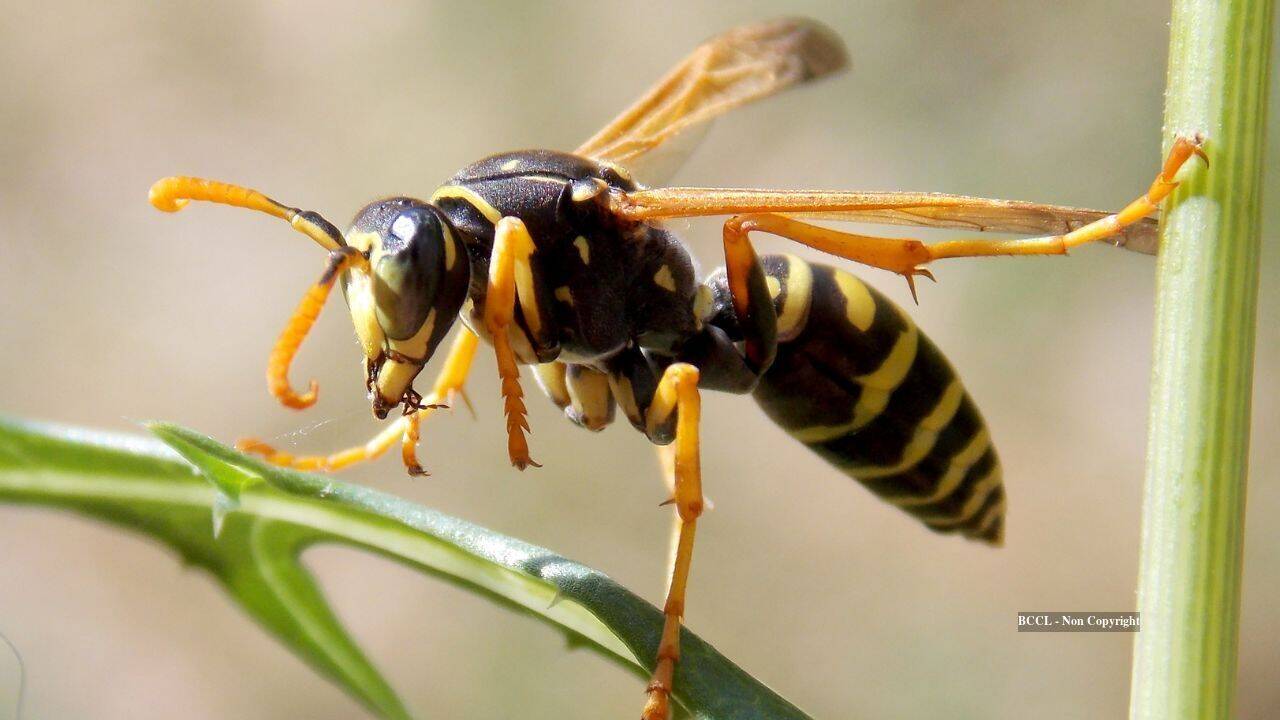
Photo via Times of India

Britain’s wasps are unusually scarce this summer, leaving researchers struggling to find them

Read the original at Times of India ↗
Cite

TOI Science Desk. (2026, September 14). Britain’s wasps are unusually scarce this summer, leaving researchers struggling to find them. Times of India. https://timesofindia.indiatimes.com/science/wildlife/britains-wasps-are-unusually-scarce-this-summer-researchers-cannot-find-enough-for-experiments-and-the-few-seen-are-unusually-small/articleshow/134241666.cms

Dated when The Aporia collected the article, usually within hours of publication. Check the original for its exact date and byline.

Times of India · collected 2026-09-14 · by TOI Science Desk

Quick Summary

This summer in Britain, wasp sightings have been unusually rare, with researchers finding it difficult to gather enough specimens for their studies. The scarcity is thought to be due to extreme weather and reduced food sources affecting colony development. Although the Big Wasp Survey hasn't released data yet, scientists are cautious about confirming a significant decline but note that the absence of wasps could indicate broader ecological changes.
Written by AI on 2026-09-15, from this article's own text only (the story summary below draws on all the coverage).

AI analysis

Story summary

This summer in Britain, researchers have noticed a significant scarcity of wasps, which are usually abundant by now. The few observed wasps appear smaller than usual, raising concerns among scientists who struggle to gather enough specimens for studies. Scientists from the United Kingdom suspect that volatile spring weather, repeated heatwaves, and reduced food supplies might have disrupted wasp colonies before they could fully develop. Although this observation is not yet confirmed by the country’s main national survey, researchers are cautiously considering these findings due to the ecological importance of wasps as predators, pollinators, and decomposers. While fewer wasps mean less hassle for picnickers, their absence may indicate broader environmental issues affecting ecosystems.

Written for “Wasps Scarce In Britain” on 2026-11-02, grounded in this article and the 0 other(s) covering the same event.

Story

📰 Wasps Scarce In Britain
Environment · 1 article(s) covering the same event.

Compared with similar articles

Nothing to compare against. No article is close enough to this one for the pipeline to have linked or judged the pair.
How this article was measured signals, leaning charts, publisher record, byline, topics and claims

Signals How these are calculated →

Claims extracted
98
sentences that state something as happening or true
Uncertain
34%
33 of 98 hedged ("reportedly", "may", "according to")
Leaning
not political
takes no side on a contested political question
Publisher signals
59/100
Times of India's corrections and hedging, across everything collected from it. Not a measure of accuracy.
Outlets on this story
1
Environment
Same framing elsewhere
1
articles that frame the event the way this one does
Analyzed 2026-09-15 · how these are computed

How this is being covered How these are calculated →

Article leaning vs. publisher reliability
Source leaning vs. consistency

Publisher

Times of India · 3922 article(s) · 3 correction(s) detected
Running correction rate · 3 correction(s)

Who wrote this

TOI Science Desk
306 article(s) here · 1 carrying a prediction
🔮 “Normally, my job is quite monotonous, so I wanted to create something that would entertain people, turning my ‘serious’ job into something fun,” he said in a Guinness World Records news release.
🔮 The subsequent collision between the two galaxy clusters may then have compressed the cloud or re-energised its particles, causing it to shine more brightly in radio wavelengths once again.
🔮 The mathematicians at the University of California, Davis, argue that the answer may already lie within Einstein’s own equations and that an invisible form of energy may not be needed at all.
🔮 The work will be carried out by the West Tennessee River Basin Authority, which is preparing a plan to restore the river and the land around it.
🔮 Cornell University scientists have developed genetically engineered tomato plants that turn red-purple when nitrogen becomes scarce, giving farmers a visible warning that crops may need fertiliser.
🔮 By studying these crystals and other mineral grains, scientists could establish the meteorite's age and identify later changes caused by water.
🔮 Centuries later, bronze objects found in Scandinavia would preserve chemical signatures consistent with the metals produced at this Spanish site, offering evidence of connections that may have crossed much of Europe.
🔮 Deposited impurities and staining may also have contributed, while low temperatures and humidity could cause the fabric to crack.
🔮 Two male king cobras meeting during the breeding season may engage in a prolonged contest, using their bodies to wrestle for control rather than relying on the venomous strikes associated with these snakes.
🔮 The project could offer a new way to build more affordable and sustainable homes across Canada.
Wire or desk byline, not an individual reporter.
Also by TOI Science Desk
Nothing else under this byline is closely related to this article, so these are simply their most recent.
All 306 articles by TOI Science Desk →

Topics

Britain ScienceDaily The Big Wasp Survey the United Kingdom’s

Subjects

Britain GPE · 1× ScienceDaily ORG · 1× The Big Wasp Survey ORG · 1× the United Kingdom’s GPE · 1×

Narrative

The shortage has become so pronounced that researchers are struggling to collect enough insects for laboratory experiments, while the few wasps being seen appear smaller than expected for the season.
framing: mixed · carried by 1 article(s) · first seen 2026-09-15
🔮 Scientists suspect that a combination of volatile spring weather, repeated heatwaves and reduced food supplies may have disrupted colonies before they could grow.

Claims (98 extracted, 33 hedged)

Britain’s summer is missing one of its most familiar insects. asserted
summer → miss → insects
Wasps that usually gather around outdoor food, patrol gardens and become increasingly noticeable in late summer appear unusually scarce in 2026. asserted
that → gather → 2026
The shortage has become so pronounced that researchers are struggling to collect enough insects for laboratory experiments, while the few wasps being seen appear smaller than expected for the season. asserted
wasps → become → season
Scientists suspect that a combination of volatile spring weather, repeated heatwaves and reduced food supplies may have disrupted colonies before they could grow. uncertain
they → suspect → colonies
As reported by ScienceDaily, the evidence is not yet based on the country’s main national survey, so researchers are treating the pattern cautiously. asserted
researchers → report → pattern
Even so, the unusual absence is drawing attention because wasps are important predators, pollinators and decomposers, not simply unwanted picnic visitors. asserted
wasps → draw → attention
A summer without the usual buzzFor many people, the absence of wasps may sound like good news. uncertain
absence → sound → news
Fewer insects around outdoor meals means fewer stings, fewer nest removal requests and less anxiety during warm weather. asserted
insects → mean → weather
Yet wasps play important roles in ecosystems, and their disappearance may signal changes that are more significant than a quieter garden. uncertain
that → play → garden
Social wasps eat caterpillars, flies and other insects, helping to control populations that can harm plants and crops. asserted
that → eat → plants
The adults also forage flowers for nectar, aiding in pollination. asserted
adults → forage → pollination
When wasps die, their bodies and remains of their prey become part of nutrient cycles, making them decomposers as well as predators. asserted
them → die → cycles
Their seasonal abundance tends to follow a familiar pattern. asserted
abundance → tend → pattern
Queens emerge in spring, found nests and produce workers. asserted
Queens → emerge → workers
The colony grows through summer, eventually producing reproductive males and queens. asserted
colony → grow → males
By late summer, workers are often highly visible as natural food sources decline and they search for sugar near homes, gardens and outdoor gatherings. asserted
they → decline → homes
This year, that pattern appears disrupted. asserted
pattern → appear → ?
The insects are not simply arriving late in some places. asserted
insects → arrive → places
Researchers and pest control professionals are reporting noticeably lower activity. asserted
Researchers → report → activity
Scientists struggle to find specimensThe shortage has been particularly obvious to wasp biologists. asserted
shortage → struggle → biologists
Researchers need live wasps for experiments examining behaviour, ecology, communication and colony organisation. asserted
Researchers → need → behaviour
This year, students have struggled to find enough insects for planned studies. asserted
students → struggle → studies
That difficulty offers an unusual form of evidence. asserted
difficulty → offer → evidence
Scientists who work with wasps know where and when to look for them, and they are familiar with normal seasonal activity. asserted
they → work → activity
When experienced researchers cannot collect specimens, the absence becomes difficult to dismiss as a casual impression. asserted
absence → collect → impression
The Big Wasp Survey, the United Kingdom’s main public monitoring project for wasps, had not yet begun collecting its 2026 summer samples when the reports emerged. asserted
reports → begin → samples
Until those data are available, researchers cannot say precisely how much populations have declined or whether the pattern affects the entire country equally. asserted
pattern → say → country
Some areas may have normal numbers while others experience severe shortages. uncertain
others → have → shortages
Local weather, habitat and food availability can all influence colony success. asserted
weather → influence → success
Scientists therefore need systematic sampling before drawing firm conclusions. asserted
Scientists → need → conclusions
A strange springThe possible explanation begins with the weather earlier in the year. asserted
explanation → begin → year
Spring 2026 started with warm, dry conditions that would normally favour wasp colonies. asserted
that → start → colonies
Warm weather can help queens forage, develop eggs and find prey for their larvae. asserted
queens → help → larvae
Dry periods may also reduce the risk of nests being damaged by persistent rain. uncertain
nests → reduce → rain
But the season then became unusually unstable. asserted
season → become → ?
Periods of extreme heat were interrupted by sudden cold and damp weather and surprisingly cool nights. asserted
Periods → interrupt → weather
Such rapid changes can be hard on insects whose activity and development is triggered by temperature. asserted
activity → trigger → temperature
A queen establishing a nest during a warm spell could find herself in trouble if cold or wet weather hits unexpectedly. uncertain
weather → establish → trouble
She may abandon the nest, die while foraging or fail to raise enough workers to support colony growth. uncertain
She → abandon → growth
If many queens are affected at the beginning of the season, the consequences can continue for months. asserted
consequences → affect → months
…and 58 more, not listed.

💬Give feedback
🕘History 🎫Support