Photo via Fox News

How Saudi Arabia's defense vulnerabilities could become Trump's problem amid Houthi onslaught

Read the original at Fox News ↗
Cite

Phillips, M. (2026, October 21). How Saudi Arabia's defense vulnerabilities could become Trump's problem amid Houthi onslaught. Fox News. https://www.foxnews.com/politics/saudi-arabia-defense-vulnerabilities-trump-problem-houthi-onslaught

Dated from the outlet's own feed. Check the original for its byline.

Fox News · collected 2026-10-21 · by Morgan Phillips

Quick Summary

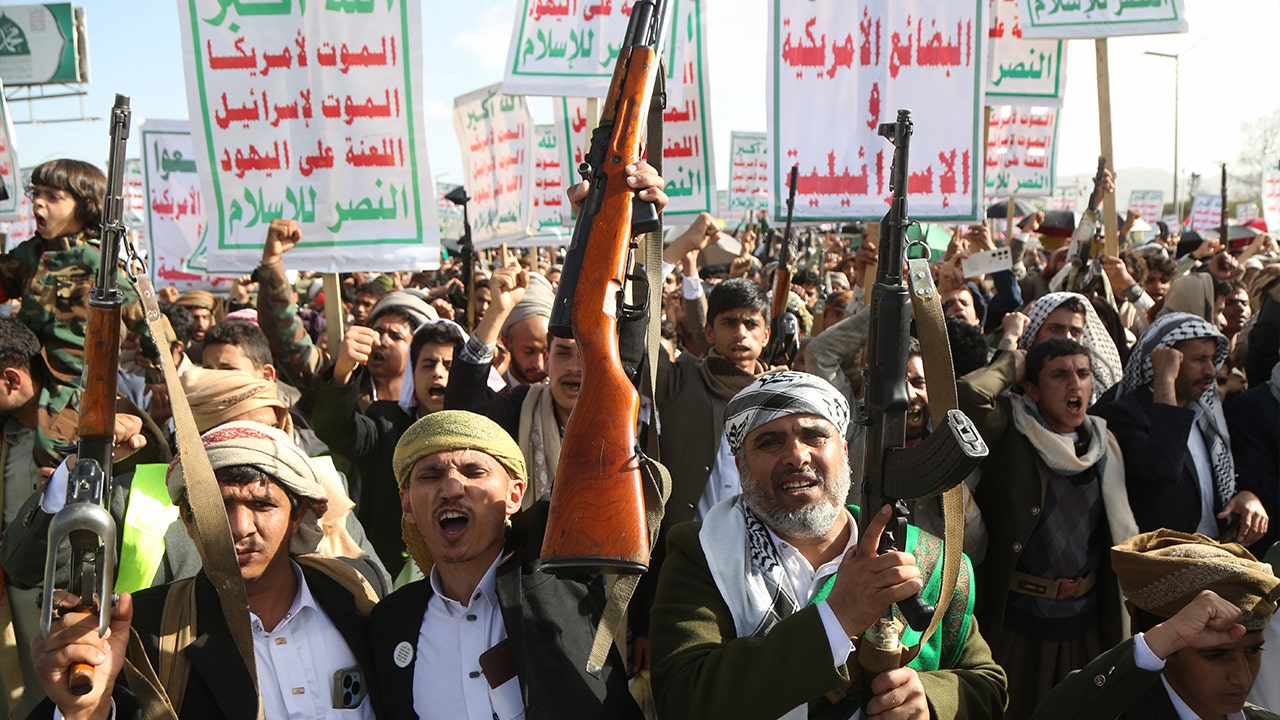
Saudi Arabia is seeking international help, including from Britain and Egypt, to defend against Houthi missile and drone attacks, which have increased significantly since October 5th, targeting airports and critical infrastructure. Saudi Arabia spent an estimated $83.2 billion on defense last year, yet its sophisticated military systems struggle with the lower-end weaponry used by the Houthis. This vulnerability could become a diplomatic issue for President Trump as he considers whether to intervene directly against Iran-backed Houthi rebels in Yemen.
Written by AI on 2026-10-21, from this article's own text only (the story summary below draws on all the coverage).

AI analysis

Story summary

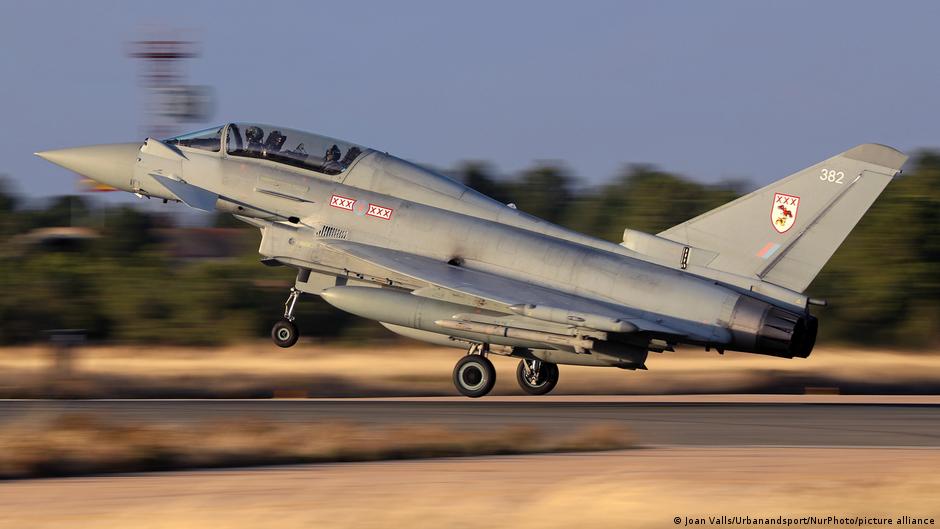
RAF Typhoon fighter jets will be deployed by the UK to defend Saudi Arabia from aerial attacks by the Houthis, an Iran-backed militant group based in Yemen. The deployment follows recent Houthi missile and drone strikes on Saudi cities, including multiple attacks on King Khalid International Airport in Riyadh since October. Wes Streeting, the UK Defence Secretary, confirmed that RAF Typhoons will conduct defensive missions over Saudi Arabia but will not launch offensive operations against Houthi targets in Yemen. The UK is also sending military advisors and an Atlas A400M transport aircraft to support equipment movement within Saudi territory. This intervention aims to protect critical infrastructure and civilian populations from further attacks, which have killed at least 18 people and injured hundreds since early October.

Written for “UK Jets To Defend Saudi Arabia From Houthis” on 2026-11-02, grounded in this article and the 8 other(s) covering the same event.

Story

📰 UK Jets To Defend Saudi Arabia From Houthis
Politics · 9 article(s) covering the same event. Compare every outlet's account →

Compared with similar articles

This article reads unscored and hedges 17% of its claims. Each row says how that neighbour differs.
Deutsche Welle
Hedges 2 of 20 claims Outlet record 95/100
Semafor
⚖️ Leans strongly right Hedges 0 of 5 claims Outlet record 59/100
“Article A reports on Egypt's pledge to support Saudi Arabia in the Houthi war, while Article B discusses multiple countries including Britain, Israel and Egypt offering various forms of assistance to Saudi Arabia.”
BBC News
Hedges 0 of 9 claims Outlet record 68/100
“While both articles discuss UK deploying Typhoon jets to defend Saudi Arabia, Article B is more of an analysis piece covering broader context including potential U.S. involvement and does not focus on the same specific moment as Article A.”
Evening Standard
Hedges 0 of 9 claims Outlet record 64/100
“While both articles discuss UK sending fighter jets to defend Saudi Arabia against Houthi attacks, they are from different dates indicating distinct reporting points.”
Fox News
⚖️ Leans right Hedges 2 of 23 claims Outlet record 69/100
“While both articles discuss threats from Houthi attacks and potential U.S. involvement in Saudi Arabia, Article A focuses on military reinforcements, while Article B specifically reports a State Department order for non-emergency personnel to leave the country.”
New York Post
⚖️ Leans strongly right Hedges 2 of 20 claims Outlet record 66/100
“The articles describe related developments but different specific events: one about military reinforcements to defend Saudi Arabia, and the other about U.S. government personnel being pulled out of Saudi Arabia due to Houthi attacks.”
Euronews
⚖️ Leans right Hedges 7 of 28 claims Outlet record 60/100
“The articles discuss different scenarios involving potential conflicts but do not describe the same specific incident occurring at the same time and place.”
Deutsche Welle
Hedges 4 of 41 claims Outlet record 95/100
“The articles describe related situations involving Saudi Arabia seeking help from allies against Houthi attacks, but occur at different times and involve distinct requests for assistance.”
Dawn
Hedges 3 of 22 claims Outlet record 72/100
“The articles describe different stages of ongoing conflict between Saudi Arabia and Houthi rebels, not the exact same incident.”
Evening Standard
Hedges 1 of 14 claims Outlet record 64/100
“While both articles mention UK sending Typhoon fighter jets to defend Saudi Arabia against Houthi attacks, Article A focuses on details of UK's military support including specific aircraft types and roles, while Article B is a broader commentary about the situation becoming a problem for U.S. President Trump.”
How this article was measured signals, leaning charts, publisher record, byline, topics and claims

Signals How these are calculated →

Claims extracted
59
sentences that state something as happening or true
Uncertain
17%
10 of 59 hedged ("reportedly", "may", "according to")
Leaning
withheld
no quote in the article backed the model's score
Publisher signals
69/100
Fox News's corrections and hedging, across everything collected from it. Not a measure of accuracy.
Outlets on this story
9
Politics
Same framing elsewhere
1
articles that frame the event the way this one does
Analyzed 2026-10-21 · how these are computed

How this is being covered How these are calculated →

Article leaning vs. publisher reliability
Source leaning vs. consistency

Publisher

Fox News · 6262 article(s) · 11 correction(s) detected
Running correction rate · 11 correction(s)

Who wrote this

Morgan Phillips
46 article(s) here · 1 carrying a prediction
🔮 The Trump administration warned Iran that there "will be consequences" if Tehran continues its malign activities amid growing concern over a potential new round of U.S.-Iran hostilities after the midterm elections.
🔮 Four U.S. cities will share almost $300 million in federal funding after competing to show how they would reduce violent crime and strengthen local law enforcement.
🔮 The opening moves of the next major war could unfold hundreds of miles above Earth.
🔮 Moscow and Kyiv remain locked in a years-long grinding war, but in one Ukrainian city, the fight has quieted — and soon the Russian-occupied aging population in Oleshky will be offered humanitarian relief and a way out.
🔮 The Pentagon is preparing U.S. military bases to keep operating for at least 90 days without outside support as it prepares for the possibility of a major war that could cripple power grids, disrupt supply chains and threaten critical infrastructure on American soil.
🔮 He is betting that keeping those sanctions in reserve will help bring Vladimir Putin to the negotiating table, a strategy drawing criticism from Republican allies amid questions about whether Moscow believes he will ever use them.
🔮 Tiffany points to 20-week abortion limit as Crowley declines to name one Tiffany pointed to Wisconsin's existing 20-week abortion limit when moderators asked whether he would sign a six-week abortion ban , a restriction he previously supported as a legislator.
🔮 "I will make sure that local, county and state law enforcement coordinate with federal law enforcement," Tiffany said in the debate hosted by WISN-TV.
🔮 Britain announced Tuesday that it would deploy Typhoon fighter jets to help defend Saudi cities and critical infrastructure, while Egypt is assisting the kingdom and Israel has offered to help.
🔮 Saudi Arabia is turning to foreign allies to fend off Houthi missiles and drones, exposing a military vulnerability that could soon become President Donald Trump's problem.
Also by Morgan Phillips
Nothing else under this byline is closely related to this article, so these are simply their most recent.
All 46 articles by Morgan Phillips →

Topics

Houthis Riyadh Saudi Saudi Arabia U.S.

Subjects

Riyadh GPE · 6× Saudi Arabia GPE · 6× U.S. GPE · 5× Houthis NORP · 4× Saudi NORP · 4× Campbell PERSON · 3× Houthi NORP · 3× Iran GPE · 3× Rubio PERSON · 3× Israel GPE · 2×

Narrative

"But I don’t think this outside support will make a significant military difference unless the U.S. is directly involved." That leaves Trump facing a potentially consequential decision: whether to continue helping Saudi Arabia defend against incoming attacks or go further and target the Houthis directly.
framing: assertive · carried by 1 article(s) · first seen 2026-10-21
🔮 Saudi Arabia is turning to foreign allies to fend off Houthi missiles and drones, exposing a military vulnerability that could soon become President Donald Trump's problem.

Claims (59 extracted, 10 hedged)

Saudi Arabia is turning to foreign allies to fend off Houthi missiles and drones, exposing a military vulnerability that could soon become President Donald Trump's problem. uncertain
that → turn → vulnerability
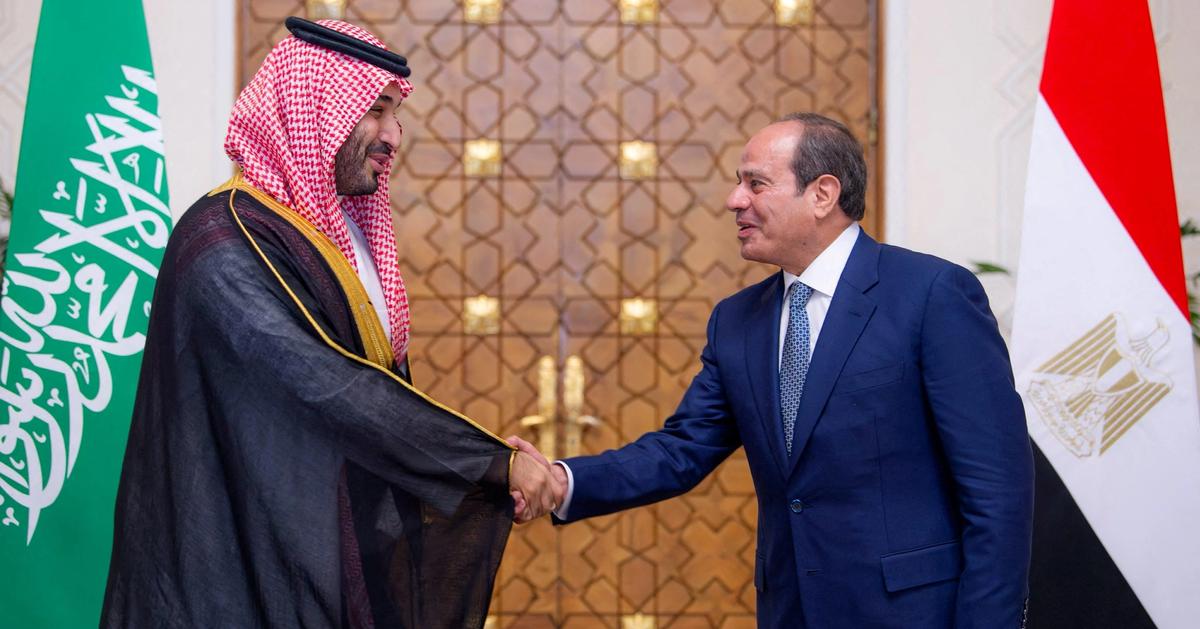
Britain announced Tuesday it would send Typhoon fighter jets to defend Saudi cities and critical infrastructure, Egypt is already assisting the kingdom and Israel has offered to step-in to help. asserted
Israel → announce → kingdom
Riyadh, meanwhile, is asking Washington for more interceptors, and Trump is weighing whether the U.S. should intervene and strike the Iran-backed Houthis directly. asserted
U.S. → ask → Houthis
The reinforcements could help shield Saudi cities and critical infrastructure. uncertain
reinforcements → help → cities
They do little, however, to eliminate the Houthi launchers and weapons threatening them from Yemen. asserted
They → do → Yemen
"The theme right now, I think, is defensive or defensive-minded," Jason Campbell, a senior fellow at the Middle East Institute, told Fox News Digital. asserted
Campbell → think → Digital
The question, he said, is whether that evolves into something "more offensive or kinetic." asserted
that → say → something
The Houthis have already demonstrated their ability to punch through Saudi defenses. asserted
Houthis → demonstrate → defenses
Their strikes and attempted strikes on the kingdom more than doubled in a single week this month, according to the Armed Conflict Location & Event Data Project, with airports in Riyadh, Jizan, Najran, Dammam and Abha targeted since Oct. 5. uncertain
airports → attempt → Oct.
The most devastating barrage struck King Khalid International Airport in Riyadh, killing at least 13 people and wounding more than 300. asserted
barrage → strike → 300
Other attacks have targeted Saudi energy infrastructure, turning the Houthi campaign into a threat not only to the kingdom's security but also to the economic stability Riyadh has spent years trying to project. asserted
Riyadh → target → years
Saudi Arabia has spent decades building one of the region's most sophisticated militaries. asserted
Arabia → spend → militaries
Riyadh spent an estimated $83.2 billion on defense last year, making it the eighth-largest military spender in the world, according to the Stockholm International Peace Research Institute. uncertain
it → spend → Institute
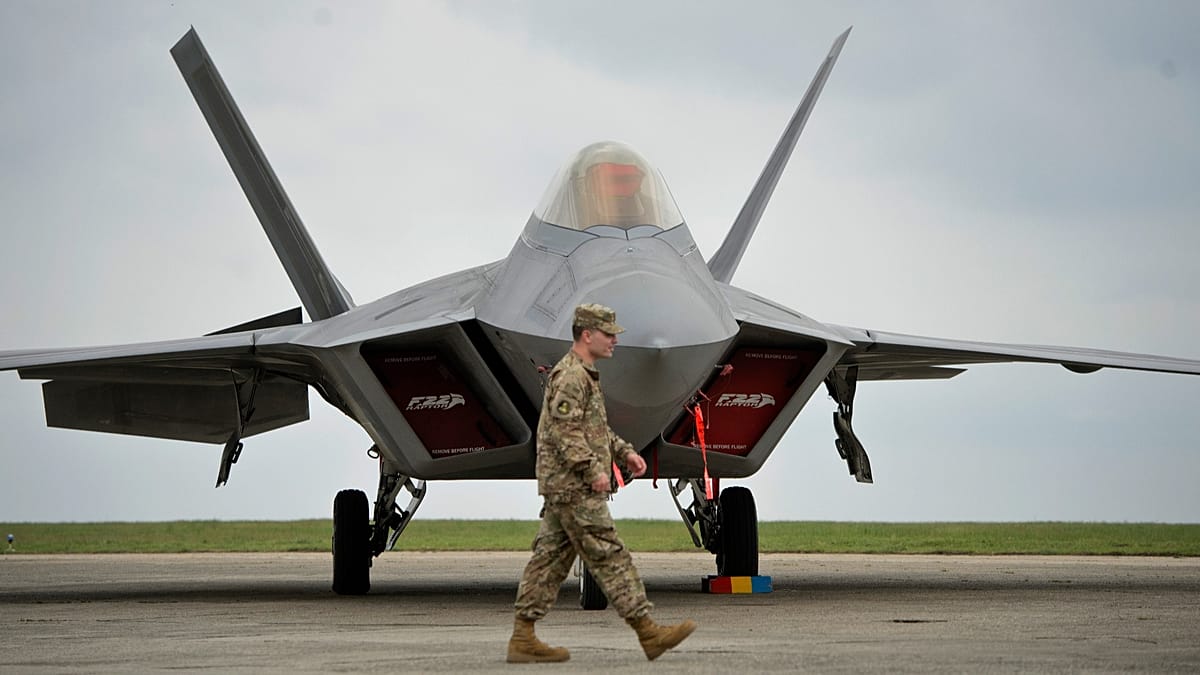
Its arsenal includes U.S.-made F-15 fighter jets, Patriot missile defenses and advanced radar systems. asserted
arsenal → include → jets
Yet the Houthis are exploiting a mismatch between the defenses Saudi Arabia and its partners spent years building and the weapons now coming at them. asserted
Arabia → exploit → them
Campbell said the U.S. and its regional partners had been comparatively well prepared to confront the higher end of Iran's arsenal, including ballistic missiles and other advanced weapons. asserted
U.S. → say → missiles
"What the region was decidedly less prepared for was an array of lower end of the spectrum ... threats posed by Iran and now the Houthis," Campbell said. asserted
Campbell → pose → Iran
Campbell said Saudi Arabia and other U.S. partners have burned through significant numbers of high-end interceptors against ballistic missiles and other threats, while lower-flying weapons can also challenge radar and early-warning systems that were not necessarily designed or calibrated to detect them. asserted
that → say → them
Secretary of State Marco Rubio said Tuesday that Riyadh is competing with allies around the world — and the U.S. military itself — for a limited supply of the interceptors needed to defend against missile attacks. asserted
Riyadh → say → attacks
"I also talked to Saudi Arabia today; they’d like interceptors. asserted
they → talk → interceptors
Israel would like interceptors. asserted
Israel → like → interceptors
We would like interceptors. asserted
We → like → interceptors
Every country in the world would like interceptors," Rubio said, calling them "probably the most in-demand product right now in the defense field. asserted
Rubio → like → field
The U.S. cannot meet every request, Rubio acknowledged. asserted
Rubio → meet → request
American forces must maintain minimum air-defense requirements at bases around the world, while the sophisticated interceptors are expensive and take time to manufacture even as production increases. asserted
production → maintain → time
"We have our own needs too," Rubio said. asserted
Rubio → have → needs
Saudi Arabia's sheer size compounds the challenge. asserted
size → compound → challenge
The kingdom stretches across more than 800,000 square miles, leaving cities, airports, oil facilities and military installations spread across a vast territory. asserted
kingdom → stretch → territory
"Saudi Arabia is a huge geography to protect, and this speaks to a larger threat we’re facing globally: a relatively small nonstate actor can pose a serious challenge to even a sophisticated and extremely expensive military," Farea Al-Muslimi, a research fellow at Chatham House, told Fox News Digital. asserted
Muslimi → protect → Digital
"The Houthis can impose enormous costs without having to spend very much themselves." asserted
Houthis → impose → much
That imbalance helps explain why Saudi Arabia is increasingly looking beyond its own military for protection. asserted
Arabia → help → protection
But outside assistance may have limits. uncertain
assistance → have → limits
"Many years later, everyone is realizing that the Houthis are not just Saudi Arabia’s problem, but everyone’s problem — whether that’s Turkey, Egypt, France, the UK or others," Al-Muslimi said. asserted
Muslimi → realize → ?
"But I don’t think this outside support will make a significant military difference unless the U.S. is directly involved." That leaves Trump facing a potentially consequential decision: whether to continue helping Saudi Arabia defend against incoming attacks or go further and target the Houthis directly. asserted
Arabia → think → Houthis
Trump has kept direct U.S. military action on the table. asserted
Trump → keep → table
Asked earlier this month whether the U.S. could join Saudi strikes against the Houthis, he said, "We may. uncertain
We → ask → Houthis
We’re gonna look at it." asserted
We → go → it
"We’ll make a decision," Trump said. asserted
Trump → make → decision
"We move very quickly." asserted
We → move → ?
But direct U.S. intervention would not be without precedent — or questions about what another bombing campaign could accomplish. uncertain
campaign → accomplish → what
…and 19 more, not listed.

💬Give feedback
🕘History 🎫Support