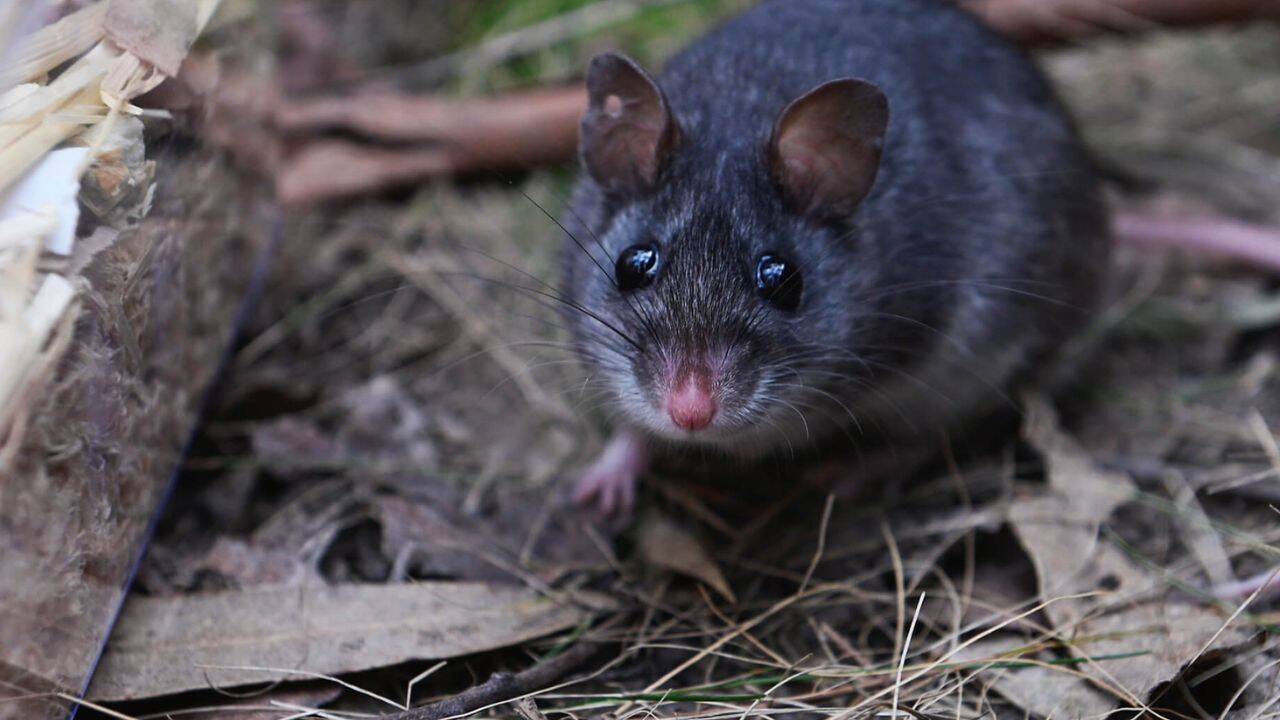
Photo via Times of India

Australia releases 50 critically endangered smoky mice into forest after decades of absence

Read the original at Times of India ↗
Cite

TOI Science Desk. (2026, October 21). Australia releases 50 critically endangered smoky mice into forest after decades of absence. Times of India. https://timesofindia.indiatimes.com/science/wildlife/australia-releases-nearly-50-critically-endangered-smoky-mice-into-a-predator-free-forest-where-the-species-had-not-been-seen-since-the-1990s/articleshow/135085964.cms

Dated from the outlet's own feed. Check the original for its byline.

Times of India · collected 2026-10-21 · by TOI Science Desk

Quick Summary

Australia recently reintroduced nearly 50 critically endangered smoky mice into the Nungatta Feral Predator-Free Area within South East Forest National Park, New South Wales, where they had not been seen since the 1990s. This initiative aims to restore the local ecosystem and return nine species of mammals that are native to but extinct in the area due to predation by feral cats and foxes. The project plans to release up to 120 smoky mice annually as part of a broader effort to revive the park's biodiversity.
Written by AI on 2026-10-21, from this article's own text only (the story summary below draws on all the coverage).

AI analysis

Story summary

Australia released nearly 50 critically endangered smoky mice into the Nungatta Feral Predator-Free Area in South East Forest National Park in New South Wales on October 21, 2026. This marks the first return of a threatened species to this area since the 1990s when smoky mice were last seen there. The NSW Government initiated this project as part of its broader effort to restore native wildlife and ecosystem by excluding feral cats and foxes from 10 predator-free areas covering nearly 65,000 hectares across national parks. Up to 120 smoky mice are planned for release each year, with the eventual goal of reintroducing up to nine species that were once native to the region.

Written for “Smoky Mice Reintroduced In Australia” on 2026-10-30, grounded in this article and the 0 other(s) covering the same event.

Story

📰 Smoky Mice Reintroduced In Australia
Environment · 1 article(s) covering the same event.

Compared with similar articles

Nothing to compare against. No article is close enough to this one for the pipeline to have linked or judged the pair.
How this article was measured signals, leaning charts, publisher record, byline, topics and claims

Signals How these are calculated →

Claims extracted
32
sentences that state something as happening or true
Uncertain
3%
1 of 32 hedged ("reportedly", "may", "according to")
Leaning
not political
takes no side on a contested political question
Publisher signals
59/100
Times of India's corrections and hedging, across everything collected from it. Not a measure of accuracy.
Outlets on this story
1
Environment
Same framing elsewhere
1
articles that frame the event the way this one does
Analyzed 2026-10-21 · how these are computed

How this is being covered How these are calculated →

Article leaning vs. publisher reliability
Source leaning vs. consistency

Publisher

Times of India · 3707 article(s) · 2 correction(s) detected
Running correction rate · 2 correction(s)

Who wrote this

TOI Science Desk
295 article(s) here · 1 carrying a prediction
🔮 She explored whether an inexpensive device could capture airborne genetic material and support the detection of bacterial pathogens.
🔮 This control may help it maintain its orientation and move along a narrow path without losing its bearings.
🔮 The university says the sculpture will subsequently go on permanent display at its Turner Museum of Glass.
🔮 By bringing together nature, wellness facilities and educational spaces, Winter Garden aimed to create a setting where visitors could exercise, learn about nutrition and gardening, and spend time outdoors.
🔮 Also discovered was a 4,500-year-old humanoid idol, which archaeologists hope will help shed light on the cultural traditions of the region.
🔮 When garlic mustard spreads across the forest floor, other plants may struggle to obtain the resources they need to survive.
🔮 The train delay that could not have happened in 1841 The mystery originated in an account published anonymously in the scientific journal Nature on October 5, 1871.
🔮 A late-night snack may do more than add extra calories to your day.
🔮 The work offers a glimpse of such a future, where living organisms could become an active part of the robotic systems.
🔮 A centuries-old archaeological puzzle at Westminster Abbey in London may finally be nearing a resolution, with new research suggesting that a skeleton discovered inside a Roman stone coffin belonged to a medieval abbot rather than the Roman-era man named on its inscription.
Wire or desk byline, not an individual reporter.
Also by TOI Science Desk
Nothing else under this byline is closely related to this article, so these are simply their most recent.
All 295 articles by TOI Science Desk →

Topics

Australia New South Wales Victoria pre-European the NSW Government

Subjects

New South Wales GPE · 4× the NSW National Parks and Wildlife Service ORG · 3× Australia GPE · 2× Victoria GPE · 2× the NSW Government ORG · 2× the NSW Government’s ORG · 2× NSW GPE · 1× pre-European NORP · 1× the National Threatened Species Institute ORG · 1× the University of Canberra ORG · 1×

Narrative

The role of predator-free areas in restoring native wildlife The Nungatta Feral Predator-Free Area was established by the NSW National Parks and Wildlife Service as part of a network of 10 areas designed to exclude feral cats and foxes.
framing: assertive · carried by 1 article(s) · first seen 2026-10-21
🔮 Once all the sites are established, almost 65,000 hectares of national park estate will be free of feral predators.

Claims (32 extracted, 1 hedged)

Australia has brought the critically endangered smoky mouse back to a forest area in New South Wales where it had not been seen since the 1990s. asserted
it → bring → 1990s
Nearly 50 individuals were released into the Nungatta Feral Predator-Free Area in South East Forest National Park. asserted
individuals → release → Park
The reintroduction marks the first return of a threatened species to the protected area, which was established to keep feral cats and foxes out. asserted
which → mark → cats
According to the NSW Government, the release took place as part of a wider effort to restore the area’s ecosystem and bring back locally extinct mammals. uncertain
release → accord → mammals
The project aims to reintroduce up to nine species that once lived in the region, helping restore the forest’s native mammal community. asserted
that → aim → community
Nearly 50 smoky mice return to South East Forest National Park asserted
mice → return → Park
The smoky mouse is the first threatened species to be reintroduced into the Nungatta Feral Predator-Free Area. asserted
mouse → reintroduce → Area
Almost 50 individuals have been released, with up to 120 planned for release each year. asserted
120 → release → release
The area lies within South East Forest National Park in New South Wales and has not recorded the species since the 1990s. asserted
area → lie → 1990s
The reintroduction is part of a broader project to restore the region’s native mammal community. asserted
reintroduction → restore → community
The long-footed potoroo, eastern bettong, eastern quoll and New Holland mouse are among the other species identified for return. asserted
potoroo → identify → return
The project aims to bring back the pre-European community of mammals and restore ecosystem health. asserted
project → aim → health
It is also intended to make the national park an important place for biodiversity restoration and future visitors. asserted
park → intend → restoration
What threatens the survival of Australia’s smoky mouse asserted
threatens → threaten → mouse
The smoky mouse is a small native rodent listed as critically endangered in New South Wales. asserted
mouse → list → Wales
It is about two to three times the size of the introduced house mouse. asserted
It → introduce → mouse
The species was first recorded in New South Wales in 1993 near Mount Poole, in Nungatta State Forest. asserted
species → record → Forest
Smoky mice survive in Kosciuszko National Park, while a small number are still recorded in the Nullica area of South East Forest National Park. asserted
number → survive → Park
The species is also present at a small number of sites in western and eastern Victoria, although it has not been seen in southern Victoria for a long time. asserted
it → see → time
Its numbers have declined significantly because of predation by feral cats and foxes, habitat loss, inappropriate fire regimes and the introduced root rot fungus Phytophthora cinnamomi. asserted
numbers → decline → cats
The role of predator-free areas in restoring native wildlife The Nungatta Feral Predator-Free Area was established by the NSW National Parks and Wildlife Service as part of a network of 10 areas designed to exclude feral cats and foxes. asserted
Area → restore → cats
Once all the sites are established, almost 65,000 hectares of national park estate will be free of feral predators. asserted
hectares → establish → predators
The network forms an essential part of the state’s threatened species strategy and its commitment to zero extinctions in NSW national parks. asserted
network → form → parks
Removing these predators is intended to support the survival of threatened native mammals. asserted
Removing → remove → mammals
The smoky mice released at Nungatta come from a captive breeding programme that began in 2016 with support from the NSW Government’s Saving our Species programme. asserted
that → release → programme
Their return marks the first stage of the wider restoration effort planned for the area. asserted
return → mark → area
More threatened mammals were planned for reintroduction into the forest asserted
mammals → plan → forest
The smoky mouse reintroduction is a collaboration between the NSW National Parks and Wildlife Service, the NSW Government’s Saving our Species programme, the National Threatened Species Institute and the University of Canberra. asserted
reintroduction → save → Canberra
David Kelly, Manager Threatened Species at the NSW National Parks and Wildlife Service, described Nungatta as the first feral cat and fox-free area in the tall forests of South East Forest National Park. asserted
Kelly → describe → Park
He said the return of the smoky mouse was the first step in a major ecosystem restoration project. asserted
return → say → project
The NSW Government also planned to reintroduce the eastern quoll, long-footed potoroo, eastern bettong and other species as part of the wider ecosystem restoration project. asserted
Government → plan → project
Kelly said these animals play critical roles in the ecosystem and expressed hope that the completed reintroductions would make the national park an even better place to visit. asserted
park → say → hope

💬Give feedback
🕘History 🎫Support