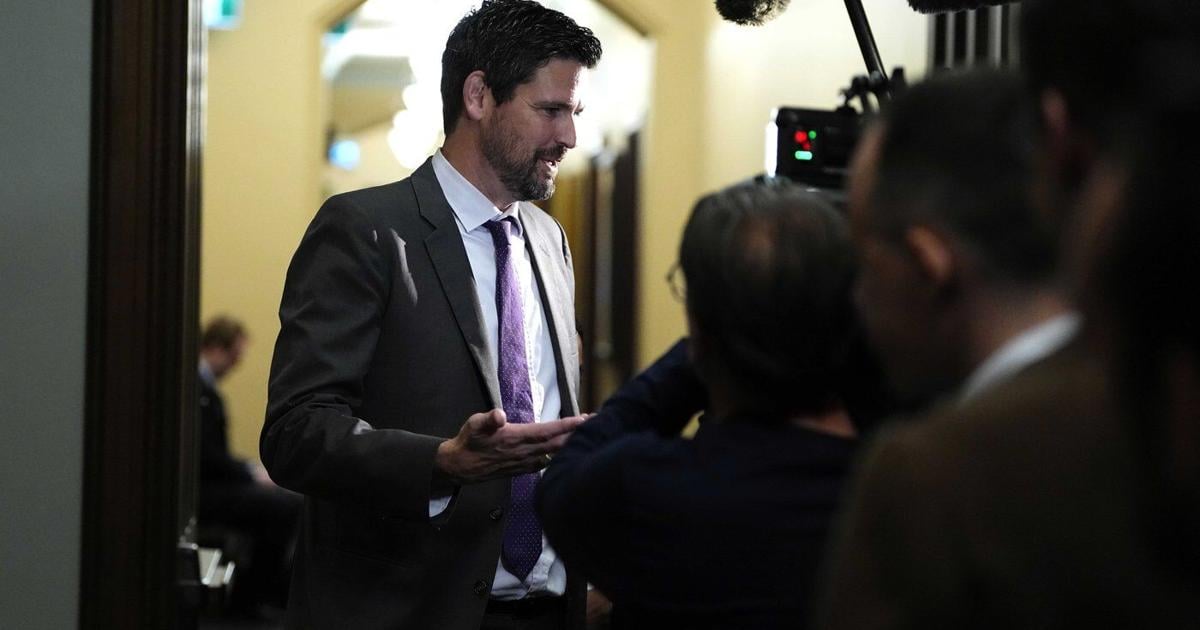
Photo via Toronto Star

Social media ban for under-16s consistent with Charter, government says

Read the original at Toronto Star ↗
Cite

Karadeglija, A. (2026, October 21). Social media ban for under-16s consistent with Charter, government says. Toronto Star. https://www.thestar.com/news/canada/social-media-ban-for-under-16s-consistent-with-charter-government-says/article_340875cc-ab2c-5c84-9c09-4f2e6dd5da89.html

Dated from the outlet's own feed. Check the original for its byline.

Toronto Star · collected 2026-10-21 · by Anja Karadeglija

Quick Summary

The Liberal government in Canada argues that its proposed Bill C-34, which would ban children under 16 from accessing social media, aligns with the Charter of Rights and Freedoms despite potential impacts on freedom of expression, equality rights, and privacy. The bill asserts that age-based restrictions already exist for activities like voting and driving, and cites evidence about the risks social media poses to young people's privacy, problematic use, and exposure to harmful content.
Written by AI on 2026-10-21, from this article's own text only (the story summary below draws on all the coverage).

AI analysis

Story summary

The Liberal government in Canada asserts that its proposed Bill C-34, which bans kids under 16 from accessing social media, is consistent with the Charter of Rights and Freedoms. The bill aims to mitigate risks associated with data collection, algorithmic content determination, and posting harmful content online. Despite potential impacts on freedom of expression, equality rights, and privacy (protected by section 2(b) and section 8 of the Charter), the government maintains that age-based restrictions are justified due to evidence of social media's negative effects on young people’s privacy, problematic use habits, and exposure to harmful content. The bill aligns with existing regulations for activities like voting and driving where age limits are already in place.

Written for “Social Media Ban For Under-16s” on 2026-10-31, grounded in this article and the 0 other(s) covering the same event.

Story

📰 Social Media Ban For Under-16s
Politics · 1 article(s) covering the same event.

Compared with similar articles

This article reads unscored and hedges 16% of its claims. Each row says how that neighbour differs.
CBS News
⚖️ Leans left Hedges 11 of 107 claims Outlet record 66/100
“The articles discuss different countries' approaches to social media regulations for under-16s, with Article A focusing on Canada's proposed legislation and Article B discussing Australia's implemented ban.”
CBS News
Hedges 0 of 2 claims Outlet record 66/100
“The articles refer to different countries' legislation: Canada in Article A and Australia in Article B.”
How this article was measured signals, leaning charts, publisher record, byline, topics and claims

Signals How these are calculated →

Claims extracted
19
sentences that state something as happening or true
Uncertain
16%
3 of 19 hedged ("reportedly", "may", "according to")
Leaning
withheld
no quote in the article backed the model's score
Publisher signals
64/100
Toronto Star's corrections and hedging, across everything collected from it. Not a measure of accuracy.
Outlets on this story
1
Politics
Same framing elsewhere
1
articles that frame the event the way this one does
Analyzed 2026-10-21 · how these are computed

How this is being covered How these are calculated →

Article leaning vs. publisher reliability
Source leaning vs. consistency

Publisher

Toronto Star · 10621 article(s) · 27 correction(s) detected
Running correction rate · 27 correction(s)
2026-10-26
Correction
2026-10-24
Correction
2026-10-07
Correction
2026-09-24
Correction

Who wrote this

Anja Karadeglija
17 article(s) here · 1 carrying a prediction
🔮 The government is indicating it’s open to supporting elements of a private member’s bill to amend the Divorce Act, though it’s not clear what the bill ultimately will look like.
🔮 Canadian news companies say they’re worried about changes to Meta’s terms of service and want the company to clarify how they will be affected.
🔮 The Liberal government says while its proposed digital safety legislation might affect freedom of expression, the bill itself is consistent with the Charter of Rights and Freedoms.
🔮 In June, the federal government said it would tell the CRTC to change course on requiring big streamers like Netflix to contribute to Canadian content, and would instead provide funding directly. But four months later, the government still isn’t saying when it will provide the new direction to the CRTC or disburse the $600 million.
🔮 Prime Minister Mark Carney will take a hands-on role in setting the agenda for Ottawa’s new AI advisory council.
🔮 OTTAWA - Prime Minister Mark Carney will “play an active role” in setting the agenda for Ottawa’s new AI advisory council.
🔮 In an online post on Sept. 24, Perreaux wrote that an editor at Türkiye Today contacted him to ask him to vouch for Robson — and he realized he couldn’t. “The key moment where my heart sank was when the Turkish journalist told me that Daniel Robson refused to do a video call,” Perreaux said in an interview.
🔮 Niki Sharma said Friday that she had not received a response because of the “rapidly evolving” situation but the changes need to “ensure a clearer pathway for human and corporate accountability for the actions of AI.” “I think if we do the right changes to the Criminal Code, it will change the behaviour of AI companies, because there will be a clear line to accountability,” she said at an unrelated news conference.
🔮 Bengio is set to address the UN Security Council today, which will also hear from major AI companies.
Also by Anja Karadeglija
Nothing else under this byline is closely related to this article, so these are simply their most recent.
All 17 articles by Anja Karadeglija →

Topics

Bill C-34 would ban Charter Liberal OTTAWA the Charter of Rights and Freedoms

Subjects

Canada GPE · 1× Dalhousie University ORG · 1× France GPE · 1× French NORP · 1× Liberal NORP · 1× Michael Karanicolas PERSON · 1× OTTAWA GPE · 1× Tamir Israel PERSON · 1× the Canadian Civil Liberties Association ORG · 1× the House of Commons ORG · 1×

Narrative

The statement said this approach reflects “the increased risks to young people that stem from the collection and use of data in feeding algorithms that determine content to be served, as well as risks that stem from the ability to post content.”
framing: assertive · carried by 1 article(s) · first seen 2026-10-21
🔮 The Liberal government says while its proposed digital safety legislation might affect freedom of expression, the bill itself is consistent with the Charter of Rights and Freedoms.
2026-10-21 · Toronto Star
Social media ban for under-16s consistent with Charter, government says · assertive framing

Claims (19 extracted, 3 hedged)

The Liberal government says while its proposed digital safety legislation might affect freedom of expression, the bill itself is consistent with the Charter of Rights and Freedoms. uncertain
bill → say → Rights
Bill C-34 would ban kids under 16 from accessing social media. asserted
C-34 → ban → media
Experts have warned it is likely to face a constitutional challenge. asserted
it → warn → challenge
The government included the analysis in a Charter statement, a document issued by the justice minister that looks at whether a bill is consistent with the Charter. asserted
bill → include → Charter
“As this measure would affect the ability of users to post and consume content, it has the potential to engage freedom of expression protected by section 2(b) of the Charter,” the statement says. asserted
statement → affect → Charter
It says the bill might also affect equality rights and section 8 of the Charter, which deals with privacy. uncertain
which → say → privacy
But it maintains the social media ban is consistent with the Charter for a number of reasons, including the fact that age-based restrictions already apply to activities like voting and driving. asserted
restrictions → maintain → voting
It also says there is considerable evidence about the risks social media use poses for young people. asserted
use → say → people
“These include risks relating to privacy, problematic use, and exposure to harmful content, and can result both from the consumption of content on social media, as well as the posting of content,” it says. asserted
it → include → content
“For example, information posted by young persons on social media may be effectively impossible to remove from the internet, may spread virally, may feed algorithms that encourage problematic use, and may make the poster a target for grooming and cyberbullying.” uncertain
poster → post → grooming
The statement adds young people will still be able to browse sites anonymously, without an account. asserted
people → add → account
The statement said this approach reflects “the increased risks to young people that stem from the collection and use of data in feeding algorithms that determine content to be served, as well as risks that stem from the ability to post content.” asserted
that → say → content
The government also noted that a planned new regulator, which will be established once the bill passes, will be able to exempt social media platforms that implement adequate safeguards. asserted
that → note → safeguards
This summer, France’s top court struck down that country’s social media ban for kids under 15, saying the ban was too broad and infringed on freedom of expression. asserted
ban → strike → expression
Tamir Israel, a director at the Canadian Civil Liberties Association, said at the time Bill C-34 shares many of the same features as the French bill. asserted
C-34 → say → bill
Dalhousie University associate law professor Michael Karanicolas said a Charter challenge to Canada’s law is almost inevitable. asserted
challenge → say → law
Bill C-34 was introduced in June and is up for second reading in the House of Commons on Wednesday. asserted
C-34 → introduce → Wednesday
If it passes second reading, it must make its way through a House of Commons committee study and through the Senate before it can become law. asserted
it → pass → Senate
This report by The Canadian Press was first published Oct. 21, 2026. asserted
report → publish → Press

💬Give feedback
🕘History 🎫Support