Many Canadians are familiar with the United Nations Declaration on the Rights of Indigenous Peoples (UNDRIP), due to media coverage of both the content of the declaration, legislation passed by Ottawa and Victoria, along with court cases declaring it positive Canadian law.
asserted
it → pass → cases
What many may not understand is that UNDRIP has been the “holy grail” of the activist Aboriginal movement in Canada, and particularly in British Columbia, for many years.
uncertain
UNDRIP → understand → years
Once only considered a non legally binding UN document, UNDRIP rose to prominence when the Truth and Reconciliation Commission called on all levels of government to “fully adopt and implement (it) as the framework for reconciliation.”
asserted
Commission → consider → reconciliation
Never mind that Canada had already baked Indigenous rights into the Constitution Act, 1982, with the additions of sections 25 and 35.
asserted
Canada → mind → sections
Those rights have been defined over subsequent years not by Canadians or Canadian governments, but by the Supreme Court of Canada.
asserted
rights → define → Canada
A primary example arose in 1997, when the court used Sec. 35 — which recognizes and affirms the “existing Aboriginal and treaty rights of the Aboriginal peoples of Canada” — to justify the legal concept of “Aboriginal title.”
asserted
which → arise → title
We have recently witnessed in the Cowichan decision involving private lands in Richmond, B.C., where Aboriginal title was found by a B.C. court to be a “superior” interest in land to fee simple land.
asserted
title → witness → land
The vehement response to the Cowichan decision by private landowners demonstrates clearly how well that judicial invention is now working out in furthering “reconciliation.”
asserted
invention → demonstrate → reconciliation
It is a far more challenging set of legal assumptions, and arguably far broader in scope and reach than even the concepts that the Supreme Court has defined to be constitutional law under Sec. 35.
asserted
Court → define → .
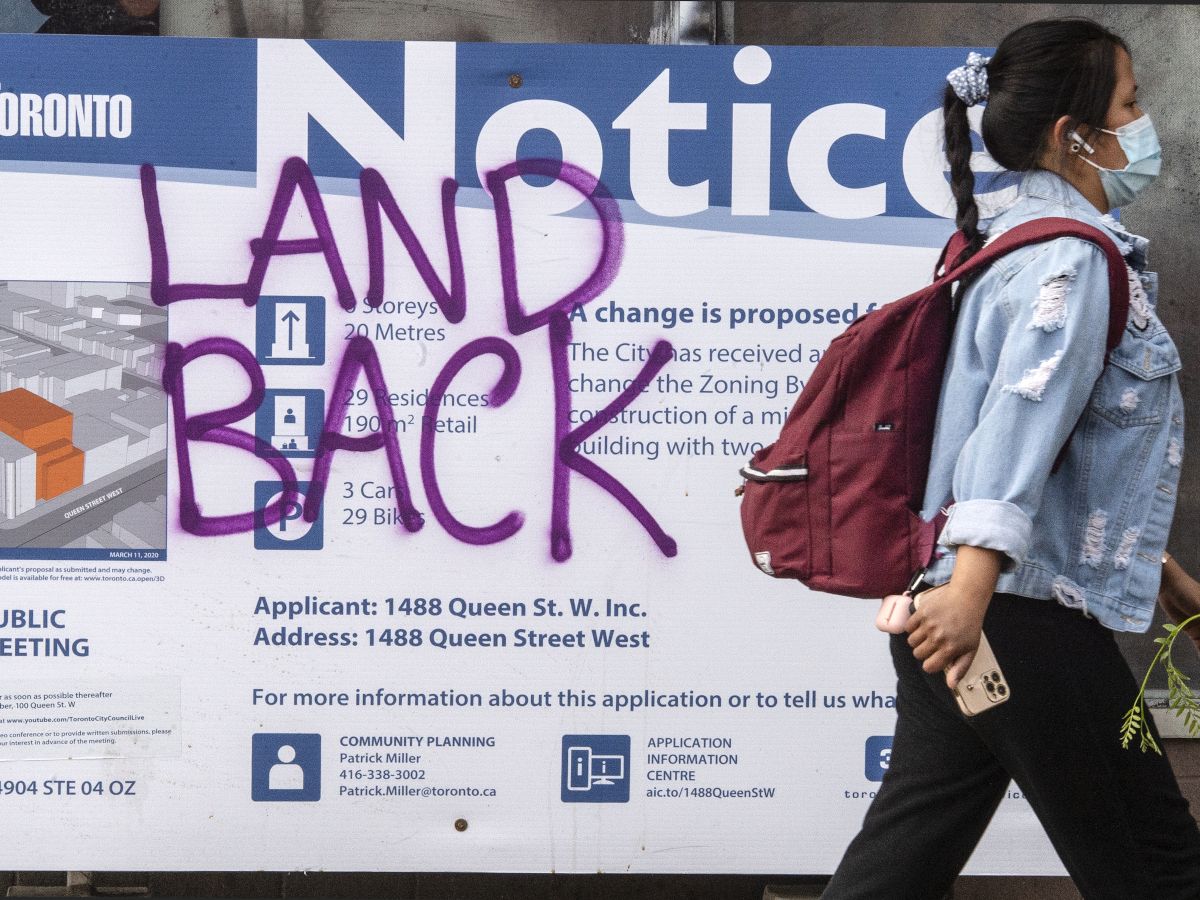
In fact, UNDRIP goes far beyond Sec. 35 in what it demands sovereign states accept as being the “rights” of Indigenous peoples, and those expansive definitions have become one of the driving forces behind the modern “land back” movement, particularly in British Columbia.
asserted
definitions → go → Columbia
It is a concept that the present B.C. government’s adoption of UNDRIP has brought to the forefront of provincial political discourse, largely due to Premier David Eby’s obvious interest in forging agreements to convert vast areas of Crown lands into Aboriginal title lands.
asserted
adoption → bring → lands
What the adoption of UNDRIP has led to in British Columbia are two highly controversial and constitutionally questionable assumptions about the rights of Indigenous peoples.
asserted
led → lead → peoples
First, following Article 26 of UNDRIP, which deals with the rights of Indigenous peoples to their traditional territories, is the supposed conclusion that any Aboriginal community that claims a territory — no matter how large or doubtful the claim — has ownership rights over those lands and all the natural resources on them.
uncertain
claim → follow → them
Second, the assumption, without any requirement for constitutional proof, that the right to self-determination in Article 4 creates the authority for Indigenous communities to govern and exercise legal jurisdiction over their claimed territories.
asserted
communities → create → territories
These two significant UNDRIP provisions have supported the work of the B.C. government in moving quickly to return lands to Aboriginal communities.
asserted
provisions → support → communities
More significantly, they have supported the government’s move to recognize unproven rights to control and govern traditional lands, notwithstanding the fact that it is the B.C. government that has the constitutional legal jurisdiction and authority over Crown lands in the province.
asserted
that → support → province
“Land back” is being promoted through two interconnected UNDRIP principles in British Columbia: the alleged Indigenous ownership of all lands and resources throughout often enormous territories; and the supposed legal authority to decide what those lands and resources can be used for, and who is to retain the revenue that they generate.
asserted
they → promote → that
Supplementing the latter is the concept of “free and informed consent” that is set out in Article 32(2) of UNDRIP, which obliges governments to obtain Indigenous buy-in before any development takes place on their claimed traditional territories.
asserted
development → supplement → territories
This promotes Aboriginal territorial control over democratic government decision-making on large swaths of Crown land and acts as an impediment to economic development.
asserted
This → promote → development
Both the B.C. Court of Appeal and the Supreme Court of Canada have determined UNDRIP to be part of the positive law of the province and of Canada.
asserted
UNDRIP → determine → Canada
It now remains to be seen whether the courts will begin to enforce UNDRIP articles — such as 4, 19, 26 and 32(2) — as definitive law, even when they are inconsistent with Canada’s constitutional law.
asserted
they → remain → law
If the courts chose to do so, the “land back” movement in British Columbia is about to gain a great deal more relevance and public attention.
asserted
movement → choose → relevance
Geoffrey Moyse is a retired senior lawyer who served as legal counsel to the B.C. government, advising six successive governments on Indigenous law over more than 30 years.
asserted
who → serve → years
 The Aporia