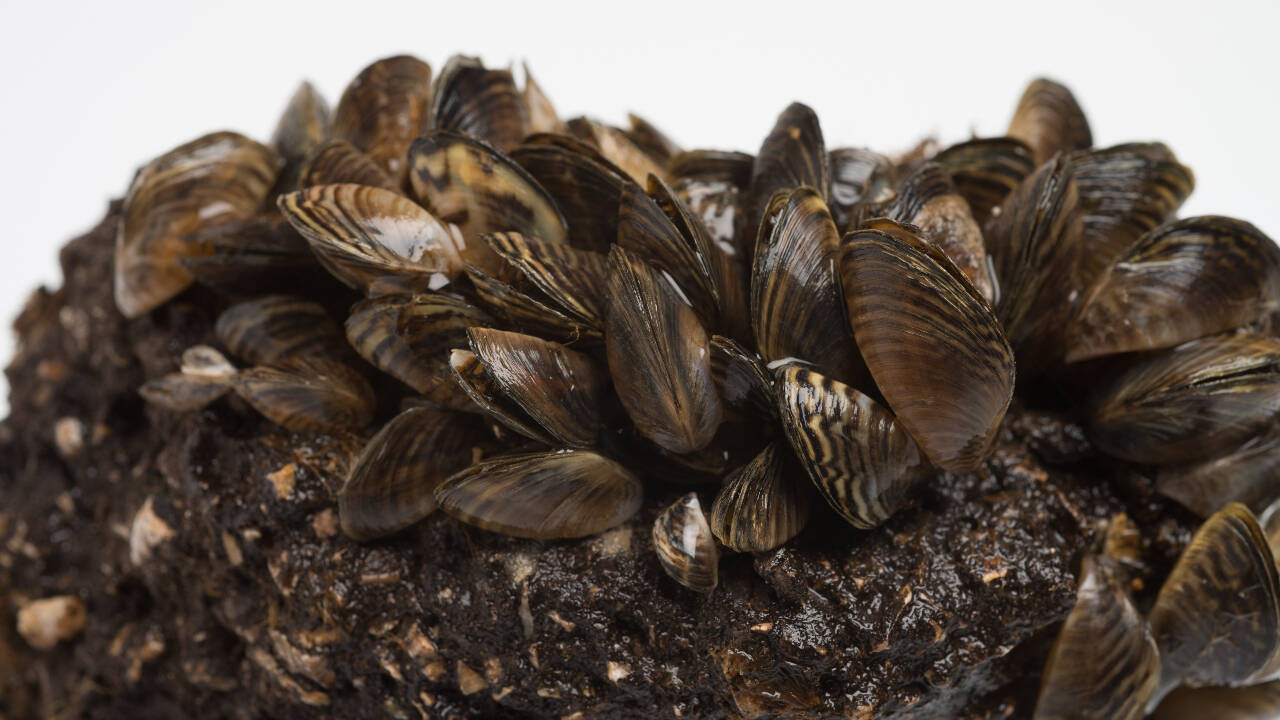
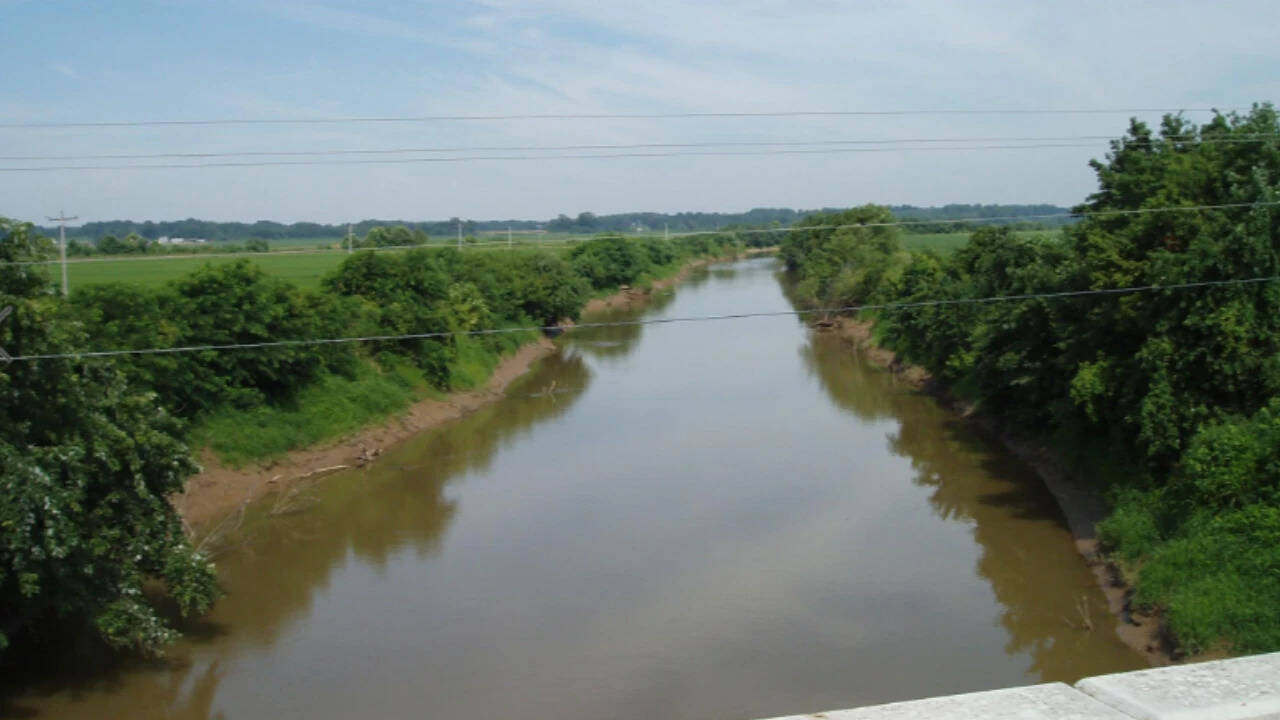
Photo via Times of India

Michigan scientists kill 80% of invasive zebra mussels in five days with CO₂ mats

Read the original at Times of India ↗
Cite

TOI Science Desk. (2026, September 15). Michigan scientists kill 80% of invasive zebra mussels in five days with CO₂ mats. Times of India. https://timesofindia.indiatimes.com/science/discovery/michigan-scientists-covered-invasive-zebra-mussels-with-weighted-lakebed-mats-and-pumped-carbon-dioxide-underneath-after-five-days-mortality-of-caged-mussels-topped-80/articleshow/134257290.cms

Dated when The Aporia collected the article, usually within hours of publication. Check the original for its exact date and byline.

Times of India · collected 2026-09-15 · by TOI Science Desk

Quick Summary

Michigan scientists have successfully reduced invasive zebra mussel populations by 80% in just five days at Loon Lake in Sleeping Bear Dunes National Lakeshore using CO₂-infused mats placed over the lakebed. The experiment, conducted by researchers from the U.S. Geological Survey, involved comparing ordinary benthic mats with those infused with carbon dioxide and found that while both methods reduced zebra mussel populations, the CO₂ mats were significantly more effective. The study highlights a promising new approach to controlling invasive species without widespread environmental harm.
Written by AI on 2026-09-15, from this article's own text only (the story summary below draws on all the coverage).

AI analysis

Story summary

Michigan scientists have developed a new method to control invasive zebra mussels in freshwater ecosystems. In a 2024 experiment at Loon Lake in Sleeping Bear Dunes National Lakeshore, researchers from the U.S. Geological Survey used benthic mats — heavy, flexible covers placed over the lake bottom — and added carbon dioxide beneath them. This approach proved highly effective, killing 80% of zebra mussels within just five days. The experiment involved dividing three areas of the lake into treatment and reference plots, each measuring 4 by 4 meters. One method used a polyethylene mat alone, while another incorporated carbon dioxide-infused water under an identical mat. This innovative technique offers a promising tool for managing invasive species without relying solely on physical barriers.

Written for “Zebra Mussel Eradication Michigan” on 2026-11-02, grounded in this article and the 0 other(s) covering the same event.

Story

📰 Zebra Mussel Eradication Michigan
Environment · 1 article(s) covering the same event.

Compared with similar articles

Nothing to compare against. No article is close enough to this one for the pipeline to have linked or judged the pair.
How this article was measured signals, leaning charts, publisher record, byline, topics and claims

Signals How these are calculated →

Claims extracted
31
sentences that state something as happening or true
Uncertain
16%
5 of 31 hedged ("reportedly", "may", "according to")
Leaning
not political
takes no side on a contested political question
Publisher signals
59/100
Times of India's corrections and hedging, across everything collected from it. Not a measure of accuracy.
Outlets on this story
1
Environment
Same framing elsewhere
1
articles that frame the event the way this one does
Analyzed 2026-09-15 · how these are computed

How this is being covered How these are calculated →

Article leaning vs. publisher reliability
Source leaning vs. consistency

Publisher

Times of India · 3913 article(s) · 3 correction(s) detected
Running correction rate · 3 correction(s)

Who wrote this

TOI Science Desk
306 article(s) here · 1 carrying a prediction
🔮 “Normally, my job is quite monotonous, so I wanted to create something that would entertain people, turning my ‘serious’ job into something fun,” he said in a Guinness World Records news release.
🔮 The subsequent collision between the two galaxy clusters may then have compressed the cloud or re-energised its particles, causing it to shine more brightly in radio wavelengths once again.
🔮 The mathematicians at the University of California, Davis, argue that the answer may already lie within Einstein’s own equations and that an invisible form of energy may not be needed at all.
🔮 The work will be carried out by the West Tennessee River Basin Authority, which is preparing a plan to restore the river and the land around it.
🔮 Cornell University scientists have developed genetically engineered tomato plants that turn red-purple when nitrogen becomes scarce, giving farmers a visible warning that crops may need fertiliser.
🔮 By studying these crystals and other mineral grains, scientists could establish the meteorite's age and identify later changes caused by water.
🔮 Centuries later, bronze objects found in Scandinavia would preserve chemical signatures consistent with the metals produced at this Spanish site, offering evidence of connections that may have crossed much of Europe.
🔮 Deposited impurities and staining may also have contributed, while low temperatures and humidity could cause the fabric to crack.
🔮 Two male king cobras meeting during the breeding season may engage in a prolonged contest, using their bodies to wrestle for control rather than relying on the venomous strikes associated with these snakes.
🔮 The project could offer a new way to build more affordable and sustainable homes across Canada.
Wire or desk byline, not an individual reporter.
Also by TOI Science Desk
Nothing else under this byline is closely related to this article, so these are simply their most recent.
All 306 articles by TOI Science Desk →

Topics

Michigan U.S.

Subjects

Michigan GPE · 2× U.S. GPE · 1×

Narrative

But it offers an intriguing new tool for managing zebra mussels: instead of relying solely on a physical barrier, scientists can transform the space beneath the mat into a short-lived, hostile environment for one of freshwater's most persistent invaders.
framing: assertive · carried by 1 article(s) · first seen 2026-09-15
🔮 A 2024 experiment at Loon Lake in Sleeping Bear Dunes National Lakeshore tested whether carbon dioxide could make benthic mats—a kind of heavy, flexible cover placed over the lake bottom—more effective at killing zebra mussels.

Claims (31 extracted, 5 hedged)

Once established, the invasive shellfish can blanket lakebeds, crowd out native species and alter the communities that depend on them. asserted
that → establish → them
Scientists in Michigan are now testing a surprisingly simple idea: cover the lakebed and turn up the carbon dioxide underneath. asserted
Scientists → test → dioxide
A 2024 experiment at Loon Lake in Sleeping Bear Dunes National Lakeshore tested whether carbon dioxide could make benthic mats—a kind of heavy, flexible cover placed over the lake bottom—more effective at killing zebra mussels. uncertain
mats → test → mussels
The results suggest that the combination can work considerably faster than mats alone. asserted
combination → suggest → mats
Testing the mats in Loon Lake asserted
Testing → test → Lake
Researchers from the U.S. Geological Survey divided three areas of Loon Lake into treatment and reference plots. asserted
Researchers → divide → plots
Each treatment area measured 4 by 4 meters, while the mats themselves were slightly larger to ensure that the lakebed was covered. asserted
lakebed → measure → meters
The scientists tested two approaches. asserted
scientists → test → approaches
One used a polyethylene mat the experimental plots before treatment began. asserted
treatment → use → mat
They then with a vinyl coating, anchored to the bottom with sandbags and weights. asserted
They → anchor → sandbags
The second used an identical mat, but with carbon dioxide-infused water pumped underneath it. asserted
second → use → it
To measure the effects, researchers placed roughly 360 zebra mussels in cages across the experimental plots before treatment began. asserted
treatment → measure → plots
They then left the mats in place for five days before removing them and assessing mussel survival and the surrounding aquatic community. asserted
They → leave → survival
Carbon dioxide and pH measurements The ordinary mat did have an effect, but adding carbon dioxide produced a much stronger result. asserted
adding → have → result
Under the carbon dioxide mats, concentrations reached levels close to 200 milligrams per liter, with pH measurements indicating sustained exposure during the treatment period. asserted
measurements → reach → period
After five days, more than 80 percent of the caged zebra mussels in the carbon dioxide plots had died. asserted
percent → cage → plots
Researchers also found very few zebra mussels in the carbon dioxide and ordinary mat plots after treatment, with the lowest survival occurring where carbon dioxide had been introduced. asserted
dioxide → find → treatment
The approach is based partly on earlier laboratory research suggesting that carbon dioxide can be more harmful to zebra mussels than to some native freshwater mussels. asserted
dioxide → base → mussels
That selectivity matters. asserted
selectivity → matter → ?
Eliminating an invasive species is of limited value if the treatment causes comparable damage to native wildlife. asserted
treatment → eliminate → wildlife
Previous experiments found that certain native unionid mussels could survive carbon dioxide exposures that were lethal to zebra mussels, although prolonged exposure could affect growth and tissue condition. uncertain
exposure → find → growth
The Michigan study therefore explored carbon dioxide as a potential selective toxin, using the mat to keep the treatment concentrated near the lakebed rather than dispersing it throughout the surrounding water. asserted
study → explore → water
Native life still needs watching The results were encouraging, but the treatment was not without ecological effects. asserted
treatment → watch → effects
Researchers recorded lower total numbers of benthic macroinvertebrates—the small, tying up equipment and treatment areas for longer periods. asserted
Researchers → record → periods
If carbon dioxide can achieve high zebra mussel mortality in just a few days, the same equipment could potentially be moved animals living on or near the lakebed—in both types of mat plots compared with reference areas. uncertain
equipment → achieve → areas
Interestingly, however, overall diversity remained comparable among the treatments. asserted
diversity → remain → treatments
That finding points to an important question for future work: whether carbon dioxide treatment can be refined enough to kill zebra mussels while minimizing disruption to other organisms living in the same habitat. asserted
treatment → point → habitat
Conventional benthic mats can require extended deployment, tying up equipment and treatment areas for longer periods. asserted
mats → require → periods
If carbon dioxide can achieve high zebra mussel mortality in just a few days, the same equipment could potentially be moved and redeployed multiple times. uncertain
equipment → achieve → days
The researchers say improvements to the carbon dioxide delivery system could also expand the area that can be treated at once. uncertain
that → say → area
But it offers an intriguing new tool for managing zebra mussels: instead of relying solely on a physical barrier, scientists can transform the space beneath the mat into a short-lived, hostile environment for one of freshwater's most persistent invaders. asserted
scientists → offer → invaders

💬Give feedback
🕘History 🎫Support