Photo via Euronews

Refusing to cross, unable to escape: Seafarers recount Hormuz dangers to Euronews

Read the original at Euronews ↗
Cite

Refusing to cross, unable to escape: Seafarers recount Hormuz dangers to Euronews. (2026, October 22). Euronews. https://www.euronews.com/2026/10/22/refusing-to-cross-unable-to-escape-seafarers-recount-hormuz-dangers-to-euronews

Dated from the outlet's own feed. Check the original for its byline.

Euronews · collected 2026-10-22

Quick Summary

Euronews reports on the risks faced by seafarers navigating the Strait of Hormuz, a crucial waterway for global energy trade. The article features interviews with a crew member from a cargo vessel anchored off Pakistan due to safety concerns and an Iranian maritime manager. Since conflict began, traffic through the strait has dropped by 90%, and at least 95 seafarers have died in commercial roles. Crew members are refusing to navigate through the dangerous waters, leading some companies to offer significant financial incentives to captains who agree to cross, while ordinary crew wages have risen considerably as well.
Written by AI on 2026-10-22, from this article's own text only (the story summary below draws on all the coverage).

AI analysis

Story summary

Based on the articles provided, here's a summary of key points regarding the situation in and around the Strait of Hormuz:

These points highlight the complex interplay of military actions, economic interests, environmental concerns, and humanitarian issues surrounding the Strait of Hormuz during this period.

Written for “Strait Of Hormuz Crisis” on 2026-11-02, grounded in this article and the 7 other(s) covering the same event.

Story

📰 Strait Of Hormuz Crisis
World · 8 article(s) covering the same event. Compare every outlet's account →

Compared with similar articles

This article reads unscored and hedges 7% of its claims. Each row says how that neighbour differs.
Times of India
Hedges 0 of 13 claims Outlet record 59/100
“Article A describes an incident where two oil tankers are on fire after hitting mines, while Article B discusses the broader dangers and challenges faced by seafarers attempting to navigate the Strait of Hormuz, including a stranded LNG carrier. They describe different aspects and incidents.”
The Straits Times
⚖️ Leans right Hedges 0 of 13 claims Outlet record 66/100
“Article A describes Iranian Revolutionary Guards claiming to have halted three tankers due to mines on October 20, while Article B discusses seafarers recounting dangers in the Strait of Hormuz with a specific example of a cargo vessel anchored off Pakistan for weeks.”
Times of India
Hedges 3 of 19 claims Outlet record 59/100
“Article A discusses dangers faced by seafarers and a cargo vessel in the Strait of Hormuz, while Article B reports on Iran's statement regarding US military ships entering the Persian Gulf. These are different but related events.”
Times of India
Hedges 6 of 23 claims Outlet record 59/100
“The articles discuss different aspects of the situation in the Strait of Hormuz: one focuses on seafarer experiences and dangers, while the other reports on Iran's denial of a deal offer related to reopening the strait.”
The Hindu
Hedges 0 of 8 claims Outlet record 77/100
“Article A describes a specific oil tanker hitting a mine and catching fire, while Article B discusses general dangers faced by seafarers trying to navigate through the Strait of Hormuz.”
New York Post
Hedges 6 of 38 claims Outlet record 66/100
Al Jazeera
Hedges 1 of 13 claims Outlet record 60/100
“Article A discusses a diplomatic meeting between Qatar and France regarding Hormuz navigation, while Article B reports on seafarers' experiences of danger in the Strait of Hormuz.”
Al Jazeera
Hedges 10 of 36 claims Outlet record 60/100
“While both articles discuss incidents related to the Strait of Hormuz, they describe different aspects: Article A focuses on reported attacks on ships, while Article B features a detailed account from seafarers about the dangers and specific vessel situations.”
Fox News
Hedges 6 of 36 claims Outlet record 69/100
New York Post
Hedges 5 of 24 claims Outlet record 66/100
“The articles discuss related maritime dangers in the Strait of Hormuz but describe different aspects: one focuses on a record high in ship attacks, while the other reports on crew experiences and vessel safety concerns.”
How this article was measured signals, leaning charts, publisher record, byline, topics and claims

Signals How these are calculated →

Claims extracted
28
sentences that state something as happening or true
Uncertain
7%
2 of 28 hedged ("reportedly", "may", "according to")
Leaning
not political
takes no side on a contested political question
Publisher signals
60/100
Euronews's corrections and hedging, across everything collected from it. Not a measure of accuracy.
Outlets on this story
8
World
Same framing elsewhere
1
articles that frame the event the way this one does
Analyzed 2026-10-22 · how these are computed

How this is being covered How these are calculated →

Article leaning vs. publisher reliability
Source leaning vs. consistency

Publisher

Euronews · 1141 article(s) · 1 correction(s) detected
Running correction rate · 1 correction(s)

Who wrote this

No reporter is named on this article.

Topics

Euronews Iran Iranian Pakistan The Al Ruwais

Subjects

Iranian NORP · 6× Pakistan GPE · 5× Euronews ORG · 4× Hamed PERSON · 3× Iran GPE · 2× Oman GPE · 2× UAE GPE · 2× Bahamian NORP · 1× Kpler ORG · 1× The IRGC Navy ORG · 1×

Narrative

Fearing for its safety, its 34-member crew does not want to test the waters and attempt to cross the Strait of Hormuz, despite demands from the ship's owners. "What strikes me as strange is that this company is willing to risk the ship just to pass through the Strait of Hormuz," an electrician aboard the UAE-owned vessel told Euronews. "If it were up to the company, we'd go through, but for that to happen, the entire crew would have to agree.
framing: assertive · carried by 1 article(s) · first seen 2026-10-22
🔮 Fearing for its safety, its 34-member crew does not want to test the waters and attempt to cross the Strait of Hormuz, despite demands from the ship's owners. "What strikes me as strange is that this company is willing to risk the ship just to pass through the Strait of Hormuz," an electrician aboard the UAE-owned vessel told Euronews. "If it were up to the company, we'd go through, but for that to happen, the entire crew would have to agree.

Claims (28 extracted, 2 hedged)

Euronews spoke to a crew member of a cargo vessel anchored off Pakistan for weeks and an Iranian maritime manager about dangers in the vital waterway — where traffic has fallen 90% since the war began and at least 95 seafarers in commercial roles have died. asserted
seafarers → speak → roles
The Al Ruwais, a 314-metre liquefied natural gas carrier flying a Bahamian flag, has been sitting adrift off the coast of Pakistan for weeks. asserted
Ruwais → liquefy → weeks
Fearing for its safety, its 34-member crew does not want to test the waters and attempt to cross the Strait of Hormuz, despite demands from the ship's owners. "What strikes me as strange is that this company is willing to risk the ship just to pass through the Strait of Hormuz," an electrician aboard the UAE-owned vessel told Euronews. "If it were up to the company, we'd go through, but for that to happen, the entire crew would have to agree. asserted
crew → fear → company
And they don't. asserted
they → do → ?
I am waiting to leave by boat for Pakistan, where I will board another vessel. asserted
I → wait → vessel
Under maritime regulations, the right to refuse transit into a designated warlike area is individual, meaning that one sailor objecting is enough to stop a vessel from moving into a danger zone. asserted
sailor → refuse → zone
On ships whose crews do agree to cross, companies have offered captains up to $100,000 (€89,000) per month plus $50,000 (€44,500) risk bonuses, while ordinary crew wages have risen four to six times. asserted
wages → agree → bonuses
"On other ships, they give as much as $10,000 (€8,900), but not everyone gets the same amount, and it depends a lot on the position and base salary," the sailor aboard Al Ruwais told Euronews. asserted
sailor → give → Euronews
"It's only fair that everyone gets the same amount, otherwise, it would mean that the captain's life is worth more than that of the deckhand. asserted
life → get → deckhand
" No passage is safe, sailors say A vital waterway for the world's energy trade, the Straight of Hormuz has been under two concurrent naval blockades since the outbreak of the Iran war following US-Israeli strikes in late February. asserted
waterway → say → February
The southern corridor near Oman is patrolled by US forces, while the northern route passes through Iranian-controlled waters. asserted
route → patrol → waters
The IRGC Navy has stated that vessels transiting routes it considers unauthorised face what it described as "punitive action". asserted
it → state → action
Traffic through the strait has collapsed as a result. asserted
Traffic → collapse → result
More than 125 vessels passed daily before the war. asserted
vessels → pass → war
That figure has fallen to fewer than 10 to 12, a drop of more than 90%, according to ship-tracking firm Kpler. uncertain
figure → fall → Kpler
Drone attacks, sea mines and strikes from unknown projectiles have driven the decline, with UK Maritime Trade Operations recording multiple incidents involving fires, sinkings and power failures aboard tankers and LNG carriers. asserted
Operations → drive → tankers
Ships that do attempt the crossing have taken to turning off satellite AIS transponders, extinguishing running lights at night and shutting down radio equipment to avoid detection. asserted
that → attempt → detection
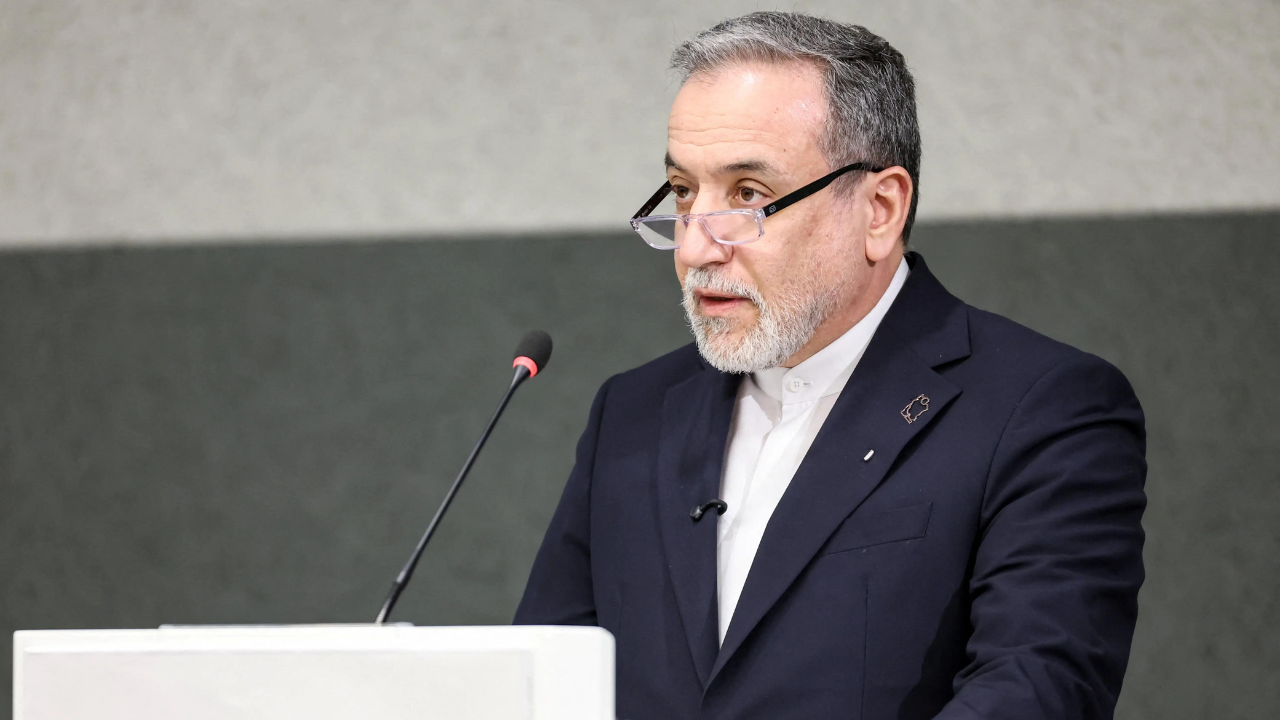
Hamed, a 50-year-old former captain who now runs a maritime management company in Iran, told Euronews that since March of last year the war has resulted in the deaths of some 95 seafarers in commercial, fishing, passenger, tugboat and offshore platform support roles. asserted
war → run → roles
Military vessels have suffered heavy damage and ships undergoing repairs in Bandar Abbas have been struck, he said, although precise casualty figures have not been officially released. asserted
figures → suffer → Abbas
"Nearly 60% of our ships are sanctioned and forbidden from calling at foreign ports such as India, Pakistan, the UAE, Oman, Kuwait, and Iraq," Hamed said. asserted
Hamed → sanction → India
"Even Pakistan's maritime borders, where Iranian vessels used to travel, have now been closed to us." asserted
vessels → use → us
Around 40% of southern Iranian seafarers have refused sea assignments, he said, with many shifting to the Caspian Sea to handle increased grain imports from the north. asserted
many → refuse → north
Wages in the south have been raised by 30 to 100%. asserted
Wages → raise → %
Sailors now earn between 50 and 80 million tomans (€165 to €265) per month, and captains between $1,200 and $4,000 (€1,100 to €3,700). asserted
Sailors → earn → 1,200
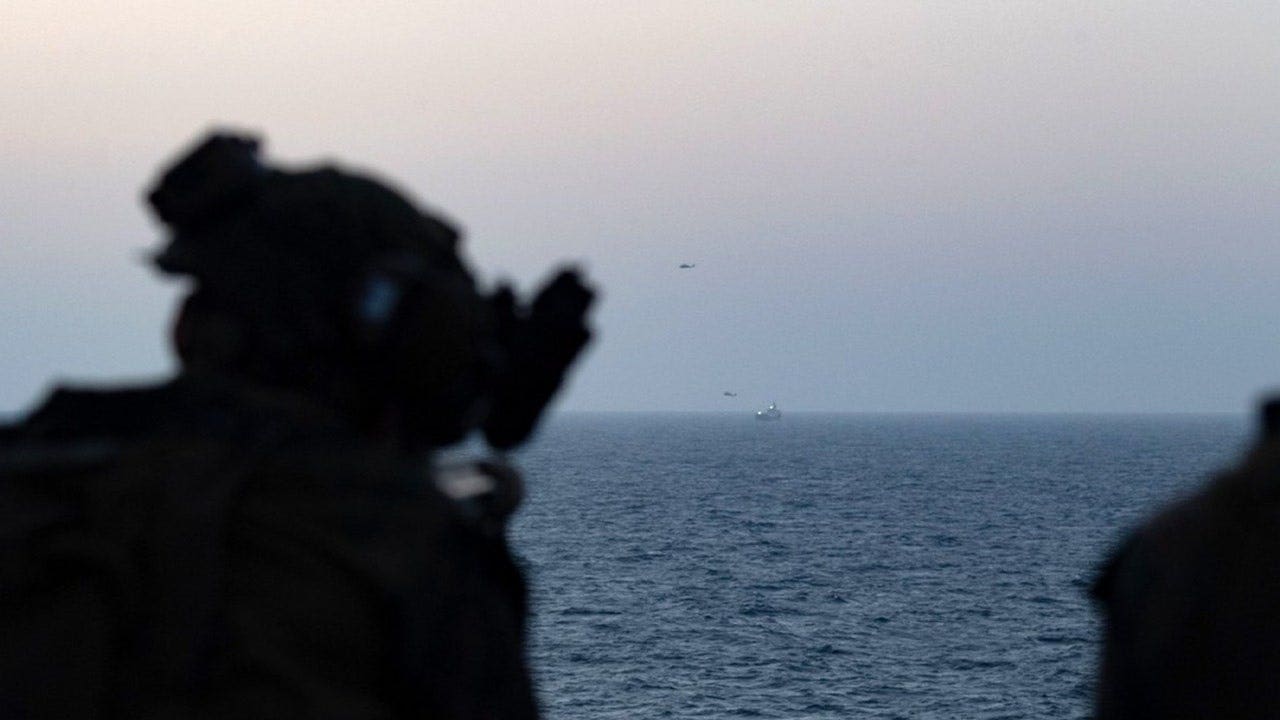
US forces have boarded Iranian commercial vessels roughly 15 times since the war began, Hamed said, arriving by helicopter and speedboat to inspect cargo for explosives, with no guarantees of their safety. “The US has provided no safe-passage guarantees for Iranian commercial ships," Hamed said. asserted
Hamed → board → ships
"Every week we witness aerial or naval drone attacks on Iranian vessels." asserted
we → witness → vessels
He estimated that roughly 35,000 Iranian seafarers across approximately 2,000 vessels continue operating in southern waters to deliver wheat, corn and medicine to ordinary Iranians. asserted
seafarers → estimate → Iranians
If the situation deteriorates further, he warned, authorities could be forced to declare a complete shutdown and evacuate coastal facilities. uncertain
authorities → deteriorate → facilities

💬Give feedback
🕘History 🎫Support