Photo via Daily Mail

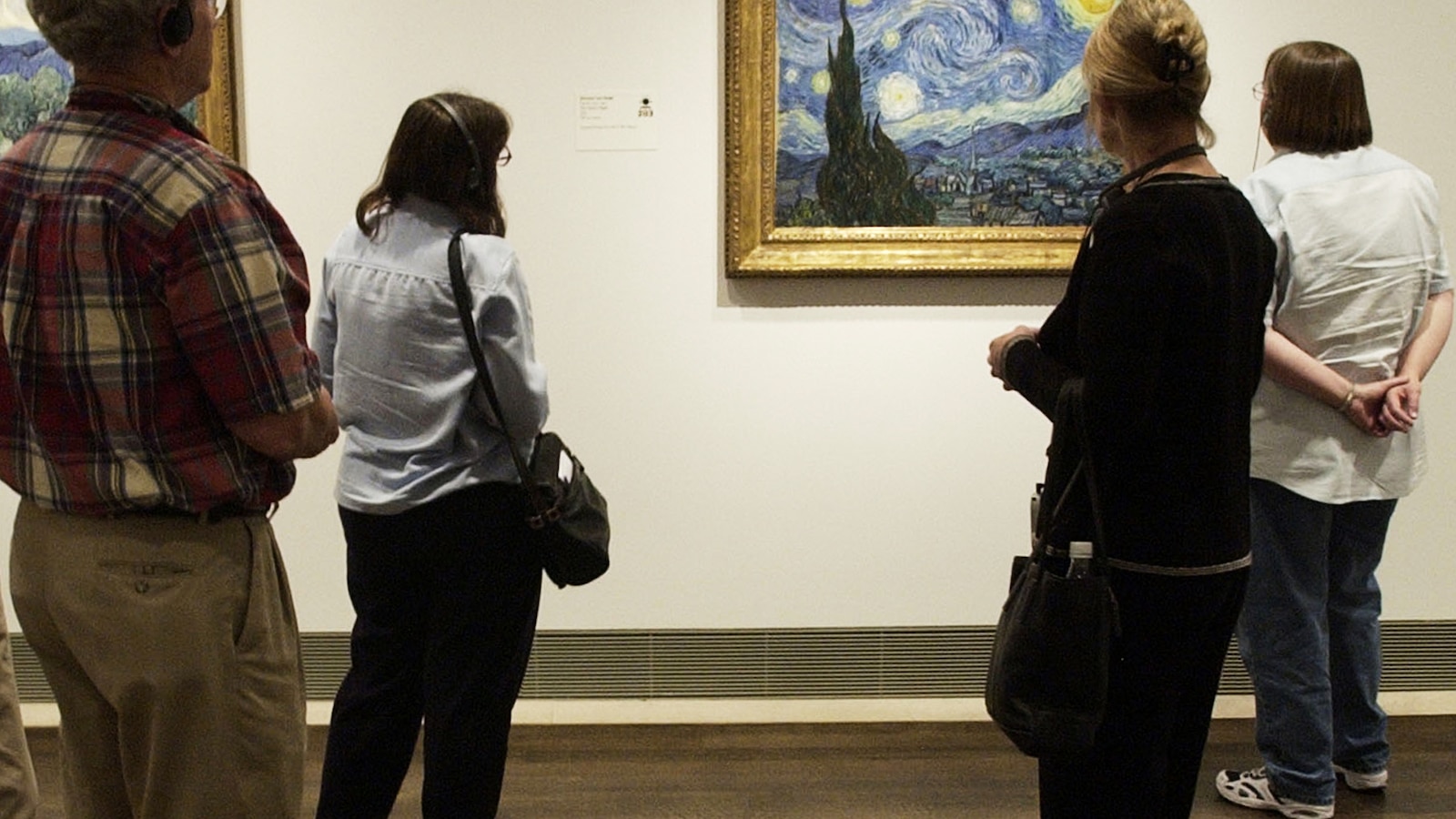
Scientists pinpoint the exact sky that inspired Van Gogh's The Starry Night

Read the original at Daily Mail ↗
Cite

Hunter, W. (2026, October 22). Scientists pinpoint the exact sky that inspired Van Gogh's The Starry Night. Daily Mail. https://www.dailymail.com/sciencetech/article-16229661/Van-Goghs-Starry-Night-Sky.html?ns_mchannel=rss&ns_campaign=1490&ito=1490

Dated from the outlet's own feed. Check the original for its byline.

Daily Mail · collected 2026-10-22 · by Wiliam Hunter

Quick Summary

Scientists from Korea have determined that Vincent van Gogh’s painting "The Starry Night" depicts the exact sky visible just before dawn on July 22, 1889, in Saint-Remy-de-Provence, France. They identified a specific configuration of celestial objects including a waning crescent moon, Venus, and the Hyades star cluster in Taurus that matches Van Gogh’s depiction. This finding resolves long-standing debate over whether "The Starry Night" was based on real observations or purely from imagination.
Written by AI on 2026-10-22, from this article's own text only (the story summary below draws on all the coverage).

AI analysis

Story summary

South Korean researchers have determined the exact date Vincent van Gogh painted his famous work "The Starry Night," pinpointing it to a clear predawn sky on July 22, 1889, in Saint-Remy-de-Provence, France. The study, published in Scientific Reports, used astronomical analysis and historical weather data to confirm that the painting's celestial elements match those visible from Van Gogh’s window at his asylum. Prior scholarship had dated the piece to June 1889 based on a letter Van Gogh wrote to his brother describing work on "a new study of a starry sky," though he was incapacitated by mental health issues in July, making it impossible for him to paint from observation until August. The researchers' findings suggest that Van Gogh saw and painted the exact celestial scene depicted in his masterpiece just before dawn on July 22, aligning with his recovery period later that month.

Written for “Van Gogh'S Starry Night Sky Identified” on 2026-11-04, grounded in this article and the 2 other(s) covering the same event.

Story

📰 Van Gogh'S Starry Night Sky Identified
Entertainment · 3 article(s) covering the same event. Compare every outlet's account →

Compared with similar articles

This article reads unscored and hedges 18% of its claims. Each row says how that neighbour differs.
ABC News (US)
Hedges 5 of 30 claims Outlet record 67/100
New York Post
Hedges 4 of 22 claims Outlet record 66/100
How this article was measured signals, leaning charts, publisher record, byline, topics and claims

Signals How these are calculated →

Claims extracted
28
sentences that state something as happening or true
Uncertain
18%
5 of 28 hedged ("reportedly", "may", "according to")
Leaning
not political
takes no side on a contested political question
Publisher signals
69/100
Daily Mail's corrections and hedging, across everything collected from it. Not a measure of accuracy.
Outlets on this story
3
Entertainment
Same framing elsewhere
1
articles that frame the event the way this one does
Analyzed 2026-10-22 · how these are computed

How this is being covered How these are calculated →

Article leaning vs. publisher reliability
Source leaning vs. consistency

Publisher

Daily Mail · 9239 article(s) · 22 correction(s) detected
Running correction rate · 22 correction(s)

Who wrote this

Wiliam Hunter
11 article(s) here · 1 carrying a prediction
🔮 Although coca leaves played an important role in Incan religious beliefs as offerings to the gods, they may have also had a more practical role.
🔮 Scientists have made a discovery that could overturn a decades-old theory on how life got started on Earth.
🔮 And with the iPhone Duo out of stock until January 2027, disappointed customers might be waiting a long time for a replacement. It's only been days since Apple's £2,000 foldable iPhone Duo went on sale, but some customers are already reporting cracking and dead spots on their new phones
🔮 But while you might have enjoyed the extra hour in bed, many countries around the world have already abandoned the annual time shift.
🔮 ' Here, we explain what the vulnerability is and how it could affect you.
🔮 And that scene exactly matched what would have taken place on that summer night, according to the team from Korea, which published its discovery in Scientific Reports.
🔮 An 'unprecedented' El Niño will trigger severe storms and power cuts that could leave millions offline this winter, experts have warned.
🔮 The Sphinx is one of ancient Egypt's most enigmatic monuments, and now scientists have found that it could be hiding a very unusual secret.
🔮 Scientists uncovered a collection of fossilised puke in what would have been the shallow waters of river deltas, 31 miles (50km) off the Norwegian coast.
Also by Wiliam Hunter
Nothing else under this byline is closely related to this article, so these are simply their most recent.
All 11 articles by Wiliam Hunter →

Topics

Dutch France Korea Saint-Remy-de-Provence Scientific Reports

Subjects

Van Gogh's PERSON · 5× France GPE · 3× Van Gogh PERSON · 3× Dutch NORP · 1× Korea GPE · 1× Korean NORP · 1× Saint-Remy-de-Provence GPE · 1× Scientific Reports ORG · 1× Vincent Van Gogh PERSON · 1× Vincent Van Gogh's PERSON · 1×

Narrative

Researchers found that The Starry Night matches the exact night sky that Van Gogh would have seen from his room in the early hours of July 22, 1889 Statistical analysis then confirmed the correspondence between the five central stars of The Starry Night and the Hyades, with an even closer match in the pen drawing Van Gogh made after the painting. Checking the historical weather records, the researchers found that the sky that night would have been clear enough for Van Gogh to see such an astronomical arrangement.
framing: assertive · carried by 1 article(s) · first seen 2026-10-22
🔮 And that scene exactly matched what would have taken place on that summer night, according to the team from Korea, which published its discovery in Scientific Reports.

Claims (28 extracted, 5 hedged)

Its swirls have long left art experts suffering for their sanity, as they try to work out whether The Starry Night was indeed real. asserted
Night → leave → sanity
But now we understand, it seems, exactly which evening Vincent Van Gogh painted in his iconic work. asserted
Gogh → understand → work
For, according to calculations by researchers, the piece depicts the sky as it was just before dawn on July 22, 1889. uncertain
it → accord → July
It is believed to show the view from the Dutch artist's window in Saint-Remy-de-Provence, France. asserted
It → believe → Provence
The artwork had left critics bitterly divided over whether the scene was merely a figment of his imagination. Yet it seems all that was needed to crack the decades-old mystery was a spot of star gazing. asserted
that → leave → gazing
The researchers found that in the piece, the waning crescent moon, the planet Venus, and the Hyades star cluster in the constellation Taurus were shown as close together. asserted
moon → find → Taurus
And that scene exactly matched what would have taken place on that summer night, according to the team from Korea, which published its discovery in Scientific Reports. uncertain
which → match → Reports
A team of Korean researchers have finally settled the debate by pinpointing the precise night sky that inspired Vincent Van Gogh's The Starry Night through the constellation he painted The Starry Night is the most celebrated painting from Van Gogh's stay at the Saint-Paul-de-Mausole mental asylum, inspiring Don McLean's hit song Vincent. The artist found himself there after a serious mental breakdown that May, which famously involved cutting off part of his left ear. uncertain
which → settle → ear
As such, these unusual circumstances have led the painting to be the centre of fervent speculation over its possible hidden meanings or symbolic content. asserted
circumstances → lead → meanings
But the biggest puzzles have been what the painting really shows and when it was painted. asserted
it → show → what
Traditionally, the painting has been dated by a letter Van Gogh wrote to his brother, Theo, around June 18, 1889. asserted
Gogh → date → June
But if The Starry Night does resemble the sky as Van Gogh really saw it, then this could not be the case. uncertain
this → resemble → it
That is because in early June, the Moon would have been waning gibbous - when only half of it is visible - which doesn't at all match the slim crescent depicted. asserted
which → wan → crescent
Art historians have also identified the bright cluster of stars in the painting as Aries, but astronomers say this doesn't make sense. asserted
this → identify → sense
Scientists started by looking at the night sky in Van Gogh's paintings, which have been accurately dated, including Café Terrace at Night (pictured) Scientists discovered that the paintings did, in fact, accurately depict the night sky, with Café Terrace at Night showing a constellation called the summer triangle and Starry Night over the Rhône capturing the Big Dipper. asserted
Terrace → start → Dipper
Lead author Elijah Jeong–hyun Kim, PhD candidate at Kyung Hee University and CEO of SLLAB, says: 'To an observational astronomer, the cluster of stars in The Starry Night is the Hyades in Taurus.' asserted
cluster → say → Taurus
First, the researchers looked at two of Van Gogh's night sky paintings that are dated very accurately thanks to an abundance of historical sources – Café Terrace at Night and Starry Night over the Rhône. asserted
that → look → Rhône
Using an astronomical model, the researchers were able to reconstruct the night sky as it would have been on the day those paintings were made, and compared it to Van Gogh's field of view. asserted
paintings → use → view
They discovered that the paintings did, in fact, accurately depict the night sky, with Café Terrace at Night showing a constellation called the summer triangle and Starry Night over the Rhône capturing the Big Dipper. asserted
Night → discover → Dipper
Using these techniques, the researchers then turned to the question of when The Starry Night itself was painted. asserted
Night → use → question
During two trips to France in 2019, the researchers retraced Van Gogh's location to work out his exact view down over the town of Saint–Rémy. asserted
researchers → retrace → Rémy
Reconstructing the night sky for that period, they found that the stars would have been arranged just as they are in The Starry Night on July 22 – a month later than had previously been estimated. asserted
they → reconstruct → July
Scientists travelled to Saint–Rémy–de–Provence, France, to work out the exact view Van Gogh would have had from the window of his room in the Saint–Paul–de–Mausole mental asylum (pictured) asserted
Gogh → travel → asylum
Researchers found that The Starry Night matches the exact night sky that Van Gogh would have seen from his room in the early hours of July 22, 1889 Statistical analysis then confirmed the correspondence between the five central stars of The Starry Night and the Hyades, with an even closer match in the pen drawing Van Gogh made after the painting. Checking the historical weather records, the researchers found that the sky that night would have been clear enough for Van Gogh to see such an astronomical arrangement. asserted
Gogh → find → arrangement
Additionally, frequent mentions of cicadas in Van Gogh's letters suggest a period of hot weather, which better matches the temperature records for July. asserted
which → suggest → July
This suggests that Van Gogh likely sketched the night sky as he saw it in the early hours of July 22, and then finished the final painting over the following days. uncertain
he → suggest → days
Mr Kim says: 'I hope this work prompts a renewed, multidisciplinary look at the sequence and working methods of the Saint–Rémy paintings, and at Van Gogh's movements that summer. asserted
work → say → movements
We plan to tell those stories one by one.' asserted
We → plan → one

💬Give feedback · no sign-in needed

No sign-in needed for now. Your note is sent without a name, so it cannot be answered.

🕘History 🎫Support