Photo via The Straits Times

WTO says global trade system at critical juncture, urges reform

Read the original at The Straits Times ↗
Cite

The Straits Times. (2026, September 15). WTO says global trade system at critical juncture, urges reform. The Straits Times. https://www.straitstimes.com/world/europe/wto-says-global-trade-system-at-critical-juncture-urges-reform

Dated when The Aporia collected the article, usually within hours of publication. Check the original for its exact date and byline.

The Straits Times · collected 2026-09-15 · by The Straits Times

Quick Summary

The World Trade Organization (WTO) issued an urgent call for reform on September 15, warning that failing to update global trade rules could lead to economic fragmentation and significant reductions in GDP and exports by 2050. The report models scenarios where global GDP drops up to 6.9% and exports decline nearly 27%, should multilateral cooperation collapse. Conversely, enhanced cooperation could boost global GDP by 2.9% and increase exports by almost 18%. WTO chief economist Rob Staiger emphasized the critical juncture of the current trading system, highlighting challenges like economic power shifts and digital trade changes.
Written by AI on 2026-09-15, from this article's own text only (the story summary below draws on all the coverage).

AI analysis

Story summary

The World Trade Organization (WTO) urged its 166 members on September 15 to reform global trade rules, warning that failure to do so could lead to a fragmented trading system, significantly reducing economic output and disproportionately harming poorer countries. In its annual report, the WTO highlighted that while about 72% of global merchandise trade still takes place under most-favoured-nation tariff terms, this is down from roughly 80% in 2022—a decline described as a "worrisome trend." The organization has struggled to reach consensus on reforms due to differing economic stages and conflicting interests among member countries. Following the failure of WTO members to agree on reform at a ministerial meeting in Yaounde, Cameroon, in March, talks resumed in Geneva but progress remains slow. Economists modeling potential fragmentation scenarios predict global GDP would be 5.1% lower and exports down by 18% if such fragmentation occurs.

Written for “Global Trade System Urges Reform” on 2026-11-21, grounded in this article and the 0 other(s) covering the same event.

Compared with similar articles

This article reads leans left and hedges 22% of its claims. Each row says how that neighbour differs.
The Hindu
Hedges 1 of 17 claims Outlet record 60/100
“The articles discuss different events: one is a speech by Chinese President Xi Jinping at the BRICS Summit, while the other is a report from the WTO on global trade reforms.”

Story

Global Trade System Urges Reform
Economy/Business · 1 article(s) covering the same event.
How this article was measured signals, leaning charts, publisher record, byline, topics and claims

Signals How these are calculated →

Claims extracted
18
sentences that state something as happening or true
Uncertain
22%
4 of 18 hedged ("reportedly", "may", "according to")
Leaning
Leans left
of the writing, not the subject · beta estimate
Publisher signals
64/100
The Straits Times's corrections and hedging, across everything collected from it. Not a measure of accuracy.
Outlets on this story
1
Economy/Business
Same framing elsewhere
1
articles that frame the event the way this one does
Analyzed 2026-09-15 · how these are computed

How this is being covered How these are calculated →

Article leaning vs. publisher reliability
Source leaning vs. consistency

Publisher

The Straits Times · 5640 article(s) · 7 correction(s) detected
Running correction rate · 7 correction(s)

Who wrote this

The Straits Times
3923 article(s) here · 1 carrying a prediction
The apparent compromise of the National Crime Information Center database would mark the second intrusion involving an FBI system in recent months and the latest in a string of cyber incidents that have alarmed US officials over the past week.
Electrify the world Australia’s Climate Minister Chris Bowen, who was shuttling between delegations to seek compromises, said he would work over the “coming hours, for as long as it takes, to get the job done”.
New York City’s Rikers Island jail complex would close by 2032 under a sweeping plan announced Nov 20 by Mayor Zohran Mamdani of New York City, whose strategy for finally shuttering the notorious facility hinges on substantially reducing the number of people kept behind bars.
Prosecutors have alleged that while placing his 911 call, Rinderknecht asked the artificial intelligence app ChatGPT on his phone whether someone could be found at fault for lighting a fire “because of your cigarettes”, to which ChatGPT replied, “Yes”.
A placard beside Trump’s podium listed a series of broad agreements the president had reached with Chinese President Xi Jinping and Russian President Vladimir Putin, which included a reaffirmation that nuclear war would be futile for all nations involved.
He told groups of subordinates that they had become so rich that he couldn’t motivate them simply with money, according to three people who spoke on the condition of anonymity to discuss confidential conversations.
The closed freeway lanes recall stems from unusual circumstances where a Waymo vehicle may enter and continue driving in a closed freeway lane, the company said, adding it is still working on the recall remedy.
Araqchi says Iran wants diplomacy to end war; Trump says terms unacceptable Nov 20 - Iran's Foreign Minister Abbas Araqchi said Tehran still hoped diplomacy could end its war with the United States, while US President Donald Trump said Iran wanted a deal but one that was not acceptable to him.
While You Were Sleeping: 5 stories you might have missed, Nov 21, 2026 Trump, Xi agree military AI decisions should involve humans US President Donald Trump and Chinese President Xi Jinping agreed humans should always be involved in military decisions that use artificial intelligence technologies, even as the two countries compete for AI supremacy, Treasury Secretary Scott Bessent said on Nov 20.
US Vice President Vance declines to say he would have ordered Iran strikes WASHINGTON, Nov 20 - US Vice President JD Vance on Friday declined to say whether he would have authorized strikes on Iran to prevent the country from developing a nuclear weapon, sidestepping President Donald Trump's calls for him to say the attacks were necessary and that he would carry them out again.
Also by The Straits Times
Nothing else under this byline is closely related to this article, so these are simply their most recent.
All 3923 articles by The Straits Times →

Topics

Cameroon GENEVA The World Trade Organization WTO Yaounde

Subjects

WTO ORG · 11× Staiger PERSON · 4× GENEVA GPE · 3× Reuters ORG · 2× Cameroon GPE · 1× Rob Staiger PERSON · 1× The World Trade Organization ORG · 1× Yaounde GPE · 1×

Narrative

The WTO said trade policy uncertainty had reached unprecedented levels in recent years as governments increasingly deploy tariffs, subsidies, export controls and industrial policies. Although about 72 per cent of global merchandise trade still takes place under WTO most-favoured-nation tariff terms, down from roughly 80 per cent in 2022, Staiger called the decline a “worrisome trend” that underscored the risk of a gradual erosion of the multilateral trading system.
framing: mixed · carried by 1 article(s) · first seen 2026-09-15
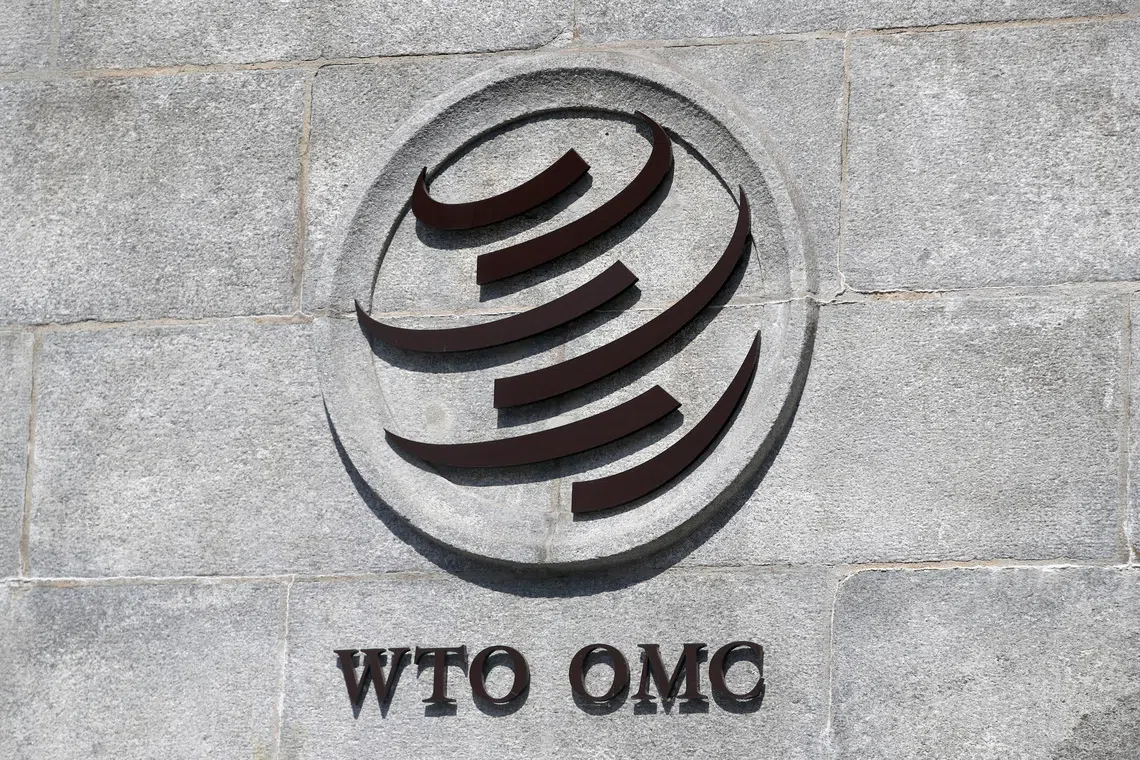
The World Trade Organization (WTO) on Sept 15 urged its members to reform global trade rules or risk a slide into fragmentation that could significantly reduce economic output and hit poorer countries hardest.
2026-09-15 · The Straits Times
WTO says global trade system at critical juncture, urges reform · mixed framing

Claims (18 extracted, 4 hedged)

WTO says global trade system at critical juncture, urges reform AI generated GENEVA – asserted
WTO → say → reform
The World Trade Organization (WTO) on Sept 15 urged its members to reform global trade rules or risk a slide into fragmentation that could significantly reduce economic output and hit poorer countries hardest. uncertain
that → urge → countries
In its annual report, the Geneva-based global trade body said existing rules have struggled to keep pace with shifts in economic power, the rise of industrial policy, digital trade and escalating political tensions between major powers. asserted
rules → base → powers
The warning comes after the WTO’s 166 members failed to reach agreement on a reform package at a ministerial meeting in Yaounde, Cameroon, in March, before relaunching talks in Geneva on issues including decision-making, dispute settlement and the challenges posed by subsidies and state intervention. asserted
members → come → subsidies
The WTO has struggled to find agreement on reforms among all members in the consensus-based organisation – as members are at different stages of economic development and with often conflicting interests. asserted
members → struggle → interests
WTO economists modelled a scenario in which the world fragments into competing geopolitical blocs and found global GDP would be 5.1 per cent lower and exports 18.6 per cent lower by 2050 than otherwise. asserted
exports → model → 2050
In a more severe scenario, in which multilateral cooperation collapses and is replaced by a patchwork of free trade agreements, global GDP would fall 6.9 per cent and exports nearly 27 per cent. asserted
GDP → collapse → agreements
By contrast, enhanced multilateral cooperation could raise global GDP by 2.9 per cent and boost exports by almost 18 per cent, according to the report. uncertain
cooperation → enhance → report
Least-developed countries would stand to gain the most from stronger cooperation, but could also suffer the largest losses from fragmentation. uncertain
countries → develop → fragmentation
Trade at a crossroads WTO chief economist Rob Staiger told Reuters the trading system was at a “critical juncture”, citing four major challenges identified in the report: a broader distribution of economic power, growing state intervention in economies, changes in the nature of trade driven by digitalisation and global value chains, and rising political friction. asserted
system → tell → digitalisation
“The rules are under strain and they really are having an impact. asserted
they → have → impact
And if things fell apart at the global multilateral level, our scenarios are saying these would be the costs, and those costs would be quite large,” Staiger said. asserted
Staiger → fall → level
The findings come as countries increasingly pursue regional and sector-specific trade arrangements amid rising trade tensions and sweeping US tariffs. asserted
countries → come → tensions
In March, a group of WTO members agreed to move ahead with the organisation’s first baseline digital trade rules through a plurilateral agreement, bypassing opposition from some members. asserted
group → agree → members
Staiger said regional trade agreements and plurilateral initiatives could strengthen the multilateral system, but warned they could also undermine it if they evolved into competing blocs. uncertain
they → say → blocs
Without a strong WTO framework, such arrangements risk diverting trade towards preferred partners rather than the most efficient producers and encouraging blocs to raise barriers against outsiders, Staiger said. asserted
Staiger → risk → outsiders
WTO rules help limit discrimination against non-members and constrain how free trade agreements are structured, he added. asserted
he → help → members
The WTO said trade policy uncertainty had reached unprecedented levels in recent years as governments increasingly deploy tariffs, subsidies, export controls and industrial policies. Although about 72 per cent of global merchandise trade still takes place under WTO most-favoured-nation tariff terms, down from roughly 80 per cent in 2022, Staiger called the decline a “worrisome trend” that underscored the risk of a gradual erosion of the multilateral trading system. asserted
that → say → system

Give feedback · no sign-in needed

No sign-in needed for now. Your note is sent without a name, so it cannot be answered.

History Support