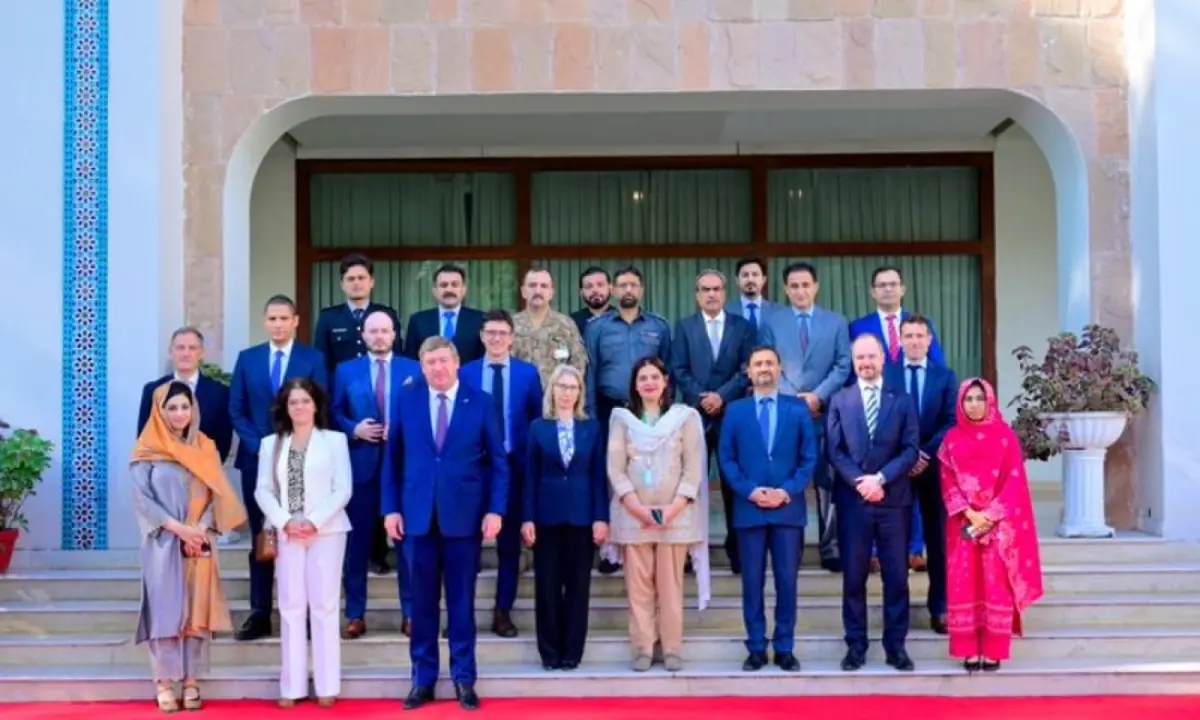
Photo via Dawn

The Gulf’s emerging web of security partnerships

Read the original at Dawn ↗
Cite

Syed, B. S. (2026, October 23). The Gulf’s emerging web of security partnerships. Dawn. https://www.dawn.com/news/2039253/the-gulfs-emerging-web-of-security-partnerships

Dated from the outlet's own feed. Check the original for its byline.

Dawn · collected 2026-10-23 · by Baqir Sajjad Syed

Quick Summary

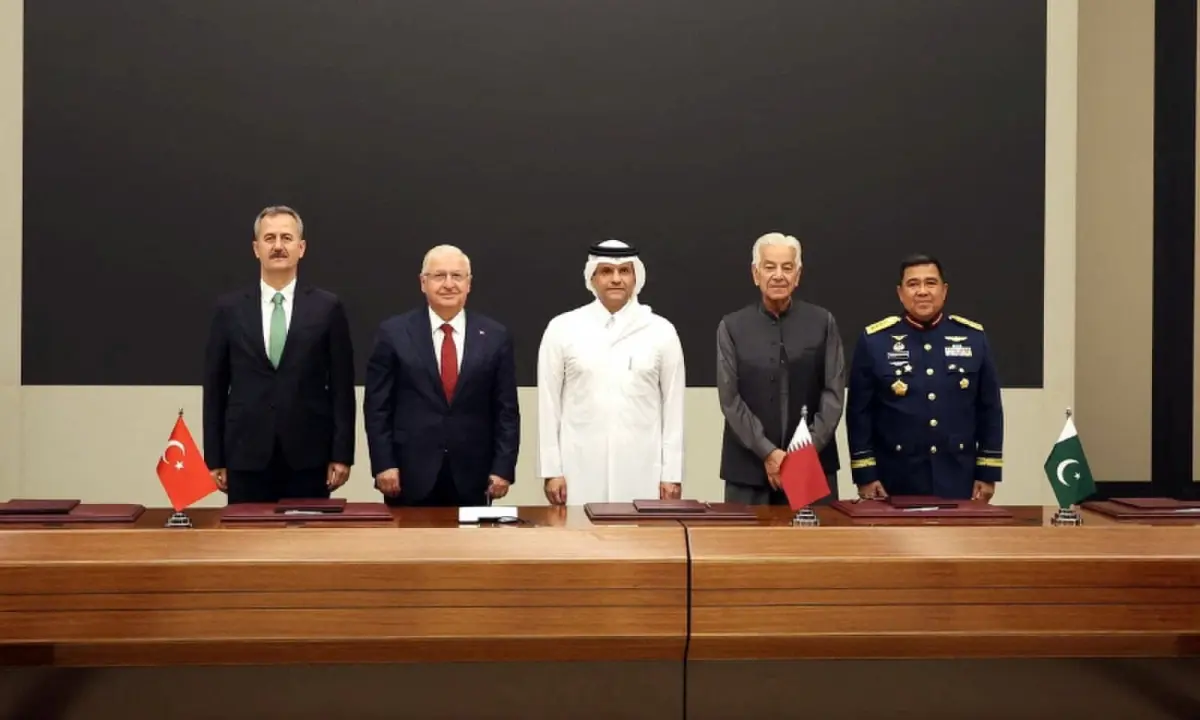
Middle Eastern states recently signed the Badr Memorandum of Understanding in Doha on Wednesday, marking their efforts to diversify defense partnerships amid doubts about U.S.-led security arrangements. This agreement involves Pakistan, Türkiye, Qatar, and Indonesia focusing on defense manufacturing, technology transfer, and training without mutual military assistance commitments. In contrast, the Makkah Joint Defense Agreement from August between Saudi Arabia, Pakistan, and Türkiye includes mutual defense guarantees in case of an attack. These varying agreements highlight a fragmented regional security landscape rather than forming a cohesive architecture, driven by the desire for strategic autonomy following recent geopolitical tensions.
Written by AI on 2026-10-23, from this article's own text only (the story summary below draws on all the coverage).
See how they differ ↓

AI analysis

Story summary

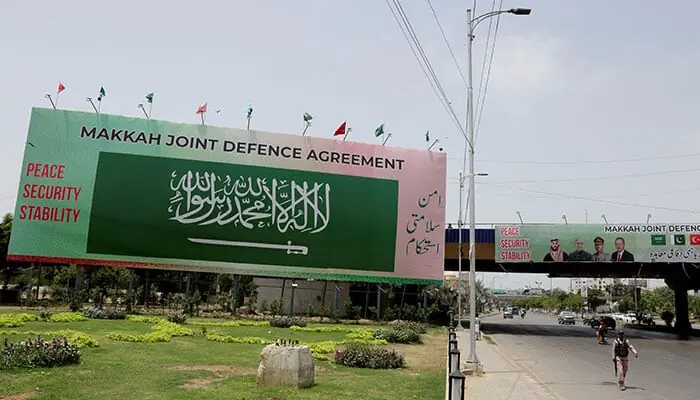
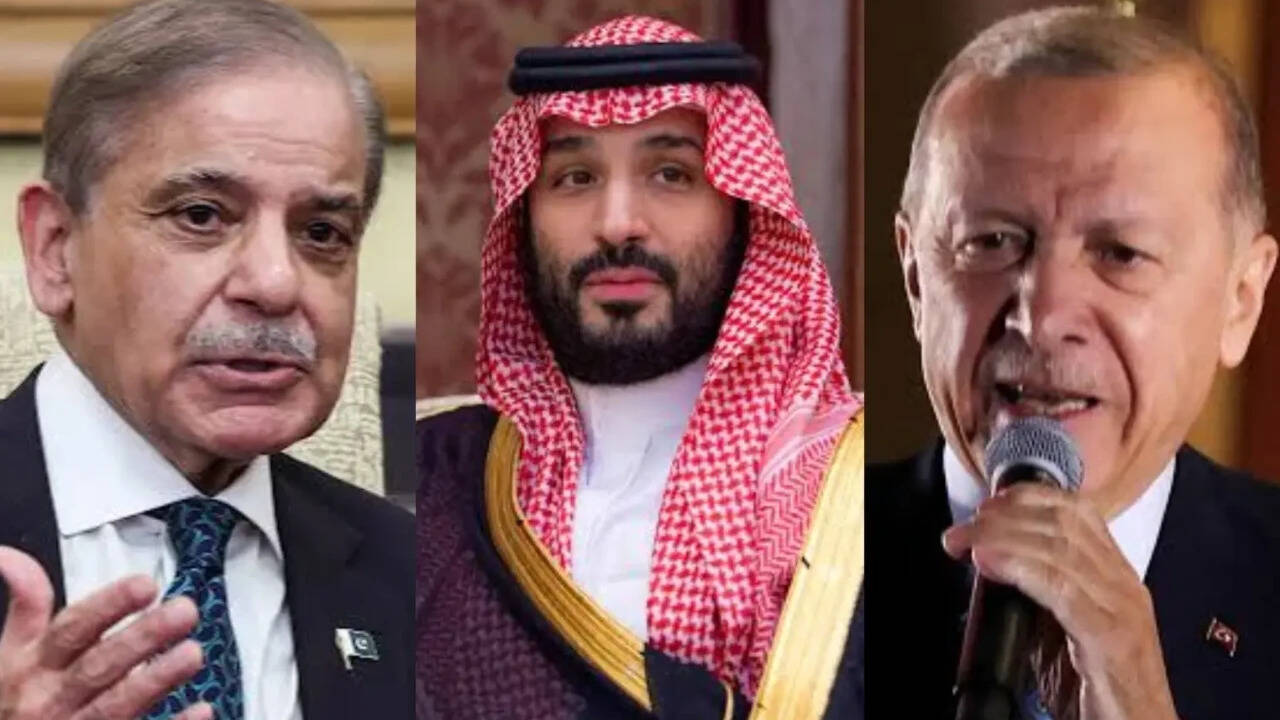
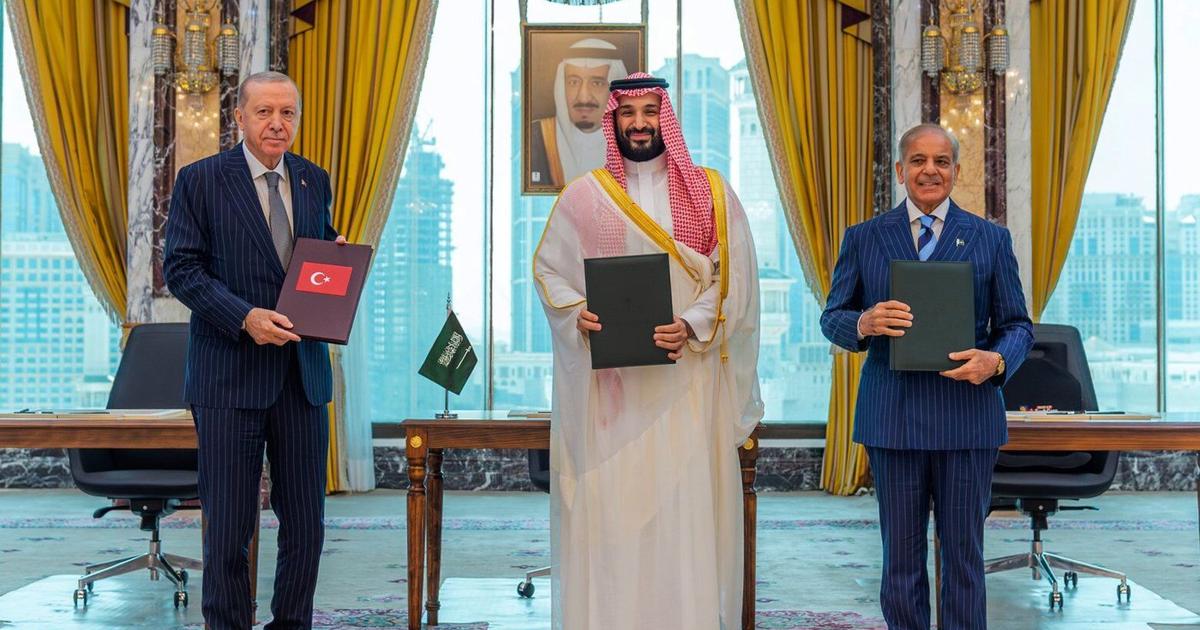
Turkish President Recep Tayyip Erdogan, Saudi Crown Prince Mohammed bin Salman, and Pakistani Prime Minister Shehbaz Sharif signed the Makkah Joint Defence Agreement in August 2025, aiming to bolster cooperation among Pakistan, Saudi Arabia, and Turkey as regional powers amid increasing uncertainty due to conflicts with Iran. The agreement includes provisions for collective defense against external attacks, mirroring NATO’s Article 5, but explicitly excludes offensive actions.

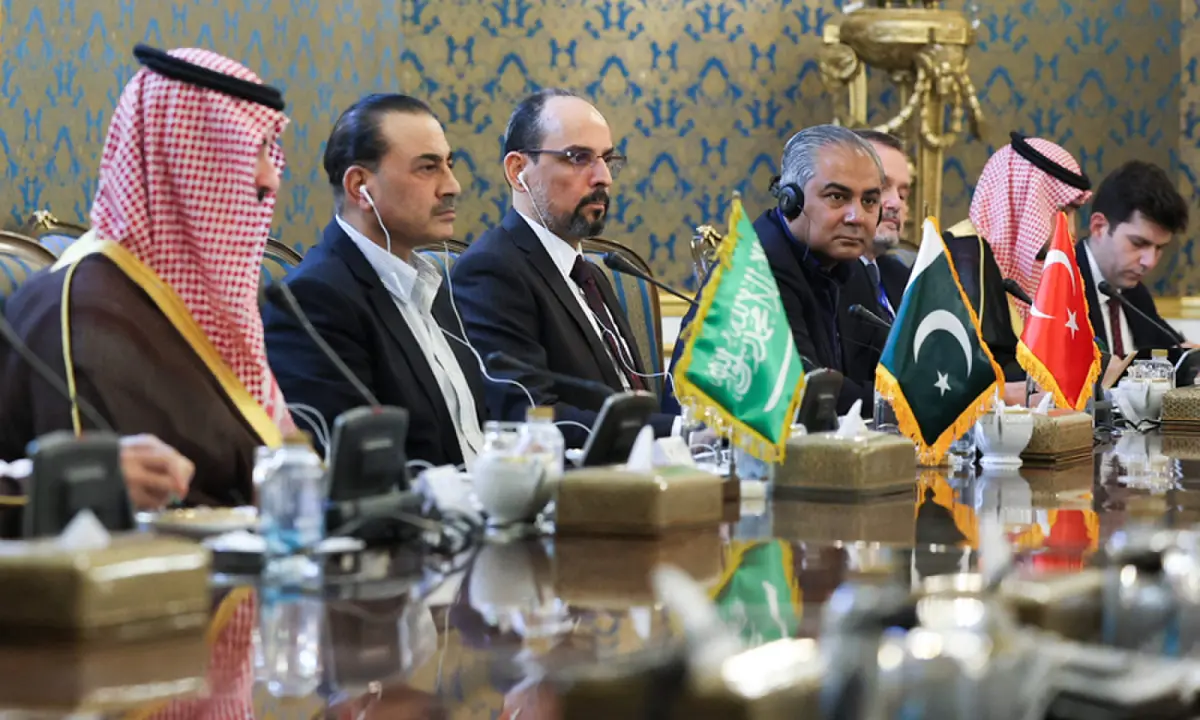
In addition to the Makkah pact, Pakistan has also signed multiple other defense agreements since September 2025, including the Strategic Mutual Defence Agreement (SMDA) with Saudi Arabia and a separate agreement with Kuwait. The Badr Memorandum of Understanding was signed by Pakistan, Turkey, Qatar, and Indonesia in Doha on October 17, focusing on joint defense production, technology transfer, research, and development to reduce reliance on Western arms sales.

These agreements aim to enhance regional security and strategic autonomy for the participating nations while fostering industrial cooperation and interoperability among their armed forces. The text of the Makkah Joint Defence Agreement emphasizes defensive measures and excludes commitments to offensive operations or sending troops abroad, addressing concerns about involvement in conflicts like the Saudi-Houthi war in Yemen.

The proliferation of these defense pacts reflects a broader trend in the Middle East toward diversifying security partnerships amid growing doubts about traditional US-led arrangements. Despite this fragmentation, there is an emphasis on building mutual defense capabilities without necessarily aligning with existing blocs or committing to aggressive military engagements beyond self-defense.

Written for “Makkah Defence Alliance Pact” on 2026-11-21, grounded in this article and the 7 other(s) covering the same event.

How they differ

4 outlets covered “Makkah Defence Alliance Pact”.

What each outlet says

One AI summary per outlet of its latest article on this story, written from that article alone and checked against it. Open the article for the outlet's own words.

DawnThis outlet23 Oct

Middle Eastern states recently signed the Badr Memorandum of Understanding in Doha on Wednesday, marking their efforts to diversify defense partnerships amid doubts about U.S.-led security arrangements. This agreement involves Pakistan, Türkiye, Qatar, and Indonesia focusing on defense manufacturing, technology transfer, and training without mutual military assistance commitments. In contrast, the Makkah Joint…

The Gulf’s emerging web of security partnerships (this article)5 articles from Dawn on this story
Al Jazeera21 Oct

Qatar, Turkiye, Pakistan, and Indonesia signed a memorandum of understanding in Doha on Wednesday to deepen their defense industry cooperation. The agreement, named "Badr," aims to enhance joint production, technology transfers, and integrated supply chains among the four countries, reflecting regional efforts to diversify security partnerships due to ongoing tensions between the US-Israel alliance and Iran. Experts…

How Qatar, Turkiye, Pakistan and Indonesia are deepening defence ties →
Toronto Star21 Oct

Turkey, Saudi Arabia, and Pakistan signed a mutual defense agreement in Mecca aimed at bolstering regional security against threats like those posed by Iran-backed Houthi rebels in Yemen. Turkey has asked its parliament to ratify the pact, which mirrors NATO’s Article 5 by committing all three countries to view an armed attack on one as an attack on all. The deal involves increasing cooperation and defense…

How the Mecca defense agreement between Turkey, Pakistan and Saudi Arabia will work →
South China Morning Post27 Oct

Turkey, Pakistan, Qatar, and Indonesia have formed an alliance called the Badr defence pact, aiming to reduce dependence on Western arms and avoid associated political conditions. Signed in Doha on Wednesday, the memorandum of understanding outlines plans for these nations to collaborate on integrating their defense industries and supply chains.

Why are Turkey, Pakistan, Qatar and Indonesia joining forces? →

Where they agree and split

Framing

How the first headlines put it

Stated as fact3
The headlines (3)

Makkah alliance binds partners to decade-long pact Dawn · stated as fact

How Qatar, Turkiye, Pakistan and Indonesia are deepening defence ties Al Jazeera · stated as fact

How the Mecca defense agreement between Turkey, Pakistan and Saudi Arabia will work Toronto Star · stated as fact

The full story: what happened, how it changed, and all 8 articles →

Compared with similar articles

This article reads leans left and hedges 18% of its claims. Each row says how that neighbour differs.
South China Morning Post
Leans left Hedges 0 of 2 claims Outlet record 62/100
Al Jazeera
Hedges 2 of 25 claims Outlet record 60/100
“The articles describe different events happening at distinct times and places: one is a warning speech about energy shockwaves during a war, while the other reports on the signing of a Memorandum of Understanding for security partnerships.”
The Guardian
Leans left Hedges 4 of 48 claims Outlet record 64/100
“The articles describe different events related to security partnerships but do not refer to the same specific incident.”
Dawn
Hedges 5 of 37 claims Outlet record 66/100
“Article A discusses the publication of the Makkah Joint Defence agreement text, while Article B covers the signing of a different memorandum involving additional countries.”
Al Jazeera
Leans left Hedges 9 of 34 claims Outlet record 60/100
Dawn
Hedges 1 of 10 claims Outlet record 66/100
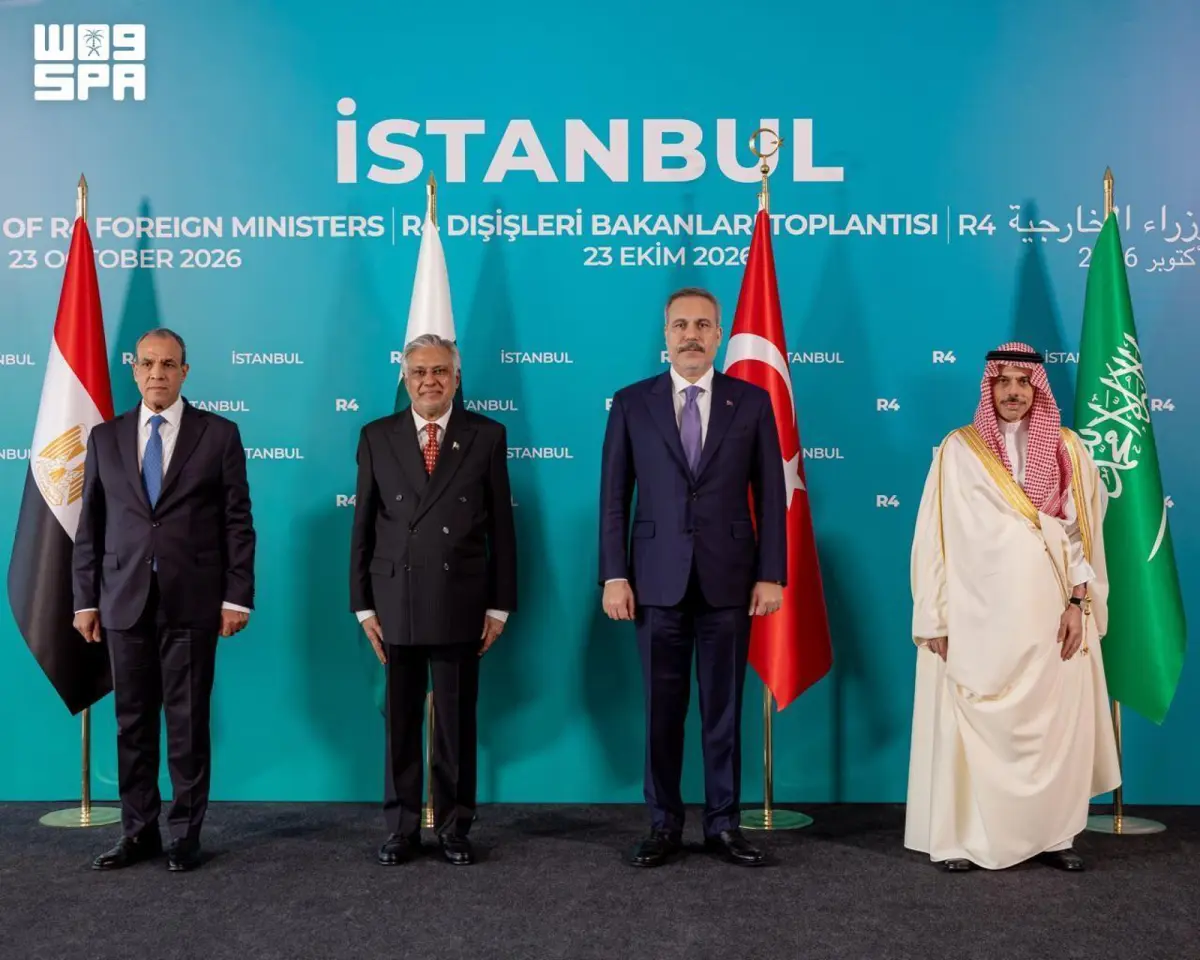
“Article A describes the signing of a memorandum in Doha, while Article B discusses a meeting between foreign ministers in Istanbul on a different day.”
Al Jazeera
Hedges 0 of 23 claims Outlet record 60/100
“The articles describe different events: one is about the signing of the Badr Memorandum in Doha, while the other is about Qatar's minister speaking at a UN-led forum on international cooperation and economic stability.”
Al Jazeera
Hedges 3 of 24 claims Outlet record 60/100
“The articles describe different meetings and agreements involving different sets of countries and officials.”
Times of India
Leans left Hedges 2 of 22 claims Outlet record 59/100
“The articles describe different meetings involving separate but related diplomatic efforts, with Article A focusing on the signing of a memorandum in Doha and Article B detailing high-level talks between Iran and Saudi Arabia, Türkiye, and Pakistan in Tehran.”
Toronto Star
Hedges 1 of 42 claims Outlet record 64/100
“The articles describe different defense agreements involving distinct sets of nations.”

Story

Makkah Defence Alliance Pact
Politics · 8 article(s) covering the same event. Compare every outlet's account →
How this article was measured signals, leaning charts, publisher record, byline, topics and claims

Signals How these are calculated →

Claims extracted
45
sentences that state something as happening or true
Uncertain
18%
8 of 45 hedged ("reportedly", "may", "according to")
Leaning
Leans left
of the writing, not the subject · beta estimate
Publisher signals
66/100
Dawn's corrections and hedging, across everything collected from it. Not a measure of accuracy.
Outlets on this story
8
Politics
Same framing elsewhere
1
articles that frame the event the way this one does
Analyzed 2026-10-23 · how these are computed

How this is being covered How these are calculated →

Article leaning vs. publisher reliability
Source leaning vs. consistency

Publisher

Dawn · 3509 article(s) · 6 correction(s) detected
Running correction rate · 6 correction(s)

Who wrote this

Baqir Sajjad Syed
14 article(s) here · 1 carrying a prediction
THE world had good reason to watch the US midterm elections with bated breath, because their outcome would not only determine the balance of power in Washington, but also shape the course of major international conflicts — particularly in the Middle East — and establish how much political bandwidth President Donald Trump would retain to pursue his foreign policy during the final two years of his presidency.
He added that regional countries could set an example of justice and development by pooling their resources and capabilities.
2026-10-27 · assertive framing · Makkah pact allies move from defence to diplomacy
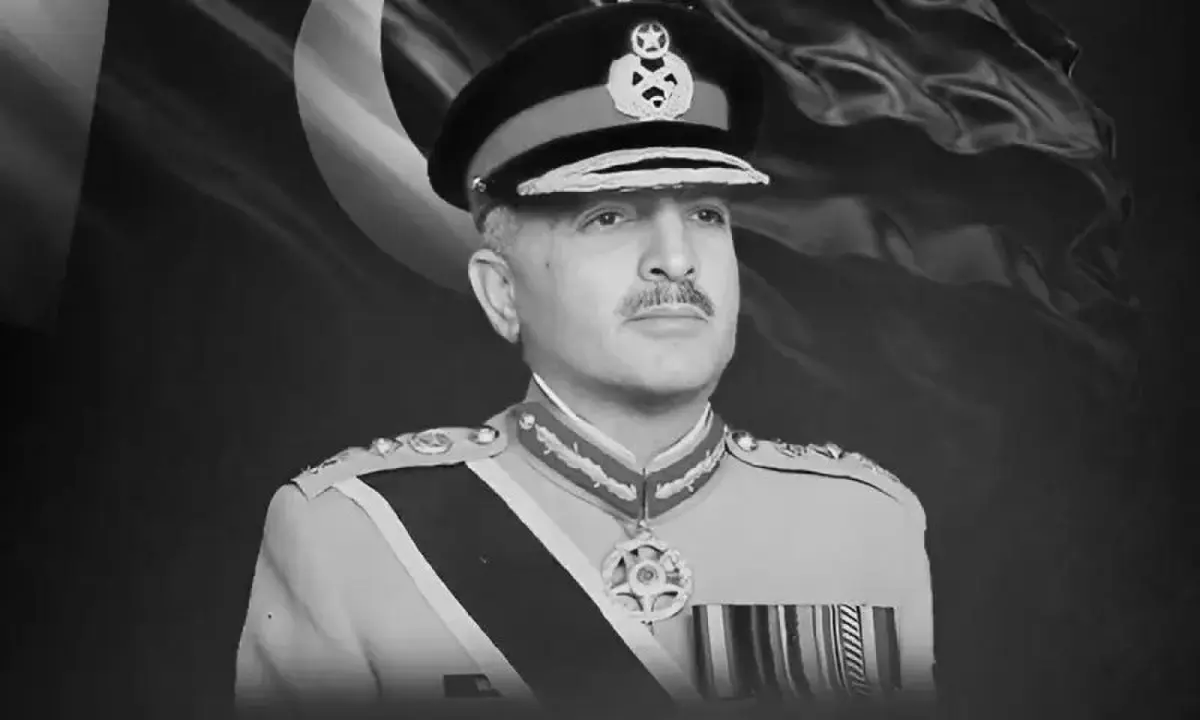
He leaves behind a legacy that will continue to figure in discussions on the country’s civil-military relationship.
2026-10-26 · assertive framing · Remembering former army chief Gen Abdul Waheed Kakar
There could not be a bigger example of how uneven is the process than the agreements being signed up by regional countries themselves.
2026-10-23 · assertive framing · The Gulf’s emerging web of security partnerships
Iranian leaders have told Pakistan that the United States must take the first steps to rebuild trust, and that the acceptance of Tehran’s seven-point proposal could provide a starting point for renewed negotiations.
2026-10-21 · mixed framing · CDF Munir-Pezeshkian meeting raises peace hopes
FO says no formal Russian mediation initiative currently under discussion • Warns India that any future aggression will be met with a stronger response
2026-10-17 · assertive framing · Pakistan rules out unconditional talks with Afghanistan
Russian presidential envoy for Afghanistan Zamir Kabulov said Moscow regretted that the participants could not agree on the final document.
2026-10-06 · assertive framing · Moscow moot ends sans joint statement
Pakistan on Thursday signalled a cautious shift in its approach to the newly imposed US sanctions on Iran, saying it would adhere to “all applicable sanctions regimes” under international and domestic law, a formulation that goes beyond Islamabad’s earlier emphasis on international law and bilateral trade commitments with Tehran.
The statements issued after the two meetings do not contain anything that would suggest that joint strikes or ground operations against Yemen’s Ansar Allah — commonly referred to as Houthis — are in the offing.
Referring to the experience of May 2025, Gen Jamil stressed that there was no space for war between two nuclear-armed states.
Also by Baqir Sajjad Syed
Nothing else under this byline is closely related to this article, so these are simply their most recent.
All 14 articles by Baqir Sajjad Syed →

Topics

Badr Iran Makkah Pakistan the Badr Memorandum of Understanding

Subjects

Makkah GPE · 4× Pakistan GPE · 4× Badr PERSON · 3× Iran GPE · 2× Saudi Arabia GPE · 2× Turkiye GPE · 2× Doha GPE · 1× Indonesia GPE · 1× Qatar GPE · 1× Türkiye GPE · 1×

Narrative

Besides the impression of the inadequacy of US security umbrella, this search for greater strategic autonomy also needs to be looked at in the context of the Gulf Cooperation Council’s own Joint Defense Agreement, signed in 2000, which too provides that aggression against one member constitutes aggression against all, yet the bloc has struggled to translate this commitment into an integrated military capability because of differences in equipment, command systems and national priorities.
framing: assertive · carried by 1 article(s) · first seen 2026-10-23
There could not be a bigger example of how uneven is the process than the agreements being signed up by regional countries themselves.
2026-10-23 · Dawn
The Gulf’s emerging web of security partnerships · assertive framing

Claims (45 extracted, 8 hedged)

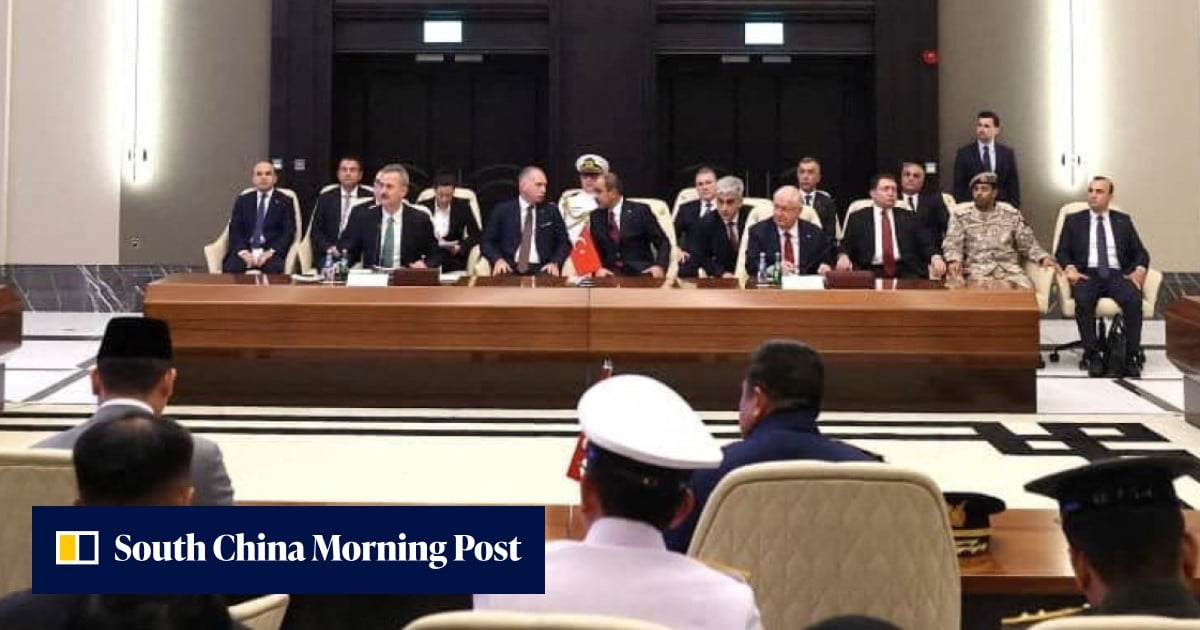
The signing of the Badr Memorandum of Understanding by Pakistan, Türkiye, Qatar and Indonesia in Doha on Wednesday is the latest manifestation of Middle Eastern states accelerated efforts for diversifying their defense partnerships amid growing doubts about the reliability of existing security arrangements of the region led by the United States. asserted
signing → accelerate → States
But, rather than laying the foundations of a new regional security architecture, the proliferation of such agreements is producing a more fractured landscape in which countries are drawing in more partners, pursuing separate strategic interests and accepting varying levels of military commitments. asserted
countries → lay → commitments
There could not be a bigger example of how uneven is the process than the agreements being signed up by regional countries themselves. uncertain
process → sign → countries
Badr, for instance, focuses on defense manufacturing, technology transfer, research and development, and training, allowing its participants to pool industrial capabilities without committing themselves to military assistance in the event of an attack. asserted
participants → focus → attack
In contrast the Makkah Joint Defense Agreement, concluded in August by Saudi Arabia, Pakistan and Turkiye, goes considerably further by providing that an attack on one participant will be treated as an attack on all as it builds on a bilateral Strategic Mutual Defense Agreement between Pakistan and KSA signed in Sept 2025. asserted
it → conclude → Sept
These are two major agreements in addition to several others being signed or solidified by the countries in the region, but the contrast between Badr and Makkah agreements is telling because these agreements are often taken as evidence of an emerging regional security architecture, although the arrangements differ considerably in their purpose and obligations. asserted
arrangements → sign → purpose
Makkah agreement formalises security guarantees between participating countries, while Badr aims to develop industrial capacity. asserted
Badr → formalise → capacity
The momentum behind these regional security initiatives has grown since this year’s US - Israel war with Iran exposed the risks of relying heavily on external protection. asserted
war → grow → protection
For Gulf states in particular, the Iran conflict raised questions about whether existing security partnerships could adequately protect their interests during a major regional confrontation. uncertain
partnerships → raise → confrontation
Importantly, the response of the affected countries has not been to abandon US, whose military capabilities are still considered indispensable, but to seek additional options through new partnerships, domestic defense production and selective commitments. asserted
capabilities → affect → partnerships
Besides the impression of the inadequacy of US security umbrella, this search for greater strategic autonomy also needs to be looked at in the context of the Gulf Cooperation Council’s own Joint Defense Agreement, signed in 2000, which too provides that aggression against one member constitutes aggression against all, yet the bloc has struggled to translate this commitment into an integrated military capability because of differences in equipment, command systems and national priorities. asserted
bloc → need → equipment
The hurdles to full operationalisation of Peninsula Shield Force has further exposed the gap between a collective defense principle and the ability asserted
hurdles → expose → principle
The newer arrangements that the countries in the region are signing up partly reflect this GCC experience. asserted
countries → sign → experience
Therefore, while these countries want enhanced security cooperation, they are also reluctant to surrender the freedom to make independent decisions. asserted
they → want → decisions
As a result, a network of partnerships is emerging that may complement one another in some areas without actually adding up to a common defense system. uncertain
that → emerge → system
Pakistan’s expanding role illustrates both the opportunities and the limitations of this approach. asserted
role → expand → approach
Its relationship with Saudi Arabia has acquired a more formal security dimension through the 2025 bilateral agreement and the subsequent Makkah framework, while cooperation with Turkiye offers scope for closer military coordination and defense industrial collaboration. asserted
cooperation → acquire → coordination
Egypt, another key player in the Arab world, has stayed outside the Makkah framework and has offered defense cooperation to Saudi Arabia, reflecting its interest in protecting its own regional priorities without becoming committed to a wider military confrontation. asserted
Egypt → stay → confrontation
Islamabad’s other Gulf relationships, however, remain more limited in scope. asserted
relationships → remain → scope
Kuwait has strengthened defense cooperation with Pakistan through an upgraded agreement - the Protocol Agreement 2026 - covering training, capacity building and border management, while Bahrain has developed close links with the Pakistani military through the presence of Pakistani personnel in its National Guard and Coast Guard, alongside cooperation in training and logistics. asserted
Bahrain → strengthen → training
These relationships have provided a basis for continued military engagement but do not carry the mutual defense obligations associated with the Pakistan - KSA partnership. asserted
relationships → provide → partnership
Ties with UAE have, meanwhile, followed a more complicated course marred by political and financial strains, Islamabad’s closer alignment with Riyadh and Abu Dhabi’s expanding defense relationship with India. asserted
Ties → follow → India
Nevertheless, training, personnel exchanges, counterterrorism activities and joint exercises between the two countries continue. asserted
training → continue → countries
Qatar has signed a defense industrial cooperation agreement involving Pakistan among others while Oman has maintained selective military ties with Pakistan and Turkiye, simultaneously preserving its wider security relationships and avoiding binding mutual defense commitments, consistent with its preference for neutrality and diplomatic engagement, particularly in relation to Iran and the Strait of Hormuz. asserted
Oman → sign → Hormuz
This makes it difficult to describe Pakistan’s growing defense relationships as a unified regional bloc. asserted
it → make → bloc
Moreover, commitments under these agreements vary according to the interests and calculations of individual partners. uncertain
commitments → vary → partners
Islamabad, in this situation, is left to balance closer security ties against its available military resources and the risk of becoming involved in conflicts whose objectives may not coincide with its own. uncertain
objectives → leave → own
At the same time the Gulf states are also pursuing different courses. asserted
states → pursue → courses
Saudi Arabia is strengthening its relationships with Pakistan and Turkiye while continuing to rely on Western military capabilities and Egypt and exploring defense industrial cooperation with China. asserted
Arabia → strengthen → China
The UAE, which has not joined either the Makkah or Badr frameworks, has deepened security cooperation with Israel, including in air defense and counter drone capabilities, while maintaining close relationships with US, France and India. asserted
which → join → US
Qatar is seeking to expand its defense industrial partnerships through Badr but at the same time retains US military presence at Al Udeid. asserted
Qatar → seek → Udeid
Bahrain remains closely aligned with Saudi Arabia and the GCC defense framework, while Kuwait continues to prioritise bilateral military cooperation with Pakistan alongside its substantial security relationship with Washington. asserted
Kuwait → remain → Washington
Oman’s preference for neutrality and mediation further distinguishes its approach from those seeking more formal security commitments. asserted
preference → distinguish → commitments
The differences are not only confined to the choice of partners, but the states also have divergent assessments of the threat posed by Iran, the role of Israel in regional security and the degree to which they should commit themselves to one another’s defense. asserted
they → confine → defense
Their partnerships are therefore being shaped as much by the need to preserve freedom of action as by the desire to develop collective capabilities. asserted
partnerships → shape → capabilities
The new partnerships do not either automatically translate into military independence for regional states, which continue to operate substantial inventories of Western origin aircraft, air defense systems and other advanced platforms that require specialised maintenance, software support, spare parts and replacement munitions. asserted
that → translate → maintenance
New partners may help diversify procurement and develop local production, but they cannot necessarily replace established suppliers on the required scale. uncertain
they → help → scale
Moreover, addition of newer systems can also complicate logistics and interoperability unless countries invest in common procedures, training and secure communications. asserted
countries → complicate → procedures
Defense industrial cooperation presents another challenge and agreements such as Badr will acquire practical significance only if they lead to funded production programs, meaningful technology transfer and capabilities that participating countries can maintain and sustain. asserted
countries → present → that
Similarly, the credibility of mutual defense arrangements will depend on whether their members can coordinate intelligence, plan jointly and establish procedures for responding to a crisis. asserted
members → depend → crisis
…and 5 more, not listed.
Give feedback · no sign-in needed

No sign-in needed for now. Your note is sent without a name, so it cannot be answered.

History Support