Photo via South China Morning Post

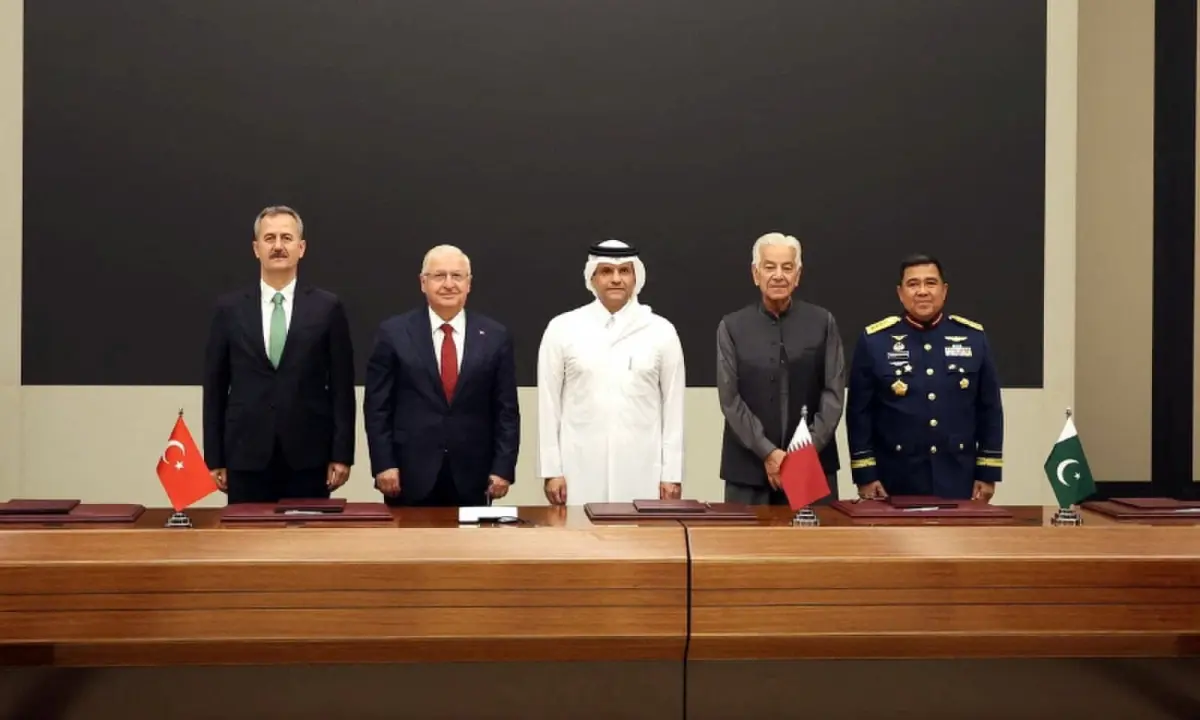
Why are Turkey, Pakistan, Qatar and Indonesia joining forces?

Read the original at South China Morning Post ↗
Cite

Hussain, T. (2026, October 27). Why are Turkey, Pakistan, Qatar and Indonesia joining forces? South China Morning Post. https://www.scmp.com/week-asia/politics/article/3372228/why-are-turkey-pakistan-qatar-and-indonesia-joining-forces

Dated from the outlet's own feed. Check the original for its byline.

South China Morning Post · collected 2026-10-27 · by Tom Hussain

Quick Summary

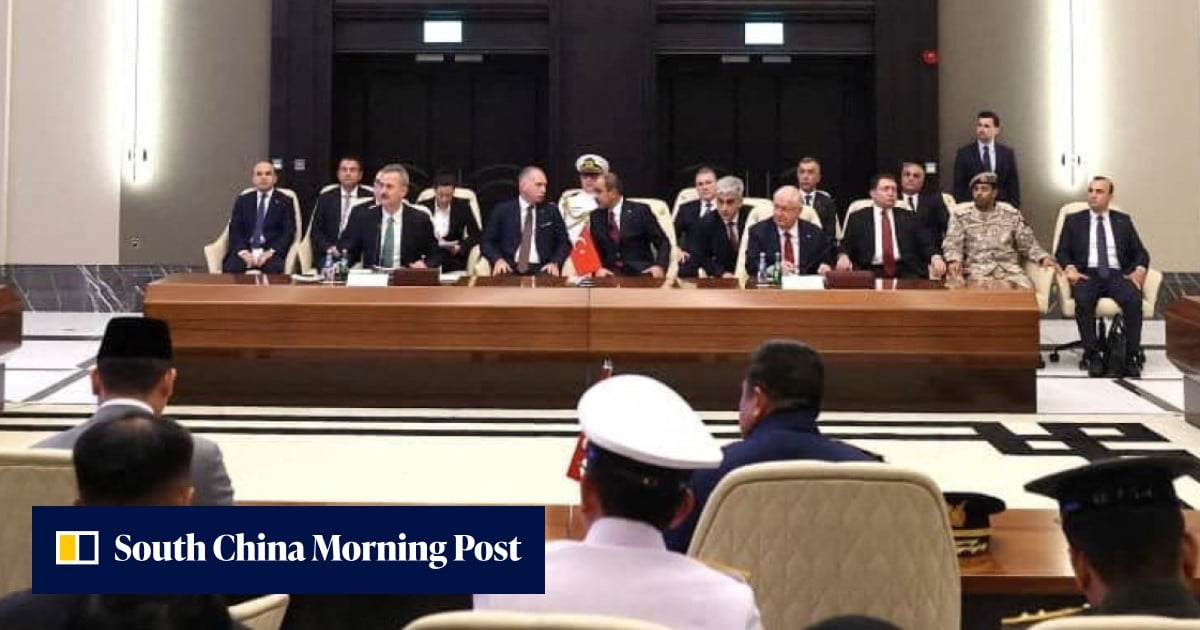
Turkey, Pakistan, Qatar, and Indonesia have formed an alliance called the Badr defence pact, aiming to reduce dependence on Western arms and avoid associated political conditions. Signed in Doha on Wednesday, the memorandum of understanding outlines plans for these nations to collaborate on integrating their defense industries and supply chains.
Written by AI on 2026-10-27, from this article's own text only (the story summary below draws on all the coverage).
See how they differ ↓

AI analysis

Story summary

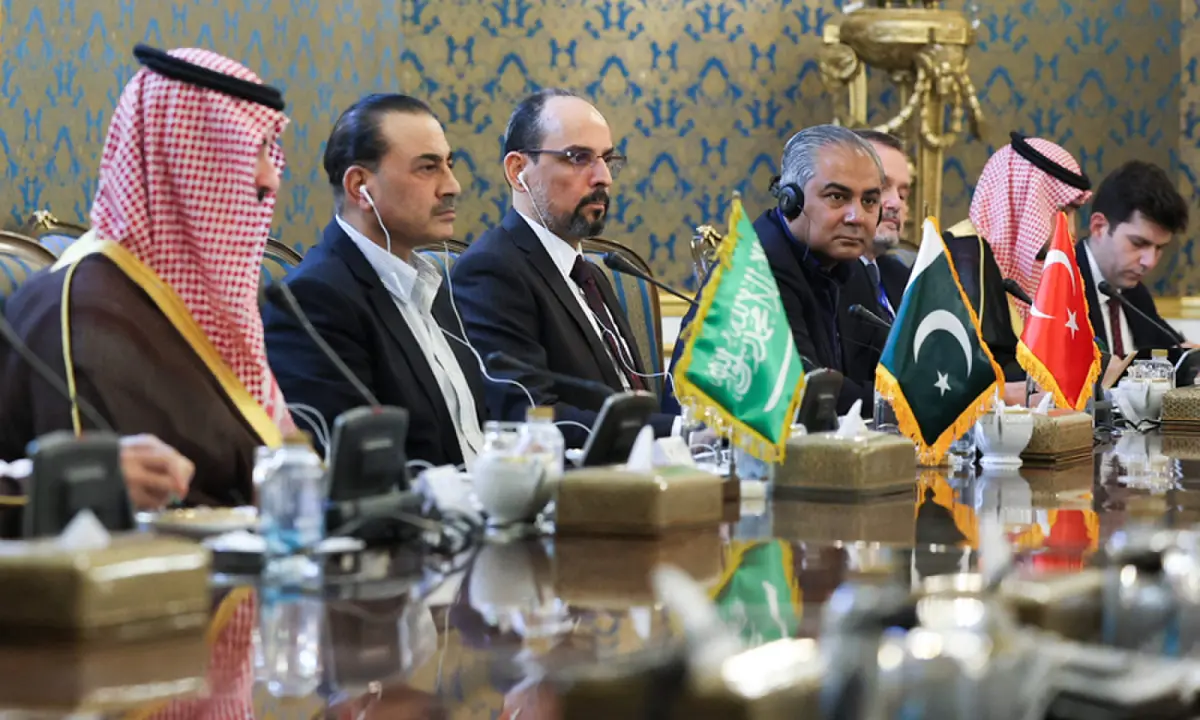
Turkish President Recep Tayyip Erdogan, Saudi Crown Prince Mohammed bin Salman, and Pakistani Prime Minister Shehbaz Sharif signed the Makkah Joint Defence Agreement in August 2025, aiming to bolster cooperation among Pakistan, Saudi Arabia, and Turkey as regional powers amid increasing uncertainty due to conflicts with Iran. The agreement includes provisions for collective defense against external attacks, mirroring NATO’s Article 5, but explicitly excludes offensive actions.

In addition to the Makkah pact, Pakistan has also signed multiple other defense agreements since September 2025, including the Strategic Mutual Defence Agreement (SMDA) with Saudi Arabia and a separate agreement with Kuwait. The Badr Memorandum of Understanding was signed by Pakistan, Turkey, Qatar, and Indonesia in Doha on October 17, focusing on joint defense production, technology transfer, research, and development to reduce reliance on Western arms sales.

These agreements aim to enhance regional security and strategic autonomy for the participating nations while fostering industrial cooperation and interoperability among their armed forces. The text of the Makkah Joint Defence Agreement emphasizes defensive measures and excludes commitments to offensive operations or sending troops abroad, addressing concerns about involvement in conflicts like the Saudi-Houthi war in Yemen.

The proliferation of these defense pacts reflects a broader trend in the Middle East toward diversifying security partnerships amid growing doubts about traditional US-led arrangements. Despite this fragmentation, there is an emphasis on building mutual defense capabilities without necessarily aligning with existing blocs or committing to aggressive military engagements beyond self-defense.

Written for “Makkah Defence Alliance Pact” on 2026-11-20, grounded in this article and the 7 other(s) covering the same event.
How they differ

4 outlets covered “Makkah Defence Alliance Pact”.

What each outlet says

One AI summary per outlet of its latest article on this story, written from that article alone and checked against it. Open the article for the outlet's own words.

South China Morning PostThis outlet27 Oct

Turkey, Pakistan, Qatar, and Indonesia have formed an alliance called the Badr defence pact, aiming to reduce dependence on Western arms and avoid associated political conditions. Signed in Doha on Wednesday, the memorandum of understanding outlines plans for these nations to collaborate on integrating their defense industries and supply chains.

Why are Turkey, Pakistan, Qatar and Indonesia joining forces? (this article)
Dawn25 Oct

Since September 2025, Pakistan has signed multiple defense agreements with Arab and Muslim states, including a Strategic Mutual Defence Agreement (SMDA) with Saudi Arabia, a Makkah Joint Defence Agreement (MJDA) with Turkiye and Saudi Arabia, a pact with Kuwait, and the Badr agreement involving Pakistan, Turkiye, Qatar, and Indonesia. These deals aim to enhance Pakistan's strategic relevance in the Middle East by…

Decoding defence deals →5 articles from Dawn on this story
Al Jazeera21 Oct

Qatar, Turkiye, Pakistan, and Indonesia signed a memorandum of understanding in Doha on Wednesday to deepen their defense industry cooperation. The agreement, named "Badr," aims to enhance joint production, technology transfers, and integrated supply chains among the four countries, reflecting regional efforts to diversify security partnerships due to ongoing tensions between the US-Israel alliance and Iran. Experts…

How Qatar, Turkiye, Pakistan and Indonesia are deepening defence ties →
Toronto Star21 Oct

Turkey, Saudi Arabia, and Pakistan signed a mutual defense agreement in Mecca aimed at bolstering regional security against threats like those posed by Iran-backed Houthi rebels in Yemen. Turkey has asked its parliament to ratify the pact, which mirrors NATO’s Article 5 by committing all three countries to view an armed attack on one as an attack on all. The deal involves increasing cooperation and defense…

How the Mecca defense agreement between Turkey, Pakistan and Saudi Arabia will work →

Where they agree and split

Framing

How the first headlines put it

Stated as fact3
The headlines (3)

Makkah alliance binds partners to decade-long pact Dawn · stated as fact

How Qatar, Turkiye, Pakistan and Indonesia are deepening defence ties Al Jazeera · stated as fact

How the Mecca defense agreement between Turkey, Pakistan and Saudi Arabia will work Toronto Star · stated as fact

The full story: what happened, how it changed, and all 8 articles →

Compared with similar articles

This article reads leans left and hedges 0% of its claims. Each row says how that neighbour differs.
Dawn
Leans left Hedges 8 of 45 claims Outlet record 67/100
Dawn
Leans left Hedges 3 of 48 claims Outlet record 67/100
Dawn
Hedges 5 of 29 claims Outlet record 67/100
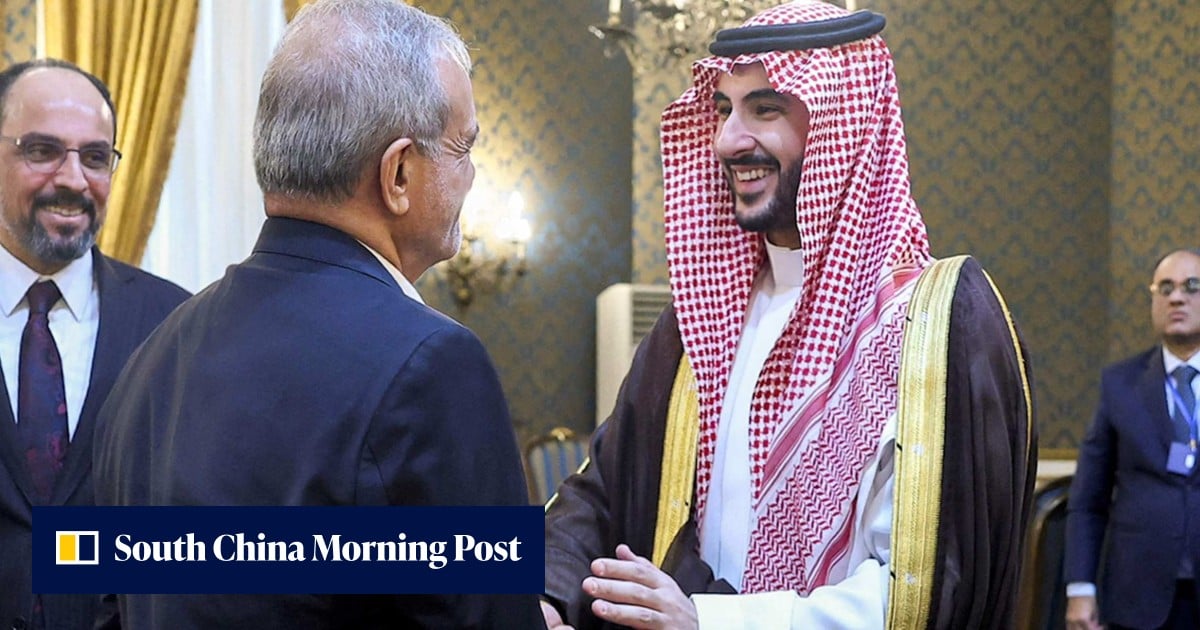
“The articles describe different meetings and agreements. Article A focuses on the signing of the Badr defence pact in Doha, while Article B discusses a subsequent diplomatic meeting between Iran and officials from Pakistan, Saudi Arabia, and Turkey.”

Story

Makkah Defence Alliance Pact
Politics · 8 article(s) covering the same event. Compare every outlet's account →
How this article was measured signals, leaning charts, publisher record, byline, topics and claims

Signals How these are calculated →

Claims extracted
2
sentences that state something as happening or true
Uncertain
0%
0 of 2 hedged ("reportedly", "may", "according to")
Leaning
Leans left
of the writing, not the subject · beta estimate
Publisher signals
62/100
South China Morning Post's corrections and hedging, across everything collected from it. Not a measure of accuracy.
Outlets on this story
8
Politics
Same framing elsewhere
1
articles that frame the event the way this one does
Analyzed 2026-10-27 · how these are computed

How this is being covered How these are calculated →

Article leaning vs. publisher reliability
Source leaning vs. consistency

Publisher

South China Morning Post · 4214 article(s) · 8 correction(s) detected
Running correction rate · 8 correction(s)

Who wrote this

Tom Hussain
13 article(s) here · 1 carrying a prediction
Saudi arms sales, UAE crypto deals and Trump family business links could be in the firing line when the Democratic-led Congress convenes 4-MIN READ4-MIN Washington’s key Gulf allies are expected to come under fire as Democrats use their new congressional majorities to investigate US President Donald Trump’s final two years in office.
Trump’s Israel aid cut reveals push to trade grants for tech cooperation A shift towards joint technology development looks set to replace traditional grants with deeper, less scrutinised Pentagon funding 3-MIN READ3-MIN
The four-nation Badr defence pact seeks to shed dependence on Western arms sales and the political strings that come with them Following the signing of the Badr memorandum of understanding in Doha on Wednesday, the four governments separately said they would work towards integrating their defence industries and supply chains to meet military needs.
Gulf economies accelerate diversification as recession looms over Iran war Even as the region’s economic downturn is expected to worsen, Gulf states are slated to spend tens of billions of dollars on infrastructure 4-MIN READ4-MIN
Saudi-Iran war risk grows as Riyadh resumes Yemen bombing Backed by Western and regional allies, Riyadh’s renewed campaign against the Houthis threatens to blow Tehran’s proxy war wide open Analysts expect the Houthis to retaliate by intensifying drone and ballistic missile attacks against Saudi Arabia, while Iran’s Revolutionary Guards are expected to supply weapons and targeting intelligence to their partners in so-called Axis of Resistance. Casualties on all sides are also likely to rise as the war widens and draws in more international players.
Pakistani troops are expected to take over various defensive functions for Saudi Arabia to enable the Middle East country to fight an all-out war aimed at defeating Yemen’s Iran-backed Houthi rebels.
Trump’s belief that all would be “fine and dandy” contrasted starkly with the suspension of Saudi oil exports from the Red Sea the same day, after drone strikes by Iran-allied Iraqi militias badly damaged the east-west pipeline that had enabled the kingdom to bypass Hormuz since the Iran war erupted on February 28.
Why the Middle East could be entering a new nuclear age
Most of the 229 per cent budget increase will fund domestic arms production as Ankara seeks to cut reliance on the West Announcing the plan on Sunday, Vice-President Cevdet Yilmaz said the aim was to ensure Turkey “develops its own technologies in the defence industry, can meet its own needs and produces high added value”.
Also by Tom Hussain
Nothing else under this byline is closely related to this article, so these are simply their most recent.
All 13 articles by Tom Hussain →

Topics

Doha Indonesia Pakistan Qatar Turkey

Subjects

Badr PERSON · 2× Doha GPE · 1× Indonesia GPE · 1× Pakistan GPE · 1× Qatar GPE · 1× Turkey GPE · 1×

Narrative

The four-nation Badr defence pact seeks to shed dependence on Western arms sales and the political strings that come with them Following the signing of the Badr memorandum of understanding in Doha on Wednesday, the four governments separately said they would work towards integrating their defence industries and supply chains to meet military needs.
framing: assertive · carried by 1 article(s) · first seen 2026-10-27
The four-nation Badr defence pact seeks to shed dependence on Western arms sales and the political strings that come with them Following the signing of the Badr memorandum of understanding in Doha on Wednesday, the four governments separately said they would work towards integrating their defence industries and supply chains to meet military needs.
2026-10-27 · South China Morning Post
Why are Turkey, Pakistan, Qatar and Indonesia joining forces? · assertive framing

Claims (2 extracted, 0 hedged)

Why are Turkey, Pakistan, Qatar and Indonesia joining forces? asserted
Turkey → join → forces
The four-nation Badr defence pact seeks to shed dependence on Western arms sales and the political strings that come with them Following the signing of the Badr memorandum of understanding in Doha on Wednesday, the four governments separately said they would work towards integrating their defence industries and supply chains to meet military needs. asserted
they → seek → needs
Give feedback · no sign-in needed

No sign-in needed for now. Your note is sent without a name, so it cannot be answered.

History Support