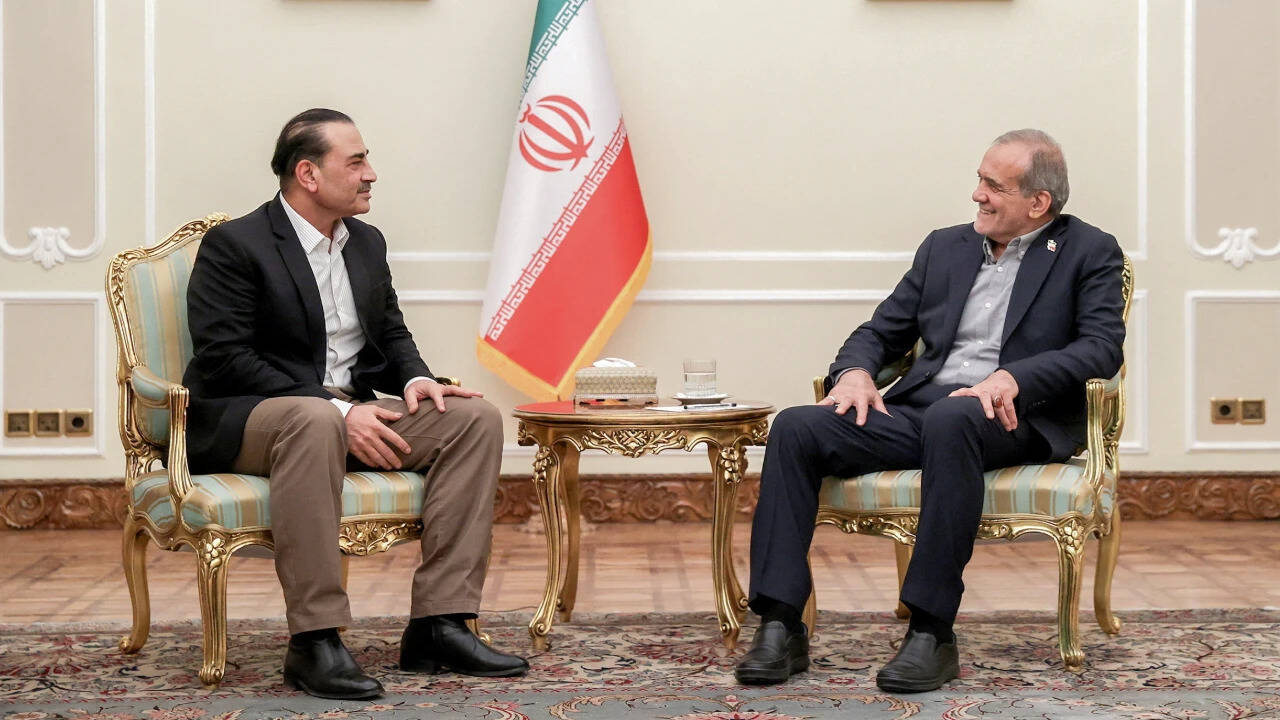
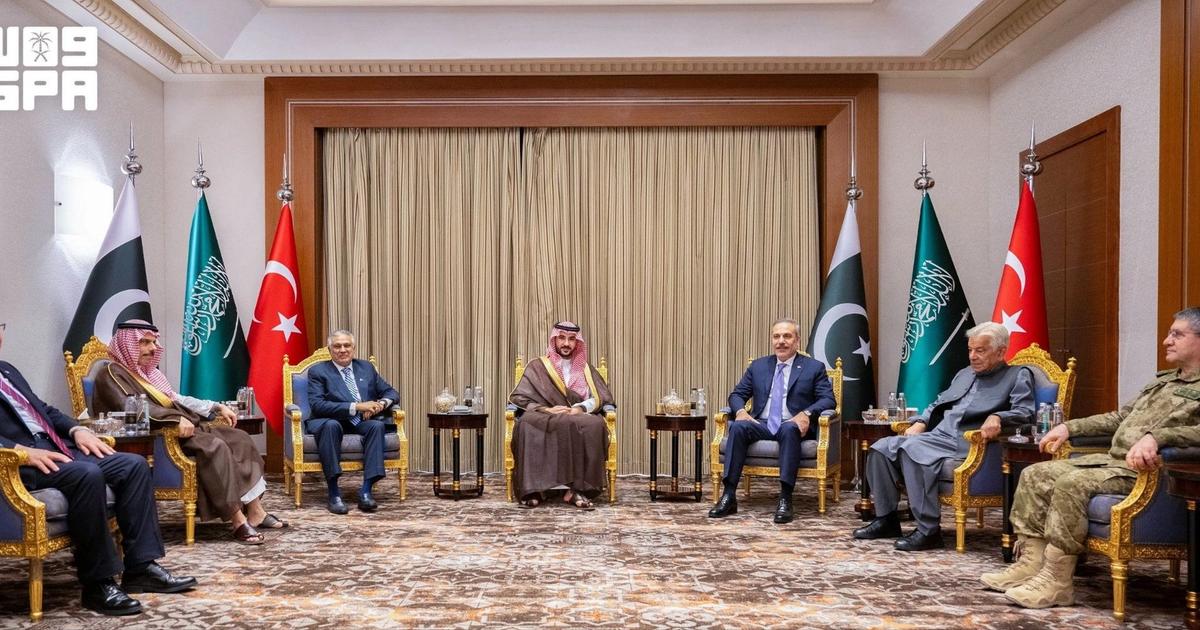
Photo via The Guardian

High-level delegation in Iran in push to avert flare-up of conflict with US

Read the original at The Guardian ↗
Cite

editor, P. W. D. (2026, October 26). High-level delegation in Iran in push to avert flare-up of conflict with US. The Guardian. https://www.theguardian.com/world/2026/oct/26/saudi-pakistani-turkish-delegation-iran-avert-flare-up-conflict-us

Dated from the outlet's own feed. Check the original for its byline.

The Guardian · collected 2026-10-26 · by Patrick Wintour Diplomatic editor

Quick Summary

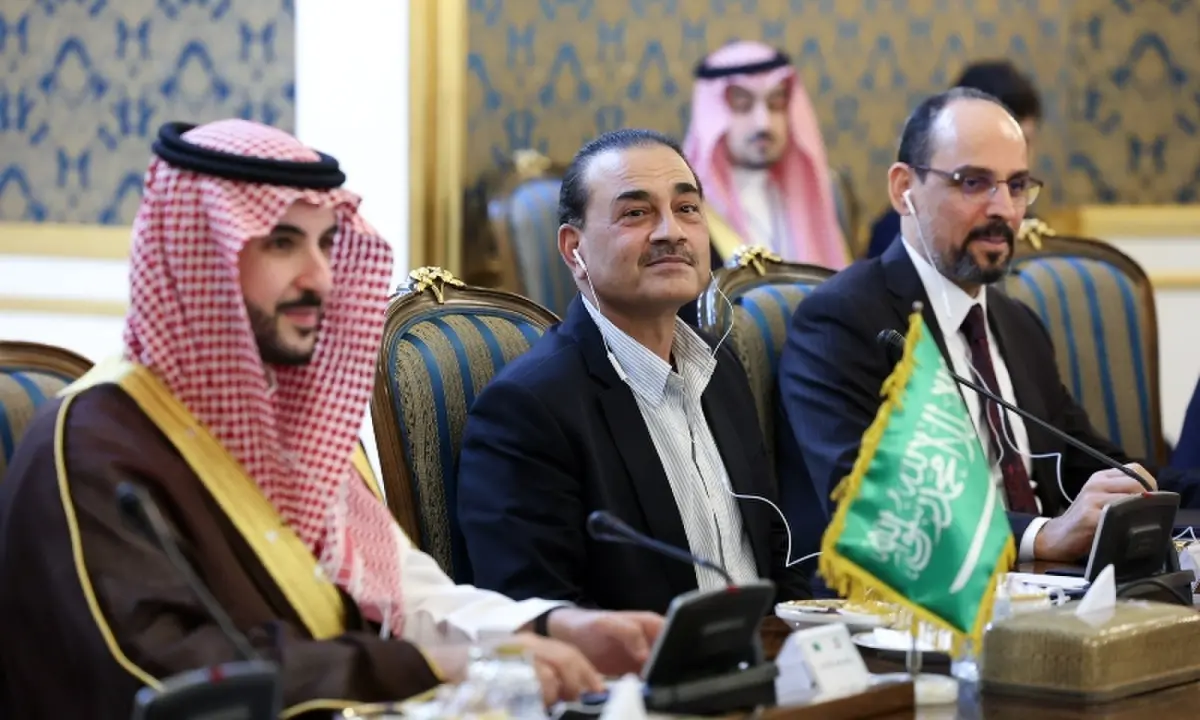
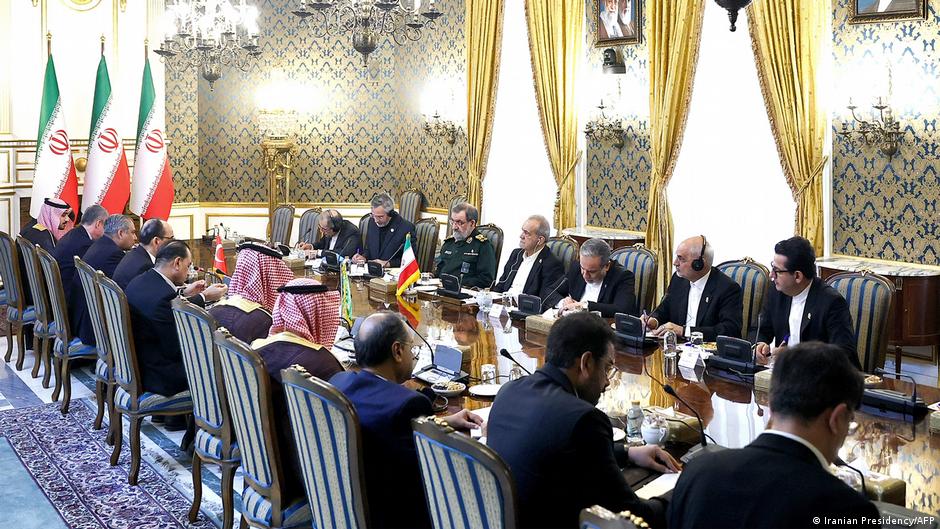
High-level diplomatic delegations from Saudi Arabia, Turkey, and Pakistan have met with Iranian officials in Tehran to discuss ways to de-escalate tensions between Iran and the US, as well as Israel. The meeting also aimed to address the ongoing conflict involving the Houthis in Yemen and explore potential regional security pacts that could involve Iran. Key figures attending included Saudi Defense Minister Khalid bin Salman, Pakistan’s army chief Field Marshal Asim Munir, and Turkey’s intelligence chief Ibrahim Kalın. Iranian officials emphasized the need for regional cooperation based on mutual trust to ensure lasting peace and security.
Written by AI on 2026-10-26, from this article's own text only (the story summary below draws on all the coverage).
See how they differ ↓

AI analysis

Story summary

On October 26, top officials from the Mecca Pact countries—Saudi Arabia, Turkey, and Pakistan—met with Iranian officials in Tehran to discuss regional security. The meeting involved Prince Khalid bin Salman (Saudi defense minister), Field Marshal Asim Munir (Pakistan’s army chief and Chief of Defence Forces), and Ibrahim Kalin (Turkish intelligence chief). They discussed strategies to ease tensions amid the re-escalation of conflicts in the region, particularly regarding the Houthi conflict in Yemen. The meeting aimed to prevent a flare-up between Iran and other regional or global powers like the US and Israel. Defence Minister Khawaja Asif later clarified that his non-participation in these discussions was due to it not being under his ministry's mandate, responding to criticism from Jamiat Ulema-i-Islam-Fazl (JUI-F) chief Maulana Fazlur Rehman.

Written for “Tehran Huddle Talks” on 2026-11-21, grounded in this article and the 23 other(s) covering the same event.

How they differ

10 outlets covered “Tehran Huddle Talks”.

What each outlet says

One AI summary per outlet of its latest article on this story, written from that article alone and checked against it. Open the article for the outlet's own words.

The GuardianThis outlet26 Oct

High-level diplomatic delegations from Saudi Arabia, Turkey, and Pakistan have met with Iranian officials in Tehran to discuss ways to de-escalate tensions between Iran and the US, as well as Israel. The meeting also aimed to address the ongoing conflict involving the Houthis in Yemen and explore potential regional security pacts that could involve Iran. Key figures attending included Saudi Defense Minister Khalid…

High-level delegation in Iran in push to avert flare-up of conflict with US (this article)2 articles from The Guardian on this story
Dawn29 Oct

Federal ministers responded to Maulana Fazlur Rehman’s comments about a meeting between Iran and Makkah Defense Pact countries in Tehran, asserting that it was unrelated to defense. The meeting included Pakistan's Chief of Defence Forces and other officials from Saudi Arabia, Turkey, and Iran. While Fazl questioned the necessity of Pakistan's interior minister attending the meeting, ministers defended their…

'Not related to defence': Govt responds to Fazl's remarks about Makkah pact countries' meeting in Tehran →8 articles from Dawn on this story
Times of India27 Oct

Saudi Arabia reportedly offered $1 billion to Yemen’s Houthi group through Iran to secure a ceasefire and halt attacks on the kingdom, according to Israeli media citing diplomatic sources in the Gulf. During talks brokered by Iran in Tehran, Saudi defense minister Prince Khalid bin Salman allegedly brought money aboard his transport aircraft, though no confirmation of actual transfers was provided. The meeting…

Saudi Arabia offered Houthis $1 billion through Iran to stop attacks: Report →3 articles from Times of India on this story
Al Jazeera28 Oct

Gulf Cooperation Council countries, including Saudi Arabia, Pakistan, and Turkey, held high-level talks with Iranian officials in Tehran to ease tensions amid fears of renewed US strikes on Iran. The meeting aimed to discuss a potential regional security pact, but negotiations have stalled over disagreements, particularly regarding Iran's nuclear program. Diplomatic efforts intensified following recent attacks by…

Are GCC countries looking for a regional security pact with Iran? →3 articles from Al Jazeera on this story
Semafor27 Oct

Stocks and oil markets reacted positively following a diplomatic meeting between Saudi, Pakistani, Turkish security officials, and Iranian leaders in Tehran. Saudi stocks saw their biggest gain in over a year at 3.4%, while oil prices dropped by about 1%. Despite these positive market signals indicating potential de-escalation of tensions, Yemen’s Houthi rebels continued to launch attacks against Saudi Arabia…

Diplomacy push provides brief respite for markets →2 articles from Semafor on this story
Euronews27 Oct

Qatar is mediating between Iran and regional powers like Saudi Arabia, Pakistan, and Turkey in an attempt to reduce tensions and open the Strait of Hormuz for shipping. During a visit to Tehran, Qatar urged Iran to demonstrate goodwill by ceasing threats against neighboring countries and reopening the strategic waterway. Talks are ongoing amid concerns over escalating conflict and disrupted energy supplies; US…

Qatar urges Iran to 'show goodwill' by ending threats to the region and reopening the Strait of Hormuz →2 articles from Euronews on this story
Show 4 more outlets
The Straits Times26 Oct

Top officials from Saudi Arabia, Turkey, and Pakistan, members of the Mecca Pact, will meet Iranian officials in Tehran on October 26 to discuss regional coordination amid ongoing conflicts. The meeting includes Saudi Defense Minister Prince Khalid bin Salman and Pakistan's army chief Field Marshal Asim Munir; details emerged from sources who wished to remain anonymous. This is the first high-level contact between…

Top officials from Mecca Pact countries to meet Iranian officials in Tehran: Sources →
The Hindu26 Oct

On October 26, 2026, Iranian state television reported that Iran held its first meeting with representatives from Saudi Arabia, Pakistan, and Turkey in Tehran. These countries are signatories to the Mecca defence pact. The parties agreed to continue discussions aimed at strengthening cooperation and addressing regional peace and security issues.

Iran, Mecca pact countries agree to continue talks after 'first' meeting: state media →
Deutsche Welle28 Oct

Three major Middle Eastern powers—Pakistan, Saudi Arabia, and Turkey—met in Tehran this Monday as part of their new Mecca defense pact aimed at preventing further military escalation between Iran and its adversaries, including the United States and Israel. The envoys discussed regional security issues such as US-Iran tensions, Houthi attacks on Saudi Arabia, and naval disputes over the Strait of Hormuz. Iran viewed…

Is Iran headed to war or peace after Mecca alliance meeting? →
South China Morning Post29 Oct

US allies in the Middle East, including Saudi Arabia, Pakistan, and Turkey, are increasing direct diplomatic engagements with Iran to establish a new regional security framework amid concerns about escalating tensions and potential conflicts. Saudi Arabia notably took a significant step by sending Prince Khalid bin Salman, the country’s defense minister, to Tehran for talks with Iranian officials, marking the first…

Why US allies in Middle East are accelerating direct talks with Iran →

Where they agree and split

Framing

How the first headlines put it

Attributed to a source1
Stated as fact7
The headlines (8)

Top officials from Mecca Pact countries to meet Iranian officials in Tehran: Sources The Straits Times · attributed to a source

Mecca country officials to hold joint meeting in Tehran; discuss regional security Times of India · stated as fact

Mecca Pact members meet officials in Tehran Semafor · stated as fact

High-level delegation in Iran in push to avert flare-up of conflict with US The Guardian · stated as fact

Mecca defence alliance members in Tehran to defuse Iran-US, Yemen tensions Al Jazeera · stated as fact

Pezeshkian urges 'regional unity' in meeting with Makkah pact countries in Tehran Dawn · stated as fact

From the Mecca defence pact to Tehran talks: Is the Middle East’s security landscape shifting? Euronews · stated as fact

Iran, Mecca pact countries agree to continue talks after 'first' meeting: state media The Hindu · stated as fact

The full story: what happened, how it changed, and all 24 articles →

Compared with similar articles

This article reads leans left and hedges 12% of its claims. Each row says how that neighbour differs.
Dawn
Hedges 5 of 28 claims Outlet record 66/100
Deutsche Welle
Hedges 7 of 41 claims Outlet record 95/100
A huddle in Tehran Same event
Dawn
Leans strongly left further left than this Hedges 2 of 47 claims Outlet record 66/100
Daily Mail
Hedges 10 of 37 claims Outlet record 69/100
“The articles describe different events: one about US troop evacuations due to threats, and another about diplomatic efforts to avert conflict involving Iran and other Middle Eastern nations.”
The Straits Times
Hedges 2 of 24 claims Outlet record 64/100
“The articles describe different events: one about Iran planning attacks against Americans, and another about high-level delegations trying to prevent conflict between Iran and other nations.”
The Straits Times
Leans left Hedges 1 of 12 claims Outlet record 64/100
Times of India
Hedges 1 of 11 claims Outlet record 59/100
Semafor
Hedges 3 of 5 claims Outlet record 64/100
Al Jazeera
Leans strongly right further right than this Hedges 3 of 49 claims Outlet record 60/100
“The articles discuss different aspects of Iran's diplomatic and political situation but do not describe the same specific incident.”
Al Jazeera
Hedges 3 of 24 claims Outlet record 60/100

Story

Tehran Huddle Talks
Politics · 24 article(s) covering the same event. Compare every outlet's account →
How this article was measured signals, leaning charts, publisher record, byline, topics and claims

Signals How these are calculated →

Claims extracted
26
sentences that state something as happening or true
Uncertain
12%
3 of 26 hedged ("reportedly", "may", "according to")
Leaning
Leans left
of the writing, not the subject · beta estimate
Publisher signals
64/100
The Guardian's corrections and hedging, across everything collected from it. Not a measure of accuracy.
Outlets on this story
24
Politics
Same framing elsewhere
1
articles that frame the event the way this one does
Analyzed 2026-10-26 · how these are computed

How this is being covered How these are calculated →

Article leaning vs. publisher reliability
Source leaning vs. consistency

Publisher

The Guardian · 3760 article(s) · 8 correction(s) detected
Running correction rate · 8 correction(s)

Who wrote this

Patrick Wintour Diplomatic editor
34 article(s) here · 1 carrying a prediction
But in terms of tangible outcomes, it is unlikely to warrant the “new page in the history of diplomacy” that Vladimir Putin claimed had been written, and will instead be consigned to a smallish footnote in any future volume of the 21st century.
Miliband has said it would mark the death knell of a future Palestinian state.
Israel’s possible new prime minister, Gadi Eisenkot has said that, if appointed, he will take a tougher approach than Benjamin Netanyahu to settler violence.
Amr al-Bidh, special representative of the exiled Southern Transitional Council (STC) leader, Aidarous al-Zubaidi, a separatist anti-Houthi force that is opposed by Saudi Arabia, accused the Saudis of incompetence – and in effect warned Riyadh that unless it became more open to a southern state it would lack the cohesive forces required to prevent the Houthis becoming a permanent security threat.
Donald Trump has said in a series of media interviews over the past 24 hours that he will attack Iran only if necessary, claiming that Gulf countries, such as Saudi Arabia, have urged him to hold back from planned large-scale military strikes.
Senior Iranian officials believe the US is planning either further military strikes or an ever-tightening economic stranglehold that will push Tehran into retaliatory action.
Iran would not be required to make any commitment that the stockpile would be removed from the country, with other options on the table, including reducing the uranium content by down-blending it.
The government has become dependent on southern troops to fend off Houthi advances, but these forces insist they will fight only to defend land inside former South Yemen.
The billboard pledged in English: “We will kill Trump” – elevating the degree of personal animus with which Donald Trump is viewed in official Iranian circles.
Dapo Akande will now serve as one of the ICJ’s 15 judges for a minimum nine-year term.
Also by Patrick Wintour Diplomatic editor
Nothing else under this byline is closely related to this article, so these are simply their most recent.
All 34 articles by Patrick Wintour Diplomatic editor →

Topics

Iran Pakistan Saudi Arabia Tehran Turkey

Subjects

Iran GPE · 15× Tehran GPE · 5× Houthis NORP · 3× Iranian NORP · 2× Israel GPE · 2× Pakistan GPE · 2× Saudi NORP · 2× Saudi Arabia GPE · 2× Turkey GPE · 2× Yemen GPE · 2×

Narrative

The Iranian foreign ministry has often proposed a security pact for the region in which Iran, as opposed to the US, plays a role, and the US-Iran conflict has potentially reopened the debate among Gulf states about whether the heavy presence of US bases in their countries is a source of reassurance or insecurity.
framing: assertive · carried by 1 article(s) · first seen 2026-10-26
Security officials and diplomats at Monday’s meeting were expected to discuss how Iran could persuade the Houthis in Yemen to end their crippling missile and drone attacks on infrastructure in Saudi Arabia.
2026-10-26 · The Guardian
High-level delegation in Iran in push to avert flare-up of conflict with US · assertive framing

Claims (26 extracted, 3 hedged)

High-level diplomatic delegations from Saudi Arabia, Turkey and Pakistan have travelled to Tehran in an attempt to prevent renewed fighting between Iran and the US and Israel as rhetoric sharpens on both sides. asserted
rhetoric → travel → sides
Security officials and diplomats at Monday’s meeting were expected to discuss how Iran could persuade the Houthis in Yemen to end their crippling missile and drone attacks on infrastructure in Saudi Arabia. uncertain
Iran → expect → Arabia
With fighting raging across Yemen, the Houthis claimed to have closed Riyadh airport and inflicted heavy damage on the Saudi economy. asserted
Houthis → rag → economy
The officials were also understood to be discussing Iran’s possible inclusion in a new security pact involving Islamic countries. asserted
officials → understand → countries
The Saudi defence minister, Khalid bin Salman, Pakistan’s army chief, Field Marshal Asim Munir, and the head of Turkey’s intelligence service, Ibrahim Kalın, were to meet Iran’s top security officials and negotiators to push for a deal between Tehran and Washington. asserted
minister → meet → Tehran
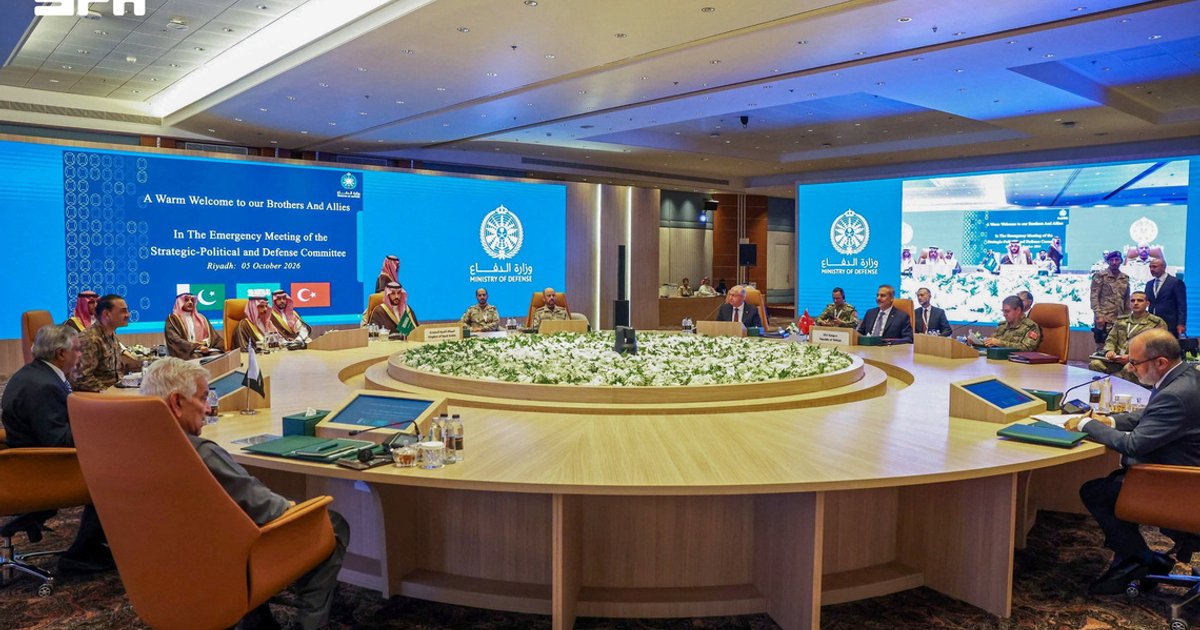
The three countries signed a defence agreement in Mecca in August. asserted
countries → sign → August
Some in Iran feared the deal was constructed to challenge Tehran, but the signatory countries have insisted it is simply a mutual defence pact. asserted
it → fear → Tehran
The balance between exploring a new long-term security architecture and demanding Iran start to compromise in the conflicts in which it is engaged will be critical. asserted
it → explore → which
It is possible the two sides came to the meeting with different priorities. asserted
sides → come → priorities
The Iranian foreign ministry has often proposed a security pact for the region in which Iran, as opposed to the US, plays a role, and the US-Iran conflict has potentially reopened the debate among Gulf states about whether the heavy presence of US bases in their countries is a source of reassurance or insecurity. asserted
presence → propose → reassurance
Oman is one Gulf state to have explored a regional security pact that includes Iran. asserted
that → explore → Iran
No Gulf state openly supported the US-Israeli attack on Iran either last year or this February, but some have covertly cooperated in the operations. asserted
some → support → operations
Iran has sought to defend itself by attacking US bases and energy infrastructure in the Gulf states. asserted
Iran → seek → states
Iran’s foreign ministry spokesperson, Esmaeil Baghaei, said the meeting could pave the way for broader regional cooperation on security based on shared interest. uncertain
meeting → say → interest
“The events of the last two years, especially the past eight months, have shown that sustainable and reliable security in our region will only be possible by building trust and cooperation among the countries of the region,” he said. asserted
he → show → region
Javad Zarif, a former foreign minister and long-term advocate of a regional security alliance called for “a comprehensive regional network based on non-aggression, mutual trust building, and shared prosperity”. asserted
Zarif → call → aggression
“Regional security is not imported, it must be created by the people of this very region together,” he said. asserted
he → import → region
He published his message alongside an image of verses 103 and 159 from Surah Ali ‘Imran, the third chapter of the Qur’an. asserted
He → publish → Qur’an
The verses emphasise being saved from a fiery pit by avoiding division, fostering unity, seeking forgiveness and consulting others. asserted
verses → emphasise → others
The meeting takes place against a backdrop of continued Pentagon briefings about a major US military buildup in preparation for a possible assault after the midterm elections. asserted
meeting → take → elections
Qatari mediators, it was confirmed, spent much of Sunday in Tehran seeking terms for Iran to reopen the strait of Hormuz. asserted
Iran → confirm → Hormuz
Israeli media reports claimed the country’s prime minister, Benjamin Netanyahu, has been trying to browbeat the military into provoking a war with Iran before the Israeli elections on Tuesday. asserted
minister → claim → Tuesday
Donald Trump’s repeated call for Netanyahu to be re-elected only adds to the mood in the region that modern-day US and Israel have the potential to be a long-term source of insecurity in the region. asserted
US → repeat → region
The idea of a security pact with Iran will be resisted in large parts of the Middle East after the damage Tehran has been prepared to inflict on the economies of the region, either directly or through the use of intermediaries such as the Houthis. asserted
Tehran → resist → Houthis
Iranian hardliners also increasingly argue Iran’s security best lies in trying to assemble a nuclear bomb, ending the fatwa on the possession of a weapon of mass destruction. asserted
security → argue → destruction
A pact likely to take many months to negotiate may also not be a solution to Washington’s demand that Iran reopen the strait of Hormuz before US sanctions are lifted. uncertain
sanctions → take → Hormuz
Give feedback · no sign-in needed

No sign-in needed for now. Your note is sent without a name, so it cannot be answered.

History Support