Photo via The Sydney Morning Herald

NSW government backflips on brand-new coffee cup law

Read the original at The Sydney Morning Herald ↗
Cite

O'Malley, N. (2026, October 28). NSW government backflips on brand-new coffee cup law. The Sydney Morning Herald. https://www.smh.com.au/environment/sustainability/nsw-government-backflips-on-brand-new-coffee-cup-law-20261028-p6191r.html?ref=rss&utm_medium=rss&utm_source=rss_feed

Dated from the outlet's own feed. Check the original for its byline.

The Sydney Morning Herald · collected 2026-10-28 · by Nick O'Malley

Quick Summary

The New South Wales government has reversed a recent law requiring cafes to provide reusable cups or glasses to dine-in customers for hot drinks, responding to concerns from small businesses. Environment Minister Penny Sharpe announced the change on Wednesday, confirming that cafes will not need to purchase additional crockery and can continue serving customers disposable recyclable cups. The original legislation aims to reduce plastic waste by banning non-recyclable coffee cups and phasing out other single-use plastics over time. However, specific provisions targeting reusable cups in sit-down service have been abandoned due to objections from business groups concerned about operational changes and logistical issues.
Written by AI on 2026-10-28, from this article's own text only (the story summary below draws on all the coverage).
See how they differ ↓

AI analysis

Story summary

The New South Wales government has reversed its recent plan to ban takeaway coffee cups in cafes, following a backlash from small businesses and media. Chris Minns’ Labor government initially passed legislation last week requiring cafes to provide mugs or glasses instead of disposable cups when customers dine in, starting 2028, and imposing fines up to $110,000 for non-compliance. However, after criticism from small business owners and News Corp Australia, the government decided to repeal these laws. Environment Minister Penny Sharpe announced on Wednesday that cafes will not be required to offer mugs or glasses and can continue serving recyclable disposable cups to customers who choose to sit down. The reforms aim to reduce plastic waste as Sydney’s landfill is projected to run out by 2030, but the government has now assured businesses they won’t face additional operational changes or cup purchasing requirements.

Written for “NSW Coffee Cup Law Backflip” on 2026-11-21, grounded in this article and the 1 other(s) covering the same event.

How they differ

2 outlets covered “NSW Coffee Cup Law Backflip”.

What each outlet says

One AI summary per outlet of its latest article on this story, written from that article alone and checked against it. Open the article for the outlet's own words.

Sydney Morning HeraldThis outlet28 Oct

The New South Wales government has reversed a recent law requiring cafes to provide reusable cups or glasses to dine-in customers for hot drinks, responding to concerns from small businesses. Environment Minister Penny Sharpe announced the change on Wednesday, confirming that cafes will not need to purchase additional crockery and can continue serving customers disposable recyclable cups. The original legislation…

NSW government backflips on brand-new coffee cup law (this article)
The Guardian28 Oct

Chris Minns’ New South Wales government has reversed its plan to mandate cafes offer customers dining in mugs or glasses instead of takeaway cups and scrapped the potential fine up to $110,000 for non-compliance, following backlash from small businesses and media outlets like News Corp Australia. The change came after the legislation passed parliament a week ago as part of an effort to reduce plastic waste amid…

‘I use disposable cups’: Chris Minns backflips on takeaway coffee cups after media and business backlash →

Compared with similar articles

This article reads unscored and hedges 3% of its claims. Each row says how that neighbour differs.

Story

NSW Coffee Cup Law Backflip
Politics · 2 article(s) covering the same event. See how they differ ↑
How this article was measured signals, leaning charts, publisher record, byline, topics and claims

Signals How these are calculated →

Claims extracted
30
sentences that state something as happening or true
Uncertain
3%
1 of 30 hedged ("reportedly", "may", "according to")
Leaning
withheld
no quote in the article backed the model's score
Publisher signals
61/100
The Sydney Morning Herald's corrections and hedging, across everything collected from it. Not a measure of accuracy.
Outlets on this story
2
Politics
Same framing elsewhere
1
articles that frame the event the way this one does
Analyzed 2026-10-28 · how these are computed

How this is being covered How these are calculated →

Article leaning vs. publisher reliability
Source leaning vs. consistency

Publisher

The Sydney Morning Herald · 7794 article(s) · 16 correction(s) detected
Running correction rate · 16 correction(s)

Who wrote this

Nick O'Malley
20 article(s) here · 1 carrying a prediction
Under the Economic Transition Scenario, a business-as-usual forecast driven purely by market forces and economics without new policy interventions, emissions will fall by 32 per cent by 2035 and 56 per cent by 2050.
Signed by Climate Change Minister Chris Bowen and his South Korean counterpart, Kim Sungwhan, on the sidelines of the United Nations’ climate summit, COP31, the agreement will give Australia access to the $US1 trillion the South Korean government has pledged to spend decarbonising its economy in the years to 2035.
Australian Conservation Foundation chief executive Adam Bandt, the former Greens leader who is at the conference, said the comments could be read as criticism of Australia, which has focused on electrification in lieu of pursuing the more diplomatically difficult task of securing agreement to specifically target fossil fuels.
Global carbon emissions are projected to decrease by 0.4 per cent this year, a new report shows, as world leaders begin to arrive at climate talks in Turkey, where the Australian president of negotiations hopes to secure agreement to speed up the electrification of the world’s economy.
Australian Climate Change Minister Chris Bowen, who will serve as president of the negotiations at the United Nations’ COP talks, said every delay costs the world more in its human and economic toll.
A year ago, the idea that Democrats might seize control of the US Senate was laughable.
Under Bolsonaro’s rule, clearing and burning for agriculture, beef production and mining had reached record highs, pushing it towards the point at which it may start to emit more carbon than it absorbs.
A nationwide review of biosecurity measures will target the imported red fire ant incursion in Sydney’s inner west after revelations the location of the nest was only required to be checked every three years.
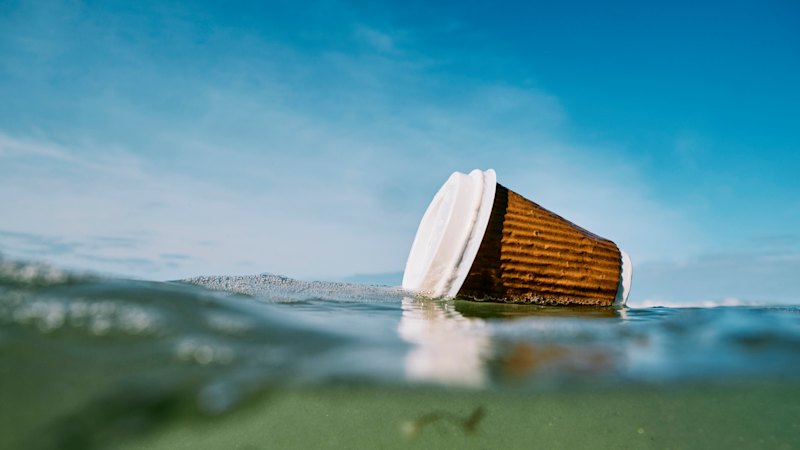
Cafes will be able to continue serving customers who choose to sit down to drink hot drinks in recyclable disposable cups in a change to a new law introduced to reduce plastic waste passed last week.
2026-10-28 · assertive framing · NSW government backflips on brand-new coffee cup law
Bowen secured the talks in negotiations when it became clear Turkey would succeed over Australia in its bid to host United Nations climate talks in November.
Also by Nick O'Malley
Nothing else under this byline is closely related to this article, so these are simply their most recent.
All 20 articles by Nick O'Malley →

Topics

Coalition Liberals NSW the Australian Association of Convenience Stores

Subjects

NSW ORG · 6× the Australian Association of Convenience Stores ORG · 2× Coalition ORG · 1× Liberals NORP · 1× Penny Sharpe PERSON · 1× Sharpe PERSON · 1× The Boomerang Foundation ORG · 1× Theo Foukkare PERSON · 1×

Narrative

These include banning plastic sticks for lollipops in favour of paper or wooden alternatives, banning the plastic ties on bread bags, tethering lids to plastic bottles accepted in return-and-earn schemes, ensuring that stickers on fruit and vegetables are compostable, and phasing out plastic microbeads from beauty and cleaning products. “We’re also making it clear that there will be no mandatory reusable cup schemes.
framing: assertive · carried by 1 article(s) · first seen 2026-10-28
Cafes will be able to continue serving customers who choose to sit down to drink hot drinks in recyclable disposable cups in a change to a new law introduced to reduce plastic waste passed last week.
2026-10-28 · The Sydney Morning Herald
NSW government backflips on brand-new coffee cup law · assertive framing

Claims (30 extracted, 1 hedged)

Cafes will be able to continue serving customers who choose to sit down to drink hot drinks in recyclable disposable cups in a change to a new law introduced to reduce plastic waste passed last week. asserted
who → continue → waste
“We’ve listened to the concerns raised by small businesses about reusable coffee cup reforms, and we’re making changes to give them certainty and confidence,” said NSW Environment Minister Penny Sharpe announcing the changes on Wednesday morning. asserted
Sharpe → listen → morning
“I can confirm that cafes will not be required to offer a mug or glass to dine-in customers. asserted
cafes → confirm → customers
The legislation was designed to give customers the option of a mug or glass when enjoying a coffee in a cafe, rather than only being offered a disposable takeaway cup. asserted
legislation → design → cup
“But we’ve heard the concerns from small businesses, and we won’t be requiring cafes to purchase any additional cups or change the way they operate. asserted
they → hear → way
Under the laws a range of products will be banned or phased out over coming years, including non-recyclable disposable coffee cups, and disposable coffee cups containing harmful chemicals. asserted
range → ban → chemicals
But one provision, that would have made it compulsory for cafes and other outlets to offer dine-in customers standard reusable glassware or crockery for tea and coffee after 2030, has been abandoned. asserted
cafes → make → 2030
This provision was objected to by some business groups, including the Australian Association of Convenience Stores, which was concerned that its members might have been inadvertently subject to the changes. Theo Foukkare, chief executive of the Australian Association of Convenience Stores, said whatever the intent of the law, it appeared that it could have seen service station owners being forced to provide reusable coffee cups. uncertain
owners → object → cups
“Everyone’s been talking about cafes, but nobody’s mentioned the 2300 servos and convenience stores across NSW that serve coffee around the clock,” he said. asserted
he → talk → clock
“Picture a customer grabbing fuel and a coffee from a self serve machine at 2am. asserted
customer → picture → am
Who’s washing the cups?” asserted
Who → wash → cups
The Liberals have sworn to repeal the law under a future NSW Coalition government. asserted
Liberals → swear → government
Under the new plastic law the mass release of balloons at events like funerals or weddings will be immediately banned, while other restrictions on single-use plastic items will be phased in over coming years. asserted
restrictions → ban → years
These include banning plastic sticks for lollipops in favour of paper or wooden alternatives, banning the plastic ties on bread bags, tethering lids to plastic bottles accepted in return-and-earn schemes, ensuring that stickers on fruit and vegetables are compostable, and phasing out plastic microbeads from beauty and cleaning products. “We’re also making it clear that there will be no mandatory reusable cup schemes. asserted
it → include → products
These schemes allow cafes to partner with cup providers so customers can borrow a reusable cup,” said Sharpe. asserted
Sharpe → allow → cup
“We were planning exemptions for small businesses to any future reuse schemes – but to remove all concern, we’re making it clear that there will be no mandatory reuse schemes. asserted
it → plan → concern
“Some businesses are already choosing to do this on their own, and they are welcome to do so. asserted
they → choose → own
And to be absolutely clear, the NSW government has never proposed banning single-use takeaway coffee cups. asserted
government → propose → cups
They will be made recyclable, so they can go in the yellow bin,” she said. asserted
she → make → bin
In 2022-23, NSW generated about 891,000 tonnes of plastic waste – almost 110 kilograms a head – but only 14 per cent of that was recycled. asserted
cent → generate → that
Nearly 800 million single-use cups are used in NSW each year, and most are used for only a matter of minutes before being discarded. asserted
most → use → minutes
Under the new law takeaway coffee cups are not being banned, but from 2028 they must be recyclable. asserted
they → ban → 2028
From 2028, cafes will need to accept KeepCups for takeaway when clean and hygienic cups are presented to staff by customers. asserted
cups → need → customers
The Boomerang Foundation, which led a campaign for plastic waste reform, wrote to the government late on Tuesday night, urging it not change the law. “In the last few days there has been misinformed criticism of the government’s reuse cup legislation. asserted
it → lead → legislation
It is nonsense, but we are aware of its potential political impact and our 56 national, state and local environment NGOs urge the NSW government to not be swayed by it asserted
NGOs → urge → it
,” wrote director Jeff Angel. asserted
Angel → write → ?
“One hot cup of coffee in a plastic or plastic lined cup releases thousands of microplastics and associated chemicals.” asserted
cup → line → microplastics
He likened opposition to the changes to that which arose when lightweight plastic bags were banned and drink container refunds introduced. asserted
refunds → liken → that
“We urge you to support all the key elements of the Plastic Reduction and Container Recycling Act, including requiring reusables for dine-in. asserted
We → urge → in
Get to the heart of what’s happening with climate change and the environment. asserted
what → get → change
Give feedback · no sign-in needed

No sign-in needed for now. Your note is sent without a name, so it cannot be answered.

History Support