Photo via The Sydney Morning Herald

Greenhouse pollution down but global warming surges as climate talks begin

Read the original at The Sydney Morning Herald ↗
Cite

O'Malley, N. (2026, November 10). Greenhouse pollution down but global warming surges as climate talks begin. The Sydney Morning Herald. https://www.smh.com.au/environment/climate-change/greenhouse-pollution-down-but-global-warming-surges-as-climate-talks-begin-20261110-p61csp.html?ref=rss&utm_medium=rss&utm_source=rss_feed

Dated from the outlet's own feed. Check the original for its byline.

The Sydney Morning Herald · collected 2026-11-10 · by Nick O'Malley

Quick Summary

Global carbon emissions are expected to drop by 0.4% in 2026 according to a report from the Global Carbon Project, as world leaders convene for climate talks in Turkey. Despite this reduction, August 2026 was recorded as one of the warmest months ever, with global temperatures reaching 1.65°C above pre-industrial levels. The decline is attributed partly to geopolitical issues like the closure of the Strait of Hormuz, which reduced oil emissions by 1.9%, but experts emphasize that sustained emission reductions require accelerated adoption of clean energy technologies rather than temporary economic shocks.
Written by AI on 2026-11-10, from this article's own text only (the story summary below draws on all the coverage).
See how they differ ↓

AI analysis

Story summary

Global fossil fuel emissions from coal, oil, and gas are projected to decrease by 0.4% in 2026, according to a new report by the Global Carbon Project. This decline is primarily attributed to a combination of the rapid expansion of wind and solar power and an energy shock caused by the Iran war. While the report indicates a slight drop, scientists from the University of Exeter warn that a reduction driven by geopolitical shocks is not a sustainable long-term climate solution. Specifically, China is expected to reduce its emissions by 0.9% this year as it continues its rollout of renewable energy. Despite this minor decrease, the world remains on track to reach 1.5 degrees Celsius of warming within four years. Research published in Nature suggests the drop is more sudden than a steady decline from energy progress, noting that oil emissions spiked before falling significantly due to the conflict. These findings come as world leaders gather in Turkey for climate talks to discuss accelerating the electrification of the global economy.

Written for “Global fossil fuel emissions fall” on 2026-11-21, grounded in this article and the 8 other(s) covering the same event.

How they differ

9 outlets covered “Global fossil fuel emissions fall”.

What each outlet says

One AI summary per outlet of its latest article on this story, written from that article alone and checked against it. Open the article for the outlet's own words.

Sydney Morning HeraldThis outlet10 Nov

Global carbon emissions are expected to drop by 0.4% in 2026 according to a report from the Global Carbon Project, as world leaders convene for climate talks in Turkey. Despite this reduction, August 2026 was recorded as one of the warmest months ever, with global temperatures reaching 1.65°C above pre-industrial levels. The decline is attributed partly to geopolitical issues like the closure of the Strait of…

Greenhouse pollution down but global warming surges as climate talks begin (this article)
Time10 Nov

Global fossil fuel emissions are projected to decrease by 0.4% in 2026, according to a report from the Global Carbon Project. This reduction stems from an energy shock caused by the Iran war and increased adoption of renewable energy sources like wind and solar power. Notably, China’s emissions are expected to drop by 0.9%, while those of the U.S. will decrease by 1.3%. India is a notable exception, with its…

Fossil Fuel Emissions Are Expected to Decrease in 2026 →
ABC News (AU)10 Nov

The Global Carbon Project’s latest report indicates that fossil fuel emissions are projected to decrease by 0.4% in 2026 compared to 2025 levels, primarily due to a reduction in oil emissions linked to the Iran war. However, lead researcher Pierre Friedlingstein warns that this drop is not sustainable without significant acceleration in renewable energy capacity and electrification efforts. Total global carbon…

Renewables and Iran war help drive fall in global fossil fuel emissions →
Toronto Star10 Nov

Global carbon dioxide emissions dropped by 0.4% in 2026 to 42.2 billion tons (38.2 billion metric tons), according to scientists at the Global Carbon Project. This slight decline is attributed to disruptions caused by the Iran war, particularly affecting oil shipments through the Strait of Hormuz, rather than significant progress in climate change mitigation efforts. Scientists warn that these reductions are…

Heat-trapping carbon pollution drops, but scientists cite the Iran war rather than energy progress →
The Hindu10 Nov

Global carbon dioxide emissions from fossil fuels dropped by 0.4% to 42.2 billion tonnes in 2026, according to a study by the Global Carbon Project. This slight decrease is attributed more to disruptions caused by the Iran war and the closure of the Strait of Hormuz than to efforts against climate change. The war has led to significant price increases for oil and gas, causing emissions from these sources to drop…

Heat-trapping carbon pollution drops, but scientists cite Iran war rather than energy progress →
The Straits Times10 Nov

Global fossil fuel emissions are projected to decrease by 0.4% in 2026 due to a combination of renewable energy expansion and an oil price shock caused by the Iran war, according to the Global Carbon Budget report released on November 10 during the COP31 climate summit in Antalya, Turkey. This marks the first annual decline since the pandemic-driven drop in 2020. The report attributes the decrease largely to reduced…

Fossil fuel emissions fall due to Iran war, renewables: Research →
Show 3 more outlets
Daily Mail10 Nov

A new report by the Global Carbon Project forecasts a 0.4% decrease in global carbon emissions from fossil fuels in 2026, marking a potential turning point in reducing reliance on coal, oil, and gas. The projected decline stems largely from a significant drop of 1.9% in oil emissions due to disruptions in energy markets linked to the Iran conflict, alongside rapid growth in renewable energy sources like solar and…

Global carbon emissions from fossil fuels are projected to decrease by 0.4% in 2026, promising study reveals →
Dawn10 Nov

Global fossil fuel emissions are projected to decrease by 0.4% in 2026, marking the first decline since 2020 due to a combination of increased renewable energy deployment and disruptions caused by the Iran war, according to researchers presenting at COP31 in Antalya, Turkiye. The Global Carbon Budget report indicates that emissions from oil are expected to drop by 1.9%, while gas emissions will fall by 0.3% and coal…

Fossil fuel emissions fall due to Iran war, renewables: research →
Semafor10 Nov

Global fossil fuel emissions are forecasted to decrease by 0.4% in 2026, largely due to increased renewable energy production and disruptions caused by the Iran war affecting oil supplies through the Strait of Hormuz. However, the decline is not considered sustainable according to a study published in Nature, which emphasizes that oil emissions might only be temporarily reduced by 1.9%. The increase in…

More renewables and Hormuz disruption drive emissions fall →

Compared with similar articles

This article reads unscored and hedges 0% of its claims. Each row says how that neighbour differs.
The Straits Times
Hedges 3 of 20 claims Outlet record 64/100
“The articles discuss different aspects of climate change and do not describe the same specific incident or occurrence.”
The Hindu
Hedges 4 of 18 claims Outlet record 78/100
“The articles discuss related topics but describe different specific events and time periods concerning climate data and emissions.”
The Straits Times
Hedges 1 of 20 claims Outlet record 64/100
The Hindu
Leans left Hedges 2 of 29 claims Outlet record 78/100
“While both articles discuss a decrease in global carbon emissions and mention the Global Carbon Project, they are not reporting on the same specific incident as Article B focuses more on the reasons behind the drop (oil shocks from the Iran war), while Article A emphasizes the context of climate talks in Turkey.”
Al Jazeera
Hedges 8 of 45 claims Outlet record 60/100
“The articles cover different aspects of a larger climate-related topic and timeline but do not describe the same specific incident.”
The Hindu
Hedges 4 of 17 claims Outlet record 78/100
“While both articles cover climate-related issues and timing overlaps around a UN climate conference in Turkey, Article A focuses on Guterres' warning about entering an age of climate extremes during COP31, while Article B discusses specific emission trends and temperature records. They describe different aspects of the broader climate event.”
ABC News (AU)
Hedges 6 of 42 claims Outlet record 67/100
“While both articles discuss declining emissions and global warming in 2026, they cover different aspects of the topic without clearly describing the exact same incident or period.”
Toronto Star
Leans left Hedges 2 of 29 claims Outlet record 64/100
“While both articles discuss the decrease in global carbon emissions and mention the Global Carbon Project report released on the same day, they focus on different aspects (one citing reasons for emission reduction due to the Iran war and the other linking it with climate talks in Turkey).”
Semafor
Hedges 1 of 6 claims Outlet record 64/100
“The articles discuss different aspects of the same broad topic (emissions decrease in 2026), but do not describe the exact same incident or time frame.”
Semafor
Hedges 0 of 4 claims Outlet record 64/100
“The articles cover related events but different days and focus on different aspects: one discusses the opening of COP31 with challenges and expectations, while the other reports on greenhouse pollution trends and temperature records as leaders begin arriving for climate talks.”

Story

Global fossil fuel emissions fall
Environment · 9 article(s) covering the same event. See how they differ ↑
How this article was measured signals, leaning charts, publisher record, byline, topics and claims

Signals How these are calculated →

Claims extracted
25
sentences that state something as happening or true
Uncertain
0%
0 of 25 hedged ("reportedly", "may", "according to")
Leaning
withheld
no quote in the article backed the model's score
Publisher signals
61/100
The Sydney Morning Herald's corrections and hedging, across everything collected from it. Not a measure of accuracy.
Outlets on this story
9
Environment
Same framing elsewhere
1
articles that frame the event the way this one does
Analyzed 2026-11-10 · how these are computed

How this is being covered How these are calculated →

Article leaning vs. publisher reliability
Source leaning vs. consistency

Publisher

The Sydney Morning Herald · 7794 article(s) · 16 correction(s) detected
Running correction rate · 16 correction(s)

Who wrote this

Nick O'Malley
20 article(s) here · 1 carrying a prediction
Under the Economic Transition Scenario, a business-as-usual forecast driven purely by market forces and economics without new policy interventions, emissions will fall by 32 per cent by 2035 and 56 per cent by 2050.
Signed by Climate Change Minister Chris Bowen and his South Korean counterpart, Kim Sungwhan, on the sidelines of the United Nations’ climate summit, COP31, the agreement will give Australia access to the $US1 trillion the South Korean government has pledged to spend decarbonising its economy in the years to 2035.
Australian Conservation Foundation chief executive Adam Bandt, the former Greens leader who is at the conference, said the comments could be read as criticism of Australia, which has focused on electrification in lieu of pursuing the more diplomatically difficult task of securing agreement to specifically target fossil fuels.
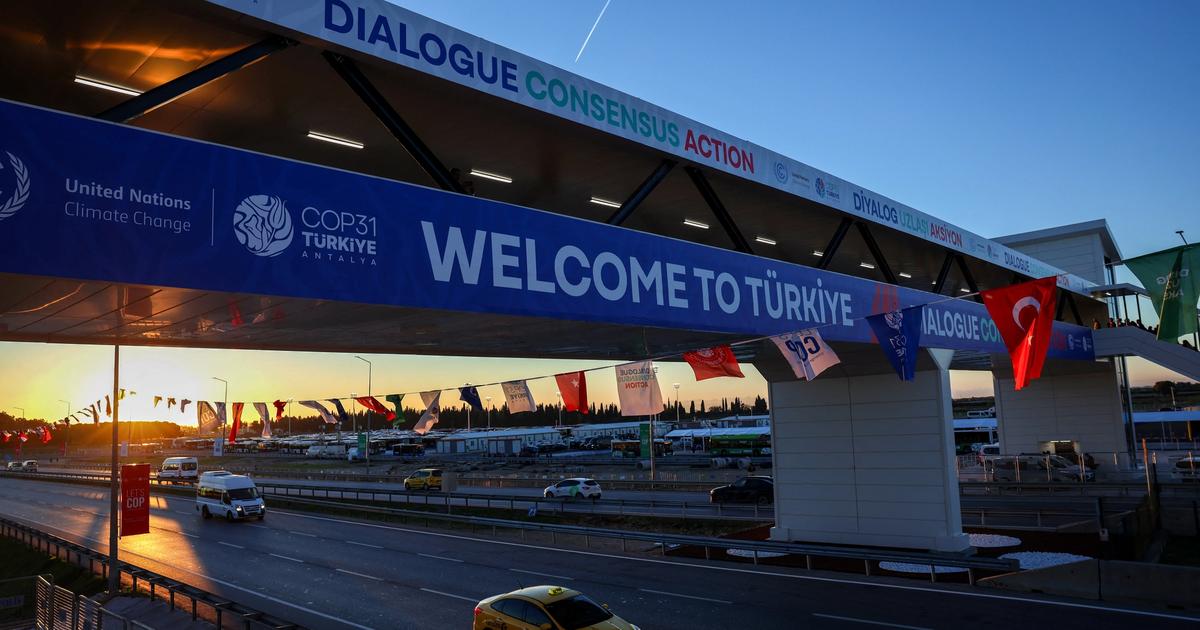
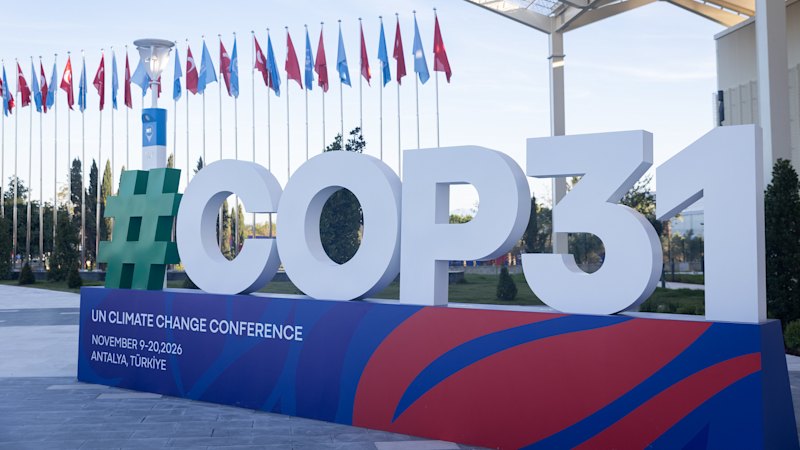
Global carbon emissions are projected to decrease by 0.4 per cent this year, a new report shows, as world leaders begin to arrive at climate talks in Turkey, where the Australian president of negotiations hopes to secure agreement to speed up the electrification of the world’s economy.
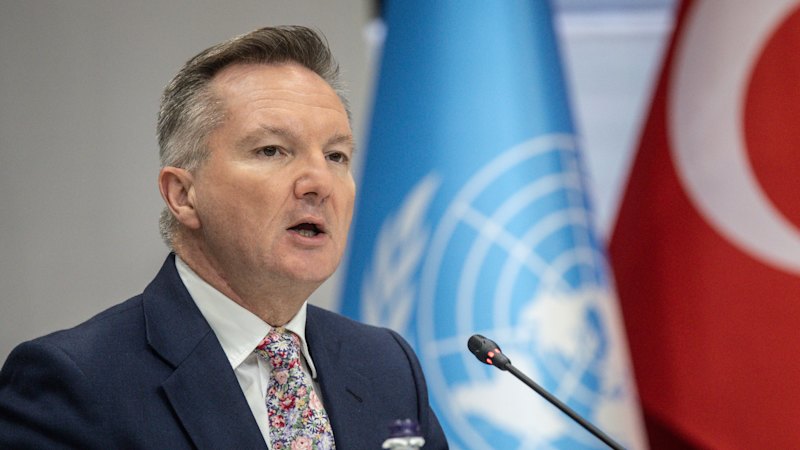
Australian Climate Change Minister Chris Bowen, who will serve as president of the negotiations at the United Nations’ COP talks, said every delay costs the world more in its human and economic toll.
A year ago, the idea that Democrats might seize control of the US Senate was laughable.
Under Bolsonaro’s rule, clearing and burning for agriculture, beef production and mining had reached record highs, pushing it towards the point at which it may start to emit more carbon than it absorbs.
A nationwide review of biosecurity measures will target the imported red fire ant incursion in Sydney’s inner west after revelations the location of the nest was only required to be checked every three years.
Cafes will be able to continue serving customers who choose to sit down to drink hot drinks in recyclable disposable cups in a change to a new law introduced to reduce plastic waste passed last week.
2026-10-28 · assertive framing · NSW government backflips on brand-new coffee cup law
Bowen secured the talks in negotiations when it became clear Turkey would succeed over Australia in its bid to host United Nations climate talks in November.
Also by Nick O'Malley
Nothing else under this byline is closely related to this article, so these are simply their most recent.
All 20 articles by Nick O'Malley →

Topics

Australian Copernicus Turkey the European Union’s the Global Carbon Project

Subjects

China GPE · 4× Turkey GPE · 3× Australian NORP · 2× Bowen PERSON · 2× the Global Carbon Project ORG · 2× Copernicus ORG · 1× Pierre Friedlingstein PERSON · 1× the European Union’s ORG · 1× the Global Carbon Budget Office ORG · 1× the University of Exeter ORG · 1×

Narrative

While renewables and electric vehicles are increasingly offsetting growth in energy demand, further acceleration is needed if global emissions are to peak and enter a sustained decline.” The impact of compounding energy crises caused by wars in Iran and Ukraine has roiled global climate efforts, causing demand surges for both renewables and alternative fossil energy sources, and causing governments to focus on domestic price impacts rather over global climate pledges.
framing: assertive · carried by 1 article(s) · first seen 2026-11-10
Global carbon emissions are projected to decrease by 0.4 per cent this year, a new report shows, as world leaders begin to arrive at climate talks in Turkey, where the Australian president of negotiations hopes to secure agreement to speed up the electrification of the world’s economy.
2026-11-10 · The Sydney Morning Herald
Greenhouse pollution down but global warming surges as climate talks begin · assertive framing

Claims (25 extracted, 0 hedged)

Global carbon emissions are projected to decrease by 0.4 per cent this year, a new report shows, as world leaders begin to arrive at climate talks in Turkey, where the Australian president of negotiations hopes to secure agreement to speed up the electrification of the world’s economy. asserted
president → project → economy
The fall in emissions, revealed by the Global Carbon Project, was reported alongside new data showing that August 2026 was the joint warmest month ever recorded, alongside July 2023. asserted
August → reveal → July
“With a global average surface air temperature 1.65°C higher than the estimated pre-industrial baseline, this August was the first month to exceed 1.5°C since November 2025,” says an analysis published by Copernicus, the European Union’s Earth observation program. asserted
analysis → estimate → Copernicus
It said August marked the end of Western Europe’s warmest summer on record, surpassing the previous record set in 2003. asserted
August → say → 2003
The fall in greenhouse gas emissions is linked to both the rapid deployment of renewable technologies and a fall in demand caused by oil prices shocks stemming from the closure of the Strait of Hormuz, which caused emissions from oil to fall 1.9 per cent. asserted
emissions → link → oil
The Global Carbon Project, a collaboration of scientists tracking and analysing greenhouse pollution, found the dip in pollution it detected was not enough to signal a sustained declined. asserted
it → track → declined
It found that while global energy demand continues to rise, two-thirds of the increase is being met by new solar and wind power and electric vehicles. asserted
thirds → find → power
“A decline in fossil CO2 emissions is encouraging, but a reduction driven partly by geopolitical shocks is not a sustainable climate solution,” said Professor Pierre Friedlingstein, director of the Global Carbon Budget Office at the University of Exeter, who led the study. asserted
who → drive → study
“The long-term answer remains the rapid deployment of clean energy technologies. asserted
answer → remain → technologies
While renewables and electric vehicles are increasingly offsetting growth in energy demand, further acceleration is needed if global emissions are to peak and enter a sustained decline.” The impact of compounding energy crises caused by wars in Iran and Ukraine has roiled global climate efforts, causing demand surges for both renewables and alternative fossil energy sources, and causing governments to focus on domestic price impacts rather over global climate pledges. asserted
governments → offset → pledges
“This year’s fossil fuel cost chaos has delivered a global shockwave, hitting households hard and spreading inflation like a cancer,” said UN climate chief Simon Stiell in his opening speech to COP31 on Monday. asserted
Stiell → deliver → Monday
But the cost increases have also shifted the economic case in favour of electrification, said International Energy Agency executive director Fatih Birol, who has declared that the world is entering ‘the age of electrification.’ asserted
world → shift → electrification
“When I first said that we got a lot of eyebrows raised,” he said in an interview with this masthead earlier this month. asserted
he → say → masthead
“But the market dynamics – leaving aside climate change – confirm it every day, every year, every month.” asserted
dynamics → leave → it
China’s emissions over 2026 are projected to decrease by 0.9 per cent, following two years of low emissions growth. asserted
emissions → project → growth
Alongside its falling oil use, China’s coal emissions rose by 0.3 per cent, but electricity generation from renewables continues to grow strongly. asserted
generation → fall → renewables
While China produces 32 per cent of global fossil emissions, it is also the country most active in deploying clean technologies and increasing carbon sinks through reforestation, the report found. asserted
report → produce → reforestation
China has backed calls by the COP climate talk hosts, Turkey, and president of negotiations, Australian Climate Change and Energy Minister Chris Bowen, to seek global agreement to accelerate the electrification of the global economy. asserted
China → back → economy
Turkey is responsible for voluntary agreements made at the United Nations climate conference, while Bowen is responsible for the formal negotiations, which demands consensus from all the 193 nations which are party to the Paris climate treaty, and the European Union. asserted
which → make → treaty
Bowen has signalled he would like an agreement on electrification to be part of a final COP cover text, though India, the world’s third-largest greenhouse polluter, has declared opposition to the effort. asserted
India → signal → effort
The talks begin in the face of global frustration at the failure of the COP process to either halt warming or implement many of the agreements signed at previous summits. asserted
talks → begin → summits
Bowen and his Turkish counterpart, Environment Minister Murat Kurum, are seeking to manage expectations for this meeting by declaring it would focus on delivering on past commitments rather than pursuing sweeping new deals and pledges. asserted
it → seek → deals
“It should be an implementation COP, because frankly speaking, we have too often fallen into the trap of trying to do many new things, rather than just deliver on what we already have,” EU climate chief Wopke Hoekstra told the European Parliament in a climate debate last month. asserted
Hoekstra → speak → debate
The effort to attract nations to sign on to plan to increase electrification to 35 per cent by 2035 – under the slogan “35 by 35” – is seen as a way to advance ambition to decarbonise the world without engaging in a dispute with oil exporting nations like Saudi Arabia. asserted
nations → attract → Arabia
Get to the heart of what’s happening with climate change and the environment. asserted
what → get → change

Give feedback · no sign-in needed

No sign-in needed for now. Your note is sent without a name, so it cannot be answered.

History Support