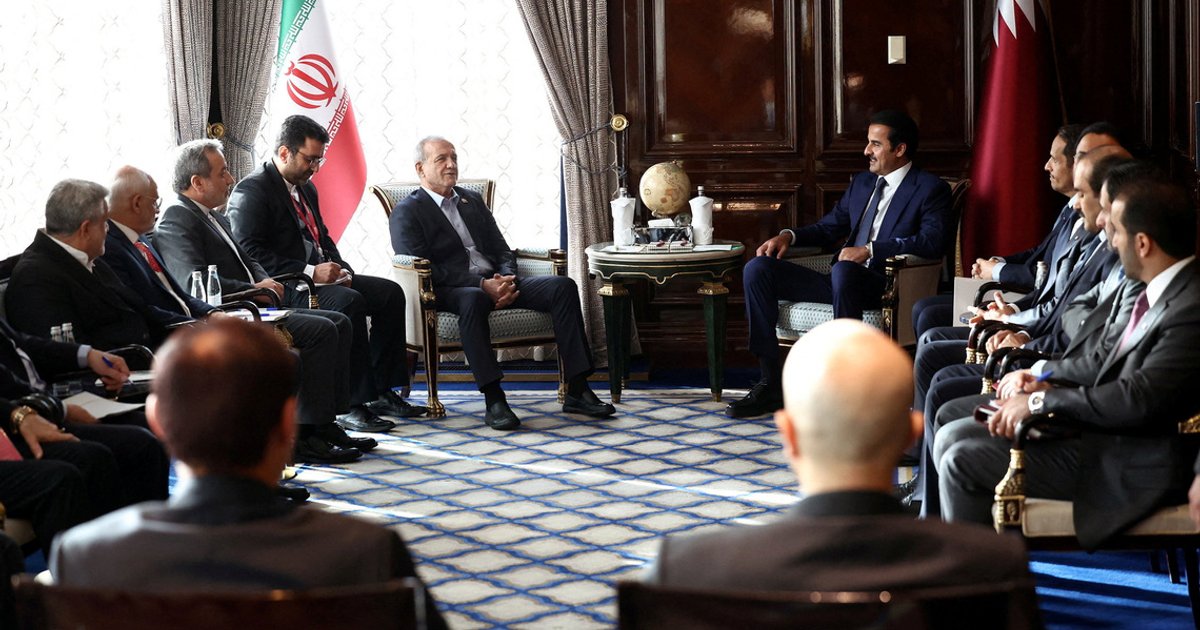
Photo via The Guardian

Gulf states working on multipart peace deal to avert renewal of US-Iran war

Read the original at The Guardian ↗
Cite

editor, P. W. D. (2026, October 28). Gulf states working on multipart peace deal to avert renewal of US-Iran war. The Guardian. https://www.theguardian.com/world/2026/oct/28/gulf-states-multipart-peace-deal-avert-renewal-us-iran-war

Dated from the outlet's own feed. Check the original for its byline.

The Guardian · collected 2026-10-28 · by Patrick Wintour Diplomatic editor

Quick Summary

Gulf states are working on a peace deal to reopen the Strait of Hormuz and for the Houthis in Yemen to withdraw forces as part of efforts to prevent renewed conflict between Iran and the US. The US wants Iran to allow UN weapons inspectors back into the country, while Iran insists on economic sanctions relief before making concessions. Talks involve multiple countries including Saudi Arabia, Turkey, Pakistan, and European diplomats, with a focus on reducing the US presence in the Middle East and establishing a non-aggression pact that includes Iran.
Written by AI on 2026-10-28, from this article's own text only (the story summary below draws on all the coverage).
See how they differ ↓

AI analysis

Story summary

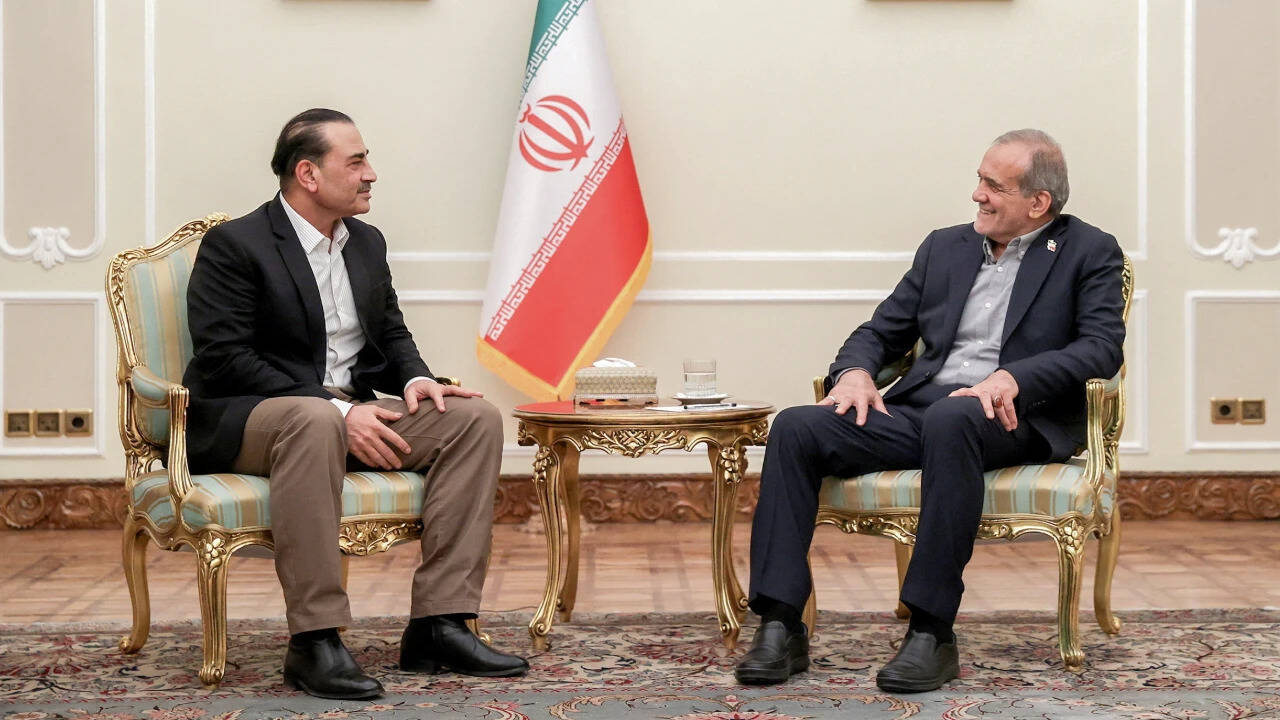
On October 26, top officials from the Mecca Pact countries—Saudi Arabia, Turkey, and Pakistan—met with Iranian officials in Tehran to discuss regional security. The meeting involved Prince Khalid bin Salman (Saudi defense minister), Field Marshal Asim Munir (Pakistan’s army chief and Chief of Defence Forces), and Ibrahim Kalin (Turkish intelligence chief). They discussed strategies to ease tensions amid the re-escalation of conflicts in the region, particularly regarding the Houthi conflict in Yemen. The meeting aimed to prevent a flare-up between Iran and other regional or global powers like the US and Israel. Defence Minister Khawaja Asif later clarified that his non-participation in these discussions was due to it not being under his ministry's mandate, responding to criticism from Jamiat Ulema-i-Islam-Fazl (JUI-F) chief Maulana Fazlur Rehman.

Written for “Tehran Huddle Talks” on 2026-11-21, grounded in this article and the 23 other(s) covering the same event.

How they differ

10 outlets covered “Tehran Huddle Talks”.

What each outlet says

One AI summary per outlet of its latest article on this story, written from that article alone and checked against it. Open the article for the outlet's own words.

The GuardianThis outlet28 Oct

Gulf states are working on a peace deal to reopen the Strait of Hormuz and for the Houthis in Yemen to withdraw forces as part of efforts to prevent renewed conflict between Iran and the US. The US wants Iran to allow UN weapons inspectors back into the country, while Iran insists on economic sanctions relief before making concessions. Talks involve multiple countries including Saudi Arabia, Turkey, Pakistan, and…

Gulf states working on multipart peace deal to avert renewal of US-Iran war (this article)2 articles from The Guardian on this story
Dawn29 Oct

Federal ministers responded to Maulana Fazlur Rehman’s comments about a meeting between Iran and Makkah Defense Pact countries in Tehran, asserting that it was unrelated to defense. The meeting included Pakistan's Chief of Defence Forces and other officials from Saudi Arabia, Turkey, and Iran. While Fazl questioned the necessity of Pakistan's interior minister attending the meeting, ministers defended their…

'Not related to defence': Govt responds to Fazl's remarks about Makkah pact countries' meeting in Tehran →8 articles from Dawn on this story
Times of India27 Oct

Saudi Arabia reportedly offered $1 billion to Yemen’s Houthi group through Iran to secure a ceasefire and halt attacks on the kingdom, according to Israeli media citing diplomatic sources in the Gulf. During talks brokered by Iran in Tehran, Saudi defense minister Prince Khalid bin Salman allegedly brought money aboard his transport aircraft, though no confirmation of actual transfers was provided. The meeting…

Saudi Arabia offered Houthis $1 billion through Iran to stop attacks: Report →3 articles from Times of India on this story
Al Jazeera28 Oct

Gulf Cooperation Council countries, including Saudi Arabia, Pakistan, and Turkey, held high-level talks with Iranian officials in Tehran to ease tensions amid fears of renewed US strikes on Iran. The meeting aimed to discuss a potential regional security pact, but negotiations have stalled over disagreements, particularly regarding Iran's nuclear program. Diplomatic efforts intensified following recent attacks by…

Are GCC countries looking for a regional security pact with Iran? →3 articles from Al Jazeera on this story
Semafor27 Oct

Stocks and oil markets reacted positively following a diplomatic meeting between Saudi, Pakistani, Turkish security officials, and Iranian leaders in Tehran. Saudi stocks saw their biggest gain in over a year at 3.4%, while oil prices dropped by about 1%. Despite these positive market signals indicating potential de-escalation of tensions, Yemen’s Houthi rebels continued to launch attacks against Saudi Arabia…

Diplomacy push provides brief respite for markets →2 articles from Semafor on this story
Euronews27 Oct

Qatar is mediating between Iran and regional powers like Saudi Arabia, Pakistan, and Turkey in an attempt to reduce tensions and open the Strait of Hormuz for shipping. During a visit to Tehran, Qatar urged Iran to demonstrate goodwill by ceasing threats against neighboring countries and reopening the strategic waterway. Talks are ongoing amid concerns over escalating conflict and disrupted energy supplies; US…

Qatar urges Iran to 'show goodwill' by ending threats to the region and reopening the Strait of Hormuz →2 articles from Euronews on this story
Show 4 more outlets
The Straits Times26 Oct

Top officials from Saudi Arabia, Turkey, and Pakistan, members of the Mecca Pact, will meet Iranian officials in Tehran on October 26 to discuss regional coordination amid ongoing conflicts. The meeting includes Saudi Defense Minister Prince Khalid bin Salman and Pakistan's army chief Field Marshal Asim Munir; details emerged from sources who wished to remain anonymous. This is the first high-level contact between…

Top officials from Mecca Pact countries to meet Iranian officials in Tehran: Sources →
The Hindu26 Oct

On October 26, 2026, Iranian state television reported that Iran held its first meeting with representatives from Saudi Arabia, Pakistan, and Turkey in Tehran. These countries are signatories to the Mecca defence pact. The parties agreed to continue discussions aimed at strengthening cooperation and addressing regional peace and security issues.

Iran, Mecca pact countries agree to continue talks after 'first' meeting: state media →
Deutsche Welle28 Oct

Three major Middle Eastern powers—Pakistan, Saudi Arabia, and Turkey—met in Tehran this Monday as part of their new Mecca defense pact aimed at preventing further military escalation between Iran and its adversaries, including the United States and Israel. The envoys discussed regional security issues such as US-Iran tensions, Houthi attacks on Saudi Arabia, and naval disputes over the Strait of Hormuz. Iran viewed…

Is Iran headed to war or peace after Mecca alliance meeting? →
South China Morning Post29 Oct

US allies in the Middle East, including Saudi Arabia, Pakistan, and Turkey, are increasing direct diplomatic engagements with Iran to establish a new regional security framework amid concerns about escalating tensions and potential conflicts. Saudi Arabia notably took a significant step by sending Prince Khalid bin Salman, the country’s defense minister, to Tehran for talks with Iranian officials, marking the first…

Why US allies in Middle East are accelerating direct talks with Iran →

Where they agree and split

Framing

How the first headlines put it

Attributed to a source1
Stated as fact7
The headlines (8)

Top officials from Mecca Pact countries to meet Iranian officials in Tehran: Sources The Straits Times · attributed to a source

Mecca country officials to hold joint meeting in Tehran; discuss regional security Times of India · stated as fact

Mecca Pact members meet officials in Tehran Semafor · stated as fact

High-level delegation in Iran in push to avert flare-up of conflict with US The Guardian · stated as fact

Mecca defence alliance members in Tehran to defuse Iran-US, Yemen tensions Al Jazeera · stated as fact

Pezeshkian urges 'regional unity' in meeting with Makkah pact countries in Tehran Dawn · stated as fact

From the Mecca defence pact to Tehran talks: Is the Middle East’s security landscape shifting? Euronews · stated as fact

Iran, Mecca pact countries agree to continue talks after 'first' meeting: state media The Hindu · stated as fact

The full story: what happened, how it changed, and all 24 articles →

Compared with similar articles

This article reads leans left and hedges 11% of its claims. Each row says how that neighbour differs.
The Hindu
Hedges 4 of 18 claims Outlet record 78/100
“The articles describe different developments related to potential military conflict and peace negotiations between the US and Iran, rather than a single specific incident.”
Times of India
Hedges 1 of 11 claims Outlet record 59/100
“The articles describe different aspects of regional diplomacy but do not report on the same specific meeting or incident.”
Al Jazeera
Hedges 0 of 2 claims Outlet record 60/100
“The articles describe different discussions and initiatives related to US-Iran tensions but do not refer to the same specific meeting or incident.”
Al Jazeera
Leans left Hedges 3 of 24 claims Outlet record 60/100
Dawn
Hedges 1 of 20 claims Outlet record 66/100
“The articles describe different aspects of diplomatic efforts: one focuses on Gulf states' plans for a peace deal involving sanctions and military withdrawal, while the other reports on President Trump's claims that outreach to Iran was about medical supplies rather than peace talks.”
Semafor
Leans strongly right further right than this Hedges 1 of 7 claims Outlet record 64/100
“The articles describe different phases or aspects of ongoing negotiations rather than a single, identical incident.”
Dawn
Outlet record 66/100
“The articles discuss related topics but describe different events: Article A is an editorial opinion against aggression towards Iran, while Article B reports on ongoing peace talks involving Gulf states and other nations to prevent a US-Iran war.”
The Hindu
Hedges 1 of 7 claims Outlet record 78/100
“The articles describe different aspects of a broader situation; Article A discusses ongoing peace talks and plans, while Article B reports on Iran's official stance against holding talks with the US.”
Prudent warning Different event
Dawn
Leans strongly left further left than this Hedges 4 of 22 claims Outlet record 66/100
“Article A discusses a meeting in Istanbul where foreign ministers expressed opposition to military intervention in Iran, while Article B focuses on ongoing peace talks involving Gulf states and a multipronged peace deal to prevent renewed conflict between the US and Iran.”
The Straits Times
Hedges 3 of 23 claims Outlet record 64/100
“While both articles discuss peace negotiations involving Iran, the US, and Gulf states, Article A focuses on the content of a proposed deal including sanctions lifting and UN weapons inspections, whereas Article B emphasizes Iran's rejection of a new draft proposal presented by Qatari mediators.”

Story

Tehran Huddle Talks
Politics · 24 article(s) covering the same event. Compare every outlet's account →
How this article was measured signals, leaning charts, publisher record, byline, topics and claims

Signals How these are calculated →

Claims extracted
19
sentences that state something as happening or true
Uncertain
11%
2 of 19 hedged ("reportedly", "may", "according to")
Leaning
Leans left
of the writing, not the subject · beta estimate
Publisher signals
64/100
The Guardian's corrections and hedging, across everything collected from it. Not a measure of accuracy.
Outlets on this story
24
Politics
Same framing elsewhere
1
articles that frame the event the way this one does
Analyzed 2026-10-28 · how these are computed

How this is being covered How these are calculated →

Article leaning vs. publisher reliability
Source leaning vs. consistency

Publisher

The Guardian · 3767 article(s) · 8 correction(s) detected
Running correction rate · 8 correction(s)

Who wrote this

Patrick Wintour Diplomatic editor
34 article(s) here · 1 carrying a prediction
But in terms of tangible outcomes, it is unlikely to warrant the “new page in the history of diplomacy” that Vladimir Putin claimed had been written, and will instead be consigned to a smallish footnote in any future volume of the 21st century.
Miliband has said it would mark the death knell of a future Palestinian state.
Israel’s possible new prime minister, Gadi Eisenkot has said that, if appointed, he will take a tougher approach than Benjamin Netanyahu to settler violence.
Amr al-Bidh, special representative of the exiled Southern Transitional Council (STC) leader, Aidarous al-Zubaidi, a separatist anti-Houthi force that is opposed by Saudi Arabia, accused the Saudis of incompetence – and in effect warned Riyadh that unless it became more open to a southern state it would lack the cohesive forces required to prevent the Houthis becoming a permanent security threat.
Donald Trump has said in a series of media interviews over the past 24 hours that he will attack Iran only if necessary, claiming that Gulf countries, such as Saudi Arabia, have urged him to hold back from planned large-scale military strikes.
Senior Iranian officials believe the US is planning either further military strikes or an ever-tightening economic stranglehold that will push Tehran into retaliatory action.
Iran would not be required to make any commitment that the stockpile would be removed from the country, with other options on the table, including reducing the uranium content by down-blending it.
The government has become dependent on southern troops to fend off Houthi advances, but these forces insist they will fight only to defend land inside former South Yemen.
The billboard pledged in English: “We will kill Trump” – elevating the degree of personal animus with which Donald Trump is viewed in official Iranian circles.
Dapo Akande will now serve as one of the ICJ’s 15 judges for a minimum nine-year term.
Also by Patrick Wintour Diplomatic editor
Nothing else under this byline is closely related to this article, so these are simply their most recent.
All 34 articles by Patrick Wintour Diplomatic editor →

Topics

European Houthis Iran Saudi Arabia Yemen

Subjects

Iran GPE · 20× Houthis NORP · 3× Saudi Arabia GPE · 3× Yemen GPE · 3× European NORP · 2× Houthi NORP · 2× Pakistan GPE · 2× Turkey GPE · 2× British NORP · 1× Hormuz GPE · 1×

Narrative

Iran successfully prevented discussion of its nuclear programme at the meeting with Turkey, Saudi Arabia and Pakistan, and instead ensured the focus was a broader discussion about a long-term regional security vision that would include the Gulf states and Iran and see the US presence in the Middle East reduced or ended.
framing: assertive · carried by 1 article(s) · first seen 2026-10-28
The US is aware of the talks’ progress but is holding out for a concession that European powers suggest could involve Iran allowing UN weapons inspectors back into the country.
2026-10-28 · The Guardian
Gulf states working on multipart peace deal to avert renewal of US-Iran war · assertive framing

Claims (19 extracted, 2 hedged)

A multipronged peace deal to reopen the strait of Hormuz within four days of sanctions being lifted and for the Houthis to withdraw substantial forces inside Yemen are at the heart of Gulf states’ plans to avert what they regard as a disastrous renewal of war between Iran and the US. asserted
they → reopen → Iran
The US is aware of the talks’ progress but is holding out for a concession that European powers suggest could involve Iran allowing UN weapons inspectors back into the country. uncertain
Iran → hold → country
The British foreign secretary, Ed Miliband, urged the Iranians to agree to readmit the UN weapons inspectors when he met the Iranian foreign minister, Abbas Araghchi, in New York but so far Iran has refused, saying it will only hold talks in principle on its nuclear programme. asserted
it → urge → programme
European diplomats believe allowing weapons inspectors to reenter Iran and visit its bombed nuclear sites is a minimum requirement for a breakthrough with the US president, Donald Trump. asserted
inspectors → believe → president
But Iran remains focused solely on the guarantees of sanctions relief it would receive in return for reopening the strait of Hormuz. asserted
it → remain → Hormuz
Dr Ali Bagheri, the deputy secretary of Iran’s national security council, said Iran was willing to reduce its proposal that the strait reopen seven days after economic sanctions are lifted to four days. asserted
sanctions → say → days
In a further sign of flexibility, Iran is starting to acknowledge it has a mediating role in the parallel conflict in Yemen. asserted
it → start → Yemen
Iran’s secretary of the supreme national security council, Mohsen Rezaei, met the Houthi’s ambassador to Iran, Ibrahim al-Dulaimi, on Tuesday. asserted
secretary → meet → Tuesday
The meeting took place 24 hours after a high-level delegation from Saudi Arabia, Turkey and Pakistan travelled to Tehran to discuss Saudi terms for ending the Yemen conflict as well as a longer-term security architecture for the region. asserted
delegation → take → region
Iran backs the Houthis, and has the power to influence them, including devising proposals that stop short of a Houthi military victory that many say is unobtainable. asserted
many → back → victory
In return the Houthis are demanding that Saudi Arabia lift what it regards as a naval and air blockade on Houthi-held territory. asserted
it → demand → territory
Iran successfully prevented discussion of its nuclear programme at the meeting with Turkey, Saudi Arabia and Pakistan, and instead ensured the focus was a broader discussion about a long-term regional security vision that would include the Gulf states and Iran and see the US presence in the Middle East reduced or ended. asserted
presence → prevent → East
A new non-aggression pact in which Iran is no longer ostracised by the rest of the Gulf, as it has been since the 1979 Islamic Revolution, would meet Iran’s highest strategic goal. asserted
it → ostracise → goal
An agreed commitment to this goal by six Gulf states might also make it easier for Iran to swallow potentially difficult tactical concessions that it would be required to make concerning its nuclear programme. uncertain
it → agree → programme
One of the key advocates of the inclusive security plan, Oman’s foreign minister, Badr Albusaidi, said he believed the US administration understood this was the direction the region is heading. asserted
region → say → plan
He said: “I think if Iran is fully re-engaged in this idea of having all of us, eight countries at peace with the rest of the world, the economic potential is going to be enormous for all of us in the region and those outside the region who choose to take part in this development. asserted
who → say → development
We have really discussed this in at length during the talks between Iran and the United States, and I think there is general acceptance that this will be the direction of travel once we have a deal in place at the end of the day.” asserted
we → discuss → day
At a televised event in Iran this week Araghchi underlined the importance of a new postwar security pact to Iran, saying: “Recently, there has been talk of a new war but I am already thinking about the postwar period. asserted
I → televise → period
Whether there is war or not, our policies remain the same.” asserted
policies → be → ?
Give feedback · no sign-in needed

No sign-in needed for now. Your note is sent without a name, so it cannot be answered.

History Support