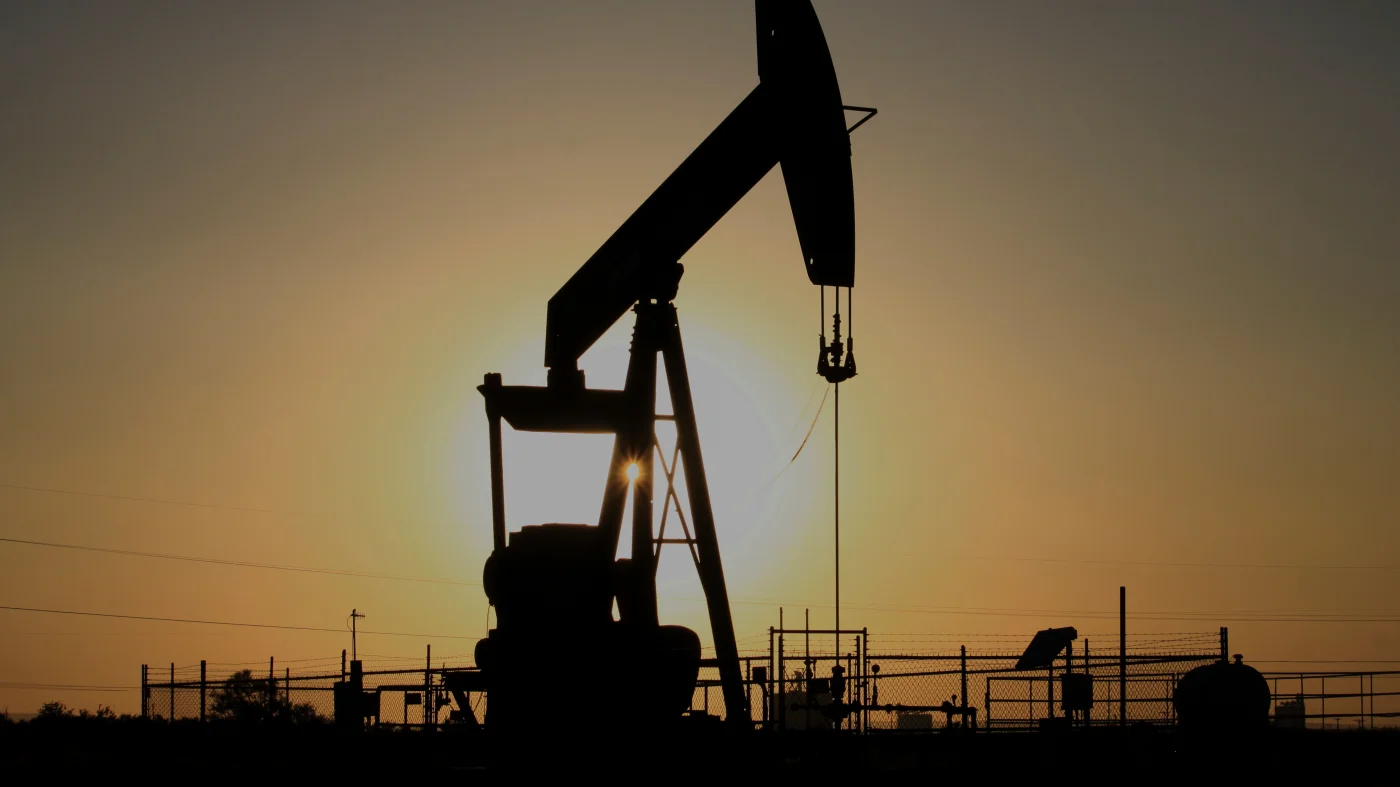
Photo via The Guardian

Shell profits double to $10.8bn as Iran war pushes up profit margin on oil

Read the original at The Guardian ↗
Cite

correspondent, J. A. E. (2026, October 29). Shell profits double to $10.8bn as Iran war pushes up profit margin on oil. The Guardian. https://www.theguardian.com/business/2026/oct/29/shell-profits-double-iran-war-pushes-up-profit-margin-on-oil

Dated from the outlet's own feed. Check the original for its byline.

The Guardian · collected 2026-10-29 · by Jillian Ambrose Energy correspondent

Quick Summary

Shell reported a profit of $10.8 billion for the July-September quarter, doubling from $5.432 billion in the same period last year, driven by higher oil and gas prices due to Middle East conflicts. The company also increased its share buyback program to return $5 billion to investors over the next three months. Climate campaigners criticized the profit surge, with Greenpeace calling it profiteering on global suffering caused by fossil fuel-related disasters.
Written by AI on 2026-10-29, from this article's own text only (the story summary below draws on all the coverage).
See how they differ ↓

AI analysis

Story summary

On October 29, 2026, Shell plc announced a significant rise in its third-quarter earnings to $10.8 billion (up from $5.43 billion in the same period last year), driven by higher oil and gas prices amid the ongoing Middle East conflict. The company also plans to return $5 billion to shareholders through share buybacks before the end of the year, which sent its shares up 3%. Wael Sawan, Shell's CEO, highlighted strong operational performance despite a volatile global energy market disrupted by geopolitical tensions. However, climate campaigners and environmental groups criticized the profit surge, citing concerns over rising fuel costs for households. The conflict in the Middle East has pushed oil prices above $100 per barrel, contributing to higher profit margins for petroleum products compared to previous records set during earlier conflicts.

Written for “Shell Plc Publishes Third Quarter Earnings” on 2026-11-21, grounded in this article and the 4 other(s) covering the same event.

How they differ

3 outlets covered “Shell Plc Publishes Third Quarter Earnings”.

What each outlet says

One AI summary per outlet of its latest article on this story, written from that article alone and checked against it. Open the article for the outlet's own words.

The GuardianThis outlet29 Oct

Shell reported a profit of $10.8 billion for the July-September quarter, doubling from $5.432 billion in the same period last year, driven by higher oil and gas prices due to Middle East conflicts. The company also increased its share buyback program to return $5 billion to investors over the next three months. Climate campaigners criticized the profit surge, with Greenpeace calling it profiteering on global…

Shell profits double to $10.8bn as Iran war pushes up profit margin on oil (this article)
Evening Standard29 Oct

Shell reported a profit of $10.81 billion for the quarter ending September 30, nearly doubling from the same period last year due to rising oil prices. The company announced additional share buybacks, which drew criticism from campaigners who argue that high fuel costs are burdening households and motorists. Environmental groups also criticized Shell's plan to proceed with the Rosebank oil and gas field project…

Shell criticised over bumper earnings haul amid soaring oil prices →2 articles from Evening Standard on this story
Toronto Star29 Oct

On October 29, 2026, Shell plc reported strong financial results for the third quarter of 2026, achieving adjusted earnings of $10.8 billion despite global energy disruptions and volatile commodity prices. The company attributed its success to operational efficiency, strategic acquisitions like ARC Resources Ltd., and a final investment decision on LNG Canada Phase 2. Additionally, Shell announced plans for a $5…

Shell plc publishes third quarter 2026 press release →2 articles from Toronto Star on this story

Compared with similar articles

This article reads unscored and hedges 0% of its claims. Each row says how that neighbour differs.
Evening Standard
Leans left Hedges 0 of 6 claims Outlet record 64/100
Evening Standard
Leans left Hedges 0 of 17 claims Outlet record 64/100
Toronto Star
Hedges 24 of 341 claims Outlet record 65/100
Toronto Star
Hedges 11 of 57 claims Outlet record 65/100
NPR
Leans left Hedges 2 of 45 claims Outlet record 60/100
“While both articles discuss Shell's increased profits due to the Iran war and higher oil prices, they report on different time periods and details (Article A specifies the July-September quarter of 2026 while Article B summarizes earnings from 'this week').”

Story

Shell Plc Publishes Third Quarter Earnings
Economy/Business · 5 article(s) covering the same event. See how they differ ↑
How this article was measured signals, leaning charts, publisher record, byline, topics and claims

Signals How these are calculated →

Claims extracted
17
sentences that state something as happening or true
Uncertain
0%
0 of 17 hedged ("reportedly", "may", "according to")
Leaning
not political
takes no side on a contested political question
Publisher signals
64/100
The Guardian's corrections and hedging, across everything collected from it. Not a measure of accuracy.
Outlets on this story
5
Economy/Business
Same framing elsewhere
1
articles that frame the event the way this one does
Analyzed 2026-10-29 · how these are computed

How this is being covered How these are calculated →

Article leaning vs. publisher reliability
Source leaning vs. consistency

Publisher

The Guardian · 3767 article(s) · 8 correction(s) detected
Running correction rate · 8 correction(s)

Who wrote this

Jillian Ambrose Energy correspondent
12 article(s) here · 0 carrying a prediction
The world’s datacentres will create 70% more carbon emissions within the next four years as the US and China turn to fossil fuels to power their AI growth agendas, according to the world’s energy watchdog.
The giant offshore windfarms backed by Andy Burnham this week may face unexpected stumbling blocks after Greenpeace activists unwittingly dumped about 15 tonnes of boulders on to the site as part of a campaign against seabed trawling in the North Sea.
The investigation found there were “high levels of stress and concern” within the control room over how staff would be able to keep the power system balanced as renewable energy replaces legacy fossil fuel power plants in line with the government’s net zero ambitions.
They add to the growing costs of balancing the grid, which reached a total of £505m in September alone, the highest monthly cost recorded, and are expected to reach £3.2bn over the next year.
Days after Donald Trump announced a deal to import Russian diesel into the US in an effort to lower soaring pump prices, the world’s energy watchdog has warned that the global fuel shortage will drag into 2027.
Drivers will be able to see live petrol prices on Google Maps for the first time from Thursday, in a move that will help motorists shop around for the cheapest fuel.
Shell’s refineries are expected to make almost double the profit from every barrel of fuel produced owing to record prices caused by shortages around the world.
“It will take decades to wean off from that dependency,” Rossi said in an interview with the BBC.
Household energy bills in Great Britain are predicted to soar by £276 a year for the typical household from January as the impact of the Middle East war continues through the coldest months of winter.
With elections due next year in eight EU countries including France, Italy, Spain and Poland, leaders are scrambling to head off the potential fallout from what analysts have warned could be one of the continent’s biggest energy shocks in decades.
Also by Jillian Ambrose Energy correspondent
Nothing else under this byline is closely related to this article, so these are simply their most recent.
All 12 articles by Jillian Ambrose Energy correspondent →

Topics

Greenpeace Russia Shell the Middle East conflict

Subjects

Shell ORG · 10× Russia GPE · 2× Wael Sawan PERSON · 2× Greenpeace ORG · 1× Philip Evans PERSON · 1×

Narrative

These margins are also significantly higher than the previous record for petroleum products of about $28 a barrel, set in the early months of the Russia-Ukraine war, due to shortages in the global market caused by severe damage to refineries in the Middle East and Russia.
framing: assertive · carried by 1 article(s) · first seen 2026-10-29
2026-10-29 · The Guardian
Shell profits double to $10.8bn as Iran war pushes up profit margin on oil · assertive framing

Claims (17 extracted, 0 hedged)

Shell has doubled its profits in the last quarter after the Middle East conflict drove up the price of oil and gas and created shortages in the global market. asserted
conflict → double → market
Shell reported on Thursday morning that it made an adjusted profit of $10.8bn (£8.1bn) in the July-September quarter, up from $5.432bn in the third quarter of 2025. asserted
it → report → 2025
The results beat analyst expectations for a rise to $10.33bn. asserted
results → beat → 10.33bn
The company also raised its share buyback programme – it plans to return $5bn to investors for the next three months, up from $3bn in the last quarter. asserted
it → raise → quarter
“Shell’s relentless focus on operational performance enabled very strong results in a quarter with continued severe disruption to the global energy system,” the Shell chief executive, Wael Sawan, said. asserted
executive → enable → system
Climate campaigners criticised the jump in profits, which pushed Shell’s shares up by 3% in early trading on Thursday morning. asserted
which → criticise → morning
“As fossil-fuelled storms, floods, and soaring costs wreck communities, oil executives like Shell’s Wael Sawan are popping champagne on the deck of a sinking planet. asserted
executives → fuel → planet
We are paying with our lives and paychecks while they cash in on our misery,” said Philip Evans, a senior campaigner at Greenpeace. asserted
Evans → pay → Greenpeace
Shell’s profits were also higher than in the second quarter of this year, when it made $9.836bn. asserted
it → make → 9.836bn
Shell told investors earlier this month that it expected the profit margins at its refineries to climb to $42 for each barrel of fuel produced in the July to September period, far above the margins of $24 a barrel in the second quarter of this year. asserted
margins → tell → year
These margins are also significantly higher than the previous record for petroleum products of about $28 a barrel, set in the early months of the Russia-Ukraine war, due to shortages in the global market caused by severe damage to refineries in the Middle East and Russia. asserted
margins → set → East
Shell’s gas production has been hard hit by the Middle East crisis, which led to severe damage to one of its key gas processing facilities in the Gulf. asserted
which → hit → Gulf
The company’s prewar gas production of 900,000 barrels of oil equivalent per day fell by a third as the Middle East war unfolded. asserted
war → fall → third
Europe’s benchmark gas price index reached an average of almost €64 per megawatt-hour in the third quarter, up from more than €48 a megawatt-hour in the second quarter. asserted
index → reach → quarter
Meanwhile, the global oil price benchmark averaged $94.90 a barrel, up from $69.10 a barrel in the same quarter last year. asserted
benchmark → average → quarter
The steadily rising commodity prices helped lift the market value of Europe’s biggest oil and gas company, now the largest company on the UK’s FTSE 100 index. asserted
prices → rise → index
Shell’s share price rose to a record high of more than £40 a share earlier this month as the global oil price climbed towards $117 a barrel, the highest price in six months. asserted
price → rise → months
Give feedback · no sign-in needed

No sign-in needed for now. Your note is sent without a name, so it cannot be answered.

History Support