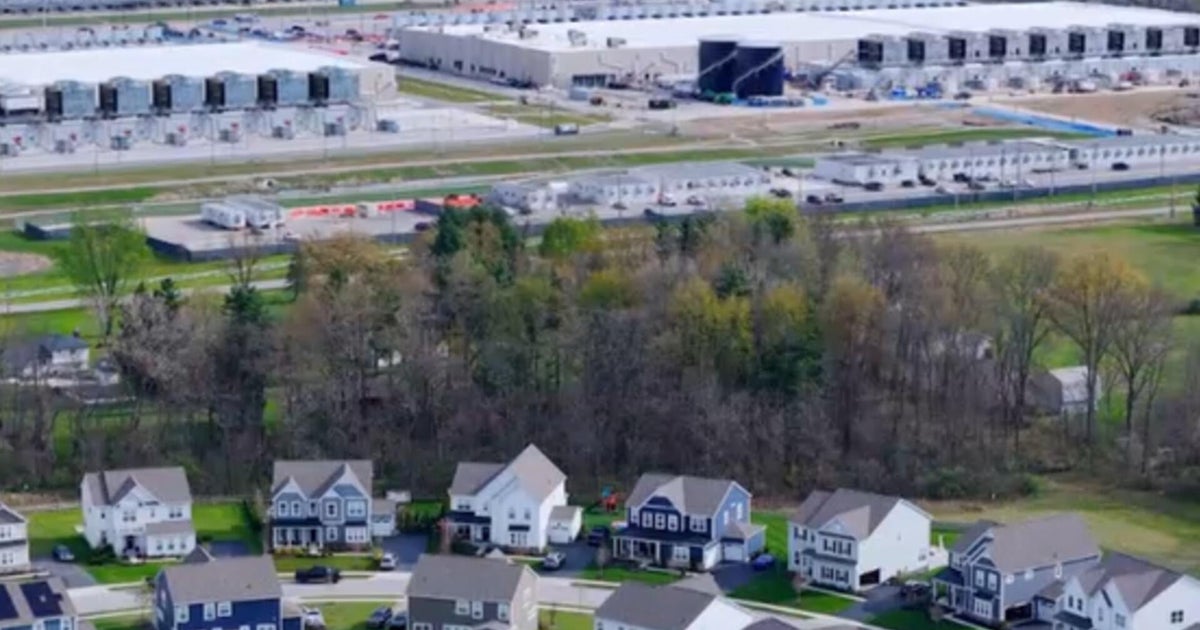
Photo via The Guardian

Datacentres to create 70% more carbon emissions by 2030, IEA report warns

Read the original at The Guardian ↗
Cite

correspondent, J. A. E. (2026, November 19). Datacentres to create 70% more carbon emissions by 2030, IEA report warns. The Guardian. https://www.theguardian.com/world/2026/nov/19/datacentres-to-create-70-more-carbon-emissions-by-2030-iea-report-warns

Dated from the outlet's own feed. Check the original for its byline.

The Guardian · collected 2026-11-19 · by Jillian Ambrose Energy correspondent

Quick Summary

The International Energy Agency (IEA) warns that datacentres will produce 70% more carbon emissions by 2030, driven by the expansion of artificial intelligence. This growth will lead to a doubling of electricity consumption, with AI datacentres alone consuming an additional 350 terawatt-hours annually, equivalent to Britain’s total yearly usage. The report highlights that while datacentres are significant buyers of renewable energy, the demand for fossil fuels is rising, especially in the US and China, contributing to increased carbon emissions.
Written by AI on 2026-11-20, from this article's own text only (the story summary below draws on all the coverage).

AI analysis

Story summary

The International Energy Agency (IEA) has warned that datacenters will create 70% more carbon emissions by 2030, primarily due to the rapid expansion of artificial intelligence. The Paris-based agency's report indicates that datacenters will consume an additional 350 terawatt-hours of electricity annually by 2030, surpassing the current annual electricity consumption of Great Britain. This surge is attributed to the US and China's reliance on fossil fuels to support their AI growth. The IEA's executive director, Fatih Birol, emphasized that the world's energy future is uncertain following the Middle East war, which has disrupted energy markets significantly.

Written for “Datacentres Carbon Emissions Increase” on 2026-11-21, grounded in this article and the 0 other(s) covering the same event.

Compared with similar articles

This article reads leans left and hedges 12% of its claims. Each row says how that neighbour differs.
The Guardian
Leans left Hedges 6 of 26 claims Outlet record 64/100
“The articles discuss the carbon emissions from datacenters but cover different aspects and timeframes of the issue.”
Al Jazeera
Leans left Hedges 0 of 2 claims Outlet record 60/100
“The articles cover related issues but discuss different aspects of data center expansion and its impacts, not the same specific incident.”
CBS News
Hedges 1 of 2 claims Outlet record 66/100
“The articles discuss different studies with distinct findings and timeframes.”

Story

Datacentres Carbon Emissions Increase
Environment · 1 article(s) covering the same event.
How this article was measured signals, leaning charts, publisher record, byline, topics and claims

Signals How these are calculated →

Claims extracted
24
sentences that state something as happening or true
Uncertain
12%
3 of 24 hedged ("reportedly", "may", "according to")
Leaning
Leans left
of the writing, not the subject · beta estimate
Publisher signals
64/100
The Guardian's corrections and hedging, across everything collected from it. Not a measure of accuracy.
Outlets on this story
1
Environment
Same framing elsewhere
1
articles that frame the event the way this one does
Analyzed 2026-11-20 · how these are computed

How this is being covered How these are calculated →

Article leaning vs. publisher reliability
Source leaning vs. consistency

Publisher

The Guardian · 3744 article(s) · 8 correction(s) detected
Running correction rate · 8 correction(s)

Who wrote this

Jillian Ambrose Energy correspondent
12 article(s) here · 1 carrying a prediction
The world’s datacentres will create 70% more carbon emissions within the next four years as the US and China turn to fossil fuels to power their AI growth agendas, according to the world’s energy watchdog.
The giant offshore windfarms backed by Andy Burnham this week may face unexpected stumbling blocks after Greenpeace activists unwittingly dumped about 15 tonnes of boulders on to the site as part of a campaign against seabed trawling in the North Sea.
The investigation found there were “high levels of stress and concern” within the control room over how staff would be able to keep the power system balanced as renewable energy replaces legacy fossil fuel power plants in line with the government’s net zero ambitions.
They add to the growing costs of balancing the grid, which reached a total of £505m in September alone, the highest monthly cost recorded, and are expected to reach £3.2bn over the next year.
Days after Donald Trump announced a deal to import Russian diesel into the US in an effort to lower soaring pump prices, the world’s energy watchdog has warned that the global fuel shortage will drag into 2027.
Drivers will be able to see live petrol prices on Google Maps for the first time from Thursday, in a move that will help motorists shop around for the cheapest fuel.
Shell’s refineries are expected to make almost double the profit from every barrel of fuel produced owing to record prices caused by shortages around the world.
“It will take decades to wean off from that dependency,” Rossi said in an interview with the BBC.
Household energy bills in Great Britain are predicted to soar by £276 a year for the typical household from January as the impact of the Middle East war continues through the coldest months of winter.
With elections due next year in eight EU countries including France, Italy, Spain and Poland, leaders are scrambling to head off the potential fallout from what analysts have warned could be one of the continent’s biggest energy shocks in decades.
Also by Jillian Ambrose Energy correspondent
Nothing else under this byline is closely related to this article, so these are simply their most recent.
All 12 articles by Jillian Ambrose Energy correspondent →

Topics

China Great Britain IEA Paris The International Energy Agency

Subjects

IEA ORG · 8× China GPE · 5× Canada GPE · 1× Fatih Birol PERSON · 1× Great Britain GPE · 1× Paris GPE · 1× The International Energy Agency ORG · 1× the European Union ORG · 1×

Narrative

The Paris-based agency found that the breakneck pace of the industry’s growth means that within four years AI datacentres will consume an extra 350 terrawatt-hours of electricity every year, or more than the annual electricity consumption of Great Britain.
framing: assertive · carried by 1 article(s) · first seen 2026-11-20
The world’s datacentres will create 70% more carbon emissions within the next four years as the US and China turn to fossil fuels to power their AI growth agendas, according to the world’s energy watchdog.
2026-11-20 · The Guardian
Datacentres to create 70% more carbon emissions by 2030, IEA report warns · assertive framing

Claims (24 extracted, 3 hedged)

The world’s datacentres will create 70% more carbon emissions within the next four years as the US and China turn to fossil fuels to power their AI growth agendas, according to the world’s energy watchdog. uncertain
US → create → watchdog
The International Energy Agency (IEA) warned that datacentres will consume twice as much electricity by 2030 compared with today, with the global expansion of artificial intelligence accounting for three-quarters of this growth. asserted
expansion → warn → growth
The Paris-based agency found that the breakneck pace of the industry’s growth means that within four years AI datacentres will consume an extra 350 terrawatt-hours of electricity every year, or more than the annual electricity consumption of Great Britain. asserted
datacentres → base → Britain
Its influential annual report warned that the world’s energy future was less certain after the impact of the Middle East war, which it has described as the greatest energy market disruption in history. asserted
it → warn → history
“I don’t see any credible pathway for the energy world to return to the way it was before,” said the IEA’s executive director Fatih Birol. asserted
director → see → way
Instead, it will be reshaped by the policy decisions governments make after the crisis to meet the increasing demand for energy to power a growing global population, the rising need for air-conditioning and a booming AI economy, the IEA said. asserted
IEA → reshape → conditioning
Datacentre developers have emerged as the world’s biggest corporate buyers of renewable energy to help fuel their servers which have a connection to local power grids. asserted
which → emerge → grids
Despite this, the report showed that the appetite for fossil fuels is expected to grow even faster, particularly in the US and China. asserted
appetite → show → US
By the end of the decade, around half of the electricity needed to power China’s AI datacentres will come from coal power plants, according to the IEA. uncertain
half → need → IEA
The rest will come from renewable energy, with smaller amounts from nuclear reactors and very little from gas plants. asserted
rest → come → plants
In contrast, the US is expected to rely on gas to provide about 60% of the electricity for its datacentres by 2030. asserted
US → expect → 2030
There were plans for about 180GW of new gas-fired power plants linked to US datacentres in August this year, the agency said. asserted
agency → be → August
That is almost as much new gas capacity as the total now installed across the European Union. asserted
That → instal → Union
As a result of the growth in fossil fuel generation for datacentres, emissions associated with this sector were on track to rise by 70% by 2030, the IEA said. asserted
IEA → associate → 2030
The appetite for gas power among US datacentre developers is more than 16 times higher than in Canada, where the IEA identified plans for 11GW of gas generation to power their servers. asserted
IEA → identify → servers
In the rest of the world, AI developers have put forward plans for new gas plants with a combined capacity of just 4GW, the agency said. asserted
agency → put → 4GW
This is because renewable energy is expected to play a greater role in supplying datacentres outside the US and China. asserted
energy → expect → US
In the EU, the IEA expects datacentres to rely on renewables for about 70% of their electricity by 2030 – followed by nuclear power, gas generation, and a very small amount of coal power. asserted
datacentres → expect → power
The agency based its forecasts for the notoriously opaque industry on data showing the annual global shipment of AI servers, which have climbed eighteen-fold since 2020. asserted
which → base → 2020
It also used space-based imagery to track the buildout of 93 large “AI factories” around the world. asserted
It → use → world
Its analysis suggests that the world’s datacentre capacity has climbed tenfold in the last 24 months to 17GW. uncertain
capacity → suggest → 17GW
By the time the AI factories were completed, their combined capacity was likely to be about 50GW, the IEA said. asserted
IEA → complete → time
The world’s existing stock of datacentres, including those with AI-optimised servers, now stands at 120GW, with 80% of this capacity in China, the US and the EU. asserted
stock → exist → China
A further 120GW will be built by the end of the decade under the IEA scenario often considered its central base case, of which three-quarters will be AI datacentres. asserted
quarters → build → which

Give feedback · no sign-in needed

No sign-in needed for now. Your note is sent without a name, so it cannot be answered.

History Support