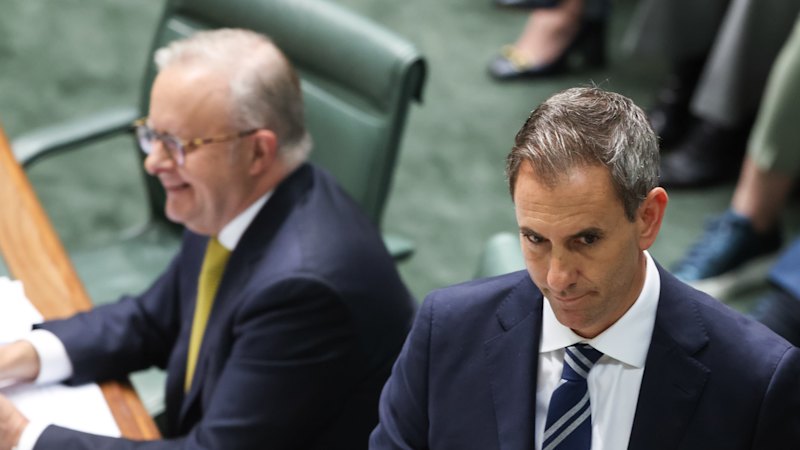
Photo via Evening Standard

Healey warns of more ‘hard decisions’ and departmental spending cuts

Read the original at Evening Standard ↗
Cite

Wingate, S. (2026, October 29). Healey warns of more ‘hard decisions’ and departmental spending cuts. Evening Standard. https://www.standard.co.uk/business/business-news/john-healey-treasury-resolution-foundation-robert-jenrick-budget-b1302752.html

Dated from the outlet's own feed. Check the original for its byline.

Evening Standard · collected 2026-10-29 · by Sophie Wingate

Quick Summary

Chancellor Jeremy Healey addressed the House of Commons, defending his budget as significant despite criticisms from think tanks like the Institute for Fiscal Studies and Resolution Foundation. He outlined plans to cut departmental capital budgets by 1% annually over three years starting in 2027-28 to raise £3 billion, with an additional £1.7 billion coming from Treasury reserves, to fund a defense investment plan shortfall of £4.7 billion.
Written by AI on 2026-10-31, from this article's own text only (the story summary below draws on all the coverage).
See how they differ ↓

AI analysis

Story summary

On October 25, 2026, British Chancellor John Healey announced plans for a new budget aimed at boosting local growth and reducing welfare costs under Prime Minister Andy Burnham's government. The budget includes £285 million in immediate funding to support "good growth" in England until a new system takes effect in 2028, allowing some income tax revenue to be directly managed by local areas. Healey also pledged over £1 billion for social and affordable housing across the country, surpassing the £40 billion mark for the government's 10-year homes programme.

Despite these initiatives, criticism emerged as Healey faced challenges in clarifying his plans for reducing welfare spending and addressing high inflation. On November 1, 2026, concerns were raised that over 830,000 low-income households would miss out on the £100 council tax reduction scheme designed to alleviate energy costs, benefiting only those in bands A to D.

Written for “Labour Budget Promises And U-turns” on 2026-11-21, grounded in this article and the 151 other(s) covering the same event.

How they differ

7 outlets covered “Labour Budget Promises And U-turns”.

What each outlet says

One AI summary per outlet of its latest article on this story, written from that article alone and checked against it. Open the article for the outlet's own words.

Evening StandardThis outlet29 Oct

Chancellor Jeremy Healey addressed the House of Commons, defending his budget as significant despite criticisms from think tanks like the Institute for Fiscal Studies and Resolution Foundation. He outlined plans to cut departmental capital budgets by 1% annually over three years starting in 2027-28 to raise £3 billion, with an additional £1.7 billion coming from Treasury reserves, to fund a defense investment plan…

Healey warns of more ‘hard decisions’ and departmental spending cuts (this article)61 articles from Evening Standard on this story
Daily Mail2 Nov

A new analysis by Policy in Practice reveals that over 830,000 low-income households will miss out on a £100 energy bailout announced by Labour Chancellor John Healey. The measure aims to assist up to 20 million households across council tax bands A to D with a total of £2.6 billion. However, the analysis highlights that these households are poorly targeted and excludes many of those most in need due to their…

Labour's '£100 energy bailout for the North' will 'miss out 830,000 of the poorest households' →50 articles from Daily Mail on this story
The Guardian30 Oct

Prime Minister Andy Burnham expressed regret over his first budget as being less radical than desired due to economic uncertainties and external pressures like the war in Iran. He acknowledged criticism for not addressing issues such as welfare cuts and defense spending more aggressively, explaining that while he wanted significant changes, practical constraints limited what could be accomplished immediately…

Andy Burnham admits he would have liked more radical first budget →21 articles from The Guardian on this story
BBC1 Nov

Households in the West Midlands are expressing concerns that recent government measures announced by Chancellor John Healey do not adequately address rising energy costs. While appreciative of a £100 household energy payment and plans to remove gas standing charges, residents like Kelly Birkett and Mark Sumner remain worried about their ability to manage winter heating bills. The chancellor defended the measures as…

Energy bills help 'doesn't go far enough' →16 articles from BBC on this story
Al Jazeera28 Oct

The UK's Chancellor of the Exchequer, John Healey, presented his Autumn Budget on Wednesday under Prime Minister Andy Burnham’s Labour government. The budget includes a one-off payment of £100 to 20 million households for energy costs and extends a temporary VAT cut until July. However, economist James Meadway criticizes these measures as insufficient to address the cost-of-living crisis, noting that real earnings…

Five key takeaways from the UK Autumn Budget →2 articles from Al Jazeera on this story
Washington Examiner29 Oct

Chancellor of the Exchequer John Healey presented a budget that suggests the United Kingdom is headed towards a fiscal crisis similar to France's if significant spending cuts are not implemented soon. The article criticizes the Labour government for its reluctance to address the impending economic issues, likening their approach to ignoring reality.

The UK keeps calm and carries on toward French-style disaster →
Show 1 more outlets
The Straits Times29 Oct

British Finance Minister John Healey announced plans to reduce welfare spending, which is projected to cost more than 11% of economic output by 2026, during an interview with the BBC. He emphasized that cuts would not be made through “crude reductions” but did not specify when these changes would take place before the next election in mid-2029 at the latest. Prime Minister Andy Burnham echoed Healey’s commitment to…

Britain will reduce ‘unsustainable’ welfare costs, Finance Minister Healey says →

Where they agree and split

Agreed

Reported by outlets on both sides of the middle

Chancellor John Healey has pledged a reduction in the welfare bill ahead of the next general election, in an interview with BBC Radio 4's Today programme.

4 outlets
Show 1 more

The Office for Budget Responsibility said total welfare spending would grow from £334bn last year to £431bn by 2030 – with about half of that being spent on pensioners and a quarter on sickness and disability benefits.

4 outlets
The full story: what happened, how it changed, and all 152 articles →

Compared with similar articles

This article reads leans right and hedges 12% of its claims. Each row says how that neighbour differs.
Evening Standard
Leans right Hedges 2 of 27 claims Outlet record 64/100
The Guardian
Hedges 3 of 14 claims Outlet record 64/100
The Sydney Morning Herald
Leans left further left than this Hedges 2 of 36 claims Outlet record 61/100
“The articles discuss different dates and contexts related to government spending and budget policies, indicating separate events rather than a single incident.”
BBC News
Leans left further left than this Hedges 1 of 22 claims Outlet record 65/100
“Article A discusses general economic challenges and political ambitions leading up to a Budget, while Article B reports on specific warnings and criticisms immediately following the announcement of the Budget.”
Evening Standard
Hedges 0 of 67 claims Outlet record 64/100
Evening Standard
Hedges 0 of 20 claims Outlet record 64/100
“The articles discuss different aspects of budget and policy actions, not a single identical incident.”
Evening Standard
Hedges 0 of 22 claims Outlet record 64/100

Story

Labour Budget Promises And U-turns
Politics · 152 article(s) covering the same event. Compare every outlet's account →
How this article was measured signals, leaning charts, publisher record, byline, topics and claims

Signals How these are calculated →

Claims extracted
26
sentences that state something as happening or true
Uncertain
12%
3 of 26 hedged ("reportedly", "may", "according to")
Leaning
Leans right
of the writing, not the subject · beta estimate
Publisher signals
64/100
Evening Standard's corrections and hedging, across everything collected from it. Not a measure of accuracy.
Outlets on this story
152
Politics
Same framing elsewhere
1
articles that frame the event the way this one does
Analyzed 2026-10-31 · how these are computed

How this is being covered How these are calculated →

Article leaning vs. publisher reliability
Source leaning vs. consistency

Publisher

Evening Standard · 11037 article(s) · 82 correction(s) detected
Running correction rate · 82 correction(s)

Who wrote this

Sophie Wingate
65 article(s) here · 1 carrying a prediction
He is expected to sign new agreements on food, energy and youth mobility at Friday’s summit, having described the current Brexit deal as not good enough.
The companies include Har Hevron Development Company Ltd, Hemdat Shomron Ltd and SAG (Velvel) Construction and Development Ltd. The sanctions have also hit Tzav 9, an Israeli activist movement which has prevented humanitarian aid convoys from entering war-torn Gaza as recently as October. The announcement comes two days before the review of tenders for the construction of homes for Israelis in the E1 development is to begin, with critics saying the controversial project that would effectively separate the occupied West Bank from East Jerusalem.
But, with the Brussels meeting approaching this Friday, Mr Burnham appeared to prolong the timeline, saying in a speech on Monday he would start a discussion with the bloc on options after the summit, before presenting options to the public at a later date.
The announcement comes two days before the review of tenders for the construction of homes for Israelis in the E1 development is to begin, with critics saying the controversial project that would effectively separate the occupied West Bank from East Jerusalem.
Mr Miliband has argued that the plans for the E1 development in the West Bank would render a two-state solution unviable.
Burnham gives no ‘blanket assurance’ on accepting Neets recommendations in full Former Labour health secretary Mr Milburn’s review next week will recommend how to curb the number of so-called Neets – 16 to 24-year-olds not in education, employment or training – which topped a million earlier this year for the first time in more than a decade.
Former Labour health secretary Mr Milburn’s review next week will recommend how to curb the number of so-called Neets – 16 to 24-year-olds not in education, employment or training – which topped a million earlier this year for the first time in more than a decade.
Also by Sophie Wingate
Nothing else under this byline is closely related to this article, so these are simply their most recent.
All 65 articles by Sophie Wingate →

Topics

Britain Budget Government IFS Institute for Fiscal Studies

Subjects

Budget ORG · 5× Britain GPE · 4× Healey PERSON · 4× Government ORG · 3× IFS ORG · 2× Labour NORP · 2× Commons ORG · 1× Institute for Fiscal Studies ORG · 1× Keir Starmer PERSON · 1× Resolution Foundation ORG · 1×

Narrative

Ruth Curtice, chief executive of the Resolution Foundation, which has been influential on Labour’s thinking, said: “Faced with a tough backdrop amid global economic turmoil, the Chancellor delivered a scattergun Budget that did little to address the sharp challenges facing Britain.
framing: assertive · carried by 1 article(s) · first seen 2026-10-31
The influential Institute for Fiscal Studies (IFS) think tank said the Budget’s “raft of fiddly measures” would do little to boost growth and warned it delayed tough decisions, and the left-leaning Resolution Foundation think tank said Mr Healey had “spread the jam thin”.
2026-10-31 · Evening Standard
Healey warns of more ‘hard decisions’ and departmental spending cuts · assertive framing

Claims (26 extracted, 3 hedged)

Healey warns of more ‘hard decisions’ and departmental spending cuts He hit back against accusations it was too modest, saying: “I’d fundamentally contest that this is not a significant Budget.” asserted
this → warn → accusations
The influential Institute for Fiscal Studies (IFS) think tank said the Budget’s “raft of fiddly measures” would do little to boost growth and warned it delayed tough decisions, and the left-leaning Resolution Foundation think tank said Mr Healey had “spread the jam thin”. asserted
Healey → say → jam
But the Chancellor insisted it included “some big decisions”, pointing to energy reforms including offering millions of households £100 to help with soaring energy bills, as well as defence spending. asserted
it → insist → bills
In Wednesday’s speech in the Commons, he committed to spending 3% of economic output on defence by 2030, and to “fully funding” the £4.7 billion black hole in the defence investment plan (Dip) left by Sir Keir Starmer. asserted
he → commit → Starmer
The Dip shortfall will be funded “through reprioritisation of capital budgets”, according to the Budget document. uncertain
shortfall → fund → document
Departments across Government will be asked to reduce their capital budgets by 1% each between 2027-28 and 2029-30 to raise some £3 billion. asserted
Departments → ask → billion
The remaining £1.7 billion shortfall will be made up from an “unallocated contingency in the Treasury’s capital reserve”, the Budget said. asserted
Budget → remain → reserve
In a round of post-Budget broadcast interviews, Mr Healey told Good Morning Britain that funding the Dip “involved hard choices, it’s reprioritising within Government”. asserted
it → tell → Government
And he signalled that departments would have to further slash spending to pay for choices made at the spending review next year. asserted
departments → signal → review
He told Bloomberg: “My Cabinet colleagues are demonstrating that they can also exert fiscal discipline and spending control, and we will take that into the spending review. asserted
we → tell → review
Read More “But the spending review will be framed by the priorities that we set in the 10-year plan for Britain, that’s as it should be. asserted
it → read → Britain
“Hard decisions about the top priorities for Britain in the years to come, judgments that then follow about how we fund them.” asserted
we → come → them
Meanwhile, Mr Healey denied postponing difficult decisions on the welfare system amid criticism he had failed to deal with the ballooning cost of welfare. asserted
he → deny → welfare
He said ministers had already brought in a range of measures to cut the cost, including reinstating face-to-face assessments, tweaking the “terms of universal credit, so people don’t have to brand themselves as too sick to work”. asserted
people → say → themselves
And he suggested the benefits bill would start coming down before the next general election, telling BBC Radio 4’s Today programme: “There will be a reduction in the benefits bill, we’ll do that in a Labour way and we’ll do that because it is simply not good for Britain or progressive to have a bigger and bigger benefits bill.” uncertain
it → suggest → bill
Tory shadow chancellor Andrew Griffith argued the Government could find the money to boost defence spending by curbing the welfare bill. uncertain
Government → argue → bill
He told Times Radio: “It’s not the only area of Government spending that people should look at to try and make savings and live within our means. asserted
people → tell → means
“But if your welfare bill is going up by £60 billion, and you’re struggling to try and find £10 billion for defence, I honestly don’t think it is that hard.” asserted
it → go → defence
In the IFS initial response to the fiscal statement, director Helen Miller said: “The plan to reduce borrowing has been pushed back. asserted
plan → say → borrowing
“This Budget has a raft of fiddly measures but very little that will move the dial on growth.” asserted
that → have → growth
She added: “Whether reductions in borrowing can actually be delivered depends heavily on public service spending plans, where growth is set to slow sharply after this year. “History warns us to be sceptical of tight spending plans in later years of the forecast.” asserted
History → add → forecast
Ruth Curtice, chief executive of the Resolution Foundation, which has been influential on Labour’s thinking, said: “Faced with a tough backdrop amid global economic turmoil, the Chancellor delivered a scattergun Budget that did little to address the sharp challenges facing Britain. asserted
that → say → Britain
“Cost-of-living support is being spread far too thinly and will leave even those families receiving help facing higher energy bills than they did during the last energy price shock.” asserted
they → spread → shock
The Budget will face closer scrutiny on Thursday when the Office for Budget Responsibility (OBR) watchdog and Resolution Foundation researchers host a post-Budget briefing. asserted
watchdog → face → briefing
The IFS will also give a considered analysis of the Budget. asserted
IFS → give → Budget
Meanwhile, Prime Minister Andy Burnham, Mr Healey and Business Secretary Jonathan Reynolds will seek to rally support for the Budget on a visit to a Rolls-Royce factory in the East Midlands. asserted
Burnham → seek → Midlands
Give feedback · no sign-in needed

No sign-in needed for now. Your note is sent without a name, so it cannot be answered.

History Support