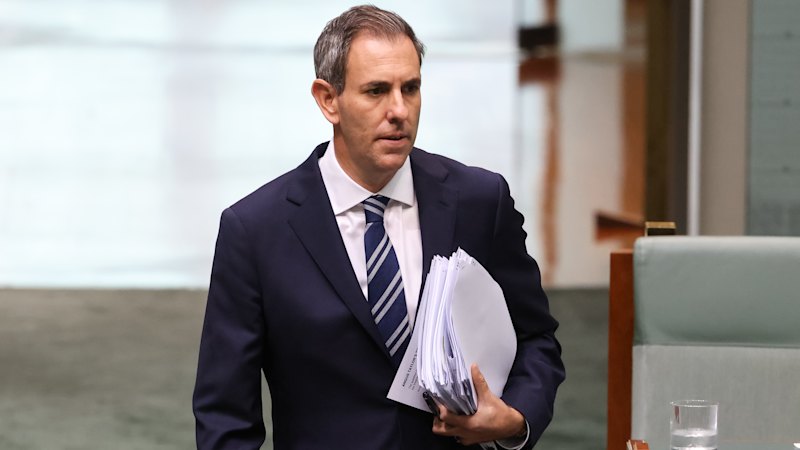
Photo via The Guardian

Healey’s budget paves way for ‘brutal’ spending review next year, warns IFS

Read the original at The Guardian ↗
Cite

correspondent, R. P. S. e. (2026, October 29). Healey’s budget paves way for ‘brutal’ spending review next year, warns IFS. The Guardian. https://www.theguardian.com/uk-news/2026/oct/29/john-healey-budget-brutal-spending-review-next-year-ifs

Dated from the outlet's own feed. Check the original for its byline.

The Guardian · collected 2026-10-29 · by Richard Partington Senior economics correspondent

Quick Summary

John Healey's recent budget address did not cover a £28 billion shortfall in public finances, according to the Institute for Fiscal Studies (IFS). The IFS warns of impending “brutal” spending cuts next year unless significant additional funding is allocated, particularly noting a need for an extra £17 billion by 2030-31. Helen Miller, director of the IFS, highlights that without substantial changes, some public services may face real-term cuts in the upcoming spending review. The article reports on Healey's low-key approach to address immediate fiscal challenges while avoiding decisive action that could lead to speculation about future tax hikes and budget cuts.
Written by AI on 2026-10-29, from this article's own text only (the story summary below draws on all the coverage).
See how they differ ↓

AI analysis

Story summary

On October 25, 2026, British Chancellor John Healey announced plans for a new budget aimed at boosting local growth and reducing welfare costs under Prime Minister Andy Burnham's government. The budget includes £285 million in immediate funding to support "good growth" in England until a new system takes effect in 2028, allowing some income tax revenue to be directly managed by local areas. Healey also pledged over £1 billion for social and affordable housing across the country, surpassing the £40 billion mark for the government's 10-year homes programme.

Despite these initiatives, criticism emerged as Healey faced challenges in clarifying his plans for reducing welfare spending and addressing high inflation. On November 1, 2026, concerns were raised that over 830,000 low-income households would miss out on the £100 council tax reduction scheme designed to alleviate energy costs, benefiting only those in bands A to D.

Written for “Labour Budget Promises And U-turns” on 2026-11-21, grounded in this article and the 151 other(s) covering the same event.

How they differ

7 outlets covered “Labour Budget Promises And U-turns”.

What each outlet says

One AI summary per outlet of its latest article on this story, written from that article alone and checked against it. Open the article for the outlet's own words.

The GuardianThis outlet29 Oct

John Healey's recent budget address did not cover a £28 billion shortfall in public finances, according to the Institute for Fiscal Studies (IFS). The IFS warns of impending “brutal” spending cuts next year unless significant additional funding is allocated, particularly noting a need for an extra £17 billion by 2030-31. Helen Miller, director of the IFS, highlights that without substantial changes, some public…

Healey’s budget paves way for ‘brutal’ spending review next year, warns IFS (this article)21 articles from The Guardian on this story
Evening Standard1 Nov

John Healey, the Chancellor, clarified during a BBC interview on Sunday that under Labour, the overall benefits bill will decrease but did not specify when savings would begin. Earlier media interpretations suggested he wanted reductions before the next election, which he denied. The article discusses Healey’s plans for reforming welfare benefits following concerns raised by the Office for Budget Responsibility…

John Healey promises benefits bill ‘will come down under Labour’ →61 articles from Evening Standard on this story
Daily Mail2 Nov

A new analysis by Policy in Practice reveals that over 830,000 low-income households will miss out on a £100 energy bailout announced by Labour Chancellor John Healey. The measure aims to assist up to 20 million households across council tax bands A to D with a total of £2.6 billion. However, the analysis highlights that these households are poorly targeted and excludes many of those most in need due to their…

Labour's '£100 energy bailout for the North' will 'miss out 830,000 of the poorest households' →50 articles from Daily Mail on this story
BBC1 Nov

Households in the West Midlands are expressing concerns that recent government measures announced by Chancellor John Healey do not adequately address rising energy costs. While appreciative of a £100 household energy payment and plans to remove gas standing charges, residents like Kelly Birkett and Mark Sumner remain worried about their ability to manage winter heating bills. The chancellor defended the measures as…

Energy bills help 'doesn't go far enough' →16 articles from BBC on this story
Al Jazeera28 Oct

The UK's Chancellor of the Exchequer, John Healey, presented his Autumn Budget on Wednesday under Prime Minister Andy Burnham’s Labour government. The budget includes a one-off payment of £100 to 20 million households for energy costs and extends a temporary VAT cut until July. However, economist James Meadway criticizes these measures as insufficient to address the cost-of-living crisis, noting that real earnings…

Five key takeaways from the UK Autumn Budget →2 articles from Al Jazeera on this story
Washington Examiner29 Oct

Chancellor of the Exchequer John Healey presented a budget that suggests the United Kingdom is headed towards a fiscal crisis similar to France's if significant spending cuts are not implemented soon. The article criticizes the Labour government for its reluctance to address the impending economic issues, likening their approach to ignoring reality.

The UK keeps calm and carries on toward French-style disaster →
Show 1 more outlets
The Straits Times29 Oct

British Finance Minister John Healey announced plans to reduce welfare spending, which is projected to cost more than 11% of economic output by 2026, during an interview with the BBC. He emphasized that cuts would not be made through “crude reductions” but did not specify when these changes would take place before the next election in mid-2029 at the latest. Prime Minister Andy Burnham echoed Healey’s commitment to…

Britain will reduce ‘unsustainable’ welfare costs, Finance Minister Healey says →

Where they agree and split

Agreed

Reported by outlets on both sides of the middle

Chancellor John Healey has pledged a reduction in the welfare bill ahead of the next general election, in an interview with BBC Radio 4's Today programme.

4 outlets
Show 1 more

The Office for Budget Responsibility said total welfare spending would grow from £334bn last year to £431bn by 2030 – with about half of that being spent on pensioners and a quarter on sickness and disability benefits.

4 outlets
The full story: what happened, how it changed, and all 152 articles →

Compared with similar articles

This article reads unscored and hedges 21% of its claims. Each row says how that neighbour differs.
Daily Mail
Hedges 2 of 31 claims Outlet record 69/100
BBC News
Hedges 0 of 3 claims Outlet record 65/100
BBC News
Leans left Hedges 6 of 36 claims Outlet record 65/100
Evening Standard
Leans right Hedges 2 of 27 claims Outlet record 64/100
Evening Standard
Leans right Hedges 3 of 26 claims Outlet record 64/100
The Sydney Morning Herald
Leans left Hedges 2 of 36 claims Outlet record 61/100
“The articles describe different events: one is about Jim Chalmers refusing to cap government spending, while the other is about John Healey facing a £28bn shortfall and a potential brutal spending review.”

Story

Labour Budget Promises And U-turns
Politics · 152 article(s) covering the same event. Compare every outlet's account →
How this article was measured signals, leaning charts, publisher record, byline, topics and claims

Signals How these are calculated →

Claims extracted
14
sentences that state something as happening or true
Uncertain
21%
3 of 14 hedged ("reportedly", "may", "according to")
Leaning
withheld
no quote in the article backed the model's score
Publisher signals
64/100
The Guardian's corrections and hedging, across everything collected from it. Not a measure of accuracy.
Outlets on this story
152
Politics
Same framing elsewhere
1
articles that frame the event the way this one does
Analyzed 2026-10-29 · how these are computed

How this is being covered How these are calculated →

Article leaning vs. publisher reliability
Source leaning vs. consistency

Publisher

The Guardian · 3744 article(s) · 8 correction(s) detected
Running correction rate · 8 correction(s)

Who wrote this

Richard Partington Senior economics correspondent
21 article(s) here · 1 carrying a prediction
City economists had forecast borrowing would increase to £18bn.
City economists had forecast a reading of 3.6%.
2026-11-18 · assertive framing · UK inflation rises to 3.6% as energy prices increase
The eight, drawn from across the country, will share their stories of jobseeking in uncertain economic times, after the chaos of the Covid pandemic during their final years of education and with AI now upending the jobs market.
The forecasters were clear when John Healey became chancellor in July: Britain’s resilience to the war in the Middle East would not last.
After months of warnings over the valuations of AI companies – amid fears of tinderbox conditions in the world economy fuelled by the Iran war and concerns that the tech bubble could burst – the trigger for the sell-off has been attributed to the Democrats’ sweeping US midterm election victory .
2026-11-06 · assertive framing · US tech stock rout: is the AI bubble bursting?
After Democrats swept aside his Republican party in the midterm elections, analysts said the prospect of a highly erratic lame-duck president would have significant implications for financial markets, growth, inflation, government borrowing costs and living standards.
Angela Rayner has said voters will begin to see a difference in their high street before the next general election as Labour prioritises investment in struggling local communities.
Helen Miller, the director of the IFS, said avoiding a return to austerity for unprotected government departments could require a £17bn top-up to the spending plans for 2030-31.
Britain’s economy has taken a multibillion-pound hit as the war in the Middle East drags down growth and triggers a fresh cost of living crisis, according to the government’s independent forecaster.
Drawn up before Wednesday’s budget, the proposal, which was first reported last week, is expected to form part of the government response to Alan Milburn’s review into why so many young people are unemployed.
Also by Richard Partington Senior economics correspondent
Nothing else under this byline is closely related to this article, so these are simply their most recent.
All 21 articles by Richard Partington Senior economics correspondent →

Topics

Britain Commons IFS Labour the Institute for Fiscal Studies

Subjects

Healey PERSON · 4× IFS ORG · 3× Andy Burnham’s PERSON · 1× Britain GPE · 1× Commons ORG · 1× Helen Miller PERSON · 1× John Healey PERSON · 1× Labour NORP · 1× Rachel Reeves PERSON · 1× the Institute for Fiscal Studies ORG · 1×

Narrative

With Labour having promised there would be no return to austerity, and as Andy Burnham’s government prepares for the next election, she said it appeared extremely unlikely that Healey would follow through with such cuts. “A clear short-term risk with the chancellor’s choices is that next year – with low headroom and a spending review that looks pretty brutal for some departments – we see another season of damaging speculation about tax rises,” she said.
framing: mixed · carried by 1 article(s) · first seen 2026-10-29
Helen Miller, the director of the IFS, said avoiding a return to austerity for unprotected government departments could require a £17bn top-up to the spending plans for 2030-31.

Claims (14 extracted, 3 hedged)

John Healey has paved the way for a “brutal” spending review next year after his budget failed to cover a £28bn shortfall in the public finances needed to avoid a return to austerity, according to Britain’s leading tax and spending experts. uncertain
budget → pave → experts
A day after his address to the Commons, the Institute for Fiscal Studies (IFS) said the chancellor had left himself a mountain to climb by ducking several big decisions in his debut tax and spending statement. asserted
chancellor → say → statement
After his low-key speech designed with febrile bond markets in mind, the thinktank said Healey had left plans for overall departmental spending across the rest of the parliament broadly unchanged in cash terms. asserted
Healey → design → terms
But as the war in the Middle East fuels a surge in inflation – raising the cost of delivering public services – the chancellor has in effect pencilled in large cuts in the run-up to the next general election. asserted
chancellor → fuel → election
Helen Miller, the director of the IFS, said avoiding a return to austerity for unprotected government departments could require a £17bn top-up to the spending plans for 2030-31. uncertain
avoiding → say → 2030
That is before taking into account an additional £11bn needed to fund a commitment to increase defence spending to 3% of GDP. asserted
That → take → GDP
“It effectively implies that some public services will see real-terms cuts in next year’s spending review,” she said. asserted
she → imply → review
With Labour having promised there would be no return to austerity, and as Andy Burnham’s government prepares for the next election, she said it appeared extremely unlikely that Healey would follow through with such cuts. “A clear short-term risk with the chancellor’s choices is that next year – with low headroom and a spending review that looks pretty brutal for some departments – we see another season of damaging speculation about tax rises,” she said. asserted
she → promise → rises
In his first budget as chancellor on Wednesday, Healey raised taxes on banks and landlords to fund relief for households being squeezed by the energy shock emanating from the Middle East war. asserted
Healey → raise → war
Against a highly uncertain global backdrop, Healey stuck to the government’s fiscal rules with £15bn of headroom – allowing a hit to the £23.6bn buffer left by his predecessor, Rachel Reeves, as the conflict drives up the UK government’s borrowing costs. asserted
conflict → stick → costs
Faced with grim forecasts for household living standards and growth in the British economy, the IFS said it was a “reasonable choice” for the chancellor to allow for a modest reduction in headroom. asserted
chancellor → face → headroom
However, his deferral of some important decisions to next year’s spending review prompted the thinktank to criticise his plans for meeting the fiscal rules, because they in effect relied on him cutting public spending or announcing tax increases that he had yet to prepare the public for. asserted
he → prompt → public
“My concern is not that it would be impossible to deliver the implied cuts to other services – that could be done. uncertain
that → deliver → services
But I’m sceptical that this government would be willing to do it,” Miller said. asserted
Miller → ’m → it
Give feedback · no sign-in needed

No sign-in needed for now. Your note is sent without a name, so it cannot be answered.

History Support