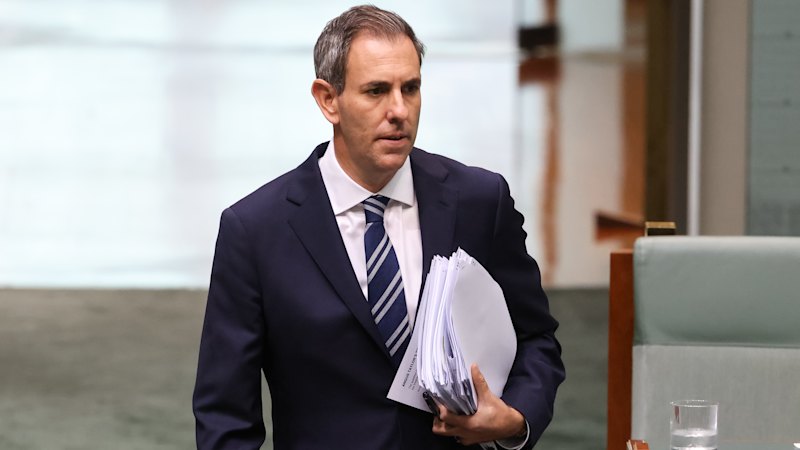
Photo via Evening Standard

Burnham acknowledges Budget ambitions constrained by global turmoil

Read the original at Evening Standard ↗
Cite

Lynch, D. (2026, October 30). Burnham acknowledges Budget ambitions constrained by global turmoil. Evening Standard. https://www.standard.co.uk/news/politics/andy-burnham-prime-minister-john-healey-budget-b1302966.html

Dated from the outlet's own feed. Check the original for its byline.

Evening Standard · collected 2026-10-30 · by David Lynch

Quick Summary

In his first Budget as Prime Minister, Jeremy Burnham spoke to ITV about the constraints imposed by global economic turmoil caused by the US's war with Iran. The Chancellor announced measures to support households and businesses while raising taxes on banks and gambling to fund this assistance. Burnham acknowledged that the scale of these measures fell short of initial ambitions due to rapidly changing global conditions, though he defended key steps like £100 energy bill relief for millions. He also hinted at potential flexibility regarding his previous commitment not to call an election until 2029, suggesting it could happen as early as 2028 depending on the situation.
Written by AI on 2026-10-30, from this article's own text only (the story summary below draws on all the coverage).
See how they differ ↓

AI analysis

Story summary

On October 25, 2026, British Chancellor John Healey announced plans for a new budget aimed at boosting local growth and reducing welfare costs under Prime Minister Andy Burnham's government. The budget includes £285 million in immediate funding to support "good growth" in England until a new system takes effect in 2028, allowing some income tax revenue to be directly managed by local areas. Healey also pledged over £1 billion for social and affordable housing across the country, surpassing the £40 billion mark for the government's 10-year homes programme.

Despite these initiatives, criticism emerged as Healey faced challenges in clarifying his plans for reducing welfare spending and addressing high inflation. On November 1, 2026, concerns were raised that over 830,000 low-income households would miss out on the £100 council tax reduction scheme designed to alleviate energy costs, benefiting only those in bands A to D.

Written for “Labour Budget Promises And U-turns” on 2026-11-21, grounded in this article and the 151 other(s) covering the same event.

How they differ

7 outlets covered “Labour Budget Promises And U-turns”.

What each outlet says

One AI summary per outlet of its latest article on this story, written from that article alone and checked against it. Open the article for the outlet's own words.

Evening StandardThis outlet30 Oct

In his first Budget as Prime Minister, Jeremy Burnham spoke to ITV about the constraints imposed by global economic turmoil caused by the US's war with Iran. The Chancellor announced measures to support households and businesses while raising taxes on banks and gambling to fund this assistance. Burnham acknowledged that the scale of these measures fell short of initial ambitions due to rapidly changing global…

Burnham acknowledges Budget ambitions constrained by global turmoil (this article)61 articles from Evening Standard on this story
Daily Mail2 Nov

A new analysis by Policy in Practice reveals that over 830,000 low-income households will miss out on a £100 energy bailout announced by Labour Chancellor John Healey. The measure aims to assist up to 20 million households across council tax bands A to D with a total of £2.6 billion. However, the analysis highlights that these households are poorly targeted and excludes many of those most in need due to their…

Labour's '£100 energy bailout for the North' will 'miss out 830,000 of the poorest households' →50 articles from Daily Mail on this story
The Guardian30 Oct

Prime Minister Andy Burnham expressed regret over his first budget as being less radical than desired due to economic uncertainties and external pressures like the war in Iran. He acknowledged criticism for not addressing issues such as welfare cuts and defense spending more aggressively, explaining that while he wanted significant changes, practical constraints limited what could be accomplished immediately…

Andy Burnham admits he would have liked more radical first budget →21 articles from The Guardian on this story
BBC1 Nov

Households in the West Midlands are expressing concerns that recent government measures announced by Chancellor John Healey do not adequately address rising energy costs. While appreciative of a £100 household energy payment and plans to remove gas standing charges, residents like Kelly Birkett and Mark Sumner remain worried about their ability to manage winter heating bills. The chancellor defended the measures as…

Energy bills help 'doesn't go far enough' →16 articles from BBC on this story
Al Jazeera28 Oct

The UK's Chancellor of the Exchequer, John Healey, presented his Autumn Budget on Wednesday under Prime Minister Andy Burnham’s Labour government. The budget includes a one-off payment of £100 to 20 million households for energy costs and extends a temporary VAT cut until July. However, economist James Meadway criticizes these measures as insufficient to address the cost-of-living crisis, noting that real earnings…

Five key takeaways from the UK Autumn Budget →2 articles from Al Jazeera on this story
Washington Examiner29 Oct

Chancellor of the Exchequer John Healey presented a budget that suggests the United Kingdom is headed towards a fiscal crisis similar to France's if significant spending cuts are not implemented soon. The article criticizes the Labour government for its reluctance to address the impending economic issues, likening their approach to ignoring reality.

The UK keeps calm and carries on toward French-style disaster →
Show 1 more outlets
The Straits Times29 Oct

British Finance Minister John Healey announced plans to reduce welfare spending, which is projected to cost more than 11% of economic output by 2026, during an interview with the BBC. He emphasized that cuts would not be made through “crude reductions” but did not specify when these changes would take place before the next election in mid-2029 at the latest. Prime Minister Andy Burnham echoed Healey’s commitment to…

Britain will reduce ‘unsustainable’ welfare costs, Finance Minister Healey says →

Where they agree and split

Agreed

Reported by outlets on both sides of the middle

Chancellor John Healey has pledged a reduction in the welfare bill ahead of the next general election, in an interview with BBC Radio 4's Today programme.

4 outlets
Show 1 more

The Office for Budget Responsibility said total welfare spending would grow from £334bn last year to £431bn by 2030 – with about half of that being spent on pensioners and a quarter on sickness and disability benefits.

4 outlets
The full story: what happened, how it changed, and all 152 articles →

Compared with similar articles

This article reads leans left and hedges 12% of its claims. Each row says how that neighbour differs.
Evening Standard
Leans left Hedges 2 of 19 claims Outlet record 64/100
The Guardian
Leans left Hedges 6 of 41 claims Outlet record 64/100
The Guardian
Leans left Hedges 8 of 72 claims Outlet record 64/100
The Guardian
Leans left Hedges 2 of 22 claims Outlet record 64/100
The Sydney Morning Herald
Leans left Hedges 2 of 36 claims Outlet record 61/100
“The articles discuss government spending and economic policies but refer to different countries and events - one is about Treasurer Jim Chalmers in Australia while the other involves Prime Minister Burnham and Chancellor John Healey in the UK.”
The Guardian
Leans left Hedges 1 of 36 claims Outlet record 64/100
Al Jazeera
Hedges 6 of 43 claims Outlet record 60/100
Evening Standard
Leans left Hedges 1 of 17 claims Outlet record 64/100
BBC News
Hedges 0 of 3 claims Outlet record 65/100
Al Jazeera
Hedges 1 of 36 claims Outlet record 60/100

Story

Labour Budget Promises And U-turns
Politics · 152 article(s) covering the same event. Compare every outlet's account →
How this article was measured signals, leaning charts, publisher record, byline, topics and claims

Signals How these are calculated →

Claims extracted
25
sentences that state something as happening or true
Uncertain
12%
3 of 25 hedged ("reportedly", "may", "according to")
Leaning
Leans left
of the writing, not the subject · beta estimate
Publisher signals
64/100
Evening Standard's corrections and hedging, across everything collected from it. Not a measure of accuracy.
Outlets on this story
152
Politics
Same framing elsewhere
2
articles that frame the event the way this one does
Analyzed 2026-10-30 · how these are computed

How this is being covered How these are calculated →

Article leaning vs. publisher reliability
Source leaning vs. consistency

Publisher

Evening Standard · 11094 article(s) · 82 correction(s) detected
Running correction rate · 82 correction(s)

Who wrote this

David Lynch
79 article(s) here · 1 carrying a prediction
Burnham says EU and UK will spend a year ‘brainstorming’ future ties Andy Burnham has paved the way for Britain to forge closer ties with the European Union (EU) after striking a deal which makes the biggest steps towards the trade bloc than any time since before Brexit.
The Prime Minister is expected to set out his view on the options as part of his 10-year plan which will be unveiled in December.
“We trust that they will do the right thing,” a Downing Street spokeswoman said when asked about the stand-off.
In a major foreign policy speech, the Prime Minister also said he believed that a summit with the EU later this week could deliver “real improvements in people’s everyday lives in areas of the country that have felt neglected for too long”, passing his so-called “Makerfield test”.
They will be focused on bringing down post-Brexit trade barriers on food and farming, as well as working more closely on emissions trading, and making it easier for young people from the UK to work, live and study in Europe and vice versa.
Witnesses described scenes of panic as people sought shelter wherever they could. Jonathan Balshaw, from Ipswich, was visiting the city with his girlfriend when the shooting began.
Also by David Lynch
Nothing else under this byline is closely related to this article, so these are simply their most recent.
All 79 articles by David Lynch →

Topics

Budget ITV Iran Labour Westminster

Subjects

Budget ORG · 7× Burnham PERSON · 6× Labour ORG · 4× ITV ORG · 3× Britain GPE · 2× Government ORG · 2× Defence ORG · 1× Iran GPE · 1× John Healey PERSON · 1× Westminster GPE · 1×

Narrative

Chancellor John Healey used the Budget to shore up households and businesses against the price rises caused by the US’s war with Iran, while raising taxes on banks and gambling to pay for the support. But many within Westminster questioned whether the scale of the Budget met the rhetoric of ending 40 years of “flawed thinking” which Mr Burnham espoused in his maiden Labour conference speech as Prime Minister.
framing: assertive · carried by 2 article(s) · first seen 2026-10-30
Asked by ITV if he would describe the Budget as radical, Mr Burnham suggested he did not.
2026-10-30 · Evening Standard
Burnham acknowledges Budget ambitions constrained by global turmoil · assertive framing
2026-10-30 · Evening Standard
Burnham acknowledges Budget ambitions constrained by global turmoil · assertive framing

Claims (25 extracted, 3 hedged)

Mr Burnham spoke to ITV after his first Budget as Prime Minister, for a documentary marking his first 100 days in office. asserted
Burnham → speak → office
Chancellor John Healey used the Budget to shore up households and businesses against the price rises caused by the US’s war with Iran, while raising taxes on banks and gambling to pay for the support. But many within Westminster questioned whether the scale of the Budget met the rhetoric of ending 40 years of “flawed thinking” which Mr Burnham espoused in his maiden Labour conference speech as Prime Minister. asserted
Burnham → use → Minister
Asked by ITV if he would describe the Budget as radical, Mr Burnham suggested he did not. uncertain
he → ask → Budget
He told the broadcaster: “We took a decision on the Budget early on. asserted
We → tell → Budget
The Chancellor came to me and said given everything, given the way the world is, and things changing by the, not even week, by the day, he felt it was right to go early and to close down some of the speculation we’ve seen in the past, because that’s added to the difficulties with budgets. “ asserted
that → come → budgets
And as we were going through, the numbers were changing a lot because of what was going on in the world. asserted
what → go → world
So, to come to your question, the room for manoeuvre wasn’t what I would have hoped it to be. asserted
it → come → manoeuvre
“I guess then the question is, you know, radical within what we were able to do. asserted
we → guess → what
It was quite a big call to ask the banks to repay the help they had off people 20 or so years ago. asserted
they → ask → people
However, the Prime Minister said his plans to give £100 energy bills relief to millions of households at the Budget was “quite a significant, significant step”. asserted
plans → say → Budget
Pressed whether it was the Budget he wanted to deliver, Mr Burnham said: “I don’t think any Prime Minister and Chancellor would say that, because a Budget is by definition a very difficult thing. asserted
Budget → press → definition
“In the times that we’re currently in, I feel that the volatility of things means you just can’t necessarily deliver the Budget that in an ideal world you would want to deliver.” asserted
you → ’re → world
Mr Burnham also suggested that Labour’s manifesto constrained some of his ambitions for Government, telling ITV: “If you’re asking me a very direct question, if I had held the pen on the current Labour manifesto, would I have written it exactly like it is? uncertain
it → suggest → it
Asked by the broadcaster when the next election will be, he said: “I said yesterday, no election in 2027. asserted
I → ask → 2027
I said that really, really plainly yesterday. asserted
I → say → that
Read More “I’ll say it again today to you and the reason I say that is because I am not coming into this job full of political calculation in terms of ‘what do I need to do for how it benefits me or the party?’. asserted
it → read → me
“I come into the job genuinely feeling that the country needs a really clear change in terms of the way politics has been done because we’re in a messy position.” asserted
we → come → position
The remarks appeared to indicate a change in Mr Burnham’s previous position that an election will not be held until 2029, leaving himself wriggle room for a poll in 2028. asserted
election → appear → 2028
Ahead of Labour’s party conference in September the Prime Minister had said 2029 is “when the next election will be”. asserted
election → say → September
Elsewhere, Defence Secretary Wes Streeting insisted the Government is moving as fast as possible to increase defence funding after criticism that the Budget did not do enough to map out the route to spend 3.5% of the economy on the military in a decade’s time. asserted
Budget → insist → time
At the Budget on Wednesday, Mr Healey filled a £4.7 billion black hole in the defence investment plan, a blueprint that takes Britain’s defence spending to 2.7% of gross domestic product (GDP) by 2027. asserted
that → fill → 2027
He also committed to spending 3% of GDP on defence by 2030 as a step towards meeting Britain’s commitment to Nato to spend 3.5% by 2035. asserted
He → commit → 2035
But the Chancellor said details of where this cash will come from will be left until the spending review, currently pencilled in for next autumn. asserted
cash → say → autumn
Mr Streeting said: “I think we are doing as much as we can, as fast as we can. asserted
we → say → much
He also signalled other areas of Government spending could face constraints as a means of filling defence coffers. uncertain
areas → signal → coffers
Give feedback · no sign-in needed

No sign-in needed for now. Your note is sent without a name, so it cannot be answered.

History Support