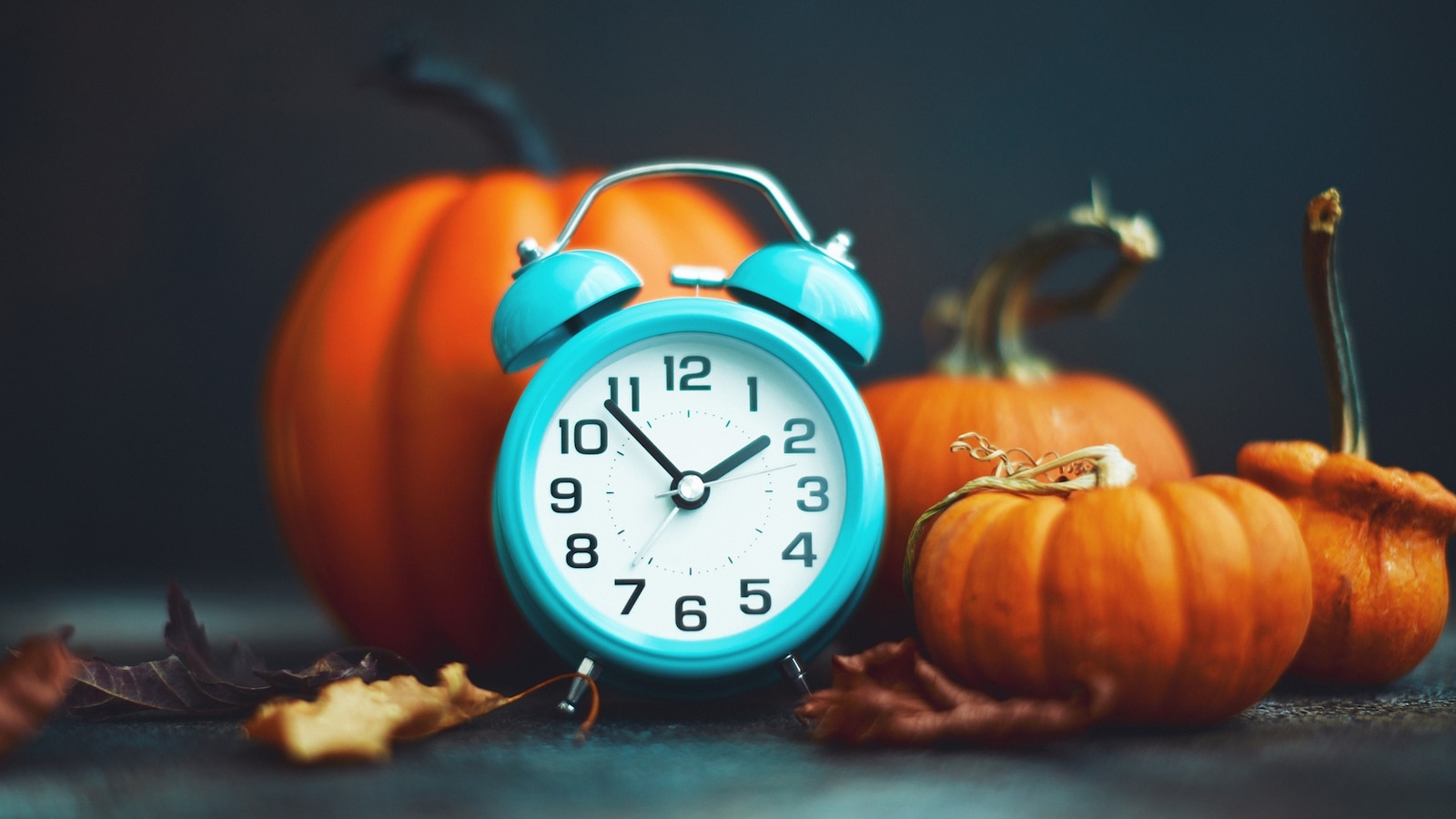
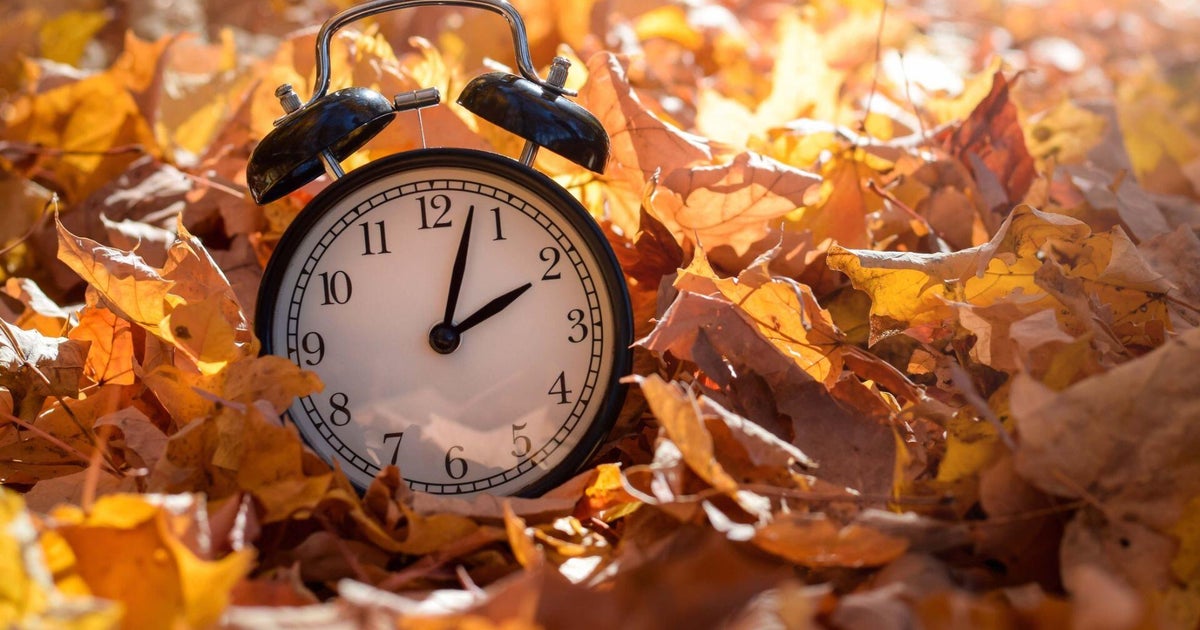
Photo via New York Post

Spring forward, fall back — how to keep your body running smoothly during daylight saving time

Read the original at New York Post ↗
Cite

Erickson, J. (2026, October 31). Spring forward, fall back — how to keep your body running smoothly during daylight saving time. New York Post. https://nypost.com/2026/10/31/lifestyle/spring-forward-fall-back-how-to-keep-your-body-running-smoothly-during-daylight-saving-time/

Dated from the outlet's own feed. Check the original for its byline.

New York Post · collected 2026-10-31 · by Jeanne Erickson

Quick Summary

Daylight saving time ends on Sunday, November 1, when clocks across most of the US will fall back by an hour at 2 a.m., potentially disrupting sleep schedules and circadian rhythms. Dr. Pedram Navab, a Stanford-trained neurologist specializing in sleep medicine, advises maintaining consistent wake times, maximizing daylight exposure, limiting screen time before bed, and gradually adjusting daily routines to help the body adapt over three to four days. He also recommends melatonin supplements for better sleep and avoiding heavy meals close to bedtime.
Written by AI on 2026-10-31, from this article's own text only (the story summary below draws on all the coverage).
See how they differ ↓

AI analysis

Story summary

Daylight Saving Time (DST) ended in most of the United States on Sunday, November 1, 2026, at 2 a.m., when clocks were set back by one hour. This change provides Americans with an extra hour of sleep but results in darker afternoons during winter months. The shift can disrupt circadian rhythms and affect sleep schedules temporarily.

Some lawmakers have been advocating for permanent Daylight Saving Time, aiming to eliminate the biannual clock changes. However, as of now, DST remains a seasonal adjustment, with debates ongoing about its necessity and impact on public health.

In Canada, Ontario has filed regulations allowing communities west of the 90th meridian to remain on standard time year-round, following similar decisions in other provinces like Manitoba. This move reflects growing interest among some regions to end DST permanently due to its potential negative effects on human circadian rhythms and overall well-being.

Experts recommend exposure to morning sunlight after clock changes to help bodies adjust more quickly to the new schedule.

Written for “Daylight Saving Time Ends” on 2026-11-21, grounded in this article and the 9 other(s) covering the same event.

How they differ

7 outlets covered “Daylight Saving Time Ends”.

What each outlet says

One AI summary per outlet of its latest article on this story, written from that article alone and checked against it. Open the article for the outlet's own words.

New York PostThis outlet31 Oct

Daylight saving time ends on Sunday, November 1, when clocks across most of the US will fall back by an hour at 2 a.m., potentially disrupting sleep schedules and circadian rhythms. Dr. Pedram Navab, a Stanford-trained neurologist specializing in sleep medicine, advises maintaining consistent wake times, maximizing daylight exposure, limiting screen time before bed, and gradually adjusting daily routines to help the…

Spring forward, fall back — how to keep your body running smoothly during daylight saving time (this article)
Toronto Star28 Oct

Ontario will end daylight saving time on Sunday, November 1, at 2 a.m., when clocks are set back one hour to 1 a.m. This change gives residents an extra hour of sleep but also leads to earlier sunsets. While most devices will adjust automatically, manual changes may be needed for some appliances and watches. Notably, Kenora and other northwestern Ontario regions have opted for permanent daylight saving time to align…

Daylight savings will end on Sunday. Here's what you should know →2 articles from Toronto Star on this story
CBS News1 Nov

Daylight saving time ended this weekend for most of the U.S., with clocks turning back an hour at 2 a.m. on Sunday. This change means that areas observing daylight saving gained an extra hour of morning light as they returned to standard time. The practice, which began during World War I to conserve fuel, has seen various adjustments over the years, including periods of year-round daylight saving and states opting…

Daylight saving time ended today. Here's what to know. →2 articles from CBS News on this story
NBC News31 Oct

Daylight saving time ends Sunday, November 7, when clocks will be turned back one hour at 2 a.m., resulting in an extra hour of sleep for many Americans. The practice of changing times twice a year continues despite ongoing debates about its necessity and impacts on health and safety. Standard time will remain until March 14, 2022, when daylight saving time begins again. Notably, Hawaii and most of Arizona do not…

Daylight saving time ends Sunday. Here’s what to know as clocks ‘fall back’ →2 articles from NBC News on this story
Time26 Oct

Daylight Saving Time ends this Sunday at 2 a.m., when clocks fall back one hour across most of the United States, leading to earlier sunrises and sunsets. This change affects sleep patterns; while moving to Standard Time is generally easier for most people as it allows an extra hour of sleep, transitioning back to Daylight Saving Time in March requires more adjustment due to losing an hour of sleep. Dr. Andrea…

Daylight Saving Time Ends This Week. Here’s How to Best Prepare Yourself for the Time Change →
Times of India31 Oct

Daylight Saving Time ends on November 1, 2026, at 2 am local time when clocks will be set back by one hour. This change gives Americans an extra hour of sleep but also affects international time differences; for example, New York will move from being 9 hours and 30 minutes behind India to 10 hours and 30 minutes behind. Clocks in Hawaii, most of Arizona (except the Navajo Nation), and certain US territories do not…

Daylight Saving Time ends tonight: When to change your clocks? When do we spring forward in 2027? →
Show 1 more outlets
ABC News (US)1 Nov

Daylight saving time will end on November 1, 2026, at 2:00 a.m., when clocks will be turned back an hour. Most of Arizona and Hawaii do not observe daylight saving time, while other states like Florida are pushing for it to become permanent year-round due to economic benefits. The Sunshine Protection Act of 2025 passed the House with a significant majority but has stalled in the Senate amid debates over its…

Daylight saving time 2026 ending: When to 'fall back' →

Where they agree and split

Framing

How the first headlines put it

Stated as fact2
The headlines (2)

How daylight saving time changes affect you and what you can do about it Toronto Star · stated as fact

Daylight Saving Time Ends This Week. Here’s How to Best Prepare Yourself for the Time Change Time · stated as fact

The full story: what happened, how it changed, and all 10 articles →

Compared with similar articles

This article reads unscored and hedges 4% of its claims. Each row says how that neighbour differs.
ABC News (US)
Hedges 2 of 20 claims Outlet record 66/100
CBS News
Hedges 4 of 40 claims Outlet record 66/100
Times of India
Hedges 3 of 48 claims Outlet record 59/100
“While both articles discuss Daylight Saving Time ending on November 1, 2026, they are providing different information and advice rather than reporting on a single specific occurrence.”
CBS News
Hedges 3 of 40 claims Outlet record 66/100
“While both articles discuss the end of daylight saving time, they describe different aspects and do not report on a single specific incident or occurrence.”
CBS News
Hedges 7 of 26 claims Outlet record 66/100
“Article A discusses the start of daylight saving time in spring, while Article B focuses on the end of daylight saving time in autumn.”
CBS News
Hedges 0 of 2 claims Outlet record 66/100
“Both articles discuss adjusting to daylight saving time ending, but they are general tips and not reporting on a single specific incident or occurrence.”

Story

Daylight Saving Time Ends
Environment · 10 article(s) covering the same event. Compare every outlet's account →
How this article was measured signals, leaning charts, publisher record, byline, topics and claims

Signals How these are calculated →

Claims extracted
28
sentences that state something as happening or true
Uncertain
4%
1 of 28 hedged ("reportedly", "may", "according to")
Leaning
not political
takes no side on a contested political question
Publisher signals
66/100
New York Post's corrections and hedging, across everything collected from it. Not a measure of accuracy.
Outlets on this story
10
Environment
Same framing elsewhere
1
articles that frame the event the way this one does
Analyzed 2026-10-31 · how these are computed

How this is being covered How these are calculated →

Article leaning vs. publisher reliability
Source leaning vs. consistency

Publisher

New York Post · 21720 article(s) · 41 correction(s) detected
Running correction rate · 41 correction(s)

Who wrote this

Jeanne Erickson
27 article(s) here · 1 carrying a prediction
The jaw-dropping scene unfolded during Huang’s visit to Taiwan in May 2025, when the very married chip tycoon joined lover and alleged CCP spy Alice Huang — a former senior executive at Singapore-based MegaSpeed International — for a dinner party at the exclusive eatery Sanliu Shifu, according to Taiwanese news station TVBS.
“Had she actually been submerged or [had fire] blown in her face intentionally, her injuries would have been much more severe.”
The doctor who oversaw Christa Pike’s botched execution compared himself to Jesus, still wants her put to death, and said in his first public comments since the fiasco that he’s willing to finish the job himself.
Adding even an hour more of sleep will throw your body’s circadian rhythm out of whack and it will be harder to acclimate.
A groundbreaking treatment could offer new hope to people struggling with the chronic and severe mental disorder — and it only requires 10 minutes of gentle ultrasound.
Nearly 1,000 people were arrested during some 800 demonstrations across France, Interior Minister Laurent Nuñez said, adding “this number will increase.”
One of America’s most threatening animals could be curled up on your couch.
Macron — who is up for election in April 2027 — issued a warning, promising lawless protestors will be dealt with harshly. “There is no place for violence in the Republic.
Scientists from Macquarie University in Australia set up their research footage by having a honeybee sting a clear gel that mimics human flesh so they could see — for the first time — how the intricate internal machinery keeps operating even after the insect has flown away.
He will require multiple surgeries to repair the gruesome injury, Paterno told Superior Court Judge Dina Vicari during the Oct. 16 detention hearings.
Also by Jeanne Erickson
Nothing else under this byline is closely related to this article, so these are simply their most recent.
All 27 articles by Jeanne Erickson →

Topics

Americans Navab Stanford The Post

Subjects

Navab PERSON · 6× Americans NORP · 1× Pedram Navab PERSON · 1× Stanford ORG · 1× The Post ORG · 1×

Narrative

Daylight saving time ends at 2 a.m. Sunday, Nov. 1, when clocks across most of the US fall back an hour, giving Americans an extra 60 minutes of sleep — but potentially disrupting their body’s internal clock, a sleep specialist warns.
framing: assertive · carried by 1 article(s) · first seen 2026-10-31
Adding even an hour more of sleep will throw your body’s circadian rhythm out of whack and it will be harder to acclimate.

Claims (28 extracted, 1 hedged)

Daylight saving time ends at 2 a.m. Sunday, Nov. 1, when clocks across most of the US fall back an hour, giving Americans an extra 60 minutes of sleep — but potentially disrupting their body’s internal clock, a sleep specialist warns. asserted
specialist → save → clock
“The clock gives you an extra hour, but your brain doesn’t read the clock,” Stanford-trained neurologist and sleep medicine specialist Dr. Pedram Navab told The Post. asserted
Navab → give → Post
“Light, wake time and daily habits tell your body when it’s time to sleep. asserted
it → tell → body
The body’s internal clock doesn’t necessarily adjust so quickly. asserted
clock → adjust → ?
“Your body needs at least three to four days to adjust, but there are ways you can help yourself,” said Navab, author of “The Alchemy of Sleep: The Science, Mystery & Magic of a Good Night’s Rest.” asserted
Navab → need → Rest
He offers the following tips for transitioning to the upcoming time change: Keep your wake time steady. asserted
offers → offer → time
If you wake early after the change, get out of bed to avoid sleeping into the morning to compensate. asserted
you → wake → morning
Adding even an hour more of sleep will throw your body’s circadian rhythm out of whack and it will be harder to acclimate. asserted
it → add → whack
Get outside after waking and seek daylight in the afternoon as evenings become darker. asserted
evenings → get → afternoon
Phones and computers should be kept in another room. asserted
Phones → keep → room
If a person is used to keeping the TV on low to help lull them to sleep, don’t stop. asserted
person → use → sleep
Don’t force an earlier bedtime just because the clock says it’s time. asserted
it → force → bedtime
For people who are sensitive to schedule changes, shift sleep and mealtimes to 15 minutes later each day for the next four days. asserted
who → shift → days
Darkness arrives earlier, making it especially important for drivers and pedestrians to stay alert. asserted
drivers → arrive → ?
Navab also weighed in on sleep aids and supplements, recommending melatonin over sleeping pills. asserted
Navab → weigh → pills
“I do not recommend sleeping pills. asserted
I → recommend → pills
One milligram of over-the-counter melatonin is all you need,” said Dr. Navab. asserted
Navab → need → melatonin
“Everyone should also make 125 milligrams of magnesium glycinate part of their supplements, along with Vitamin D.” asserted
milligrams → make → supplements
Dr. Navab also recommends a 12-hour overnight fast, spanning the two hours before bedtime, eight hours of sleep and two hours after waking. asserted
Navab → recommend → waking
Navab also offered advice on nighttime eating, suggesting people avoid sugary, salty, heavy or greasy foods close to bedtime. asserted
people → offer → bedtime
“No candy or chips,” said Navab. asserted
Navab → say → ?
“If you need something before bed, try tart cherry juice, yogurt, fruits or anything smooth or light, no heavy or greasy meals. asserted
you → need → juice
They make your body work harder and keep you awake.” Also, bedtime should be at a consistent time each night. asserted
bedtime → make → time
Silence is best but if a person is used to playing the TV softly as a background, it could be soothing. uncertain
it → use → background
“Write down four or five things that went right too,” he said. asserted
he → write → things
“It’s simple but it helps a person’s attitude. asserted
it → ’ → attitude
“Your sleep is one of the most important factors in keeping your mind and body at its best. asserted
sleep → keep → best
If a person doesn’t take care of themselves during a time change and lets their personal situations, medications or food get in the way of sleep, it will keep sleep away and make the next few days difficult to navigate.” asserted
days → take → sleep
Give feedback · no sign-in needed

No sign-in needed for now. Your note is sent without a name, so it cannot be answered.

History Support