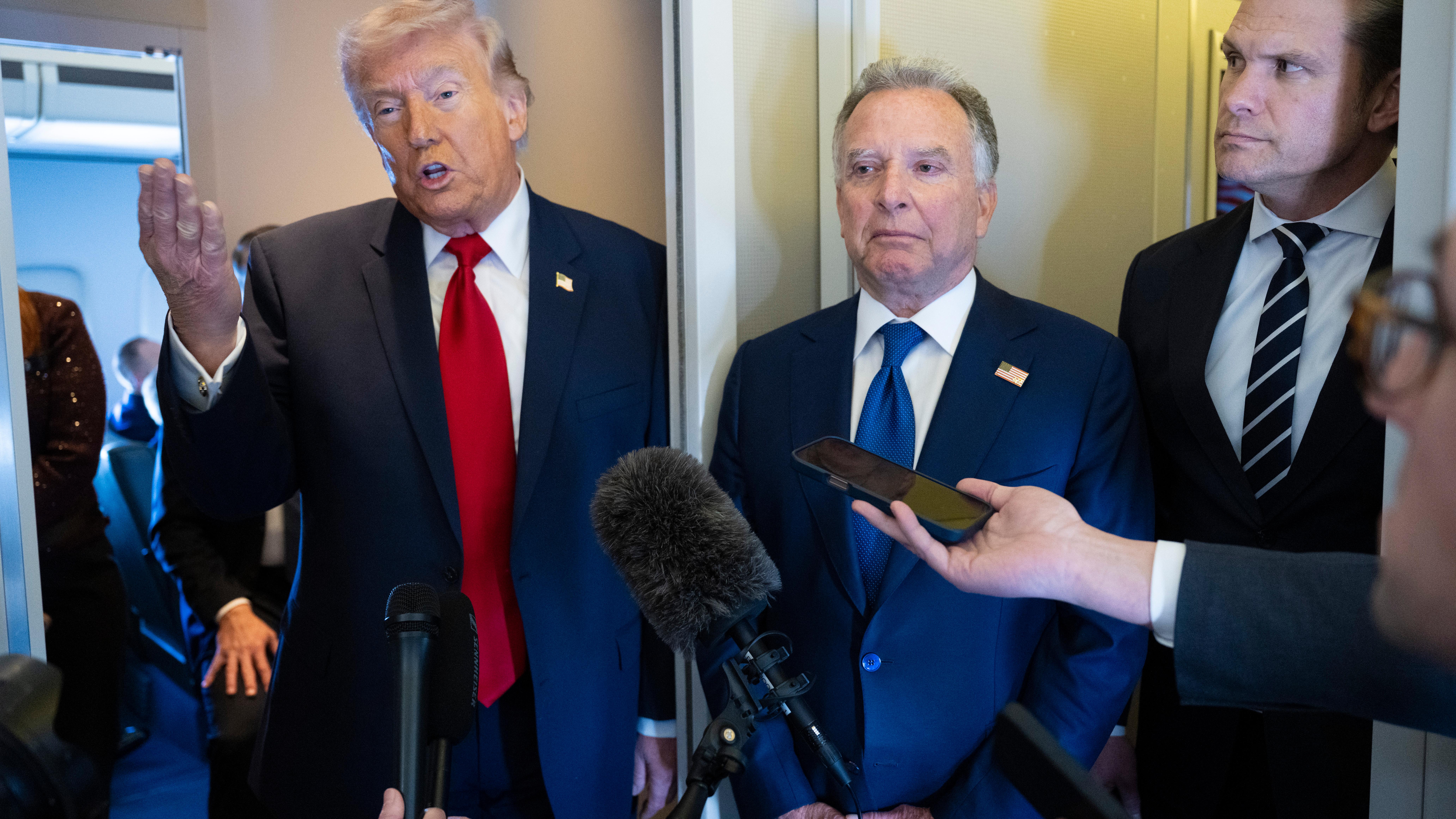
Photo via TIME

What Is the Status of the U.S.-Iran Peace Talks? Here's What Both Sides Are Saying

Read the original at TIME ↗
Cite

Ventura, T. (2026, September 15). What Is the Status of the U.S.-Iran Peace Talks? Here's What Both Sides Are Saying. TIME. https://time.com/article/2026/09/15/us-iran-peace-talks-deal-stalled-houthis-leverage-shipping-disruptions/

Dated when The Aporia collected the article, usually within hours of publication. Check the original for its exact date and byline.

TIME · collected 2026-09-15 · by Tiago Ventura

Quick Summary

The article discusses ongoing tensions between the U.S. and Iran, focusing on military activities around key maritime chokepoints like the Strait of Hormuz and Bab el-Mandeb. Oil prices have risen sharply due to disruptions in these strategic waterways, impacting global energy markets significantly. Yemen’s Houthi rebels, backed by Iran, have made territorial gains, potentially giving Iran more leverage in negotiations with the U.S. President Trump has expressed openness to restarting peace talks, but concrete progress remains stalled as both sides grapple with regional instability and economic pressures.
Written by AI on 2026-09-15, from this article's own text only (the story summary below draws on all the coverage).
See how they differ ↓

AI analysis

Story summary

As of September 2026, President Donald Trump told reporters that the U.S. is "hopefully toward the end" of its ongoing war with Iran, which began on February 28 and has lasted for seven months. Despite this hopeful statement, there are no clear timelines or significant de-escalation efforts in sight. The conflict continues to disrupt global oil supplies through the Strait of Hormuz, pushing up oil prices to over $108 per barrel. Additionally, Iran's foreign minister is under pressure from China and international concerns to reopen the strait and return to a previous interim peace deal with the U.S.

Meanwhile, tensions have escalated beyond Iran into Yemen, where Houthi rebels, aligned with Iran, pose significant threats near the Red Sea, complicating efforts at regional stability. The conflict has also drawn in other nations such as Saudi Arabia, which is offering extra crude oil through Oman to ease supply disruptions and stabilize oil prices.

At the United Nations General Assembly, Trump further alarmed global leaders by threatening to "annihilate" Iran if necessary, raising concerns about the potential for catastrophic outcomes involving nuclear weapons. This rhetoric contrasts sharply with past U.S. presidents who emphasized caution regarding such extreme measures. Despite these challenges, there is an urgent need for multilateral solutions and effective engagement through international bodies like the UN to address ongoing conflicts and crises around the world.

Written for “Trump's UN Speech Controversies” on 2026-11-21, grounded in this article and the 206 other(s) covering the same event.

How they differ

29 outlets covered “Trump's UN Speech Controversies”.

What each outlet says

One AI summary per outlet of its latest article on this story, written from that article alone and checked against it. Open the article for the outlet's own words.

TimeThis outlet25 Sep

European leaders are defending the International Criminal Court (ICC) against President Donald Trump's call for countries to withdraw from it. During the United Nations General Assembly in New York, Irish Prime Minister Micheál Martin and Dutch Prime Minister Rob Jetten both voiced strong support for the court, emphasizing its role in holding nations accountable for war crimes. They rejected Trump’s criticism of the…

‘Hands Off!’: European Leaders Reject Trump's Call to Quit the ICC →2 articles from Time on this story
The Independent24 Sep

President Donald Trump has directed diplomats worldwide to start referring to artificial intelligence as “super intelligence” in all official communications. This directive came after his speech at the U.N. General Assembly where he argued that the term "artificial intelligence" makes advanced computing seem fake and inaccurate. Michael Drager, deputy assistant secretary of state for the Bureau of International…

Trump orders diplomats worldwide to start referring to AI as ‘super intelligence’ →21 articles from The Independent on this story
Al Jazeera23 Sep

During a session of the UN General Assembly on Wednesday, a U.S. envoy left in protest while Iran’s President Masoud Pezeshkian delivered a speech criticizing what he called a "war" against Iran. Similarly, representatives from Israel were not present for the duration of Pezeshkian's address.

US envoy walks out on Pezeshkian UN speech slamming war on Iran →20 articles from Al Jazeera on this story
The Straits Times24 Sep

President Donald Trump urged countries to leave the International Criminal Court (ICC) during the UN General Assembly, describing it as “evil” and a “rogue institution.” Only Nauru has followed this directive so far among the 125 nations that are parties to the Rome Statute. The U.S. has launched a campaign against the ICC, imposing financial sanctions and visa bans on its staff, while some countries like Venezuela…

Trump tells countries to quit ICC. Few follow his lead →16 articles from The Straits Times on this story
Toronto Star23 Sep

Mark Carney observed starkly different visions of world order at the UN General Assembly from António Guterres and Donald Trump. While Guterres emphasized multilateralism and addressed concerns like climate change and AI regulation, Trump focused on U.S. dominance and unilateral actions. Carney aligned more closely with Guterres' views, advocating for "values-based realism" that combines dialogue and action rather…

At the UN, a tale of two world orders — and the growing divide between Canada and Trump's America →11 articles from Toronto Star on this story
New York Post24 Sep

President Trump threatened to annihilate Iran during his speech at the United Nations General Assembly on September 23, 2026, reigniting debates about the ethics and legality of such threats. Critics argue that this approach weakens U.S. credibility and violates international law, while supporters claim it shows strength and commitment to American interests. The article presents various viewpoints from readers…

Trump’s threat to the Iranian regime — Sept. 25, 2026 →10 articles from New York Post on this story
Show 23 more outlets
The Hindu25 Sep

The 81st session of the United Nations General Assembly marks a critical period for the organization, as Secretary-General António Guterres concludes his tenure amid numerous crises and conflicts. The assembly saw more than 65 ongoing conflicts globally in 2025, the highest number since 1946. This year’s summit highlighted the UN's weakened state due to increasing global polarization and unilateral actions by major…

Overweight and weak: On the UN, the 81st session of the UN General Assembly →9 articles from The Hindu on this story
NBC News23 Sep

During his speech at the United Nations General Assembly on Wednesday, Iran’s President Masoud Pezeshkian responded defiantly to US threats, vowing not to limit his country's nuclear program despite President Trump’s previous day declaration that he might "annihilate" Iran. Pezeshkian highlighted Iranian resilience and defense capabilities while displaying images of civilian casualties, including children killed in…

Iran’s president strikes a defiant tone at U.N. after Trump threats →9 articles from NBC News on this story
CBS News23 Sep

On Tuesday during the United Nations General Assembly, U.S. and Iranian envoys held indirect talks mediated by Qatar. The U.S. side described these discussions as "constructive" but did not provide details. Meanwhile, President Trump warned of potential military action against Iran if a deal is not reached, while Iran's foreign ministry spokesman dismissed Trump’s threats as desperate and a sign of weakness.

U.S., Iran hold first talks since June as Trump threatens annihilation →9 articles from CBS News on this story
Washington Examiner25 Sep

The Wall Street Journal highlights world leaders' consensus that the United Nations is failing, particularly regarding its inability to prevent conflicts and its governance structure permitting vetoes by five major powers. The article extends this critique beyond conflict prevention to include the U.N.’s role in cultural preservation despite facilitating mass illegal migration, as noted by President Donald Trump.

Hot air wafts from the East River →9 articles from Washington Examiner on this story
Daily Mail23 Sep

Iran responded to President Donald Trump’s UN speech, where he threatened to ‘annihilate’ Iran if it does not make a deal, by warning that any US attack would result in “crushing blows” against America. The Iranian Armed Forces issued a statement through Press TV asserting that the country would deliver harsh retaliation to aggressors, undermining Trump's rhetoric about altering power dynamics. Meanwhile, oil prices…

Iran warns it is ready to 'inflict crushing blows' on US after Trump threatened to 'annihilate' regime in UN speech →8 articles from Daily Mail on this story
Times of India22 Sep

During his address at the UN General Assembly, US President Donald Trump discussed his "big decision" regarding Iran, presenting two extreme options: either striking a deal that could lead to Iran’s economic recovery and regional influence or destroying the regime entirely. Trump emphasized ongoing international pressure on Iran and invoked past terrorist attacks linked to Iran to argue against Tehran developing…

Deal or annihilation? Trump speaks about his 'big' Iran dilemma at UNGA →7 articles from Times of India on this story
Fox News23 Sep

Iranian President Masoud Pezeshkian delivered a contentious speech at the United Nations General Assembly in New York City on Wednesday, defending his nation’s actions against U.S. aggression while under international pressure from ongoing conflict and diplomatic tension. Protesters gathered outside to denounce Iran's government, with some former political figures like Rudy Giuliani participating in demonstrations…

The top moments from Iran president’s tense visit to US soil as war rages →7 articles from Fox News on this story
The Guardian26 Sep

In his final UN speech before stepping down, French President Emmanuel Macron criticized the unilateral approach championed by US President Donald Trump and called for upholding international law and multilateralism. Macron challenged leaders to choose between living under a "law of the jungle" or in a civilized society, directly confronting Trump’s aggressive stance on Iran and other issues. Despite offering a…

In his final UN speech, Macron may have given other leaders a valuable parting gift: the guts to stand up to Trump | Steve Bloomfield →7 articles from The Guardian on this story
Euronews23 Sep

Iran's President Masoud Pezeshkian delivered a speech at the UN General Assembly, accusing the United States and Israel of illegal attacks against Iranian civilians while the U.S. delegation walked out in protest. He emphasized Iran’s stance that it will not negotiate under threat, telling Trump specifically, "Yes they did hit us, but we did not bend the knee." Pezeshkian also asserted Iran's right to develop…

Pezeshkian tells UN Iran will not be bullied but will negotiate →5 articles from Euronews on this story
BBC23 Sep

Iran’s President Masoud Pezeshkian addressed the UN General Assembly, stating that his country will not submit to pressure from the United States and Israel despite ongoing conflict since February. In response to President Trump's threat to “annihilate” Iran, Pezeshkian emphasized Iran’s resistance against sanctions and bullying would intensify. He also demanded an end to the US blockade of Iranian ships and ports…

Iran's president tells Trump it will never 'bend the knee' →5 articles from BBC on this story
South China Morning Post26 Sep

US President Donald Trump is advocating for the term "superintelligence" (SI) to replace "artificial intelligence" (AI) in government documents and diplomatic communications, aiming to include China’s cooperation on this terminology change during discussions at the United Nations General Assembly. The US State Department has already instructed its diplomats to use SI instead of AI in all future communications. A…

Amid many thorny issues with China, Trump pushes to rename AI as superintelligence →5 articles from South China Morning Post on this story
Sydney Morning Herald27 Sep

The article discusses how the United States under the Trump administration has become delinquent on UN dues, falling behind even conflict-ridden nations like Haiti, Somalia, and Congo in terms of financial responsibility. It highlights the increasing number of global conflicts and challenges that require international cooperation but are instead being sidelined by major powers, rendering the UN less effective than…

Yes, the UN is terrible – but right now, we need it desperately →5 articles from Sydney Morning Herald on this story
Dawn23 Sep

As world leaders gather for the UN General Assembly in New York, diplomatic efforts are aimed at resolving ongoing conflicts, particularly those involving Iran and the Middle East. Pakistan's interior minister met with Iranian officials to discuss peaceful solutions, while Qatar has relayed Iran’s conditions for resuming talks with the US, including an end to hostilities and sanctions against Iran. The article…

Renewed peace push →4 articles from Dawn on this story
NPR26 Sep

This opinion piece contrasts President Trump's recent U.N. speech with those of past presidents, highlighting a shift in rhetoric regarding nuclear weapons and their use. The author notes that while former leaders used strong but measured language when discussing the potential for nuclear conflict, Trump's speech included threats of annihilation without offering similar caution or diplomatic considerations.

OPINION: Trump's U.N. speech, a stark contrast with past presidents →4 articles from NPR on this story
The Globe and Mail23 Sep

Iran’s President delivered a speech at the UN General Assembly in New York on Wednesday, during which he accused the United States of committing acts of terrorism against his people and characterized Iranians as victims. This was described as a rare wartime address given the current tensions between Iran and the US.

Iran's president addresses UN General Assembly →3 articles from The Globe and Mail on this story
ABC News (US)22 Sep

President Donald Trump addressed global leaders at the United Nations General Assembly in New York City on Tuesday, also meeting with key leaders on the sidelines of the event. The article notes that this is a developing story and encourages readers to check back for further updates and to follow ABC News Live for continued coverage.

Trump addresses global leaders at United Nations General Assembly →2 articles from ABC News (US) on this story
Reason18 Sep

President Donald Trump initiated what he termed a "short-term" war with Iran in February 2026, promising it would last only four to five weeks. However, seven months later, the conflict continues with no end in sight. Key aspects include soaring diesel fuel prices and airline flight cancellations due to high jet fuel costs, as well as a U.S.-Saudi joint command involving about 100 U.S. military advisers to address…

Trump's 4-Week War With Iran Approaches Month 7 →
Los Angeles Times22 Sep

President Trump addressed the United Nations General Assembly in New York, threatening severe escalation against Iran if negotiations do not resolve its nuclear program issues. With less than a third of Americans approving of his handling of the ongoing war with Iran, Trump vowed to either negotiate a deal or “annihilate” Iran before the upcoming midterm elections. His speech also emphasized U.S. military readiness…

Trump threatens to send Iran 'into hell' if war carries on →
National Post23 Sep

President Donald Trump revealed at the United Nations that U.S. and Iranian officials held three hours of talks on September 19, described as "very productive" and scheduled for future continuation. This came after Trump's speech where he threatened to “annihilate” Iran if no deal is made. The meeting involved Steve Witkoff and Jared Kushner from the U.S., and Iranian Foreign Minister Abbas Araghchi. Despite Trump’s…

At UN, Trump threatens Iran with ‘hell,’ then after reveals the two sides had ‘very productive’ talks →
Zeteo23 Sep

This article is an opinion piece discussing Donald Trump's speech at the United Nations General Assembly in 2020. The author criticizes Trump for threatening other nations and bragging about military interventions and oil deals with Venezuela. According to the article, Trump threatened Cuba and Iran during his speech and declared that when you're America, they let you engage in pillaging, looting, and extra-legal…

🇺🇳 Trump’s Disgusting UN Speech: When You’re America, They Let You Do It →
CBC23 Sep

U.S. President Donald Trump’s approach to international relations is causing significant disruption in global alliances. At the United Nations General Assembly, Trump emphasized America's dominance and reiterated his "America First" policy while threatening nations such as Iran and considering shifting economic ties away from traditional allies like Canada towards countries with questionable democratic credentials…

Trump is reshaping U.S. alliances. The world is taking notice →
ABC News (AU)23 Sep

Iran's president addressed the UN General Assembly in New York while his country is at war with the United States, declaring Iran a "victim of terrorism" and vowing never to submit to U.S. or Israeli pressure. He emphasized Iran’s readiness for dialogue without accepting forceful language, highlighting that Tehran would endure rather than surrender. The speech came as both countries suggested some level of…

'Victims of terrorism': Iran's president tells UN 'we will never bow' to US →
Global News23 Sep

Iran's President Masoud Pezeshkian delivered a defiant speech at the U.N. General Assembly on Wednesday, denouncing the United States and Israel for attacking his country and declaring that Iran will fight "until our last breath." He presented large photos of Supreme Leader Ali Khamenei and victims from the war’s first days to highlight Iranian casualties. Pezeshkian called out President Trump directly, urging…

Iran will fight ‘until our last breath,’ president says in UN speech →

Compared with similar articles

This article reads unscored and hedges 14% of its claims. Each row says how that neighbour differs.
Reason
Leans left Hedges 8 of 41 claims Outlet record 67/100
Al Jazeera
Hedges 0 of 3 claims Outlet record 60/100
“Article A discusses the postponement of talks between Iran and Gulf Arab states in Oman, while Article B focuses on the ongoing conflict and peace talks involving the U.S. and Iran.”
The Independent
Hedges 2 of 19 claims Outlet record 59/100
“The articles describe different aspects of U.S.-Iran relations—one covers ongoing hostilities in the Strait of Hormuz, while the other reports on visa approvals for Iranian leaders to attend the UN meeting.”
The Straits Times
Hedges 0 of 14 claims Outlet record 64/100
“The articles describe different time points in the ongoing conflict, with Article A discussing active hostilities and military stalemate around the Strait of Hormuz, while Article B reports on Trump's comments about potentially nearing an end to the war and plans for a meeting with Gulf leaders.”
New York Post
Hedges 2 of 19 claims Outlet record 66/100
“The articles describe different aspects of the ongoing conflict between the U.S. and Iran; one predicts a change in phase while the other discusses current peace talks and the stalemate.”
Al Jazeera
Hedges 3 of 29 claims Outlet record 60/100
“The articles discuss related events but describe different occurrences: one about ongoing hostilities and military stalemate, and the other about Iran conveying peace conditions to the US through Qatar.”
Times of India
Hedges 2 of 19 claims Outlet record 59/100
“The articles discuss different aspects of the U.S.-Iran conflict, with Article A focusing on active hostilities and military stalemate in the Strait of Hormuz, while Article B reports on Iran's conditions to restart talks and end the war.”
Al Jazeera
Hedges 0 of 2 claims Outlet record 60/100
“The articles discuss different aspects of the U.S.-Iran conflict, with Article A focusing on ongoing hostilities and military stalemate in the Strait of Hormuz, while Article B reports on Iran setting peace terms through Qatari mediators.”
Al Jazeera
Leans left Hedges 5 of 46 claims Outlet record 60/100
“While both articles discuss ongoing U.S.-Iran conflict and peace negotiations, they describe different stages of the situation with distinct dates and conditions.”
The Independent
Hedges 4 of 54 claims Outlet record 59/100
“The articles refer to different stages of ongoing conflict between the U.S. and Iran, with Article A discussing active hostilities around the Strait of Hormuz and Article B covering Iran's conditions for re-engaging in negotiations.”

Story

Trump's UN Speech Controversies
Politics · 207 article(s) covering the same event. See how they differ ↑
How this article was measured signals, leaning charts, publisher record, byline, topics and claims

Signals How these are calculated →

Claims extracted
66
sentences that state something as happening or true
Uncertain
14%
9 of 66 hedged ("reportedly", "may", "according to")
Leaning
withheld
no quote in the article backed the model's score
Publisher signals
60/100
TIME's corrections and hedging, across everything collected from it. Not a measure of accuracy.
Outlets on this story
207
Politics
Same framing elsewhere
1
articles that frame the event the way this one does
Analyzed 2026-09-15 · how these are computed

How this is being covered How these are calculated →

Article leaning vs. publisher reliability
Source leaning vs. consistency

Publisher

TIME · 1078 article(s) · 2 correction(s) detected
Running correction rate · 2 correction(s)

Who wrote this

Tiago Ventura
22 article(s) here · 1 carrying a prediction
Carney, who is promoting a “Canada Strong” platform as he aims to build economic resilience at home, touted the expansion of the trade arrangement with China as something that will deliver “greater certainty and prosperity for all Canadians.”
Edgar explains that targets of interest to the NSA can include “foreign governments, foreign terrorist organizations, but also other prominent foreign targets that might be of intelligence interest to the United States.”
An overnight Ukrainian missile attack has severely damaged the vital Kerch bridge linking occupied Crimea with Russia, delivering a symbolic blow to Russian President Vladimir Putin ahead of a summit in Asia where he is expected to meet President Donald Trump.
The Department of Justice (DOJ) has warned Democratic Senator Elizabeth Warren of Massachusetts that she could face "significant legal consequences" if she fails to preserve records related to potential Congressional investigations involving allies of President Donald Trump.
users may still “be unable to connect to multiple Microsoft 365 services.”
Kushner, Trump’s son-in-law, said the meeting with Putin would focus on the outcome of the Abu Dhabi discussions, which concluded Wednesday with plans for another prisoner exchange, but no concrete steps toward ending the war.
Defense Secretary Pete Hegseth could become the third Cabinet secretary to be impeached in U.S. history after a Republican lawmaker reintroduced a resolution forcing the House to take up the vote.
If Massie re-files his articles of impeachment against Hegseth as privileged, it would mean the House must take up the issue within two legislative days.
But the tide may now be turning.
The sweeping victory will reshape the final two years of President Donald Trump’s presidency and could have a significant impact on the 2028 presidential map.
2026-11-04 · assertive framing · Meet the Democratic Rising Stars Who Could Shape 2028
Also by Tiago Ventura
Nothing else under this byline is closely related to this article, so these are simply their most recent.
All 22 articles by Tiago Ventura →

Topics

Houthis Iran Tehran U.S. Yemen

Subjects

Iran GPE · 9× U.S. GPE · 9× Trump PERSON · 7× Tehran GPE · 4× Houthis NORP · 3× Yemen GPE · 3× Iranian NORP · 2× TIME ORG · 2× Washington GPE · 2× Donald Trump PERSON · 1×

Narrative

Trump has repeatedly insisted that the U.S. has near total control of the vital waterway and that “oil is flowing,” but traffic via the Strait remains disrupted. Kpler, a commodities data and analytics firm, shared data with TIME that shows that only 10 ships crossed the Strait of Hormuz on Monday—a significantly lower count than the 138 vessels that typically passed through the waterway during a 24-hour period before the war.
framing: assertive · carried by 1 article(s) · first seen 2026-09-15
President Donald Trump at the start of the Iran war predicted it would last four-to-five weeks, but the conflict is now in its seventh month, with no clear timeline for when the fighting will end.

Claims (66 extracted, 9 hedged)

President Donald Trump at the start of the Iran war predicted it would last four-to-five weeks, but the conflict is now in its seventh month, with no clear timeline for when the fighting will end. asserted
fighting → predict → timeline
Active hostilities between Washington and Tehran resumed earlier this month, with oil tankers in and around the Strait of Hormuz coming under fire. asserted
tankers → resume → fire
Iran is vying to maintain a chokehold over the vital trade route amid the U.S. blockade against its ports. asserted
Iran → vie → ports
The Strait effectively remains in a military stalemate, bringing renewed regional instability and gravely impacting transit via the waterway, through which around a fifth of global oil production flowed before the war began on Feb. 28. asserted
war → remain → Feb.
Oil prices last week soared to over $100 a barrel for the first time since July, as the disruption sends energy markets spiraling once more. asserted
markets → soar → July
The balance of power in the Gulf has come under further strain as Yemen’s Iran-backed Houthi rebels have made significant advances following weeks of fighting with the Saudi-backed government of Yemen, shattering a four-year informal cease-fire in the country's civil war. asserted
rebels → come → war
The Houthis last week captured the strategic Perim Island, which sits in the Bab el-Mandeb Strait, another vital trade route situated between Yemen and Djibouti and Eritrea in the Horn of Africa, that links Asia and Europe via the Red Sea and Suez Canal. asserted
that → capture → Sea
This came as they traveled along the Red Sea coastline, aiming to tighten their grip on the critical maritime chokepoint. asserted
they → come → chokepoint
The disruption has placed further pressure on the global oil market. asserted
disruption → place → market
The Houthis’ expanding presence in the Red Sea and the potential it has to severely disrupt trade via the Bab el-Mandeb arguably gives Iran leverage in its war with the U.S., experts say. asserted
experts → expand → U.S.
“This has the effect of turning up the pressure on the U.S. and its allies who have been relying on alternate routes,” Daniel Benaim, a former U.S. Deputy Assistant Secretary of State for the Arabian Peninsula, tells TIME. asserted
Benaim → have → TIME
Diplomatic efforts in the Middle East have faltered. asserted
efforts → falter → East
The Gulf states, many of which house U.S. bases that have been targeted by Iranian strikes, on Monday postponed a critical meeting with Tehran on the reopening of the Strait of Hormuz. asserted
that → house → Hormuz
Despite pressure mounting for a clear way out of the war, meaningful negotiations between the U.S. and Iran also remain stalled. asserted
negotiations → mount → Iran
Here’s what each side has said regarding the status of peace talks, and how experts predict Iranian officials could use the Houthis’ disruption in the Red Sea to their benefit. uncertain
officials → ’ → benefit
Trump says U.S. is 'open' to restarting negotiations Trump on Monday said the U.S. is “open” to the concept of restarting negotiations between Washington and Tehran. asserted
U.S. → say → Washington
High-level officials from both sides last convened for official peace talks in Switzerland in June. asserted
officials → convene → June
Trump’s remarks stood in stark contrast to the position he laid out on Sept. 2, when he said he was “not trying to force” Iran to the bargaining table. asserted
he → stand → table
“I couldn’t care less if they sign a worthless, to them, agreement. asserted
they → care → agreement
I like our position now much better, with almost total control of the Hormuz Strait, and their economy totally collapsing. asserted
economy → like → Strait
They are just playing out the inevitable,” he insisted. asserted
he → play → inevitable
On Sept. 9, Trump assured the American public that the war will likely end “immediately after” the November midterms and said Iran’s government is holding out in hopes of hurting Republican political prospects. asserted
government → assure → prospects
Trump has expressed full confidence in the U.S.’ two-pronged military and economic campaign against Iran, with the latter aiming to choke Tehran off from the global economy through various sanctions. asserted
latter → express → sanctions
Ali Vaez, deputy program director for the Middle East and North Africa at the International Crisis Group, tells TIME that Trump’s diplomatic approach will dictate how successful future negotiations may be. uncertain
negotiations → tell → TIME
“President Trump might be interested in getting a deal with Iran, but that's not necessarily a guarantee that he will get a deal. uncertain
he → get → deal
It all depends on what approach he would adopt to diplomacy. asserted
he → depend → diplomacy
If it's maximalist, then it doesn't stand a chance of succeeding,” he says, adding that dealing with Iran requires “a multi-dimensional diplomacy” in order to achieve a “sustainable de-escalation between Iran and the United States.” asserted
dealing → stand → Iran
Trump has repeatedly insisted that the U.S. has near total control of the vital waterway and that “oil is flowing,” but traffic via the Strait remains disrupted. Kpler, a commodities data and analytics firm, shared data with TIME that shows that only 10 ships crossed the Strait of Hormuz on Monday—a significantly lower count than the 138 vessels that typically passed through the waterway during a 24-hour period before the war. asserted
that → insist → war
“The United States has shown over time that it has capabilities to move significant amounts of shipping through the Strait, but Iran has innovated,” says Benaim. asserted
Benaim → show → Strait
“Iran and its allies are innovating in their ability to disrupt. asserted
Iran → innovate → ability
So it's a bit of a foot race between U.S. attempts to bypass Iran's restraints and Iran's attempts to enforce its own de facto blockade. asserted
it → bypass → blockade
The Iran war, and its economic impact, has been deeply unpopular with Americans who are facing increasingly high energy costs. asserted
who → face → costs
Diesel prices last week reached a record $6 per gallon. asserted
prices → reach → gallon
The war with Iran has cost the U.S. government around $38 billion and contributed to growing inflation, according to newly-published analysis by the Congressional Budget Office. uncertain
war → cost → Office
A national UMass Amherst/YouGov poll, conducted from Aug. 21 to 26, found that 68% of Americans view Trump’s handling of the war negatively. asserted
% → conduct → war
Iran says 'no talks until conditions met' Iran has responded to Trump’s openness to negotiations by doubling down on its demands. “Don’t get distracted by the U.S. President’s mixed signals—from ‘no negotiations’ to ‘we’re ready to talk,’" said Mohsen Rezaei, Iran's recently-installed secretary of the Supreme National Security Council, on Monday. asserted
Rezaei → say → Monday
“No talks until Iran’s conditions are met. asserted
conditions → meet → ?
While Rezaei did not directly name any conditions, Iran previously put forward a list of six demands for the U.S. to meet before the Strait of Hormuz would be fully reopened. asserted
Strait → name → Hormuz
Rezaei also seemingly pointed to the recent developments in the wider region, arguing that the “stakes around oil and the straits have changed” and warning that “damage control won’t stop what’s coming.” asserted
what → point → oil
The remarks from the hard-line national security adviser took an elevated position from that of Iranian President Masoud Pezeshkian, who in early September said Tehran was prepared to “reciprocate,” if the U.S. returned to the cease-fire conditions both countries negotiated in June. asserted
countries → take → June
…and 26 more, not listed.
Give feedback · no sign-in needed

No sign-in needed for now. Your note is sent without a name, so it cannot be answered.

History Support