Photo via TIME

The U.S. Just Admitted it Has Weapons in Space. Why That's a Big Deal

Read the original at TIME ↗
Cite

Kluger, J. (2026, September 15). The U.S. Just Admitted it Has Weapons in Space. Why That's a Big Deal. TIME. https://time.com/article/2026/09/15/us-space-weapons-why-it-matters/

Dated when The Aporia collected the article, usually within hours of publication. Check the original for its exact date and byline.

TIME · collected 2026-09-15 · by Jeffrey Kluger

Quick Summary

On September 14, Air Force Secretary Troy Meink admitted at an aerospace conference in Maryland that the U.S. military has space-based weapons and intends to defend against threats from orbit. This acknowledgment breaks long-standing policy avoidance of weaponizing space, despite international treaties prohibiting such actions since 1967. The article highlights historical instances of space militarization by the U.S., Soviet Union, and China, including tests conducted decades ago that violated the spirit if not the letter of the Outer Space Treaty.
Written by AI on 2026-09-15, from this article's own text only (the story summary below draws on all the coverage).
See how they differ ↓

AI analysis

Story summary

On September 14, 2026, the United States Space Force confirmed it had deployed weapons into Earth's orbit for the first time. A spokesperson stated that these "on-orbit space control weapons" are designed to defend against hostile actions from adversaries but did not specify the nature of these capabilities. Both China and Russia have been developing their own space and counterspace technologies, posing threats to US interests in space.

In response, China's Foreign Ministry urged the US to halt its military buildup in orbit, warning against an arms race and weaponizing outer space. The Kremlin similarly called for space to remain free of weapons. These developments signal a growing militarization trend in Earth’s orbit, potentially leading to increased tensions between major powers.

The US move comes amid efforts by China and Russia to modernize their militaries with advanced space technologies, viewing space supremacy as crucial for future conflicts. Analysts fear this confirmation will accelerate the arms race in space among these nations.

Written for “US Deploys Space Weapons” on 2026-11-21, grounded in this article and the 23 other(s) covering the same event.

How they differ

14 outlets covered “US Deploys Space Weapons”.

What each outlet says

One AI summary per outlet of its latest article on this story, written from that article alone and checked against it. Open the article for the outlet's own words.

TimeThis outlet15 Sep

On September 14, Air Force Secretary Troy Meink admitted at an aerospace conference in Maryland that the U.S. military has space-based weapons and intends to defend against threats from orbit. This acknowledgment breaks long-standing policy avoidance of weaponizing space, despite international treaties prohibiting such actions since 1967. The article highlights historical instances of space militarization by the…

The U.S. Just Admitted it Has Weapons in Space. Why That's a Big Deal (this article)
The Hindu21 Sep

On September 14, 2026, U.S. Air Force Secretary Troy Meink announced the deployment of "on-orbit space control weapons" aimed at defending against hostile actions, a move confirmed by Space Force chief Gen. Douglas Schiess. This admission raises concerns as it aligns with military doctrines that consider both offensive and defensive operations for space control, complicating international rules governing orbital…

Unsafe space: On the U.S. and ‘on-orbit space control weapons‘ →6 articles from The Hindu on this story
South China Morning Post19 Sep

At Beijing’s Xiangshan Forum, defense experts warned that the United States breaking the taboo by deploying weapons in space could ignite an arms race and destabilize global security. Speakers urged dialogue between the US and China ahead of President Xi Jinping's visit to Washington. The US Air Force Secretary confirmed the Pentagon has deployed space control weapons but did not specify the systems involved.

US space weapons move has ‘broken taboo’, could spark new arms race, Beijing forum told →2 articles from South China Morning Post on this story
BBC15 Sep

The United States recently announced that it has deployed an undisclosed space weapon into Earth’s orbit, though specifics about its capabilities and deployment date remain unclear. The article discusses potential types of weapons, such as electronic warfare platforms or kinetic kill vehicles, which could disrupt or destroy satellites. Experts suggest that while other countries like Russia and China may have similar…

What weapon could the US have put into space? →2 articles from BBC on this story
The Straits Times15 Sep

U.S. Space Force Chief Douglas Schiess and Air Force Secretary Troy Meink recently confirmed at a conference near Washington that the Pentagon operates weapons in Earth's orbit, aiming to deter aggressive activities by China and Russia. This admission marks a significant shift towards openly discussing space weaponization despite concerns raised by Chinese and Russian officials about potential arms races and…

US admission of orbital weapons seen as landmark moment in race with China, Russia →2 articles from The Straits Times on this story
The Guardian19 Sep

Air force secretary Troy Meink disclosed that the US has deployed weapons in space but provided no details about them. This vague announcement came amid growing concerns over Russian and Chinese activities in outer space and follows President Trump’s initiative to establish Space Force as a new military branch. Experts like Clayton Swope from CSIS speculate that this disclosure is part of a broader strategy to deter…

The US air force admitted to deploying weapons in space. Don’t expect the White House to explain why →2 articles from The Guardian on this story
Show 8 more outlets
Washington Examiner18 Sep

The United States has recently confirmed its possession of space weapons, with Air Force Secretary Troy Meink acknowledging that the Space Force has "on-orbit space control weapons." This disclosure follows statements from Gen. Dan Caine emphasizing military preparedness in space. China and Russia have responded critically, urging a halt to military buildup in space due to fears it could escalate into an arms race…

America just admitted it has space weapons. Now, one miscalculated orbit could start World War III →2 articles from Washington Examiner on this story
Euronews14 Sep

The United States Space Force announced on Monday that the U.S. has deployed weapons into orbit, marking a significant escalation in militarization of space. The statement indicated these capabilities can be used for both offensive and defensive purposes to protect against adversary actions. Countries like China and Russia criticized this move, with Chinese officials urging the U.S. to halt its military buildup in…

United States Space Force says US has weapons in orbit →
Daily Mail15 Sep

The U.S. Air Force has confirmed that the United States deployed its first space weapon in orbit, though details about its offensive capabilities remain undisclosed. Speaking at the Air, Space and Cyber Conference, Secretary Troy Meink stated this deployment is necessary to address evolving threats posed by Russia and China's advancements in space technology aimed at disrupting or attacking U.S. satellites. The…

US confirms for first time it has deployed a space weapon in orbit →
Toronto Star15 Sep

Troy Meinking, the Air Force Secretary, announced at the Air and Space Cyber Conference in Maryland on Monday that the United States now possesses weapons deployed in space for defensive purposes. This marks the first time the U.S. government has officially acknowledged the presence of such capabilities in orbit.

US acknowledges for the first time that it has deployed weapons in space →
Dawn15 Sep

The United States Space Force confirmed on Tuesday that it has deployed weapons in orbit, a move criticized by both Russia and China. Russian spokesperson Dmitry Peskov called for the demilitarization of space, while Chinese foreign ministry spokesman Guo Jiakun warned against turning outer space into a battlefield. The U.S. statement provided no specific details about the type or number of weapons deployed but…

US confirms deployment of orbital weapons, draws ire of Russia and China →
New York Post15 Sep

Air Force Secretary Troy Meink confirmed at an Air & Space Forces Association conference that the US has launched secret weapons into orbit, aimed at countering threats from Russia and China, particularly concerning intelligence provided by satellites to Iran. While details such as the number of weapons or duration in space were not disclosed, Meink emphasized their role in defense against hostile actions. China…

US launches mysterious weapons into space in move against China and Russia, Air Force secretary confirms →
Global News15 Sep

The U.S. Air Force Secretary confirmed at a conference that the U.S. has launched space weapons for the first time, aimed at defending against hostile actions. No specific details were provided about these weapons or their operational nature. An air and space law expert noted that while this confirmation is rhetorically significant, it does not imply any major legal or practical changes since similar technologies…

U.S. confirms space weapons launch for the 1st time. Should you be concerned? →
Fox News15 Sep

Air Force Secretary Troy Meink disclosed at the Air & Space Forces Association’s conference in Maryland that the U.S. has weapons currently orbiting Earth to defend against attacks in space. However, Meink did not provide details such as what these weapons are or how they function. This revelation marks a shift towards more openness about U.S. military capabilities in space amid growing concerns over China and…

Pentagon reveals secret space weapons are already in orbit — but won't say what they do →

Where they agree and split

Agreed

AI · cited, from two or more outlets

  • The US Space Force stated that these capabilities can be employed for both offensive and defensive purposes.24
Quoted from the coverage (2)

China, responding to the U.S., said Tuesday, “We urge the U.S. side to stop expanding its military capabilities and preparing for war in outer space,” according to a BBC report citing the AFP.

6 outlets

"These capabilities can be employed for offensive and defensive purposes at the direction of combatant commands."

5 outlets

Disputed

Picked by our model, which is sometimes wrong

  • While the US confirmed deploying space weapons, there is disagreement over whether this action constitutes a significant legal or strategic shift.56
  • Outlets differ on the potential risks and implications of the weapon deployment for international relations and stability in space.57

Framing

How the first headlines put it

  • The BBC headline focuses on the confirmation aspect, while Dawn highlights the reaction from Russia and China.13
  • Global News asks if the public should be concerned about space weapons, whereas The Guardian questions why the White House is not providing more details.56
Attributed to a source4
Stated as fact7
The headlines (11)

United States Space Force says US has weapons in orbit Euronews · attributed to a source

US has weapons deployed in orbit, Space Force says, for ‘offensive and defensive’ use South China Morning Post · attributed to a source

U.S. has weapons deployed in orbit, Space Force says The Hindu · attributed to a source

US has weapons deployed in orbit, Space Force says The Straits Times · attributed to a source

US confirms for first time it has deployed space weapons BBC · stated as fact

US confirms for first time it has deployed a space weapon in orbit Daily Mail · stated as fact

US confirms for first time it has deployed weapons into space The Guardian · stated as fact

Air Force secretary admits US weapons are stationed in outer space Washington Examiner · stated as fact

US acknowledges for the first time that it has deployed weapons in space Toronto Star · stated as fact

US confirms deployment of orbital weapons, draws ire of Russia and China Dawn · stated as fact

US launches mysterious weapons into space in move against China and Russia, Air Force secretary confirms New York Post · stated as fact

Words to watch (3)

The US air force admitted to deploying weapons in space. Don’t expect the White House to explain why The Guardian

Air Force secretary admits US weapons are stationed in outer space Washington Examiner

The U.S. Just Admitted it Has Weapons in Space. Why That's a Big Deal Time

The full story: what happened, how it changed, and all 24 articles →

Compared with similar articles

This article reads leans left and hedges 21% of its claims. Each row says how that neighbour differs.
Washington Examiner
Hedges 2 of 19 claims Outlet record 67/100
The Guardian
Leans left Hedges 7 of 47 claims Outlet record 64/100
South China Morning Post
Centre further right than this Hedges 0 of 5 claims Outlet record 62/100
BBC News
Hedges 4 of 22 claims Outlet record 65/100
The Straits Times
Leans right further right than this Hedges 1 of 8 claims Outlet record 64/100
Daily Mail
Hedges 2 of 17 claims Outlet record 69/100
The Guardian
Leans left Hedges 2 of 29 claims Outlet record 64/100
Toronto Star
Hedges 0 of 2 claims Outlet record 64/100
Dawn
Hedges 4 of 29 claims Outlet record 67/100
BBC News
Leans right further right than this Hedges 12 of 45 claims Outlet record 65/100

Story

US Deploys Space Weapons
Politics · 24 article(s) covering the same event. Compare every outlet's account →
How this article was measured signals, leaning charts, publisher record, byline, topics and claims

Signals How these are calculated →

Claims extracted
48
sentences that state something as happening or true
Uncertain
21%
10 of 48 hedged ("reportedly", "may", "according to")
Leaning
Leans left
of the writing, not the subject · beta estimate
Publisher signals
60/100
TIME's corrections and hedging, across everything collected from it. Not a measure of accuracy.
Outlets on this story
24
Politics
Same framing elsewhere
1
articles that frame the event the way this one does
Analyzed 2026-09-15 · how these are computed

How this is being covered How these are calculated →

Article leaning vs. publisher reliability
Source leaning vs. consistency

Publisher

TIME · 1078 article(s) · 2 correction(s) detected
Running correction rate · 2 correction(s)

Who wrote this

Jeffrey Kluger
10 article(s) here · 1 carrying a prediction
This same pattern has recurred in 2025 and 2026, so the prediction is we will [see] an even larger surge at that time in 2027.” What makes things worse is that while measles is an easy illness to prevent—two doses of the MMR vaccine reduce the risk of contracting the disease by 97%—it is wildly easy to catch and spread.
The little lost boy in Dinwiddie County could not know about the effort the grownups were making to find him.
But even the harshest critics might smile at the news coming out of Dallas-based Colossal Biosciences.
2026-10-14 · assertive framing · AI Is Helping Bring Back the Dodo
In an interview with Fox News, Israeli Prime Minister Benjamin Netanyahu said it was too soon to know if the co-pilot were acting in coordination with Iran, with which Israel is currently at war, in an act of organized terrorism, “but he obviously hated Israelis because he was going to kill about 170 of them on the plane, killing himself too.” U.S. President Donald Trump on Thursday suggested the co-pilot may be linked to Iran, "based on what [he's] hearing," but did not provide any details.
The reasons for the changes are not clear, but greater public awareness of the health risks of drinking may play a role in alcohol’s overall decline.
As long ago as 1985, the U.S. Air Force shot down a defunct American weather satellite with a missile launched by a military jet flying at 31,500 ft., a first test of a technology that could just as easily be used against the space assets of enemy nations.
Every time you welcome a guest into your home, you may be letting in thousands of other ones as well—if you allow your visitors to wear their shoes when they enter.
2026-09-14 · assertive framing · Why You Should Never Wear Shoes in Your House
In those four-plus years on the job, MESSENGER did a lot of work, studying Mercury with seven different scientific instruments—including its Mercury Laser Altimeter, a ranging tool that could measure surface features to within one meter; and a dual imaging system that used two cameras to map the surface in wide- and narrow-angle and black and white and color.
“We are thinking it will be in the early 2030s,” he says.
But that will happen on the evening of Aug. 27 when much of the world will be able to witness a blood moon lunar eclipse, during which 96% of the face of the full moon will fall into Earth’s shadow, glowing a deep orange-red in the process.
Also by Jeffrey Kluger
Nothing else under this byline is closely related to this article, so these are simply their most recent.
All 10 articles by Jeffrey Kluger →

Topics

Air Force American China U.S. the Outer Space Treaty

Subjects

U.S. GPE · 4× Meink PERSON · 3× Air Force ORG · 2× America GPE · 2× American NORP · 2× Army ORG · 2× China GPE · 2× George W. Bush PERSON · 2× The Soviet Union GPE · 2× the Space Force ORG · 2×

Narrative

Weaponization of space has been officially forbidden under international law since Jan. 27, 1967, when the Treaty on Principles Governing the Activities of States in the Exploration and Use of Outer Space, including the Moon and Other Celestial Bodies—better known simply as the Outer Space Treaty—was signed and ratified by the U.S., the U.K., and the old U.S.S.R.
framing: mixed · carried by 1 article(s) · first seen 2026-09-15
As long ago as 1985, the U.S. Air Force shot down a defunct American weather satellite with a missile launched by a military jet flying at 31,500 ft., a first test of a technology that could just as easily be used against the space assets of enemy nations.

Claims (48 extracted, 10 hedged)

On Sept. 14, Air Force Secretary Troy Meink said the quiet part out loud. asserted
Meink → say → part
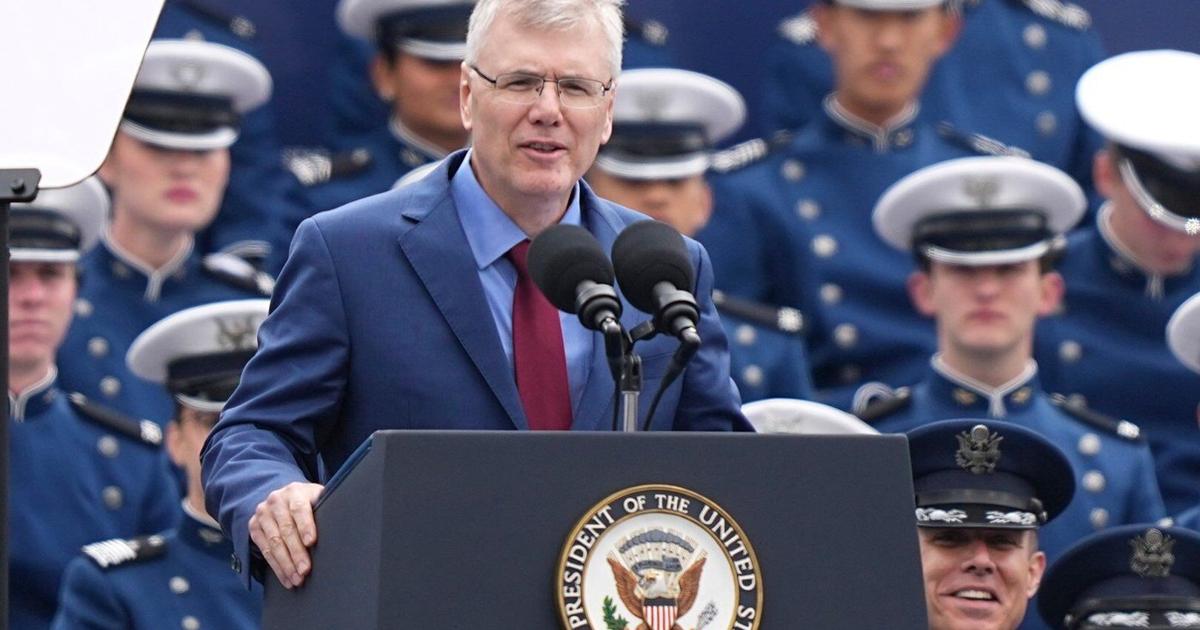
Speaking at the Air, Space, and Cyber Conference in National Harbor, Md., Meink openly conceded something U.S. policymakers have been avoiding acknowledging for years—that the American military intends to weaponize space, and indeed, that it already has hostile hardware in Earth orbit. asserted
it → speak → orbit
“We are increasing readiness against existing threats,” Meink said. asserted
Meink → increase → threats
“[T]he United States has on orbit space control weapons capable of defending the Joint Force against hostile adversary action. asserted
States → have → action
The announcement was headline-making both for what it said about the escalation of weapons development to off-planet domains, and for Meink’s surprising candor. asserted
it → make → candor
Weaponization of space has been officially forbidden under international law since Jan. 27, 1967, when the Treaty on Principles Governing the Activities of States in the Exploration and Use of Outer Space, including the Moon and Other Celestial Bodies—better known simply as the Outer Space Treaty—was signed and ratified by the U.S., the U.K., and the old U.S.S.R. asserted
Treaty → forbid → U.S.
Since then, 112 other countries have joined the pact. asserted
countries → join → pact
China, which was not remotely a global power at the time the treaty was adopted, signed on to it in 1983. asserted
treaty → adopt → 1983
But the agreement has been honored as much in the breach as in the observance—at least by the U.S., China, and modern-day Russia. asserted
agreement → honor → U.S.
As long ago as 1985, the U.S. Air Force shot down a defunct American weather satellite with a missile launched by a military jet flying at 31,500 ft., a first test of a technology that could just as easily be used against the space assets of enemy nations. uncertain
that → shoot → nations
The Soviet Union experimented with similar R&D beginning in 1983, but did not succeed at it until 2021, when it famously destroyed a Soviet-era satellite with a ground-based missile. asserted
it → experiment → missile
Beijing beat Moscow to the punch 14 years earlier, skeet-shooting a Feng Yun-1C weather satellite out of the sky with a projectile fired by a ground-launched ballistic missile, scoring a hit more than 500 miles up. asserted
Beijing → beat → hit
The U.S. has—officially at least—disavowed and condemned this kind of cosmic escalation. asserted
U.S. → disavow → escalation
At the time of the Chinese action, senior members of the George W. Bush administration criticized the move as “very troubling,” “very worrisome,” “destabilizing,” and “quite unpleasant.” asserted
members → criticize → move
A senior Air Force spokesperson told the media flatly, “We don’t want to do that.” asserted
We → tell → that
But what America ostensibly wants to do and what it has actually been doing are two different things. asserted
it → want → what
In 1983, then-President Ronald Reagan announced plans for a tactical umbrella known as the Strategic Defense Initiative (SDI), which aimed to use missiles that could reach orbital and suborbital space to knock down nuclear and conventional ordnance launched by the Soviet Union and other foes. uncertain
that → announce → Union
The program did not quite run afoul of the Outer Space Treaty since it was nominally defensive rather than offensive, though the Kremlin decidedly did not see things that way. asserted
Kremlin → run → things
The SDI ran for a decade—until the presidency of Bill Clinton—and produced no technology of note, while burning through an inflation-adjusted $70 billion. asserted
SDI → run → billion
Presidents since then have continued to invest in space-based missile defense—though at lower funding levels—with President George W. Bush going so far as to withdraw from the 1972 U.S.-U.S.S.R Anti-Ballistic Missile (ABM) treaty, to pursue the technology without officially breaking America’s diplomatic word. asserted
Bush → continue → word
In his two terms in the Oval Office, President Donald Trump has escalated the Pentagon’s push into space. asserted
Trump → escalate → space
During his first term, in 2019 Trump created the Space Force, a sixth branch of the armed services, with particular focus on the orbital domain. asserted
Trump → create → domain
The new branch is small compared to the rest of the military, with just 10,000 uniformed service members (compared to 450,000 for the Army), and a $71 billion budget for fiscal year 2027 (against the Army’s $253 billion). asserted
branch → compare → Army
What’s more, most of the work the Space Force has been doing was already being performed by the U.S. Air Force’s Space Command, meaning that the establishment of the new branch represented less an increase in the Pentagon’s off-Earth activities than a mere shift in the shingle under which the jobs were getting done. asserted
jobs → ’ → which
But upon his return to the White House in 2025, Trump stepped up the militarization of space—and did so fast. asserted
Trump → step → space
On Jan. 27—the 58th birthday of the Outer Space Treaty and just a week after his inauguration—Trump issued Executive Order 14186, establishing the so-called Iron Dome (later renamed Golden Dome), a space-defense system that the Congressional Budget Office has estimated could cost $1.2 trillion over 20 years, with a down payment of $25 billion, or about the same as NASA’s annual budget, spent in its first fiscal year alone. uncertain
Office → issue → year
Among other things, Golden Dome calls for space-based missile interceptors and a global constellation of satellites to monitor hostile nations’ space activities—both pillars of Reagan’s SDI. Golden Dome has been moving at a sprint since the Executive Order was signed. asserted
Order → call → sprint
In the past 18 months, the program has advanced from the contract phase to actual flight-ready hardware. asserted
program → advance → hardware
Beta-tests of both interceptors and surveillance systems are set for launch before the end of the year. asserted
tests → set → year
Indeed, said Meink in his remarks, “We start launching our Air Moving Target Indicator constellation this month,” referring to the monitoring satellites. asserted
We → say → satellites
It’s not just defensive weapons that are in play as the arms race in space accelerates. asserted
race → ’ → space
And it’s not just missiles that will be the agents of that combat. asserted
that → ’ → combat
Lasers and microwave technology—flashed and pulsed by armed satellites—are widely believed to be in development, and could be used to fry the brains and blind the optical systems of opposing countries’ satellites. uncertain
Lasers → flash → satellites
Meantime, Foreign Policy magazine reports that China is developing military satellites with robotic arms that could literally yank opposing satellites out of their intended orbits. uncertain
that → report → orbits
In the wake of Meink’s announcement, Bleddyn Bowen, an associate fellow in military sciences at the Royal United Services Institute and associate professor in astropolitics at England’s Durham University, told the BBC that the U.S. could be developing similar technology as well. uncertain
U.S. → tell → technology
“[S]ome sort of close inspection and grappling satellite would be [a] possibility,” he said. asserted
he → say → satellite
The biggest danger, however, comes from missiles and orbital projectiles that would effectively blow satellites up, since that kind of kinetic attack produces a swirling cloud of orbital debris that would fan out from the site of the strike, threatening other satellites with unplanned destruction. asserted
that → come → destruction
Accidental collisions with space junk already worry both the commercial and military sectors. asserted
collisions → worry → sectors
Traveling at 4.85 miles per second, even a fleck of paint could do significant damage to a satellite, or, worse, a crewed spacecraft. uncertain
fleck → travel → satellite
What truly keeps space planners up at night is something known as the Kessler Effect—a slow-motion chain reaction in which the flotsam produced by a collision with even a single piece of space debris could strike other satellites, producing more debris still, and more collisions still, ultimately leading to the loss of all spacecraft in that orbital band. uncertain
flotsam → keep → band
…and 8 more, not listed.
Give feedback · no sign-in needed

No sign-in needed for now. Your note is sent without a name, so it cannot be answered.

History Support