Photo via Semafor

‘Bragawatts’ and why all data-center investing isn’t created equal

Read the original at Semafor ↗
Cite

Hoffman, L. (2026, November 2). ‘Bragawatts’ and why all data-center investing isn’t created equal. Semafor. https://www.semafor.com/article/11/02/2026/bragawatts-and-why-all-data-center-investing-isnt-created-equal

Dated from the outlet's own feed. Check the original for its byline.

Semafor · collected 2026-11-02 · by Liz Hoffman

Quick Summary

EQT, a Scandinavian private-equity firm with $400 billion in assets under management, is focusing on investing in energy assets critical for AI development despite concerns over market instability. Jean Salata, global chair of EQT, warns against "bragawatts," or inflated power contracts that fail to deliver actual energy capacity. This strategy diverges from many other private-equity firms pursuing less sustainable business models like private credit and insurance, which have become riskier due to higher interest rates and market volatility.
Written by AI on 2026-11-02, from this article's own text only (the story summary below draws on all the coverage).

AI analysis

Story summary

EQT, a major Scandinavian private-equity firm with $400 billion in assets under management, is betting on the long-term growth of artificial intelligence despite market uncertainties. The firm's global chair, Jean Salata, emphasized that AI will continue to require significant amounts of energy and data centers. EQT now holds $100 billion in energy-related assets, positioning them as a key player in what they see as a critical bottleneck for AI development. Salata highlighted concerns about investors overestimating their understanding of the market, referring to rushed investments in power contracts as "bragawatts." He noted that merely signing contracts does not guarantee timely delivery and connectivity issues can complicate matters further. This strategic move by EQT comes at a time when private equity firms are facing challenges due to fewer exits, increased interest rates impacting cheap leverage strategies, and vulnerabilities in software company investments amid the AI revolution.

Written for “Data Center Investing Trends” on 2026-11-21, grounded in this article and the 0 other(s) covering the same event.

Compared with similar articles

This article reads unscored and hedges 2% of its claims. Each row says how that neighbour differs.
South China Morning Post
Centre Hedges 0 of 2 claims Outlet record 62/100
“The articles discuss different aspects of AI infrastructure investment and market dynamics, not the same specific incident or meeting.”
Semafor
Hedges 0 of 5 claims Outlet record 64/100
“Article A reports on financial results from Amazon and Intel, while Article B discusses investment trends in AI-related energy assets by EQT.”
BBC News
Hedges 3 of 39 claims Outlet record 65/100
“The articles discuss different aspects of AI investment and data centers without describing the same specific incident or occurrence.”
CBC News
Hedges 4 of 31 claims Outlet record 72/100
“The articles discuss different aspects of AI data center investments and economic impacts, not the same specific incident.”
Deutsche Welle
Leans left Hedges 9 of 31 claims Outlet record 95/100
“The articles discuss different aspects of AI investment and funding without describing the same specific incident.”
Semafor
Hedges 0 of 6 claims Outlet record 64/100
“The articles discuss different aspects of tech and AI funding strategies without describing the same specific incident.”
Deutsche Welle
Leans left Hedges 9 of 31 claims Outlet record 95/100
“The articles discuss related themes about AI investment and energy needs but describe different aspects and sources, indicating distinct reports rather than a single incident.”
The Guardian
Leans left Hedges 1 of 20 claims Outlet record 64/100
“The articles discuss different aspects of data centers: one focuses on an investment by EQT in energy assets for AI, while the other reports on voter rejection of data center developments across multiple US jurisdictions.”
Semafor
Leans right Hedges 2 of 14 claims Outlet record 64/100
“The articles discuss different aspects of the data center industry and market trends without clearly referencing the same specific incident.”
Al Jazeera
Leans left Hedges 5 of 65 claims Outlet record 60/100
“The articles discuss related topics but describe different aspects and parties involved in AI's energy requirements.”

Story

Data Center Investing Trends
Economy/Business · 1 article(s) covering the same event.
How this article was measured signals, leaning charts, publisher record, byline, topics and claims

Signals How these are calculated →

Claims extracted
65
sentences that state something as happening or true
Uncertain
2%
1 of 65 hedged ("reportedly", "may", "according to")
Leaning
not political
takes no side on a contested political question
Publisher signals
64/100
Semafor's corrections and hedging, across everything collected from it. Not a measure of accuracy.
Outlets on this story
1
Economy/Business
Same framing elsewhere
1
articles that frame the event the way this one does
Analyzed 2026-11-02 · how these are computed

How this is being covered How these are calculated →

Article leaning vs. publisher reliability
Source leaning vs. consistency

Publisher

Semafor · 1931 article(s) · 7 correction(s) detected
Running correction rate · 7 correction(s)

Who wrote this

Liz Hoffman
37 article(s) here · 1 carrying a prediction
One former politico-turned-tech executive who had just come from Washington told me this week: “Out here, the question is whether Jensen will be back at Nvidia by Christmas or whether it’ll take a little longer.
2026-11-18 · assertive framing · Tech leaders form tribal loyalties after Huang ouster
The position of Nvidia’s Colette Kress — a relatively unknown CFO, a rare female executive in an industry dominated by men, promoted in a storm and taking the mic for the high-stakes earnings call this afternoon — will ring familiar to old Wall Street hands.
2026-11-17 · assertive framing · Nvidia faces its own Lehman moment
Whoever replaces him will face much higher stakes, akin to Tim Cook after Steve Jobs at Apple.
Much will depend on what those Democrats and Nvidia’s board, which is running its own investigation, unearth about who knew what and when.
Top of mind, too, is what Nvidia would be without Huang, its CEO since he co-founded the company in 1993.
OpenAI set out to raise $30 billion, money it could have put together in its sleep a few months ago, and appears likely to fall far short.
The AI debt boom might just bring the push the markets need.
The original thesis, which investors never bought, was that combining Aetna’s insurance data and CVS’s 10,000 retail pharmacies would cut costs and make care more seamless.
2026-11-05 · assertive framing · CVS joins the M&A unwind club
The two seemed to embody a new type of hard-edged conservative politics that lives at the intersection of Twitter and money, driven by wealthy and successful businessmen who believed their wealth and success would translate into political victories and personal popularity.
2026-11-04 · assertive framing · How big money lost the 2026 midterms
Reports that the White House is planning post-midterm strikes on Iran may push political fallout from an unpopular war outside the election window, but the economic weight of high gas and diesel prices lands on whoever’s nominally in charge come January.
Also by Liz Hoffman
Nothing else under this byline is closely related to this article, so these are simply their most recent.
All 37 articles by Liz Hoffman →

Topics

EQT News Q&A Scandinavian Sweden

Subjects

EQT ORG · 5× Jean Salata PERSON · 2× Salata PERSON · 2× Apollo ORG · 1× Liz Hoffman PERSON · 1× News ORG · 1× Q&A ORG · 1× Scandinavian NORP · 1× Sweden GPE · 1× Wallenbergs PERSON · 1×

Narrative

There’s a bit of frustration on the part of sellers that have sold assets because they need to go fundraising, only to see the buyers make like another 3x on it, which is why you’re seeing these longer-hold vehicles like evergreen structures, open-ended structures, continuation vehicles.
framing: assertive · carried by 1 article(s) · first seen 2026-11-02
For a long time, private equity firms could borrow cheaply, ride a rising market, and look like geniuses.

Claims (65 extracted, 1 hedged)

For all the talk of AI bubbles and market crashes, Scandinavian private-equity giant EQT says it’s making a bet that regardless of what happens with the frontier labs, AI is still going to need a massive amount of power, energy, chips, and data centers. asserted
AI → say → power
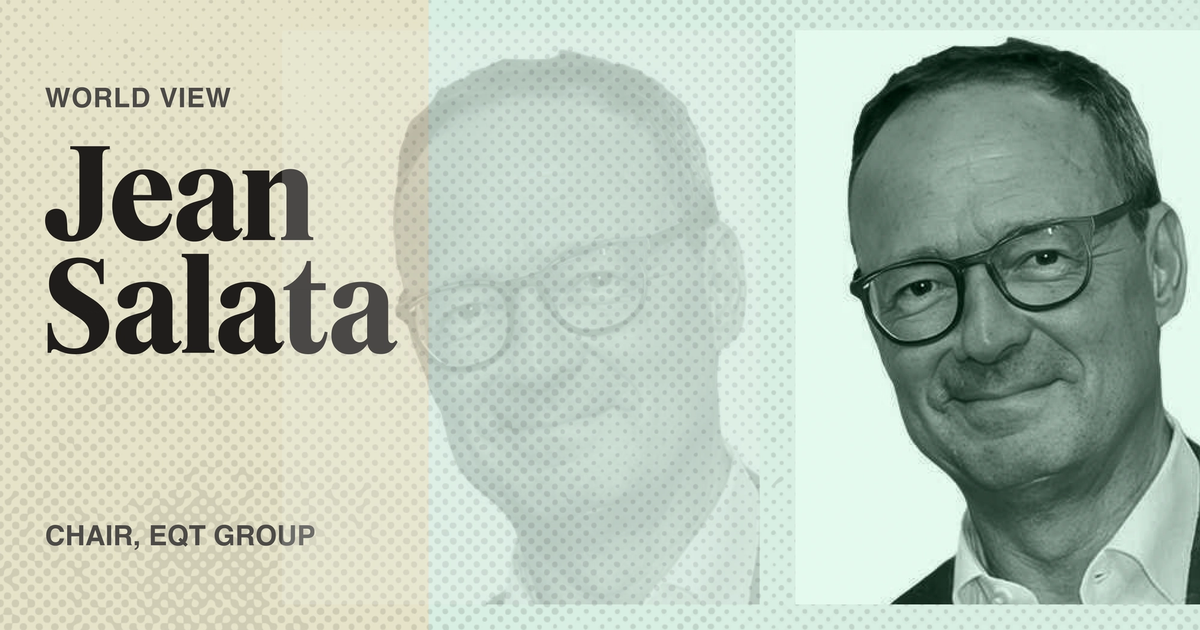
“All of a sudden, we find ourselves with $100 billion of energy assets, which are really the limiting factor for AI right now,” said Jean Salata, global chair of EQT, which has $400 billion in assets under management. asserted
which → find → management
“A lot of people went out and signed tons of contracts with anybody — they call them ‘bragawatts.’ asserted
they → go → them
But signing something and delivering it on time, and with power connected, are two very different things,” Salata said. asserted
Salata → sign → power
“Sophisticated investors understand that, but there’s a lot of things happening in the public markets where people are investing in things that they really don’t understand.” asserted
they → understand → that
EQT is a unique animal in an industry where exits have dried up, a generational bet on software companies looks vulnerable to AI, and higher interest rates have broken the math of cheap leverage and multiple expansion. asserted
rates → dry → leverage
Since 2018, PE firms have asked their investors for $1.5 trillion more capital than they’ve given back, and the industry is sitting on nearly $4 trillion worth of businesses it can’t sell. asserted
it → ask → businesses
EQT has largely stayed out of the private credit and insurance boom that has turned its US rivals into asset-gathering giants — a “beta business,” said Salata, an artisanally crafted Wall Street dig. asserted
Salata → stay → giants
And it has an unusual backstop: The Wallenbergs, Sweden’s most powerful business dynasty, helped found EQT in 1994 and remain its largest shareholder. asserted
Wallenbergs → have → 1994
The family’s patient approach to ownership is close to the long-hold model that much of private equity is now trying to reinvent. asserted
much → try → equity
Q&A This interview has been condensed and edited for clarity. asserted
interview → condense → clarity
For a long time, private equity firms could borrow cheaply, ride a rising market, and look like geniuses. uncertain
firms → borrow → geniuses
It feels like the jig is up, and I know you have some thoughts on that. asserted
you → feel → that
Our industry needs to remember what we are meant to be doing, which is delivering returns for our clients. asserted
which → need → clients
If we’re not doing that, we’re going to end up in a very difficult place. asserted
we → do → place
There’s been a lot of attention on the growth in assets under management, a business model that has really benefited from the tailwinds of the private credit run of the last five years. asserted
that → benefit → years
But we’re in an environment where the tide is going out and that means you’re going where there is real value being created. asserted
you → ’re → environment
What should that number be? The industry already is consolidating and that will accelerate. asserted
that → consolidate → be
This year the top 10 firms in the world have raised 50% of the capital. asserted
firms → raise → capital
When you raise smaller funds, people don’t see the carry coming in and so they leave and you get zombie funds. asserted
you → raise → funds
EQT has chosen not to chase those credit tailwinds you mentioned. asserted
you → choose → tailwinds
It doesn’t have the big lending business that Apollo, Blackstone, and others have ridden to huge AUM piles. asserted
Apollo → have → piles
Do you feel good about that decision? asserted
you → feel → decision
I think there’s a role for private credit, but the question is who’s best positioned to deliver that? asserted
question → think → that
We’re good at being an equity investor, being really close to the sectors that we invest in, bringing the best operational talent, bringing the technology and the AI capabilities that we have to the company. asserted
we → ’re → company
It’s an origination business. asserted
It → ’ → ?
It’s a beta business. asserted
It → ’ → ?
Best case scenario, you make 8% return on your money. asserted
you → make → money
So, the answer is yes, I think we are happy with the decision. asserted
we → think → decision
But how do you resist the pressures to be a one-stop shop? asserted
you → resist → pressures
But when you start talking about third- and fourth-quartile returns, clients will either stop or reduce the amount that they invest with you. asserted
they → start → you
It’s hard to take anything public right now that isn’t a giant AI company and private equity’s track record on returning capital has been abysmal. asserted
record → ’ → capital
How does the industry get out of this funk? asserted
industry → get → funk
There are a lot of assets for sale that need to find a home and there aren’t that many buyers. asserted
that → be → home
At EQT, we’ve been able to take advantage of where there are pockets of opportunity and liquidity. asserted
we → take → opportunity
We had $33 billion of distributions to our investors in the last 12 months, and as a result, we’re continuing to attract capital. asserted
we → have → capital
There’s this strange incentive structure in our industry, where you sell businesses that you otherwise wouldn’t want to sell because of this finite [fund] life. asserted
you → ’ → life
There’s a bit of frustration on the part of sellers that have sold assets because they need to go fundraising, only to see the buyers make like another 3x on it, which is why you’re seeing these longer-hold vehicles like evergreen structures, open-ended structures, continuation vehicles. asserted
you → ’ → structures
But then isn’t the market saying that the 10-year closed-end fund is outdated and should probably go away? asserted
fund → say → ?
One of the reasons we bought [secondaries firm] Coller is we think there is a convergence happening between the primary market and the secondary market. asserted
we → buy → market
…and 25 more, not listed.

Give feedback · no sign-in needed

No sign-in needed for now. Your note is sent without a name, so it cannot be answered.

History Support