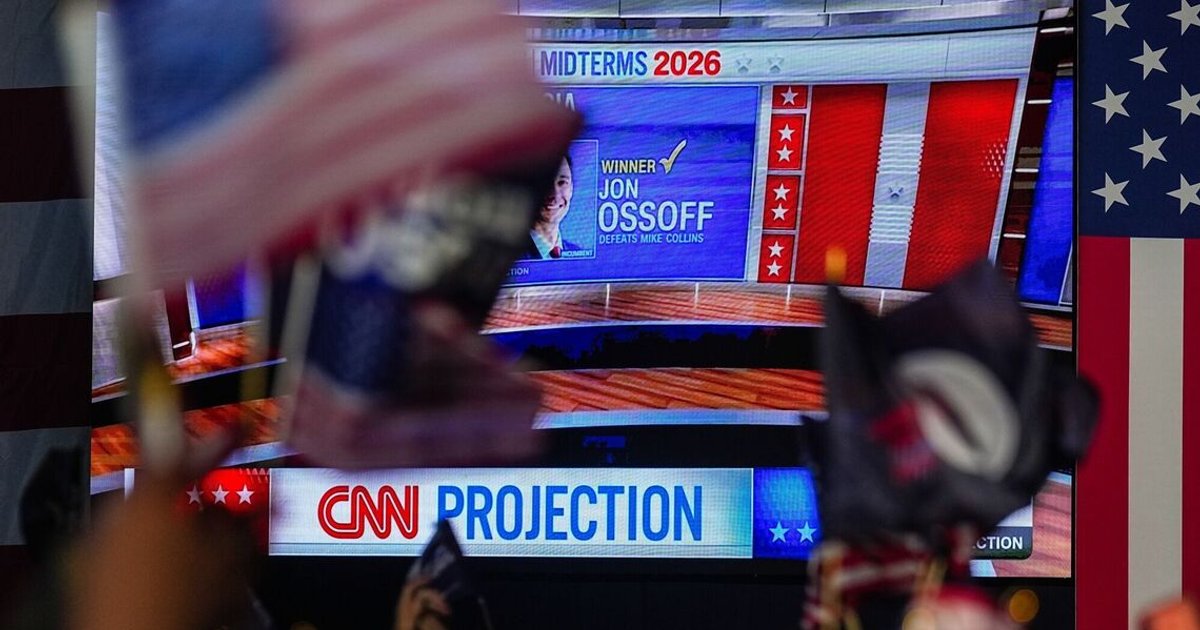
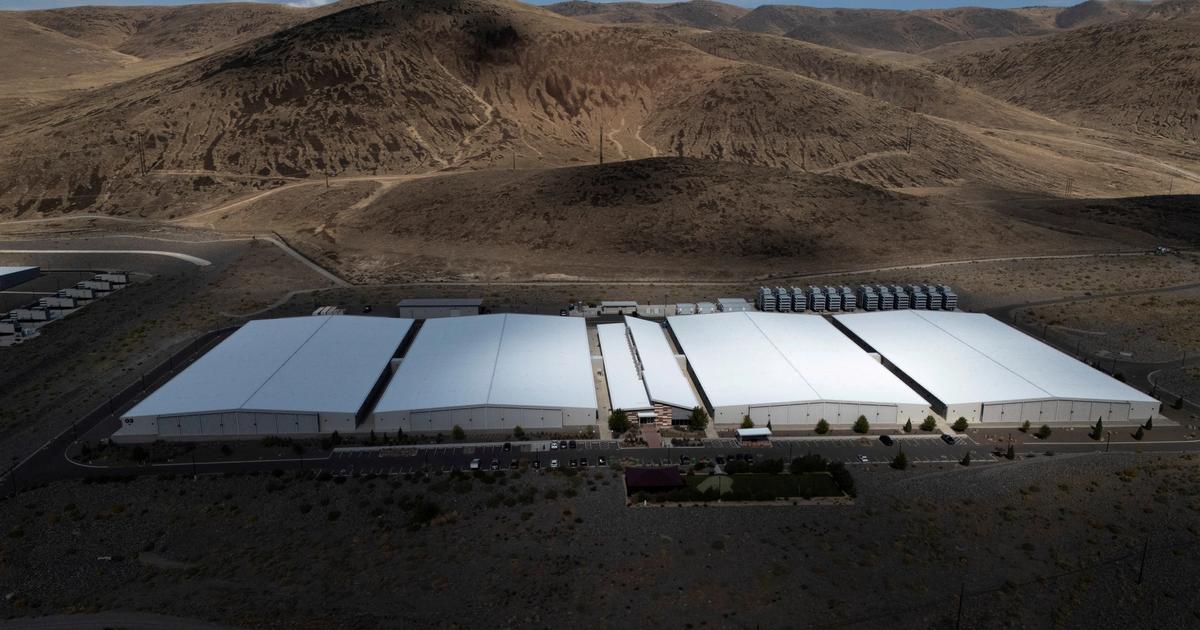
Photo via The Guardian

Datacenters were on the ballot. US voters rejected them

Read the original at The Guardian ↗
Cite

Bhuiyan, J. (2026, November 5). Datacenters were on the ballot. US voters rejected them. The Guardian. https://www.theguardian.com/us-news/2026/nov/04/datacenters-midterm-elections

Dated from the outlet's own feed. Check the original for its byline.

The Guardian · collected 2026-11-05 · by Johana Bhuiyan

Quick Summary

US voters across at least 10 states rejected datacenter projects in Tuesday’s midterm elections, with 40 jurisdictions passing bans or restrictions. In Ohio alone, 14 municipalities banned Amazon's proposed $2 million datacenter project in Sunbury. Other notable rejections occurred in Maine and Kansas. The only exception was Hardwood, North Dakota, where a moratorium failed. Politicians elected on Tuesday also pledged to restrict datacenter development, including Texas’s new governor Gina Hinojosa, who promised greater restrictions and community input. Tech analysts predict this opposition will slow the pace of datacenter buildout over the next two years.
Written by AI on 2026-11-05, from this article's own text only (the story summary below draws on all the coverage).
See how they differ ↓

AI analysis

Story summary

In the 2026 US midterm elections, voters across nine states overwhelmingly rejected data center projects, passing moratoriums and outright bans in more than 30 localities. Despite initial concerns and predictions that data centers would play a significant role in shaping election outcomes, the actual election results showed that most voters, including many self-identified Republicans, opposed having new data centers in their communities. This rejection of data centers benefited Democratic candidates, who campaigned against the rapid expansion of AI and data centers, highlighting concerns over job loss, surveillance, and economic impacts. Key Democratic victories in states like Ohio and Texas suggest that issues related to AI and data centers may become a central theme in future American politics, reflecting a growing anti-AI populism.

Written for “Data center backlash in midterms” on 2026-11-21, grounded in this article and the 34 other(s) covering the same event.

How they differ

17 outlets covered “Data center backlash in midterms”.

What each outlet says

One AI summary per outlet of its latest article on this story, written from that article alone and checked against it. Open the article for the outlet's own words.

The GuardianThis outlet5 Nov

US voters across at least 10 states rejected datacenter projects in Tuesday’s midterm elections, with 40 jurisdictions passing bans or restrictions. In Ohio alone, 14 municipalities banned Amazon's proposed $2 million datacenter project in Sunbury. Other notable rejections occurred in Maine and Kansas. The only exception was Hardwood, North Dakota, where a moratorium failed. Politicians elected on Tuesday also…

Datacenters were on the ballot. US voters rejected them (this article)3 articles from The Guardian on this story
CBS News6 Nov

Exit polls from the 2026 elections indicate that AI played a significant role for over half of the voters, although data centers were not the most critical issue. The polls showed majorities in all states opposed having new data centers built locally, benefiting Democratic candidates who campaigned against them. However, even many self-identified Republicans were resistant to data center construction despite voting…

Exit polls show data centers weren't winners in 2026 elections →7 articles from CBS News on this story
The Straits Times4 Nov

In the recent US midterm elections, voters in numerous towns across the country overwhelmingly rejected proposals related to data center developments. Notably, Harwood, North Dakota, was the sole exception where residents voted against a measure designed to limit such industrial projects. Around 430 out of about 800 residents cast their ballots, with approximately three-quarters opposing the initiative aimed at…

US midterms: Only one town out of dozens in US voted in favour of data centres →3 articles from The Straits Times on this story
Semafor5 Nov

After winning majorities in Congress, Democrats see artificial intelligence (AI) regulation as a key issue. However, internal disagreements between progressive and business-friendly factions within the party make it challenging to swiftly implement sweeping regulations. Conservative groups argue that voters are concerned about economic issues linked to rapid AI growth under the previous administration. Despite these…

Democrats are fired up on AI. Consensus is harder. →3 articles from Semafor on this story
South China Morning Post6 Nov

Forecasters are warning that the Democratic victory in the midterm elections may lead to regulatory changes that could stall up to 30% of planned artificial intelligence data centers in the United States. This potential clampdown includes project freezes proposed in Texas and increased federal oversight, which would significantly impact Big Tech's infrastructure spending plans.

Does the Democratic midterm victory spell the end of US AI data centre boom? →3 articles from South China Morning Post on this story
Washington Examiner5 Nov

Newly elected Democratic governors in several states are threatening to slow down or impose restrictions on data center development. In Texas, Governor-elect Gina Hinojosa plans to impose a moratorium until the state imposes regulatory guardrails, including requirements for hiring union workers and protecting water resources. Similarly, Georgia’s Governor-elect Keisha Lance Bottoms said she will sign an executive…

Daily on Energy: Newly elected Democratic governors threaten data center development →3 articles from Washington Examiner on this story
Show 10 more outlets
404 Media4 Nov

In last night’s midterm elections across America, voters overwhelmingly rejected proposals related to AI data centers, with 38 out of over 40 ballot measures against them in 13 states. Six cities imposed outright bans while twelve others limited the power draw for such facilities. Candidates who supported data centers faced significant losses; notably, Texas Governor Gregg Abbott lost his bid for a fourth term as…

American Voters Overwhelmingly Reject AI Data Centers →2 articles from 404 Media on this story
Reason4 Nov

In the 2026 midterms, data centers became an unexpectedly significant political issue despite initial skepticism. Exit polls showed that AI data centers were crucial or a major factor for many voters, with most ballot initiatives proposing bans or restrictions on them passing overwhelmingly. Although some argued data center issues did not sway votes as strongly as expected based on pre-election polls, the results…

It Was a Data Center Election After All →2 articles from Reason on this story
New York Post2 Nov

The article reports that despite initial media hype about data centers becoming a significant political issue in US midterm elections, voter polls show it ranks among the least important concerns for Americans in key states like Texas and Ohio. Only around 3% of voters in Texas and 2% in Ohio named data centers as their top concern, according to recent CNN polls. Politicians who previously pushed regulations on data…

Data-center fury is a campaign dud →
Time4 Nov

In the 2026 midterm elections on November 3rd, a significant backlash against AI and data center expansion by voters resulted in major defeats for candidates backed by pro-AI industry groups. Democrats spent over $100 million on ads targeting Republicans’ ties to Big Tech, winning key races such as Ohio’s Senate election. Data center bans passed in multiple counties, and mayors supporting these projects were…

How AI Backlash Shaped the 2026 Midterms →
ABC News (AU)5 Nov

Voters in ten US states rejected data centre proposals in recent midterm elections, with about 41 measures overwhelmingly failing. Democrat Gina Hinojosa's victory in Texas, where she campaigned against data centre construction, further underscores the political toxicity of these projects. Political ads heavily criticized data centres, and exit polls showed that three-quarters of voters oppose such constructions in…

US rejection of data centres is a warning for Australia — and maybe leverage →
Mother Jones5 Nov

Voters across ten states rejected data center projects in nearly 40 towns during recent midterms, with only one measure passing in Harwood, North Dakota. Nationally, 77 percent of voters voted against data center development, largely driven by concerns over environmental justice and rising utility costs. In places like Joliet, Illinois, where communities have long fought industrial pollution, nearly 80 percent…

Midterm Rout for Data Centers: Voters in Nearly 40 Towns Rejected Projects →
The Intercept5 Nov

Midterm elections saw a significant victory for candidates and ballot measures restricting or halting data center development across several states. Newly elected Democratic governors in Georgia, Ohio, and Texas have promised moratoriums on new construction, echoing sentiments from local communities that overwhelmingly approved ballot initiatives against these facilities. Public policy experts attribute this trend…

Blue Tsunami’s Clearest Takeaway: People Hate Data Centers →
The Dispatch6 Nov

The article reports that despite expectations of significant influence, the AI industry faced numerous setbacks during the 2026 midterm elections. A deep-pocketed super PAC supported by Silicon Valley leaders aimed to shape election outcomes but encountered various problems instead. The piece highlights how efforts by corporate AI interests did not achieve their intended impact, reflecting a series of missteps and…

The Midterms’ Other Big Loser: AI →
ABC News (US)6 Nov

In the recent U.S. midterm elections, opposition to data centers emerged as a significant issue in hundreds of millions of dollars' worth of TV ads and campaign promises. Democrats who won governorships in several key states pledged stricter regulation on these energy-intensive facilities. For instance, Clayton Tucker in Texas attributed his victory partly to his stance against data center development due to…

Data centers took a beating in the midterm elections →
BBC6 Nov

A recent US midterms voter poll suggests that data centers were a significant issue for many voters, with 56% saying they were crucial or major factors in their vote and 76% opposing new constructions locally. The poll highlights growing public opposition to the expansion of artificial intelligence infrastructure, particularly among those who voted Democrat. Although other issues like government corruption and cost…

Did a data centre revolt affect the US mid-term election results? →

Compared with similar articles

This article reads leans left and hedges 5% of its claims. Each row says how that neighbour differs.
Mother Jones
Leans strongly left further left than this Hedges 6 of 34 claims Outlet record 60/100
“Article A describes an incident during a political debate involving heckling about data centers, while Article B discusses voter outcomes and bans on datacenter development in multiple jurisdictions.”
BBC News
Hedges 3 of 39 claims Outlet record 65/100
“The articles discuss different aspects of neocloud firms and datacenters; one focuses on financial debates about their sustainability, while the other covers voter rejection of proposed datacenter developments.”
Semafor
Hedges 1 of 65 claims Outlet record 64/100
“The articles discuss different aspects of data centers: one focuses on an investment by EQT in energy assets for AI, while the other reports on voter rejection of data center developments across multiple US jurisdictions.”
The Independent
Leans right further right than this Hedges 2 of 14 claims Outlet record 59/100
“The articles describe different aspects of public sentiment towards data centers, with Article A discussing OpenAI's plan to rebrand data centers and Article B reporting on voter rejection of data center proposals in the midterms.”
CBC News
Hedges 4 of 31 claims Outlet record 72/100
“Article A discusses economic promises made by companies building AI data centers in Canada, while Article B reports on U.S. voters rejecting data center proposals in various jurisdictions during midterm elections.”
Daily Mail
Leans left Hedges 12 of 102 claims Outlet record 69/100
“Article A describes opposition to a specific data center and solar farm project near Tilney St Lawrence in Norfolk, UK, while Article B discusses voter rejection of data centers across multiple US jurisdictions.”
CBC News
Hedges 1 of 58 claims Outlet record 72/100
“Article A discusses legal action by a First Nation against an AI data center in Canada, while Article B talks about US voters rejecting datacenter proposals in midterm elections.”
Global News
Hedges 2 of 18 claims Outlet record 63/100
“Article A discusses the Ontario government's plans regarding AI data centers, while Article B reports on US voters rejecting datacenter proposals in various jurisdictions.”
The Straits Times
Hedges 1 of 26 claims Outlet record 64/100
Semafor
Leans left Hedges 0 of 7 claims Outlet record 64/100

Story

Data center backlash in midterms
Politics · 35 article(s) covering the same event. See how they differ ↑
How this article was measured signals, leaning charts, publisher record, byline, topics and claims

Signals How these are calculated →

Claims extracted
20
sentences that state something as happening or true
Uncertain
5%
1 of 20 hedged ("reportedly", "may", "according to")
Leaning
Leans left
of the writing, not the subject · beta estimate
Publisher signals
64/100
The Guardian's corrections and hedging, across everything collected from it. Not a measure of accuracy.
Outlets on this story
35
Politics
Same framing elsewhere
1
articles that frame the event the way this one does
Analyzed 2026-11-05 · how these are computed

How this is being covered How these are calculated →

Article leaning vs. publisher reliability
Source leaning vs. consistency

Publisher

The Guardian · 2648 article(s) · 9 correction(s) detected
Running correction rate · 9 correction(s)

Who wrote this

Johana Bhuiyan
13 article(s) here · 1 carrying a prediction
Senator Wyden of Oregon said Congress will need to act if the companies “don’t do a better job of cracking down on apps expressly designed and marketed to create harm”.
Jensen Huang said he would be willing to return to Nvidia as CEO in his first remarks since resigning from the company Thursday.
Each of these factors may have easily been resolved on their own but, together, led to a major outage that was harder to mitigate, company executives said.
They would then instruct the employees to get in touch with lawyers at a large international law firm.
The law, known as Assembly Bill 1709, prohibits such platforms from offering underage children “psychologically exploitative features” that could lead to compulsive use, such as providing personal recommendations and sending videos through autoplay features.
The small city of a population of less than 1,000 people voted down a bill that would impose restrictions on datacenter development.
2026-11-05 · assertive framing · Datacenters were on the ballot. US voters rejected them
“Access to these products will be entirely off for K-12 student accounts until school administrators explicitly turn them on.”
The company's filing statement contains a 92-page risk factor document in which it acknowledges the dangers that AI poses to society and human beings, and factors that could negatively affect Anthropic's business.
They are predicting that artificial intelligence tools will expose more fundamental weaknesses in global internet infrastructure in the months to come.
“So why would I ever turn them over to a bunch of tech companies whose sole motivation is to profit from their time and harvest their data?” The tech worker who feels torn between two worlds I work in tech, specifically in the AI sphere, and honestly I worry about the future that’s going to be there for my kids.
Also by Johana Bhuiyan
Nothing else under this byline is closely related to this article, so these are simply their most recent.
All 13 articles by Johana Bhuiyan →

Topics

Amazon Maine Ohio Republican Sunbury

Subjects

Ives PERSON · 3× Elon Musk PERSON · 2× Ohio GPE · 2× Republican NORP · 2× Texas GPE · 2× Amazon ORG · 1× Donald Trump PERSON · 1× Emporio GPE · 1× Maine GPE · 1× Sunbury GPE · 1×

Narrative

“Data centers in space looking pretty appealing right now,” Elon Musk, who poured over $400m into supporting conservative candidates, posted on X. Analyst Dan Ives said the results of the midterms are a clear sign that the pace of datacenter buildout will start to slow down.
framing: assertive · carried by 1 article(s) · first seen 2026-11-05
The small city of a population of less than 1,000 people voted down a bill that would impose restrictions on datacenter development.
2026-11-05 · The Guardian
Datacenters were on the ballot. US voters rejected them · assertive framing

Claims (20 extracted, 1 hedged)

Datacenters, the facilities full of semiconductor chips that power artificial intelligence and a host of other online products, were on the ballot in elections in at least 40 jurisdictions across 10 states. asserted
that → power → states
Voters responded with a strong rebuke of the giant buildings, which have has become a symbol of the tech industry and AI. asserted
which → respond → industry
In Ohio alone, at least 14 municipalities passed bans or restrictions on datacenter development, including in Sunbury, where Amazon has proposed a $2m datacenter project. asserted
Amazon → pass → project
In Maine, eight municipalities passed temporary datacenter moratoriums. asserted
municipalities → pass → moratoriums
In Emporio, Kansas, where a 1,000-acre gigawatt-scale datacenter was recently proposed, a ban on high-impact datacenters was approved by voters. asserted
ban → propose → voters
Voters approved nearly every datacenter moratorium that was on the ballot, dozens in total, with one notable exception: Hardwood, North Dakota. asserted
that → approve → exception
The small city of a population of less than 1,000 people voted down a bill that would impose restrictions on datacenter development. asserted
that → vote → development
Where datacenters were not explicitly on the ballot, officials who have pushed back against their development were elected. asserted
who → push → development
In Texas, Democrat Gina Hinojosa, who secured a historical victory as governor on Tuesday night over her Republican opponent, has promised to impose moratoriums on their construction. asserted
who → secure → construction
She has pledged to implement greater restrictions on and community input into whether datacenters can be built. asserted
datacenters → pledge → restrictions
Towards the end of his tenure, Greg Abbott, her Republican opponent, had also tried to capitalize on anti-datacenter sentiment, demanding an end to electricity subsidies for them. asserted
Abbott → try → them
He reversed his previous stance that had welcomed datacenters to the state. asserted
that → reverse → state
Keisha Lance Bottoms, who became governor of Georgia, and Amy Acton, the newly elected governor of Ohio, have also pledged to implement moratoria on the construction of large datacenters. asserted
who → become → datacenters
Anti-datacenter sentiment has grown in the last few months has become a bipartisan issue. asserted
grown → grow → months
In May, Florida governor Ron DeSantis signed a bill imposing strict regulations on large-scale datacenters. uncertain
DeSantis → sign → datacenters
Still, last night’s election solidified the overwhelming opposition to these centers of compute that have come to serve as a stand-in for the ultra wealthy and resource extraction by the AI industry. asserted
that → solidify → industry
“Data centers in space looking pretty appealing right now,” Elon Musk, who poured over $400m into supporting conservative candidates, posted on X. Analyst Dan Ives said the results of the midterms are a clear sign that the pace of datacenter buildout will start to slow down. asserted
pace → look → buildout
“There is no way to sugarcoat that Democrats taking control especially over the Senate will create some major hurdles for AI and tech legislation in the Beltway over the next two years,” Ives said. asserted
Ives → be → years
Ives said he was particularly worried about Hinojosa who is a “known anti-datacenter politician”. asserted
who → say → Hinojosa
“The biggest worry of the night for tech investors and the AI trade was around the state of Texas where 25%-30% of data center gigawatts and capacity will come from,” he said. asserted
he → come → gigawatts
Give feedback · no sign-in needed

No sign-in needed for now. Your note is sent without a name, so it cannot be answered.

History Support