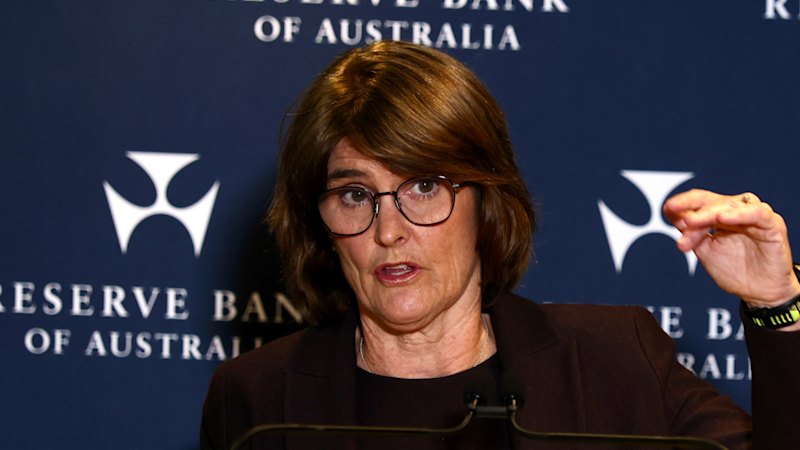
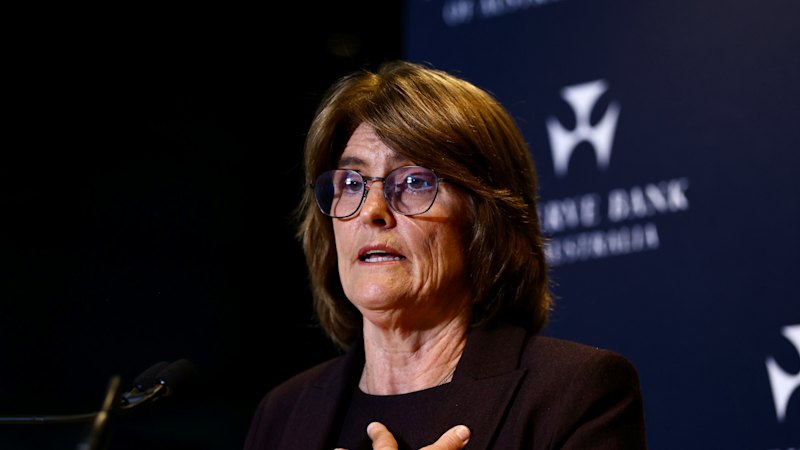
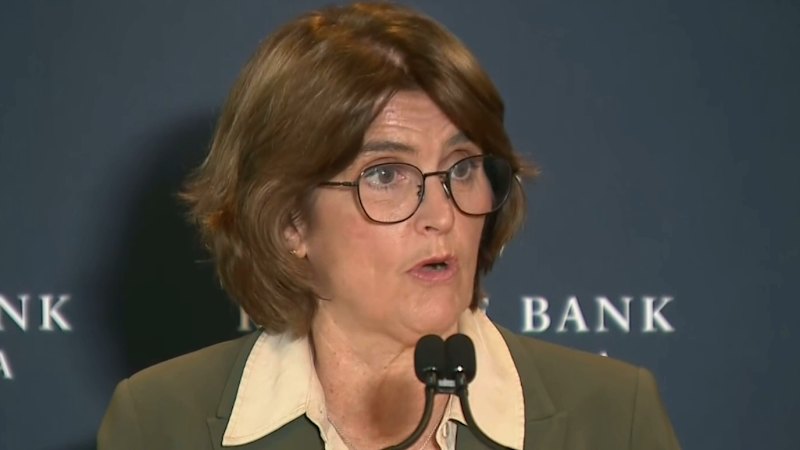
Photo via The Guardian

RBA interest rates: Reserve Bank hikes cash rate for fifth time this year in blow to mortgage holders

Read the original at The Guardian ↗
Cite

editor, P. C. E. (2026, November 3). RBA interest rates: Reserve Bank hikes cash rate for fifth time this year in blow to mortgage holders. The Guardian. https://www.theguardian.com/australia-news/2026/nov/03/rba-interest-rates-decision-cash-rate-november-reserve-bank-australia

Dated from the outlet's own feed. Check the original for its byline.

The Guardian · collected 2026-11-03 · by Patrick Commins Economics editor

Quick Summary

The Reserve Bank of Australia raised its cash rate for the fifth time this year, increasing it from 4.6% to 4.85%, amid efforts to control high inflation driven by global oil price shocks due to the Middle East conflict. The decision split the monetary policy board, with six members voting for a hike and three against. This latest increase will add $107 monthly to the interest payments on a $700,000 home loan, raising total repayments over this year’s hikes by $532.
Written by AI on 2026-11-03, from this article's own text only (the story summary below draws on all the coverage).
See how they differ ↓

AI analysis

Story summary

On November 3, 2026, the Reserve Bank of Australia (RBA) increased interest rates from 4.60% to 4.85%, marking an 18-year high and the fifth hike this year. The decision aims to combat inflation, which has risen above the RBA's target band of 2-3%. Despite Prime Minister Anthony Albanese calling interest rates a "blunt instrument," Governor Michele Bullock defended the move as necessary to prevent more severe economic consequences. However, economists warn that further hikes could push Australia into recession and exacerbate financial stress for households, particularly in New South Wales (NSW), where mortgage repayments are already among the highest nationally.

Written for “RBA Lifts Interest Rates For Fifth Time This Year” on 2026-11-20, grounded in this article and the 19 other(s) covering the same event.

How they differ

5 outlets covered “RBA Lifts Interest Rates For Fifth Time This Year”.

What each outlet says

One AI summary per outlet of its latest article on this story, written from that article alone and checked against it. Open the article for the outlet's own words.

The GuardianThis outlet3 Nov

The Reserve Bank of Australia raised its cash rate for the fifth time this year, increasing it from 4.6% to 4.85%, amid efforts to control high inflation driven by global oil price shocks due to the Middle East conflict. The decision split the monetary policy board, with six members voting for a hike and three against. This latest increase will add $107 monthly to the interest payments on a $700,000 home loan…

RBA interest rates: Reserve Bank hikes cash rate for fifth time this year in blow to mortgage holders (this article)3 articles from The Guardian on this story
Sydney Morning Herald3 Nov

Australia's Reserve Bank raised the official interest rate to 4.85%, marking the fifth increase this year and the highest since the global financial crisis. In Sydney’s western suburbs, residents are experiencing significant financial strain; a $600,000 mortgage now sees an additional monthly repayment of about $100. Many locals express frustration and worry over rising costs and reduced spending on essentials like…

‘Everyone is feeling the pain’: Interest rate hike hits Sydney hard →8 articles from Sydney Morning Herald on this story
ABC News (AU)3 Nov

The Reserve Bank of Australia (RBA) has raised interest rates to their highest level in 18 years, aiming to reduce inflation from its current rate of 4.3% annually back down to the RBA’s 2 to 3 percent target range. The article explores why this specific range was chosen and delves into the history of the RBA's adoption of an inflation target in the early 1990s, which it adapted from New Zealand's model but with…

'No need to sack the governor' and other reasons for the RBA's inflation target →6 articles from ABC News (AU) on this story
Daily Mail3 Nov

The Reserve Bank of Australia raised interest rates by 25 basis points to 4.85%, marking the fifth increase this year in response to high inflation. This move is particularly challenging for households already strained by rising costs, while businesses face higher financing expenses alongside reduced customer spending. Critics argue that although rate hikes are necessary to combat inflation, the government could be…

The worst of inflation is 'well and truly behind us', Jim Chalmers said last year. That feels especially enraging right now: PVO →2 articles from Daily Mail on this story
The Independent3 Nov

Australia’s central bank raised its benchmark interest rate from 4.60% to 4.85%, marking the highest level since 18 years ago and the fifth increase this year. Reserve Bank of Australia Governor Michele Bullock defended the decision, emphasizing the need to reduce inflation despite financial pressure on mortgage holders. The RBA’s statement suggests a potential pause in further hikes over summer to assess impacts…

Australia increases interest rates to highest level in 18 years →

Where they agree and split

Framing

How the first headlines put it

Stated as fact2
The headlines (2)

It is the RBA’s job to fight inflation, but governments must do more to help Sydney Morning Herald · stated as fact

‘Sharper, longer slowdown’ predicted for economy as fifth interest rate hike looms The Guardian · stated as fact

The full story: what happened, how it changed, and all 20 articles →

Compared with similar articles

This article reads leans left and hedges 10% of its claims. Each row says how that neighbour differs.
The Sydney Morning Herald
Hedges 5 of 28 claims Outlet record 61/100
ABC News (AU)
Hedges 0 of 3 claims Outlet record 67/100
ABC News (AU)
Hedges 2 of 15 claims Outlet record 67/100
ABC News (AU)
Hedges 3 of 38 claims Outlet record 67/100
Daily Mail
Leans left Hedges 7 of 31 claims Outlet record 69/100
Daily Mail
Leans strongly left further left than this Hedges 0 of 32 claims Outlet record 69/100
ABC News (AU)
Hedges 10 of 69 claims Outlet record 67/100
The Independent
Leans right further right than this Hedges 3 of 17 claims Outlet record 59/100
The Sydney Morning Herald
Outlet record 61/100

Story

RBA Lifts Interest Rates For Fifth Time This Year
Economy/Business · 20 article(s) covering the same event. Compare every outlet's account →
How this article was measured signals, leaning charts, publisher record, byline, topics and claims

Signals How these are calculated →

Claims extracted
21
sentences that state something as happening or true
Uncertain
10%
2 of 21 hedged ("reportedly", "may", "according to")
Leaning
Leans left
of the writing, not the subject · beta estimate
Publisher signals
64/100
The Guardian's corrections and hedging, across everything collected from it. Not a measure of accuracy.
Outlets on this story
20
Economy/Business
Same framing elsewhere
1
articles that frame the event the way this one does
Analyzed 2026-11-03 · how these are computed

How this is being covered How these are calculated →

Article leaning vs. publisher reliability
Source leaning vs. consistency

Publisher

The Guardian · 3712 article(s) · 8 correction(s) detected
Running correction rate · 8 correction(s)

Who wrote this

Patrick Commins Economics editor
12 article(s) here · 1 carrying a prediction
Jim Chalmers has promised next month’s mid-year budget update “will cut enough, but not too much”, as he flagged “substantial savings” to help in the fight against inflation.
The Albanese government in the May budget announced changes to the tax on capital gains for investors, and banned negative gearing for new landlords buying an existing home.
In its post-meeting statement following the decision, the board repeated that it “will continue to do what it considers necessary to bring inflation sustainably back to target”.
The RBA is widely expected to hit mortgage holders with a fifth rate hike on Tuesday, in a move that will push the cash rate to its highest since 2008 amid rising worries the economy could even be tipped into recession.
Taking the lion’s share of the blame for worsening cost of living pressures may not be completely fair, but it is the price of incumbency – as the latest Essential poll showed.
Jim Chalmers has revealed December’s mid-year budget update will project weaker growth and higher unemployment, as economists warn of a difficult six months ahead for the Australian economy.
The Reserve Bank says households are well placed to weather the twin storm of rising interest rates and plunging property prices, but warned that Australia would not be immune to a sudden collapse of the global AI investment boom.
Inflation has jumped to 4% in the year to August, from 3.5%, as Jim Chalmers was again forced to defend Labor’s economic management amid fears the Reserve Bank will need to hike interest rates again before Christmas.
Two or even three more Reserve Bank interest rate hikes would be “devastating” for the property market but still leave housing more unaffordable than ever as higher borrowing costs trump lower prices, experts say.
There will be more Australians dying than being born in 40 years’ time, according to the government’s latest intergenerational report, which lays bare the fundamental challenges of managing an ageing population at a time of rapid change and lower economic growth.
Also by Patrick Commins Economics editor
Nothing else under this byline is closely related to this article, so these are simply their most recent.
All 12 articles by Patrick Commins Economics editor →

Topics

Australians Canstar RBA SOMP The Reserve Bank

Subjects

RBA ORG · 7× Australia GPE · 2× SOMP ORG · 2× Australians NORP · 1× Canstar ORG · 1× Statement on Monetary Policy ORG · 1× The Reserve Bank ORG · 1×

Narrative

That would be well below an estimated potential growth rate of around 2%, but better than recent forecasts by bank analysts. And despite the risks associated with a housing downturn that “is one of the steepest over the past 50 years”, the central banks’ economists saw no evidence that the country was headed towards recession over the coming two years.
framing: assertive · carried by 1 article(s) · first seen 2026-11-03
In its post-meeting statement following the decision, the board repeated that it “will continue to do what it considers necessary to bring inflation sustainably back to target”.

Claims (21 extracted, 2 hedged)

The Reserve Bank has hiked rates for the fifth time this year, from 4.6% to 4.85%, in an attempt to regain control of surging inflation amid an ongoing global oil shock triggered by the war in the Middle East. asserted
Bank → hike → East
The RBA’s decision to hit mortgage holders again is no surprise after inflation jumped to 4.3% in the year to September and comes following tough talk from senior central bank officials over recent days and weeks. asserted
inflation → hit → days
The decision split the monetary policy board, with six members voting for a hike, while three were in favour of holding the cash rate steady. asserted
three → split → rate
In its post-meeting statement following the decision, the board repeated that it “will continue to do what it considers necessary to bring inflation sustainably back to target”. asserted
it → follow → target
The statement did not include an explicit reference to the potential need for further hikes, signalling the RBA is now prepared to wait and see the effects of this year’s five rate rises. asserted
RBA → include → rises
The cash rate has reached its highest level since 2008. Back-to-back hikes will heap more pain on over 3.3m households with home loans and turn the screws on a federal government under pressure for its economic management. The latest rate rise will lift the monthly interest payment on a $700,000 home loan by $107, according to Canstar, bringing the total rise in repayments over this year’s five hikes to $532. uncertain
rise → heap → 532
As the central bank struggles to explain to Australians how interest rate hikes will help tame inflation fueled by events overseas, the RBA’s latest set of forecasts in its Statement on Monetary Policy (SOMP) showed a difficult period ahead for the economy. asserted
set → struggle → economy
The forecasts showed the country’s cost of living crisis would extend for another year, even as Australia struggles with below trend economic growth and climbing unemployment. asserted
Australia → show → growth
The 4.3% inflation rate in the year to September was substantially stronger than the RBA had anticipated as a worsening Middle East conflict squashed hopes of a quick resolution to the global oil shock. asserted
conflict → anticipate → shock
Inflation will push higher through the final months of 2026 and only return below 3% – within the bank’s 2-3% target range – by the end of next year, or about nine months later than hoped, the latest forecasts showed. asserted
forecasts → push → year
Amid a heated political stoush over whether the federal government’s spending is to blame for high and rising inflation, the RBA noted in its SOMP that public demand was weaker than expected through the first six months of 2026. asserted
demand → blame → 2026
That was the result of cost of living measures rolling off and “moderating” spending in areas such as defence and disability and aged care services, the SOMP said. asserted
SOMP → roll → defence
Global oil prices would ease over the coming 18 months, but still remain relatively elevated, according to the forecasts, suggesting limited relief from high fuel costs for motorists and ongoing high costs for businesses. uncertain
prices → ease → businesses
“We view the risks to the inflation outlook as still skewed to the upside,” the report said. asserted
report → view → upside
Alongside persistent cost of living pressures, the RBA also predicted weak economic growth through to the end of 2028. asserted
RBA → predict → 2028
The economy would grow by 1.6% this year and by 1.3% in 2027. asserted
economy → grow → 2027
That would be well below an estimated potential growth rate of around 2%, but better than recent forecasts by bank analysts. And despite the risks associated with a housing downturn that “is one of the steepest over the past 50 years”, the central banks’ economists saw no evidence that the country was headed towards recession over the coming two years. asserted
country → estimate → years
Unemployment, now at 4.7%, would end next year at around 4.9%, before creeping over 5% in 2028. asserted
Unemployment → end → 2028
Importantly, employment would remain positive. asserted
employment → remain → ?
Meanwhile, there was no end in sight for the global artificial intelligence boom, which would continue to add to capacity issues in Australia. asserted
which → be → Australia
The RBA nearly tripled its forecast for business investment growth in 2026 to 12%. asserted
RBA → triple → %
Give feedback · no sign-in needed

No sign-in needed for now. Your note is sent without a name, so it cannot be answered.

History Support