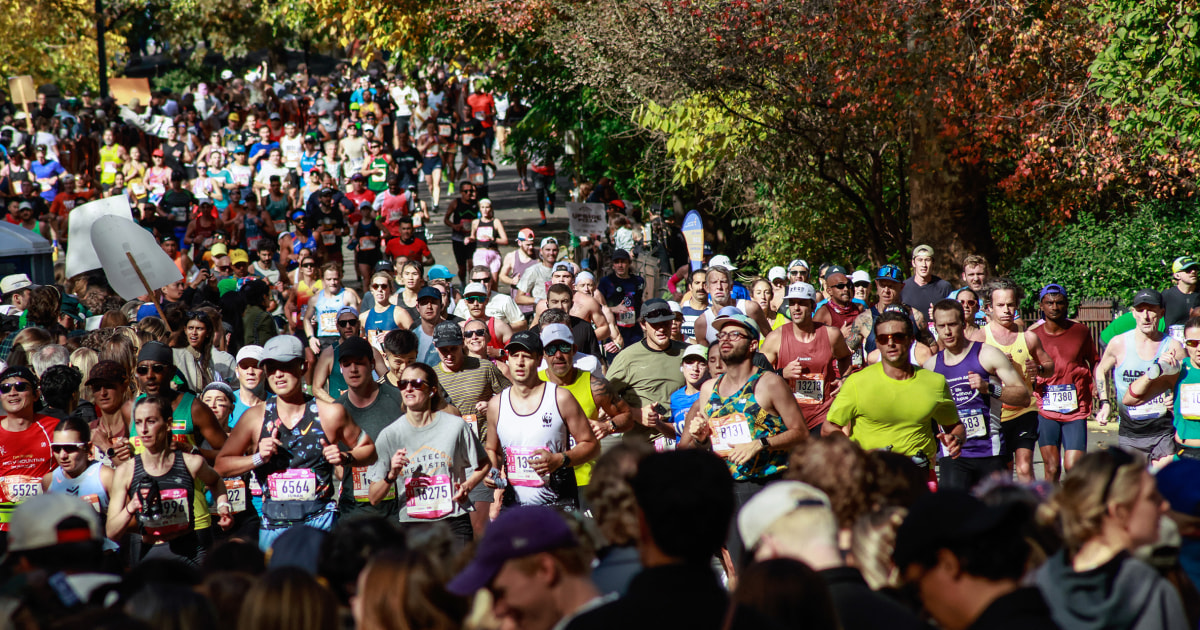
Photo via New York Post

The sudden health complication you can develop from exercise — as healthy NYC marathoner, 24, dies following race

Read the original at New York Post ↗
Cite

Yang, A. (2026, November 3). The sudden health complication you can develop from exercise — as healthy NYC marathoner, 24, dies following race. New York Post. https://nypost.com/health/what-is-rhabdo/

Dated from the outlet's own feed. Check the original for its byline.

New York Post · collected 2026-11-03 · by Allie Yang

Quick Summary

Rachel Apa, a 24-year-old New York City marathon runner who was in excellent health, died from rhabdomyolysis shortly after collapsing during the race. This condition occurs when intense exercise causes muscle breakdown, releasing harmful proteins and electrolytes into the bloodstream that can lead to kidney failure and cardiac issues. The article highlights that endurance athletes are particularly at risk due to overexertion, emphasizing the importance of proper hydration and gradual training increases to prevent such severe complications.
Written by AI on 2026-11-03, from this article's own text only (the story summary below draws on all the coverage).
See how they differ ↓

AI analysis

Story summary

A 24-year-old woman named Rachel Apa from Lewisberry, Pennsylvania, died after collapsing near the finish line of the 2026 New York City Marathon. The incident occurred in Central Park, just over two miles from the end of the race. According to her father, Steve Apa, Rachel experienced a medical emergency while running her first marathon and was being treated for rhabdomyolysis, a condition linked to intense physical exertion. A bystander and event medical staff administered CPR and used a defibrillator but were unable to save her life. The New York Road Runners organization expressed condolences in a statement, noting their sadness over the loss of one of their runners.

Written for “NYC Marathon Runner's Death” on 2026-11-21, grounded in this article and the 23 other(s) covering the same event.

How they differ

12 outlets covered “NYC Marathon Runner's Death”.

What each outlet says

One AI summary per outlet of its latest article on this story, written from that article alone and checked against it. Open the article for the outlet's own words.

New York PostThis outlet3 Nov

Rachel Apa, a 24-year-old New York City marathon runner who was in excellent health, died from rhabdomyolysis shortly after collapsing during the race. This condition occurs when intense exercise causes muscle breakdown, releasing harmful proteins and electrolytes into the bloodstream that can lead to kidney failure and cardiac issues. The article highlights that endurance athletes are particularly at risk due to…

The sudden health complication you can develop from exercise — as healthy NYC marathoner, 24, dies following race (this article)9 articles from New York Post on this story
The Independent4 Nov

Rachel Apa, a 24-year-old marathon runner from Pennsylvania, died after collapsing near the finish line of the New York City Marathon on Sunday due to rhabdomyolysis, a rare and potentially fatal condition caused by excessive muscle breakdown. She had been feeling strong earlier in the race but collapsed around mile 24. Despite six hours of medical intervention at Mount Sinai Medical Center, doctors could not save…

Rhabdo is linked to NYC marathoner’s death. What is the condition and how worried should you be? →3 articles from The Independent on this story
Fox News6 Nov

New York Giants head coach John Harbaugh honored 24-year-old Rachel Apa during a media session, expressing the team's condolences to her family following her death in Sunday’s New York City Marathon. Apa collapsed near Mile 24 and later died at Mount Sinai Hospital; doctors cited rhabdomyolysis as a cause. The tribute highlighted Apa’s dedication to raising funds for Parkinson’s disease research and her athletic…

Giants honor Rachel Apa after New York City Marathon death at age 24: 'She's in God's hands now' →3 articles from Fox News on this story
The Guardian3 Nov

A 24-year-old woman named Rachel Apa died after collapsing during the final stages of the New York City Marathon on Sunday. She had been running to honor her late grandfather who suffered from Parkinson’s disease and was about two miles from the finish line when she collapsed. Her father, Steve Apa, told the New York Times that she likely died from rhabdomyolysis, a rare condition caused by muscle breakdown due to…

24-year-old woman dies after collapsing in final stages of New York City Marathon →
NBC News3 Nov

Rachel Apa, a 24-year-old runner participating in her first New York City Marathon, collapsed and later died due to rhabdomyolysis near mile marker 24 in Central Park on Sunday. Her father shared their final text exchanges leading up to the incident, showing how Rachel communicated with him during the race despite experiencing discomfort. Emergency medical workers responded but were unable to save her, and she was…

Father shares final texts from 24-year-old runner who collapsed during NYC marathon →
CBS News3 Nov

Rachel Apa, 24, collapsed during the TCS New York City Marathon due to rhabdomyolysis, a rare condition where muscle cells break down and release harmful substances into the bloodstream after intense exercise. Her father told The New York Times that she had been experiencing pain earlier in the race but did not reach Mile 25 as planned; medical staff administered CPR and used a defibrillator before transporting her…

NYC marathoner died from rare condition rhabdomyolysis, father says →
Show 5 more outlets
Toronto Star3 Nov

Rachel Apa, a 24-year-old woman from Lewisberry, Pennsylvania, collapsed near the finish line of the New York City Marathon and later died despite efforts to resuscitate her. The incident occurred just over two miles from the end as she was running her first marathon to raise money for Parkinson’s disease research in memory of her grandfather. Emergency responders administered CPR and used a defibrillator but were…

A woman running the NYC marathon for charity dies 2 miles from the finish →
ABC News (AU)3 Nov

Rachel Apa, a 24-year-old woman from Pennsylvania, collapsed and later died during the New York City Marathon on Sunday, just 3 kilometers from the finish line. Her father revealed she had rhabdomyolysis, a rare condition that can cause muscle breakdown during exertion. The city's medical examiner is investigating the cause of her death, while bystanders administered CPR and used a defibrillator before paramedics…

Woman, 24, dies in NY marathon as father reveals she had rare condition →
BBC4 Nov

Rachel Apa, a 24-year-old runner from Pennsylvania who was participating in her first New York City Marathon to raise funds and honor her grandfather with Parkinson’s disease, collapsed near mile marker 24 in Central Park and later died due to rhabdomyolysis, according to her father. The race organizer, New York Road Runners, reported that Apa had texted her father expressing pain before collapsing; she was taken to…

Young NYC Marathon runner collapses and dies two miles from finish line →
CBC4 Nov

Rachel Apa, a 24-year-old runner, died during the New York City Marathon after collapsing near mile 24. Despite medical efforts, she could not be saved, drawing attention to the risks involved in marathon running despite its popularity. With record numbers of participants like the 61,146 runners who completed this year’s New York City Marathon, experts discuss whether the sport has become riskier over time, noting…

A runner died in the New York City Marathon. Have the risks changed as more people race? →
Time5 Nov

A 24-year-old woman named Rachel Apa died on November 1 after collapsing near the end of the New York City Marathon due to a suspected case of rhabdomyolysis, a condition where muscle tissue breaks down and releases toxic substances into the bloodstream. Dr. Douglas Farrell from Mount Sinai Hospital explains that extreme exercise can trigger this condition, also noting an increase in cases among marathon runners…

What to Know About Rhabdomyolysis, the Condition Linked to a Marathon Runner's Death →

Where they agree and split

Agreed

Reported by outlets on both sides of the middle

Apa graduated from Bucknell University, where she played Division I field hockey.

5 outlets
Show 3 more

Around Mile 18, the Times reported that Apa had texted her father "Ow" and then a mile later "Ow ow", before sending the message "final stretch" at the 23rd mile, according to the Times.

4 outlets

A 24-year-old runner in the New York City Marathon collapsed and died just two miles from the finish line, despite being in "perfect health, perfect shape", her father has said.

4 outlets

“I just held Rachel’s hand and talked to her and told her that she wasn’t alone and that she’s loved, and I prayed for her,” Nicholas, a clinical social worker, said by phone.

4 outlets

Framing

How the first headlines put it

Attributed to a source1
Stated as fact9
The headlines (10)

NYC marathoner died from rare condition rhabdomyolysis, father says CBS News · attributed to a source

NYC Marathon runner Rachel Apa dies after collapsing in Central Park two miles from finish line New York Post · stated as fact

24-year-old woman dies after collapsing in final stages of New York City Marathon The Guardian · stated as fact

'Ow, ow': NYC runner Rachel Apa sends text to father from marathon, collapses and dies Times of India · stated as fact

24-year-old dies after collapsing during her first New York City Marathon The Independent · stated as fact

Father shares final texts from 24-year-old runner who collapsed during NYC marathon NBC News · stated as fact

Healthy 24-year-old athlete dies just 2 miles from NYC marathon finish line after sending dad chilling texts Fox News · stated as fact

A woman running the NYC marathon for charity dies 2 miles from the finish Toronto Star · stated as fact

Woman, 24, dies in NY marathon as father reveals she had rare condition ABC News (Australia) · stated as fact

Young NYC Marathon runner collapses and dies two miles from finish line BBC · stated as fact

The full story: what happened, how it changed, and all 24 articles →

Compared with similar articles

This article reads unscored and hedges 25% of its claims. Each row says how that neighbour differs.
BBC News
Hedges 3 of 20 claims Outlet record 65/100
New York Post
Hedges 2 of 16 claims Outlet record 66/100
The Guardian
Hedges 0 of 16 claims Outlet record 64/100
New York Post
Hedges 1 of 7 claims Outlet record 66/100
Times of India
Hedges 0 of 19 claims Outlet record 59/100
The Independent
Hedges 4 of 20 claims Outlet record 59/100
NBC News
Hedges 3 of 45 claims Outlet record 77/100
CBS News
Hedges 6 of 35 claims Outlet record 66/100
The Independent
Hedges 2 of 28 claims Outlet record 59/100

Story

NYC Marathon Runner's Death
Sports · 24 article(s) covering the same event. Compare every outlet's account →
How this article was measured signals, leaning charts, publisher record, byline, topics and claims

Signals How these are calculated →

Claims extracted
36
sentences that state something as happening or true
Uncertain
25%
9 of 36 hedged ("reportedly", "may", "according to")
Leaning
not political
takes no side on a contested political question
Publisher signals
66/100
New York Post's corrections and hedging, across everything collected from it. Not a measure of accuracy.
Outlets on this story
24
Sports
Same framing elsewhere
1
articles that frame the event the way this one does
Analyzed 2026-11-03 · how these are computed

How this is being covered How these are calculated →

Article leaning vs. publisher reliability
Source leaning vs. consistency

Publisher

New York Post · 21720 article(s) · 41 correction(s) detected
Running correction rate · 41 correction(s)

Who wrote this

Allie Yang
41 article(s) here · 1 carrying a prediction
Pickup soccer, it turns out, is the mayor’s Achilles’ heel.
With it, experts say more people will be accurately diagnosed with obesity and better able to get the treatments suitable for their situation.
But over 36,000 people will die from prostate cancer this year, a vast majority from metastatic, advanced cancer.
How could this happen to someone in “perfect health, perfect shape,” as her dad described?
Wietrzyk will be participating in the Elite 15, a series of competitions to qualify for the Hyrox World Championships.
However, they say those thresholds may be outdated — particularly for BPA, which they observed at relatively high levels.
The lump grew so large she “couldn’t even zip my jacket up …
If you need to go under the knife, a key tool to prepare could already be in your bedside table.
What researchers found USC researchers had a group of 365 fish-averse adults, 55 to 80 years old and at increased risk for Alzheimer’s, take fish oil daily to see if it would help them avoid cognitive decline over the course of two years.
Since 2018, an unbearable “shocking, throbbing pain” would course through her face at random, lasting from seconds to minutes each time. “When I got my shocks, it was all-in-one, everything hit me,” she told The Post.
Also by Allie Yang
Nothing else under this byline is closely related to this article, so these are simply their most recent.
All 41 articles by Allie Yang →

Topics

CrossFit New York City the Cleveland Clinic the New York Times

Subjects

Apa PERSON · 1× Cleveland Clinic ORG · 1× New York City GPE · 1× Rachel Apa PERSON · 1× Steve Apa PERSON · 1× the American Academy of Physical Medicine and Rehabilitation ORG · 1× the Cleveland Clinic ORG · 1× the New York Times ORG · 1×

Narrative

The authors of the 2021 study recommend that if you do spin class, make sure to properly hydrate, avoid any medications or supplements that can increase your risk, and gradually build up exercise volume and intensity.
framing: mixed · carried by 1 article(s) · first seen 2026-11-03
How could this happen to someone in “perfect health, perfect shape,” as her dad described?

Claims (36 extracted, 9 hedged)

A young and otherwise healthy New York City marathoner died hours after completing the race due to a dangerous condition that can develop from exercise. asserted
that → die → exercise
Rachel Apa was running her first marathon when she collapsed in Central Park, just two miles from the finish line. asserted
she → run → line
The 24-year-old was rushed to Mount Sinai and died at 9:40 p.m. from a condition called rhabdomyolysis, her father, Steve Apa, told the New York Times. asserted
father → rush → Times
This is when muscles break down, flooding the blood with proteins and electrolytes, damaging critical organs. asserted
muscles → break → organs
How could this happen to someone in “perfect health, perfect shape,” as her dad described? uncertain
dad → happen → health
Apa had been training for months for the race, he said. asserted
he → train → race
But that’s exactly why she was at heightened risk for the life-threatening disease. asserted
she → ’ → disease
Here’s what to know about rhabdomyolysis, aka “rhabdo.” asserted
Here → ’ → rhabdomyolysis
Rhabdomyolysis is the rapid breakdown of skeletal muscles — those attached to bones, as opposed to muscles in the heart and other organs. asserted
Rhabdomyolysis → attach → heart
That releases a deluge of compounds into the blood that the body isn’t equipped to process, the most notable of which are the protein myoglobin and the electrolyte potassium. asserted
notable → release → which
The kidneys try to filter myoglobin out, but the large molecules clog it up, poisoning the kidney tissue and leading to renal failure. asserted
molecules → try → failure
Damaged muscle cells burst and dump potassium into the blood, disrupting signals in the heart. asserted
cells → burst → heart
This can cause fatal cardiac arrhythmias and cardiac arrest. asserted
This → cause → arrhythmias
Any muscle injury, like a car crash, burns, electrical shocks, and even medications, can cause rhabdomyolysis. asserted
injury → cause → rhabdomyolysis
Endurance athletes like marathon runners are at higher risk, as are those who do similarly intense activities, like spin classes or CrossFit. asserted
who → do → classes
Authors of a 2021 study on exertional rhabdo noted that the condition predominantly strikes young, healthy women — and wanting to keep up with others in a fitness class could be increase their risk. uncertain
wanting → note → risk
“While participants in a class are allowed to tailor the level of intensity, cadence and resistance to their fitness level, it is easy to succumb to peer pressure and overexert during the activity,” they wrote. asserted
they → allow → activity
Those undergoing military training or who work in hot environments while also doing a lot of physical work (firefighters, foundry workers) are also at risk of developing rhabdo. asserted
who → undergo → rhabdo
Dehydration doesn’t cause rhabdo, but it can make it much worse and increases the risk of deadly complications. asserted
it → cause → complications
The key is that occasional endurance activities don’t cause rhabdomyolysis. asserted
activities → cause → rhabdomyolysis
Your risk increases if you push yourself too hard without resting, according to the Cleveland Clinic. uncertain
you → increase → Clinic
The authors of the 2021 study recommend that if you do spin class, make sure to properly hydrate, avoid any medications or supplements that can increase your risk, and gradually build up exercise volume and intensity. asserted
that → recommend → volume
Rhabdo can also happen if you don’t move for a long time, cutting off normal blood flow and causing cell death. asserted
you → happen → death
People over 65 are at increased risk of this. asserted
People → increase → this
Symptoms usually appear a few days after the muscle injury, and some people may not even notice muscle soreness, according to Cleveland Clinic. uncertain
people → appear → Clinic
Top symptoms to look out for are the “classic triad” of muscle pain, muscle weakness and dark urine the color of tea or cola. asserted
symptoms → look → tea
But a vast majority of people will not get all three symptoms — in fact, only about 10% of people experience all three, according to the American Academy of Physical Medicine and Rehabilitation. uncertain
% → get → Medicine
More than 50% of patients do not report muscle pain or weakness, but that’s still the most common symptom. asserted
that → report → pain
Other potential symptoms include fever, nausea, vomiting, malaise, dehydration, infrequent urination, confusion and loss of consciousness. asserted
symptoms → include → consciousness
If you suspect you might have rhabdo, it’s important to seek medical attention immediately. uncertain
it → suspect → attention
Treatment involves IV fluids, which can stop the condition from progressing to severe kidney damage. asserted
which → involve → damage
When that happens, patients might need to go on dialysis. uncertain
patients → happen → dialysis
In up to 50% of cases, damage to the kidneys require continuing dialysis for an extended time. asserted
damage → require → time
Many people totally recover after treatment, but most people have lingering muscle weakness that lasts for weeks. asserted
that → recover → weeks
And while patients might feel better at that time, it’s important to listen to your doctor before going back to exercise. uncertain
it → feel → exercise
They may advise several weeks or months off before returning, Cleveland Clinic said. uncertain
Clinic → advise → weeks
Give feedback · no sign-in needed

No sign-in needed for now. Your note is sent without a name, so it cannot be answered.

History Support