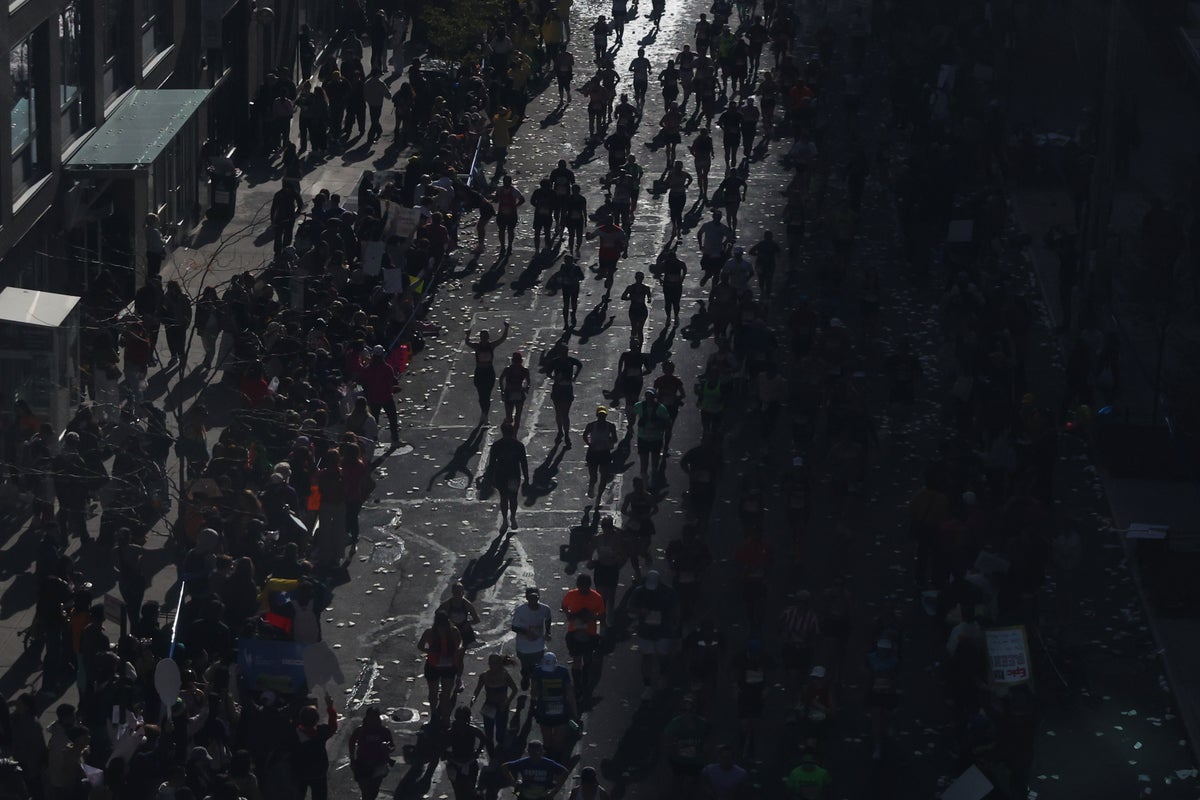
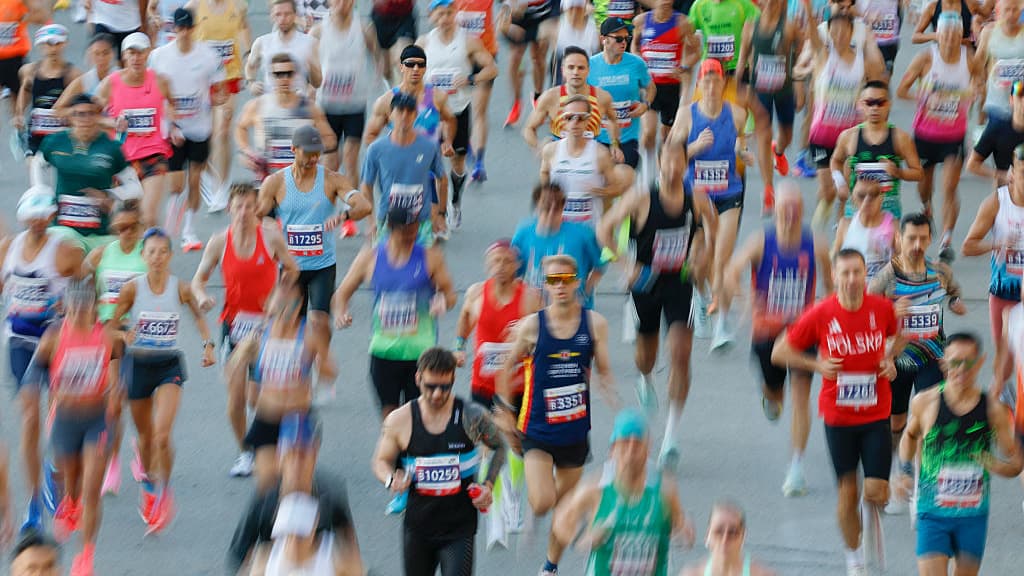
Photo via TIME

What to Know About Rhabdomyolysis, the Condition Linked to a Marathon Runner's Death

Read the original at TIME ↗
Cite

Greenwood, V. (2026, November 5). What to Know About Rhabdomyolysis, the Condition Linked to a Marathon Runner's Death. TIME. https://time.com/article/2026/11/05/what-is-rhabdomyolysis-linked-to-new-york-city-marathon-death/

Dated from the outlet's own feed. Check the original for its byline.

TIME · collected 2026-11-05 · by Veronique Greenwood

Quick Summary

A 24-year-old woman named Rachel Apa died on November 1 after collapsing near the end of the New York City Marathon due to a suspected case of rhabdomyolysis, a condition where muscle tissue breaks down and releases toxic substances into the bloodstream. Dr. Douglas Farrell from Mount Sinai Hospital explains that extreme exercise can trigger this condition, also noting an increase in cases among marathon runners since the race moved to November in 1986; in 2022 alone, 24 people were treated for rhabdomyolysis after the event compared to just 15 over five previous years. Dr. Farrell attributes this uptick partly to temperature changes and high humidity that year, making it harder for runners' bodies to cool down properly during exercise.
Written by AI on 2026-11-05, from this article's own text only (the story summary below draws on all the coverage).
See how they differ ↓

AI analysis

Story summary

A 24-year-old woman named Rachel Apa from Lewisberry, Pennsylvania, died after collapsing near the finish line of the 2026 New York City Marathon. The incident occurred in Central Park, just over two miles from the end of the race. According to her father, Steve Apa, Rachel experienced a medical emergency while running her first marathon and was being treated for rhabdomyolysis, a condition linked to intense physical exertion. A bystander and event medical staff administered CPR and used a defibrillator but were unable to save her life. The New York Road Runners organization expressed condolences in a statement, noting their sadness over the loss of one of their runners.

Written for “NYC Marathon Runner's Death” on 2026-11-21, grounded in this article and the 23 other(s) covering the same event.

How they differ

12 outlets covered “NYC Marathon Runner's Death”.

What each outlet says

One AI summary per outlet of its latest article on this story, written from that article alone and checked against it. Open the article for the outlet's own words.

TimeThis outlet5 Nov

A 24-year-old woman named Rachel Apa died on November 1 after collapsing near the end of the New York City Marathon due to a suspected case of rhabdomyolysis, a condition where muscle tissue breaks down and releases toxic substances into the bloodstream. Dr. Douglas Farrell from Mount Sinai Hospital explains that extreme exercise can trigger this condition, also noting an increase in cases among marathon runners…

What to Know About Rhabdomyolysis, the Condition Linked to a Marathon Runner's Death (this article)
New York Post5 Nov

John Harbaugh, the head coach of the New York Giants, expressed his condolences to the family of Rachel Apa during a press conference on Wednesday. Apa, a 24-year-old marathon runner who died on Sunday just two miles from the finish line in the New York City Marathon, succumbed to rhabdomyolysis after collapsing. Harbaugh praised her as an incredibly determined and passionate individual whose life was tragically cut…

John Harbaugh sends emotional message to Rachel Apa’s family after tragic NYC Marathon death →9 articles from New York Post on this story
The Independent4 Nov

Rachel Apa, a 24-year-old marathon runner from Pennsylvania, died after collapsing near the finish line of the New York City Marathon on Sunday due to rhabdomyolysis, a rare and potentially fatal condition caused by excessive muscle breakdown. She had been feeling strong earlier in the race but collapsed around mile 24. Despite six hours of medical intervention at Mount Sinai Medical Center, doctors could not save…

Rhabdo is linked to NYC marathoner’s death. What is the condition and how worried should you be? →3 articles from The Independent on this story
Fox News6 Nov

New York Giants head coach John Harbaugh honored 24-year-old Rachel Apa during a media session, expressing the team's condolences to her family following her death in Sunday’s New York City Marathon. Apa collapsed near Mile 24 and later died at Mount Sinai Hospital; doctors cited rhabdomyolysis as a cause. The tribute highlighted Apa’s dedication to raising funds for Parkinson’s disease research and her athletic…

Giants honor Rachel Apa after New York City Marathon death at age 24: 'She's in God's hands now' →3 articles from Fox News on this story
The Guardian3 Nov

A 24-year-old woman named Rachel Apa died after collapsing during the final stages of the New York City Marathon on Sunday. She had been running to honor her late grandfather who suffered from Parkinson’s disease and was about two miles from the finish line when she collapsed. Her father, Steve Apa, told the New York Times that she likely died from rhabdomyolysis, a rare condition caused by muscle breakdown due to…

24-year-old woman dies after collapsing in final stages of New York City Marathon →
NBC News3 Nov

Rachel Apa, a 24-year-old runner participating in her first New York City Marathon, collapsed and later died due to rhabdomyolysis near mile marker 24 in Central Park on Sunday. Her father shared their final text exchanges leading up to the incident, showing how Rachel communicated with him during the race despite experiencing discomfort. Emergency medical workers responded but were unable to save her, and she was…

Father shares final texts from 24-year-old runner who collapsed during NYC marathon →
Show 5 more outlets
CBS News3 Nov

Rachel Apa, 24, collapsed during the TCS New York City Marathon due to rhabdomyolysis, a rare condition where muscle cells break down and release harmful substances into the bloodstream after intense exercise. Her father told The New York Times that she had been experiencing pain earlier in the race but did not reach Mile 25 as planned; medical staff administered CPR and used a defibrillator before transporting her…

NYC marathoner died from rare condition rhabdomyolysis, father says →
Toronto Star3 Nov

Rachel Apa, a 24-year-old woman from Lewisberry, Pennsylvania, collapsed near the finish line of the New York City Marathon and later died despite efforts to resuscitate her. The incident occurred just over two miles from the end as she was running her first marathon to raise money for Parkinson’s disease research in memory of her grandfather. Emergency responders administered CPR and used a defibrillator but were…

A woman running the NYC marathon for charity dies 2 miles from the finish →
ABC News (AU)3 Nov

Rachel Apa, a 24-year-old woman from Pennsylvania, collapsed and later died during the New York City Marathon on Sunday, just 3 kilometers from the finish line. Her father revealed she had rhabdomyolysis, a rare condition that can cause muscle breakdown during exertion. The city's medical examiner is investigating the cause of her death, while bystanders administered CPR and used a defibrillator before paramedics…

Woman, 24, dies in NY marathon as father reveals she had rare condition →
BBC4 Nov

Rachel Apa, a 24-year-old runner from Pennsylvania who was participating in her first New York City Marathon to raise funds and honor her grandfather with Parkinson’s disease, collapsed near mile marker 24 in Central Park and later died due to rhabdomyolysis, according to her father. The race organizer, New York Road Runners, reported that Apa had texted her father expressing pain before collapsing; she was taken to…

Young NYC Marathon runner collapses and dies two miles from finish line →
CBC4 Nov

Rachel Apa, a 24-year-old runner, died during the New York City Marathon after collapsing near mile 24. Despite medical efforts, she could not be saved, drawing attention to the risks involved in marathon running despite its popularity. With record numbers of participants like the 61,146 runners who completed this year’s New York City Marathon, experts discuss whether the sport has become riskier over time, noting…

A runner died in the New York City Marathon. Have the risks changed as more people race? →

Where they agree and split

Agreed

Reported by outlets on both sides of the middle

Apa graduated from Bucknell University, where she played Division I field hockey.

5 outlets
Show 3 more

Around Mile 18, the Times reported that Apa had texted her father "Ow" and then a mile later "Ow ow", before sending the message "final stretch" at the 23rd mile, according to the Times.

4 outlets

A 24-year-old runner in the New York City Marathon collapsed and died just two miles from the finish line, despite being in "perfect health, perfect shape", her father has said.

4 outlets

“I just held Rachel’s hand and talked to her and told her that she wasn’t alone and that she’s loved, and I prayed for her,” Nicholas, a clinical social worker, said by phone.

4 outlets

Framing

How the first headlines put it

Attributed to a source1
Stated as fact9
The headlines (10)

NYC marathoner died from rare condition rhabdomyolysis, father says CBS News · attributed to a source

NYC Marathon runner Rachel Apa dies after collapsing in Central Park two miles from finish line New York Post · stated as fact

24-year-old woman dies after collapsing in final stages of New York City Marathon The Guardian · stated as fact

'Ow, ow': NYC runner Rachel Apa sends text to father from marathon, collapses and dies Times of India · stated as fact

24-year-old dies after collapsing during her first New York City Marathon The Independent · stated as fact

Father shares final texts from 24-year-old runner who collapsed during NYC marathon NBC News · stated as fact

Healthy 24-year-old athlete dies just 2 miles from NYC marathon finish line after sending dad chilling texts Fox News · stated as fact

A woman running the NYC marathon for charity dies 2 miles from the finish Toronto Star · stated as fact

Woman, 24, dies in NY marathon as father reveals she had rare condition ABC News (Australia) · stated as fact

Young NYC Marathon runner collapses and dies two miles from finish line BBC · stated as fact

The full story: what happened, how it changed, and all 24 articles →

Compared with similar articles

This article reads unscored and hedges 6% of its claims. Each row says how that neighbour differs.
The Independent
Hedges 5 of 45 claims Outlet record 59/100
The Guardian
Hedges 0 of 16 claims Outlet record 64/100
Times of India
Hedges 0 of 19 claims Outlet record 59/100
CBS News
Hedges 6 of 35 claims Outlet record 66/100
The Independent
Hedges 2 of 28 claims Outlet record 59/100
BBC News
Hedges 3 of 20 claims Outlet record 65/100

Story

NYC Marathon Runner's Death
Sports · 24 article(s) covering the same event. Compare every outlet's account →
How this article was measured signals, leaning charts, publisher record, byline, topics and claims

Signals How these are calculated →

Claims extracted
33
sentences that state something as happening or true
Uncertain
6%
2 of 33 hedged ("reportedly", "may", "according to")
Leaning
not political
takes no side on a contested political question
Publisher signals
60/100
TIME's corrections and hedging, across everything collected from it. Not a measure of accuracy.
Outlets on this story
24
Sports
Same framing elsewhere
1
articles that frame the event the way this one does
Analyzed 2026-11-05 · how these are computed

How this is being covered How these are calculated →

Article leaning vs. publisher reliability
Source leaning vs. consistency

Publisher

TIME · 1078 article(s) · 2 correction(s) detected
Running correction rate · 2 correction(s)

Who wrote this

Veronique Greenwood
12 article(s) here · 1 carrying a prediction
“I was wondering, as a sleep researcher, what sleep would do to that,” he says.
2026-11-12 · assertive framing · Getting Too Little Sleep Makes You Easier to Scam
When it’s hot and humid, the body might not be able to cool down quickly enough to avoid the muscle damage that could lead to rhabdomyolysis.
If he’d been hit, the injuries could have been severe, as Schroeder, who is a pediatrician and research scientist at Lucile Packard Children’s Hospital Stanford, well knows.
Every so often, after a marathon, headlines will pop up about a marathon runner collapsing and dying during or shortly after the race.
2026-10-30 · assertive framing · Is Running a Marathon Good for Your Heart?
Uncovering the links between certain infections and cancers raises the hope that by preventing infection, one could prevent certain malignancies.
2026-10-13 · assertive framing · These Infections Are Linked to 12% of New Cancer Cases
At the same time, Russian authorities have reportedly quarantined as many as 200 people, which public-health experts say would be an unusual response to an isolated case of pneumonia.
2026-10-07 · assertive framing · What Worries Experts About the Russia 'Plague' Incident
They may include painful body aches as well as fever and can last up to 10 days.
2026-10-02 · assertive framing · What to Know About the Dengue Outbreak in the U.S.
Keeping active in older age pays dividends Encouraging older people to take it slowly might sound like reasonable advice, says Margaret Danilovich, a physical therapist and instructor at Northwestern University and an author of the new paper.
2026-09-30 · assertive framing · Walking Faster May Help Reverse Frailty
As millions of people aged 60 and older received the shots, researchers watched and waited to see whether the efficacy numbers seen in clinical trials, which were quite high, would be mirrored in the real world.
2026-09-21 · assertive framing · RSV Vaccines Are Highly Effective in Older Adults
“There might be some danger, and we need to respond.”
2026-09-21 · mixed framing · Can ‘Pink Noise’ Help You Sleep Better?
Also by Veronique Greenwood
Nothing else under this byline is closely related to this article, so these are simply their most recent.
All 12 articles by Veronique Greenwood →

Topics

Mount Sinai Hospital New York City Pennsylvania the New York City Marathon the New York Times

Subjects

Farrell PERSON · 4× Douglas Farrell PERSON · 1× Marie Vangstad PERSON · 1× Mount Sinai Hospital ORG · 1× New York City GPE · 1× Norway GPE · 1× Oslo University Hospital ORG · 1× Pennsylvania GPE · 1× Rachel Apa PERSON · 1× the New York Times ORG · 1×

Narrative

In April, he and colleagues published a paper looking into a worrying trend: 24 people who ran in the 2022 New York City Marathon had rhabdomyolysis treated at nearby hospitals, while only 15 people in the previous five years combined sought help there for the condition after the race.
framing: assertive · carried by 1 article(s) · first seen 2026-11-05
When it’s hot and humid, the body might not be able to cool down quickly enough to avoid the muscle damage that could lead to rhabdomyolysis.

Claims (33 extracted, 2 hedged)

On Nov. 1, a seemingly healthy 24-year-old woman from Pennsylvania, Rachel Apa, collapsed near the end of the New York City Marathon. asserted
woman → collapse → Marathon
She died later that day despite treatment, and her father told the New York Times that her death was linked to rhabdomyolysis, a condition in which damaged muscle tissue releases substances into the bloodstream that can injure the kidneys and sometimes the heart. asserted
that → die → kidneys
The city’s medical examiner was still investigating the cause. asserted
examiner → investigate → cause
Rhabdomyolysis is a process where the muscle cells break down and die, says Dr. Douglas Farrell, a nephrologist at Mount Sinai Hospital in New York City. asserted
Farrell → break → City
“By doing so, they release their contents, which can be quite toxic to the body and to the kidney.” asserted
which → do → kidney
A variety of triggers can cause this effect: injuries where part of the body is crushed and drug side effects can contribute to rhabdomyolysis, which manifests with symptoms such as muscle pain and dark urine. asserted
which → cause → pain
Dehydration can worsen the condition. asserted
Dehydration → worsen → condition
When exercise is the trigger, the condition is called exercise-induced rhabdomyolysis. asserted
condition → call → ?
Farrell’s hospital is close to the finish line of the New York City Marathon, and he says he has seen a substantial number of cases over the years. asserted
he → say → years
In April, he and colleagues published a paper looking into a worrying trend: 24 people who ran in the 2022 New York City Marathon had rhabdomyolysis treated at nearby hospitals, while only 15 people in the previous five years combined sought help there for the condition after the race. asserted
people → publish → race
"I was a nephrologist on call during this time, and I saw a lot of patients. asserted
I → see → patients
And I said, 'Man, this feels way more than what I remember,'" he says. asserted
he → say → what
What risk factors make rhabdomyolysis more likely? asserted
rhabdomyolysis → make → ?
Temperature is a big one, says Farrell. asserted
Farrell → say → ?
When you exercise, your body needs to shed heat fast. asserted
body → need → heat
When it’s hot and humid, the body might not be able to cool down quickly enough to avoid the muscle damage that could lead to rhabdomyolysis. uncertain
that → ’ → rhabdomyolysis
Slow temperature changes the body can handle: “If you are going to go somewhere that's hotter or more humid than what you're used to, your body needs about a week or two actually to acclimate,” he says. asserted
he → handle → week
He and his colleagues suspect this contributed to the large number of cases in 2022, which was the hottest and most humid year since the marathon moved to November in 1986. asserted
marathon → suspect → 1986
Among the years he studied, “2022 was also the only marathon in which it was much hotter the day of the marathon than the previous two weeks,” he says. asserted
he → study → weeks
However, most people who run marathons, no matter the temperature, don’t get this condition. asserted
who → run → condition
“It is difficult to predict who will develop exercise-induced rhabdomyolysis before a race,” says Dr. Marie Vangstad of Oslo University Hospital in Norway, who has studied the condition. asserted
who → predict → condition
Even well-trained athletes can develop rhabdomyolysis under extreme physical exertion. asserted
athletes → train → exertion
Some individuals also have underlying genetic conditions that increase their susceptibility, but many cases occur in people without any known predisposition. asserted
cases → have → predisposition
” Is it usually life-threatening? asserted
it → threaten → ?
Deaths from exercise-induced rhabdomyolysis are exceedingly rare, Vangstad and Farrell agree. asserted
Vangstad → induce → rhabdomyolysis
None of the patients from Farrell’s paper on the 2022 marathon died. asserted
None → die → marathon
Treatment centers on fluids and monitoring kidney function and electrolytes. asserted
Treatment → center → function
When heatstroke accompanies the condition, doctors try to rapidly cool the body down, often with ice baths. asserted
doctors → accompany → baths
In more extreme cases, dialysis is used to manage kidney failure. asserted
dialysis → use → failure
Rhabdomyolysis is diagnosed using symptoms, the circumstances under which a person developed them, and blood tests for markers of muscle breakdown. asserted
person → diagnose → breakdown
However, blood markers alone do not establish the cause of death; those could be elevated in someone who died during exercise, but for other reasons than rhabdomyolysis alone. uncertain
who → establish → rhabdomyolysis
Two major studies from the last couple of years found no deaths in more than 300 exercise-induced rhabdomyolysis cases. asserted
studies → find → cases
“Overall, exercise-induced rhabdomyolysis generally has a very good prognosis, and serious complications are rare,” Vangstad says. asserted
Vangstad → induce → prognosis
Give feedback · no sign-in needed

No sign-in needed for now. Your note is sent without a name, so it cannot be answered.

History Support