Photo via The Straits Times

Hungary opens communist-era informer files in belated reckoning with Cold War past

Read the original at The Straits Times ↗
Cite

The Straits Times. (2026, November 4). Hungary opens communist-era informer files in belated reckoning with Cold War past. The Straits Times. https://www.straitstimes.com/world/europe/hungary-opens-communist-era-informer-files-in-belated-reckoning-with-cold-war-past

Dated from the outlet's own feed. Check the original for its byline.

The Straits Times · collected 2026-11-04 · by The Straits Times

Quick Summary

Hungary has released tens of thousands of Communist-era secret police files into an online public database, marking a significant step towards addressing its totalitarian past more than 36 years after the fall of communism. Prime Minister Peter Magyar announced that approximately 60,000 names are now available in the database, with additional records to be uploaded by February 2027. The files reveal the extensive network of informants used during one-party rule but many documents were destroyed in uprisings in 1956 and 1988-1989. Magyar urged citizens to approach this information with dignity, acknowledging that it may be difficult for families dealing with revelations about deceased relatives.
Written by AI on 2026-11-04, from this article's own text only (the story summary below draws on all the coverage).
See how they differ ↓

AI analysis

Story summary

On November 4, 2026, Hungary's new government, led by Prime Minister Péter Magyar, released tens of thousands of names of state informants from the communist era, uploading them to an online public database. The move aims to confront the past and rebuild public trust after nearly four decades since the collapse of communism. From 1945 to 1989, Hungary’s secret police relied on a vast network of informants who monitored society and suppressed dissent. Many informers were coerced or blackmailed into cooperation; others joined voluntarily for various advantages. The release was initially planned for April but was postponed due to the complexity and sensitivity of the files. Prime Minister Magyar defended the move as a fulfillment of his campaign promise, emphasizing that many family members will now face difficult truths about deceased relatives. Critics argue that releasing incomplete files so long after the fact may cause unnecessary anguish and division.

Written for “Hungary Opens Communist-Era Files” on 2026-11-21, grounded in this article and the 3 other(s) covering the same event.

How they differ

4 outlets covered “Hungary Opens Communist-Era Files”.

What each outlet says

One AI summary per outlet of its latest article on this story, written from that article alone and checked against it. Open the article for the outlet's own words.

The Straits TimesThis outlet4 Nov

Hungary has released tens of thousands of Communist-era secret police files into an online public database, marking a significant step towards addressing its totalitarian past more than 36 years after the fall of communism. Prime Minister Peter Magyar announced that approximately 60,000 names are now available in the database, with additional records to be uploaded by February 2027. The files reveal the extensive…

Hungary opens communist-era informer files in belated reckoning with Cold War past (this article)
The Guardian2 Nov

Hungary's new government plans to reveal the names of tens of thousands of state informants from its communist era on November 4th, aiming to confront past secrets and rebuild public trust. The initiative involves making accessible files previously hidden in the Historical Archives of the State Security services; these documents contain details about individuals who reported on others during the 1945-1989 period…

‘Traitors in every family’: Hungary to unmask communist-era informants and confront past →
BBC4 Nov

Hungary has released secret police files from its communist era to the public, a move aimed at addressing societal traumas stemming from 45 years of communist rule. The government opened these records on November 4th, symbolizing the day Soviet forces crushed Hungary's revolution in 1956. Prime Minister Péter Magyar defended this action as fulfilling a promise made by those who ended Communist rule in 1989…

Secret police files released in Hungary, 47 years after fall of communism →
Deutsche Welle4 Nov

Hungary’s current prime minister, Peter Magyar, has ordered the full release of the country’s secret police “agent files,” containing names of state security informants dating back to the Communist era. This decision marks an historic event following over three decades of debate and opposition from previous governments, including Hungary's first post-Communist prime minister Jozsef Antall and Viktor Orban's Fidesz…

36 years later: Hungary opens Communist-era secret service files →

Where they agree and split

The full story: what happened, how it changed, and all 4 articles →

Compared with similar articles

This article reads unscored and hedges 0% of its claims. Each row says how that neighbour differs.
Deutsche Welle
Leans left Hedges 3 of 41 claims Outlet record 95/100
BBC News
Hedges 0 of 23 claims Outlet record 65/100
The Guardian
Hedges 2 of 55 claims Outlet record 64/100
The Straits Times
Hedges 0 of 12 claims Outlet record 64/100
“Article A describes Orban's personal statement about being approached by secret police during his military service, while Article B reports on Hungary releasing Communist-era informer files to the public.”

Story

Hungary Opens Communist-Era Files
Politics · 4 article(s) covering the same event. Compare every outlet's account →
How this article was measured signals, leaning charts, publisher record, byline, topics and claims

Signals How these are calculated →

Claims extracted
10
sentences that state something as happening or true
Uncertain
0%
0 of 10 hedged ("reportedly", "may", "according to")
Leaning
not political
takes no side on a contested political question
Publisher signals
64/100
The Straits Times's corrections and hedging, across everything collected from it. Not a measure of accuracy.
Outlets on this story
4
Politics
Same framing elsewhere
1
articles that frame the event the way this one does
Analyzed 2026-11-04 · how these are computed

How this is being covered How these are calculated →

Article leaning vs. publisher reliability
Source leaning vs. consistency

Publisher

The Straits Times · 5644 article(s) · 7 correction(s) detected
Running correction rate · 7 correction(s)

Who wrote this

The Straits Times
3941 article(s) here · 1 carrying a prediction
At least 4 people were killed and 30 injured in a fire at a power station in southern Iraq on Saturday, with the toll expected to rise, security officials said.
Around 100 countries backed this position but big arms-producing nations like the US, Russia and Israel opposed this, resulting in a watered-down agreement that left open the question of whether future measures would be legally binding. "In the end, the military powers managed to impose many obstacles to the objective of a protocol, but at least it remains a possibility, and with a short-term mandate," said a diplomat who attended the talks that concluded past 4 a.m. (0300 GMT) in Geneva. The 128 member states of the Convention on Certain Conventional Weapons had been meeting since Monday as alarm grows over the use of lethal autonomous weapons systems in conflicts, including in Ukraine, Sudan and the Middle East.
The apparent compromise of the National Crime Information Center database would mark the second intrusion involving an FBI system in recent months and the latest in a string of cyber incidents that have alarmed US officials over the past week.
Electrify the world Australia’s Climate Minister Chris Bowen, who was shuttling between delegations to seek compromises, said he would work over the “coming hours, for as long as it takes, to get the job done”.
New York City’s Rikers Island jail complex would close by 2032 under a sweeping plan announced Nov 20 by Mayor Zohran Mamdani of New York City, whose strategy for finally shuttering the notorious facility hinges on substantially reducing the number of people kept behind bars.
Prosecutors have alleged that while placing his 911 call, Rinderknecht asked the artificial intelligence app ChatGPT on his phone whether someone could be found at fault for lighting a fire “because of your cigarettes”, to which ChatGPT replied, “Yes”.
A placard beside Trump’s podium listed a series of broad agreements the president had reached with Chinese President Xi Jinping and Russian President Vladimir Putin, which included a reaffirmation that nuclear war would be futile for all nations involved.
He told groups of subordinates that they had become so rich that he couldn’t motivate them simply with money, according to three people who spoke on the condition of anonymity to discuss confidential conversations.
The closed freeway lanes recall stems from unusual circumstances where a Waymo vehicle may enter and continue driving in a closed freeway lane, the company said, adding it is still working on the recall remedy.
Araqchi says Iran wants diplomacy to end war; Trump says terms unacceptable Nov 20 - Iran's Foreign Minister Abbas Araqchi said Tehran still hoped diplomacy could end its war with the United States, while US President Donald Trump said Iran wanted a deal but one that was not acceptable to him.
Also by The Straits Times
Nothing else under this byline is closely related to this article, so these are simply their most recent.
All 3941 articles by The Straits Times →

Topics

BUDAPEST Cold War Communist Hungarians Hungary

Subjects

Hungary GPE · 4× Communist NORP · 3× Magyar PERSON · 2× BUDAPEST GPE · 1× Hungarians NORP · 1× Peter Magyar PERSON · 1× REUTERS ORG · 1× Viktor Orban PERSON · 1× anti-Soviet NORP · 1×

Narrative

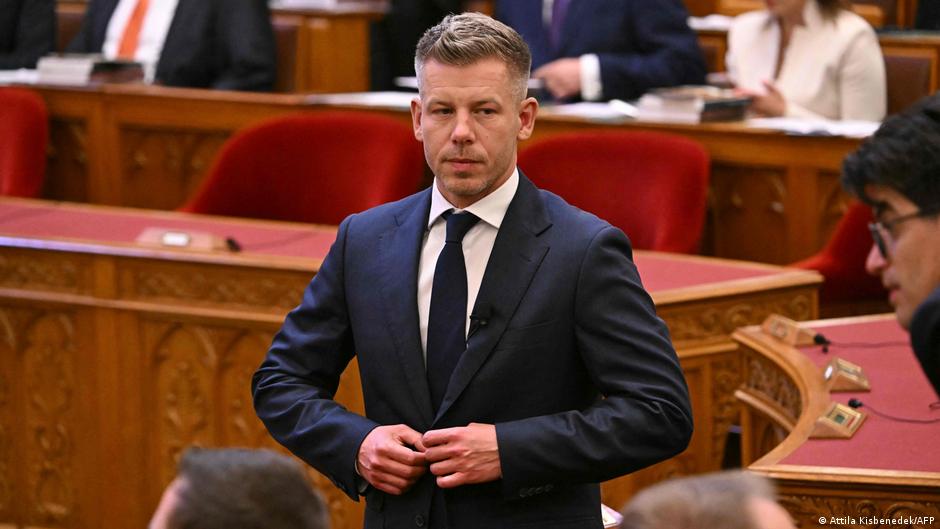
The historic move more than 36 years after the collapse of communism is part of centre-right Prime Minister Peter Magyar's pledge to make the records public and allow Hungarians to come to terms with their totalitarian past. "We are implementing now, after 36 years ... what was the promise of the change of regime," Magyar told a briefing at the archives, adding that some 60,000 names have now been made public.
framing: assertive · carried by 1 article(s) · first seen 2026-11-04
Additional files will be uploaded by February 2027 but the files are far from complete, as many were destroyed in 1956 during Hungary's anti-Soviet uprising and also in 1988-1989.
2026-11-04 · The Straits Times
Hungary opens communist-era informer files in belated reckoning with Cold War past · assertive framing

Claims (10 extracted, 0 hedged)

Hungary opens communist-era informer files in belated reckoning with Cold War past BUDAPEST, Nov 4 - Hungary released tens of thousands of Communist-era secret police files in an online public database on Wednesday, opening a window onto the vast informer network used to spy on citizens during decades of one-party rule. asserted
Hungary → open → rule
The historic move more than 36 years after the collapse of communism is part of centre-right Prime Minister Peter Magyar's pledge to make the records public and allow Hungarians to come to terms with their totalitarian past. "We are implementing now, after 36 years ... what was the promise of the change of regime," Magyar told a briefing at the archives, adding that some 60,000 names have now been made public. asserted
names → make → archives
Additional files will be uploaded by February 2027 but the files are far from complete, as many were destroyed in 1956 during Hungary's anti-Soviet uprising and also in 1988-1989. asserted
many → upload → 1988
"I ask everyone to treat this long overdue publication of documents with dignity and humanity ... as many families will now face difficult information often related to a deceased member of their family ... asserted
families → ask → family
It is impossible to process a trauma without discussion and asking questions," Magyar added. asserted
Magyar → process → questions
Although Communist rule ended in 1989, Hungary delayed fully opening the files due to a lack of strong political will from successive governments. asserted
Hungary → end → governments
So far, apart from researchers, ordinary people had been limited to viewing records about themselves or close relatives. asserted
people → limit → themselves
From Wednesday, anyone can search the online database for names linked to the former state security services. asserted
anyone → search → services
During the Cold War, secret police agencies in eastern Europe relied on collaborators drawn from the public, often via blackmail, threats or rewards. asserted
agencies → rely → blackmail
Former Prime Minister Viktor Orban said on Tuesday that Communist secret services had tried to recruit him as an informer while he was doing his military service but he refused, and later became the target of heavy police surveillance. asserted
he → say → surveillance

Give feedback · no sign-in needed

No sign-in needed for now. Your note is sent without a name, so it cannot be answered.

History Support