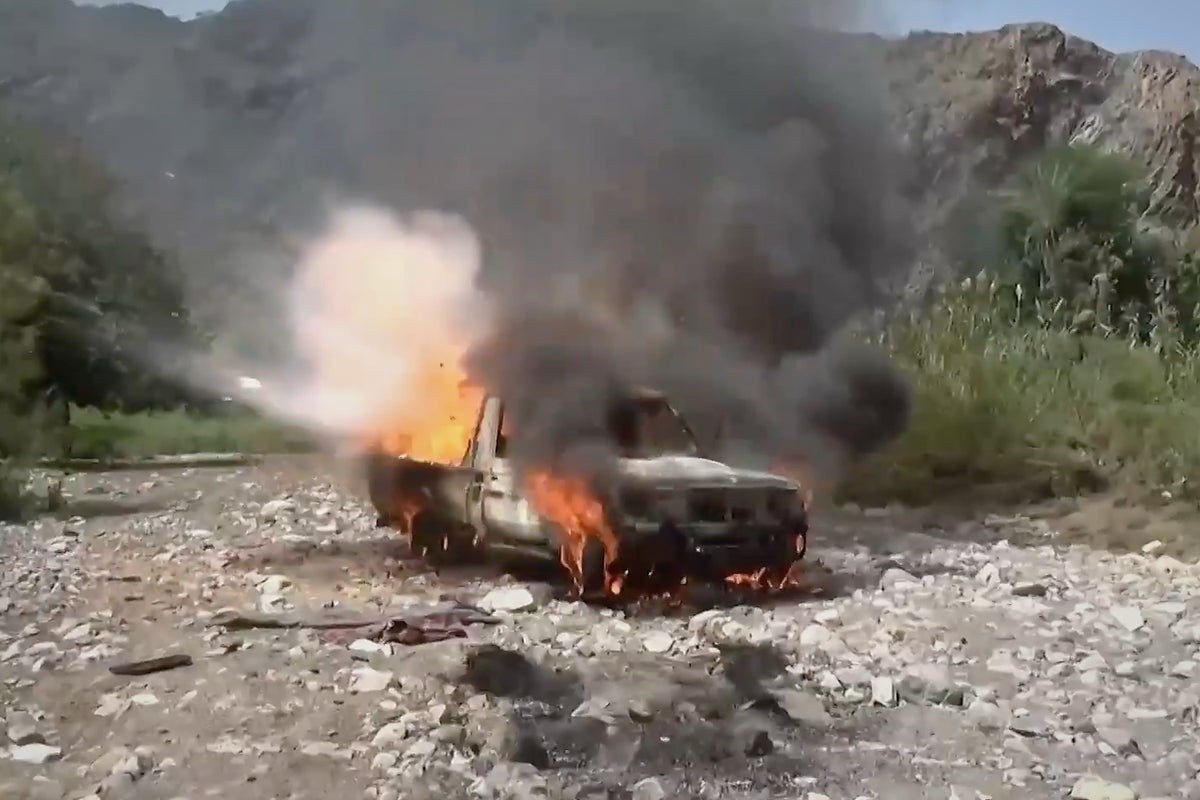
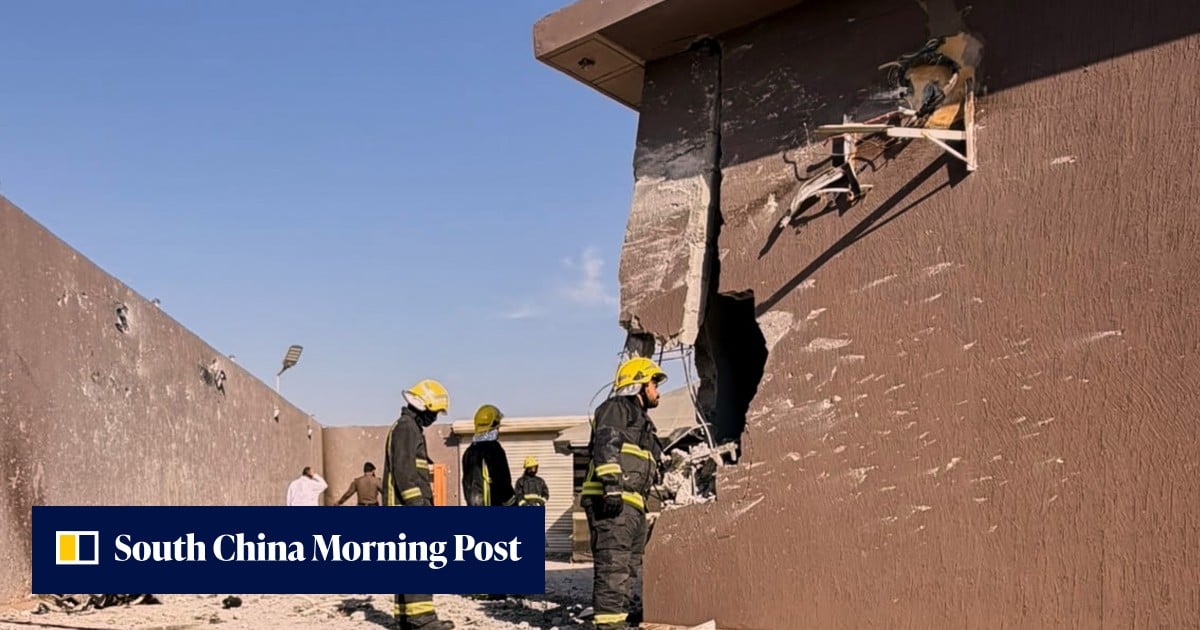
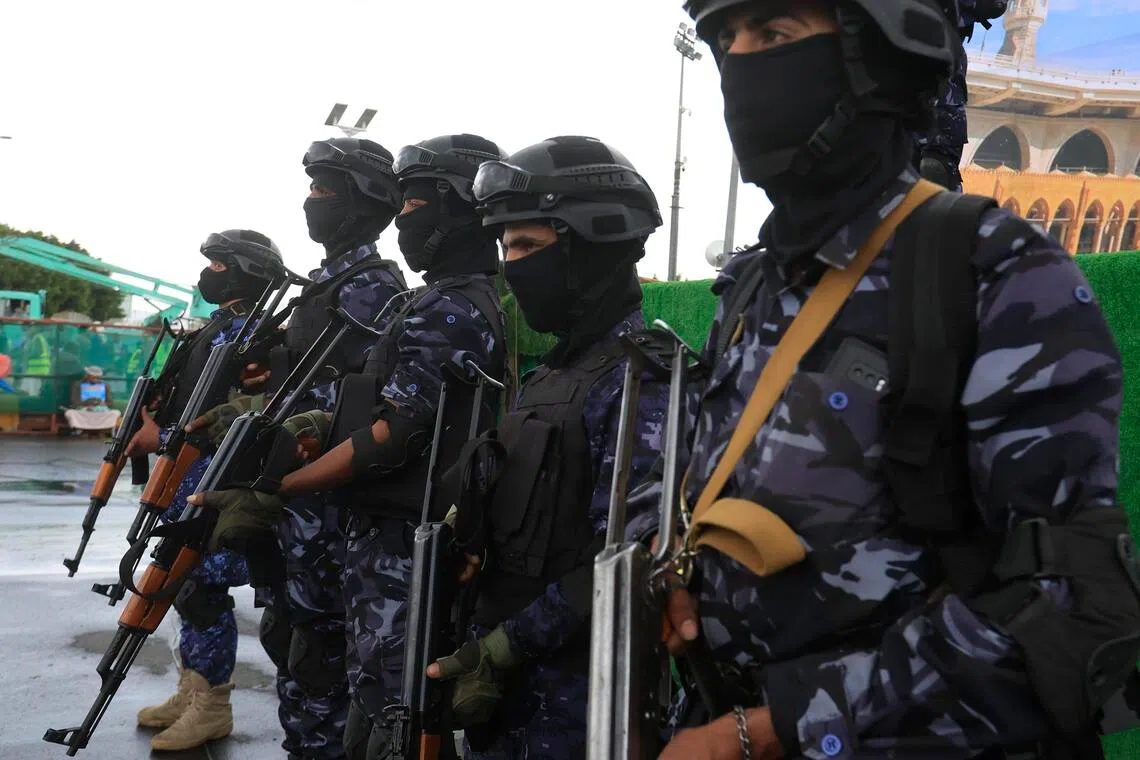
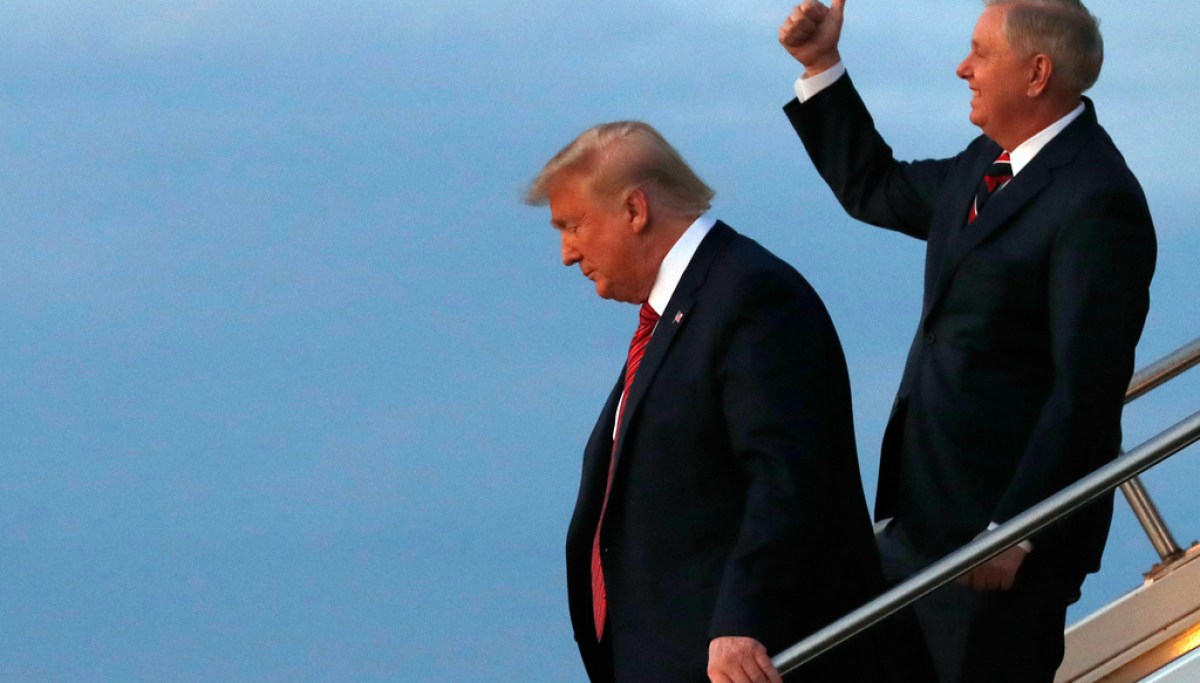
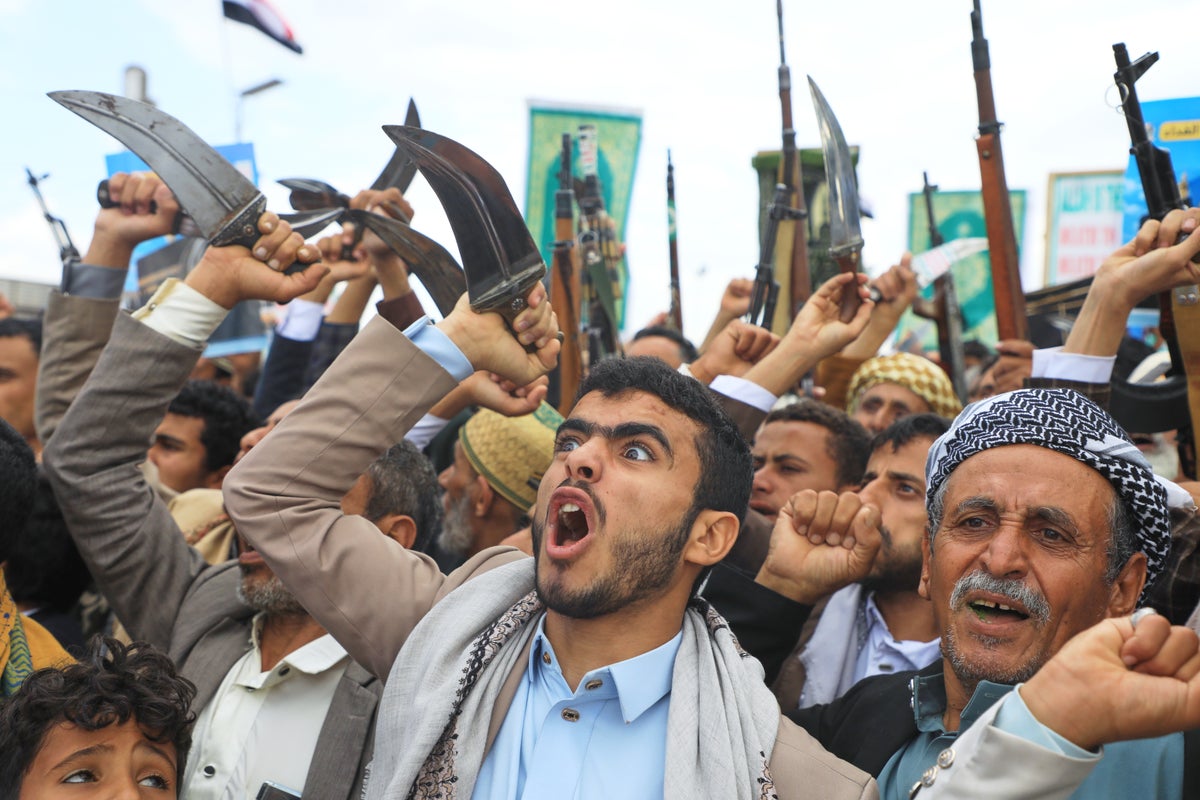
Photo via The Guardian

US officials decide against backing Saudi Arabia in Yemen after meeting Houthi leaders

Read the original at The Guardian ↗
Cite

editor, P. W. D. (2026, September 16). US officials decide against backing Saudi Arabia in Yemen after meeting Houthi leaders. The Guardian. https://www.theguardian.com/world/2026/sep/16/us-officials-decide-against-backing-saudi-arabia-yemen-meeting-houthi-leaders

Dated when The Aporia collected the article, usually within hours of publication. Check the original for its exact date and byline.

The Guardian · collected 2026-09-16 · by Patrick Wintour Diplomatic editor

Quick Summary

US officials met with Yemen's Houthi leaders in Oman over the weekend, leading to a decision by President Donald Trump not to intervene militarily on Saudi Arabia’s side against the Houthis. The meeting revealed that the Houthis assured the US they would not attack American shipping but only target Saudi-linked vessels due to the blockade of Yemen. This stance put pressure on Saudi Arabia to seek diplomatic solutions or form alliances with Pakistan and Turkey to counter Houthi advances along Yemen's Red Sea coast.
Written by AI on 2026-09-16, from this article's own text only (the story summary below draws on all the coverage).
See how they differ ↓

AI analysis

Story summary

The Houthis, backed by Iran, are rapidly advancing in Yemen and threatening critical waterways like the Bab al-Mandeb strait. President Trump spoke with Yemen's president Rashad al-Alimi about the situation but did not pledge military support to his Saudi-backed government. The U.S. had prepared airstrikes against the Houthis at Riyadh’s request but ultimately canceled them, even as bombs were loaded onto planes. This decision reflects a reluctance by the U.S. to engage militarily in the region and highlights the complex geopolitical dynamics between the U.S., Iran, and Saudi Arabia. Yemen's government is seeking direct military aid from the U.S., fearing that without such support, the Houthis will continue to expand their control over strategic areas. The cancellation of airstrikes also underscores Trump’s strategy to reduce America’s entanglement in Middle Eastern conflicts. Despite this, tensions remain high as the Houthis push for more territory and threaten global shipping routes. Trump's decision to not intervene militarily is seen by some analysts as a necessary step to break a cycle of codependency between the U.S. and its Gulf allies. However, it also raises questions about how effectively these nations can defend themselves without American support.

Written for “Houthis Fighting in Yemen” on 2026-11-21, grounded in this article and the 17 other(s) covering the same event.

How they differ

12 outlets covered “Houthis Fighting in Yemen”.

What each outlet says

One AI summary per outlet of its latest article on this story, written from that article alone and checked against it. Open the article for the outlet's own words.

The GuardianThis outlet16 Sep

US officials met with Yemen's Houthi leaders in Oman over the weekend, leading to a decision by President Donald Trump not to intervene militarily on Saudi Arabia’s side against the Houthis. The meeting revealed that the Houthis assured the US they would not attack American shipping but only target Saudi-linked vessels due to the blockade of Yemen. This stance put pressure on Saudi Arabia to seek diplomatic…

US officials decide against backing Saudi Arabia in Yemen after meeting Houthi leaders (this article)
Washington Examiner23 Sep

President Donald Trump canceled planned U.S. airstrikes against Yemen's Houthi rebels despite warplanes being ready and target lists approved, according to The New York Times. This decision came after intense pressure from Saudi Arabia’s Crown Prince Mohammed bin Salman. Critics argue that wealthy Gulf states rely too heavily on American military intervention instead of using their own substantial defense…

Bombs were loaded, warplanes were ready — but Trump was right to say ‘no’ →3 articles from Washington Examiner on this story
The Hindu21 Sep

On Sunday, September 20, 2026, U.S. President Donald Trump spoke by phone with Yemeni President Rashad al-Alimi about the advancing Iran-backed Houthis near the Bab al-Mandeb strait, a strategic waterway. Alimi sought military support from the United States for his government’s fight against the Houthis, but sources close to the matter indicate that Trump did not make any direct pledge of military assistance during…

Trump, in call with Yemen President, did not pledge military support against Houthis, say sources →2 articles from The Hindu on this story
The Straits Times21 Sep

On September 21, President Donald Trump spoke by phone with Yemeni President Rashad al-Alimi without pledging direct military assistance to fight Iran-backed Houthi rebels, according to four sources familiar with the conversation. Al-Alimi had requested US support for his government as the Houthis recently captured strategic areas near the Bab al-Mandeb strait, a crucial waterway. Two of the sources specifically…

Trump, in call with Yemen president, did not pledge military support against Houthis, say sources →2 articles from The Straits Times on this story
The Independent22 Sep

The article reports that Iran-backed Houthis are advancing in Yemen's highlands, aiming to cut off the Red Sea coast from Saudi-backed forces. US President Donald Trump had prepared airstrikes against the Houthis but called them off at the last minute after receiving pleas for military intervention from Saudi Arabia. Meanwhile, G7 foreign ministers have condemned Iran’s support of the Houthis and urged them to cease…

Iran-US war latest: Tehran-backed Houthis move to seize Yemen highlands as Trump ‘calls off strikes’ →2 articles from The Independent on this story
Al Jazeera22 Sep

The Houthis are advancing into Yemen’s Kahboub Mountains to bolster their control over recently seized Red Sea coastal areas. This move is seen as critical for defending strategic positions near Bab al-Mandeb Strait, one of the world's key shipping routes. The mountains’ proximity offers a tactical advantage in surveillance and defense against potential counterattacks by Saudi-backed forces, though the Houthis claim…

Why are the Houthis fighting for Yemen’s Kahboub Mountains? →2 articles from Al Jazeera on this story
Show 6 more outlets
South China Morning Post18 Sep

Saudi Arabia is facing a diplomatic challenge after the United States declined to intervene militarily against Houthi forces controlling Yemen’s Red Sea coast, a crucial trade route for Saudi exports to Asia. This decision has "deeply disturbed" Saudi leadership, according to Michael Ratney, former US ambassador to Saudi Arabia, who spoke at a webinar hosted by the Arab Gulf States Institute on September 12. The…

Saudi scrambles to solve ‘humiliating dilemma’ after US rejects Red Sea intervention →
Daily Mail21 Sep

President Donald Trump reportedly rejected a personal plea from Saudi Crown Prince Mohammed bin Salman to attack Houthi rebels in Yemen. According to the New York Times, after weeks of indecision and despite preparing for airstrikes on Thursday following his conversation with the crown prince, Trump decided against US intervention by Sunday. The article details tensions between Saudi Arabia and Iran through the…

Trump rejected Saudi plea for help in attacking Houthi rebels despite personal call from Saudi Crown Prince Mohammed bin Salman, report claims →
New York Post21 Sep

President Trump has left Saudi Arabia to handle threats from the Houthi group in Yemen, despite warnings about potential impacts on global oil supplies. While other nations such as Turkey and Pakistan have declined to intervene, analysts suggest this reluctance stems from fear of retaliation and the belief that the conflict is part of an internal Yemeni war rather than a proxy battle with Iran. Mona Yacoubian…

Why Trump is leaving Saudi Arabia alone to fight the Houthis — even as they threaten global oil supplies →
Dawn22 Sep

Houthi fighters in Yemen are advancing to seize strategic heights in Taiz and Lahij provinces to cut off the Red Sea coast from government-held areas. This move follows a report that President Donald Trump reversed his decision on launching air strikes against the Houthis after speaking with Saudi Crown Prince Mohammed bin Salman and Yemen's President Rashad al-Alimi. The conflict has intensified, with the Houthis…

Houthis push for control of Yemen’s highlands →
NBC News24 Sep

Yemen’s vice president of the Leadership Council, Abdullah Al-Alimi Bawazir, announced at the U.N. General Assembly that Yemen’s President Rashad al-Alimi requested military support from President Trump during their recent call to combat the Houthi rebels. The Houthis have been expanding control over Yemen’s Red Sea coast and threatening the Bab el-Mandeb Strait, a vital waterway for global energy supplies. Bawazir…

Yemen says it asked Trump for U.S. military support in fight against Houthis →

Where they agree and split

Framing

How the first headlines put it

  • The Guardian frames the event as a decision by US officials to not back Saudi Arabia, while The Hindu emphasizes Trump's claims about Houthis agreeing not to fight the U.S.12
  • NBC News highlights Yemen’s request for military support from the U.S., whereas Washington Examiner focuses on Trump's decision against military intervention.78
Words to watch (1)

Saudi scrambles to solve ‘humiliating dilemma’ after US rejects Red Sea intervention South China Morning Post

The full story: what happened, how it changed, and all 18 articles →

Compared with similar articles

This article reads leans left and hedges 6% of its claims. Each row says how that neighbour differs.
The Independent
Leans strongly right further right than this Hedges 9 of 53 claims Outlet record 59/100
“The articles describe different events: one reports on a military attack by Houthis on Saudi Arabia's base, while the other covers US officials' meeting with Houthi leaders leading to a decision against backing Saudi Arabia.”
Al Jazeera
Hedges 1 of 2 claims Outlet record 60/100
“The articles describe different decisions and meetings regarding US intervention in Yemen's conflict, not the same specific incident.”
Al Jazeera
Hedges 4 of 18 claims Outlet record 60/100
“The articles describe different actions by the US administration related to Saudi Arabia and Yemen, not the same specific incident.”
South China Morning Post
Leans left Hedges 2 of 6 claims Outlet record 62/100
Al Jazeera
Hedges 3 of 17 claims Outlet record 60/100
“The articles describe different events: one is about a meeting between US officials and Houthi leaders leading to a decision against backing Saudi Arabia, while the other reports on a missile attack by Houthis intercepted by Saudi-led coalition forces.”
The Hindu
Hedges 1 of 9 claims Outlet record 60/100
The Straits Times
Leans right further right than this Hedges 1 of 10 claims Outlet record 64/100
Washington Examiner
Hedges 2 of 16 claims Outlet record 67/100
“While both articles discuss meetings between US officials and Houthi leaders regarding Yemen, Article A focuses on a specific meeting at the US embassy in Muscat, Oman, leading to a decision not to intervene. Article B reports on President Trump's statements denying rumors of attacking the Houthis and considering actions against Iran, which is a subsequent development rather than the same event.”
Dawn
Hedges 5 of 29 claims Outlet record 67/100
“Article A discusses US officials meeting Houthi leaders and deciding against backing Saudi Arabia, while Article B warns of potential conflict escalation following a missile attack on Riyadh.”
The Independent
Leans left Hedges 4 of 34 claims Outlet record 59/100
“The articles cover related events but do not describe the exact same meeting or decision. Article A focuses on a confirmed US meeting with Houthi leaders that led to a decision against backing Saudi Arabia, while Article B reports a warning from a senior Houthi official regarding targeting of U.S. vessels and mentions Washington reaching out to Houthis after their advance.”

Story

Houthis Fighting in Yemen
Politics · 18 article(s) covering the same event. Compare every outlet's account →
How this article was measured signals, leaning charts, publisher record, byline, topics and claims

Signals How these are calculated →

Claims extracted
36
sentences that state something as happening or true
Uncertain
6%
2 of 36 hedged ("reportedly", "may", "according to")
Leaning
Leans left
of the writing, not the subject · beta estimate
Publisher signals
64/100
The Guardian's corrections and hedging, across everything collected from it. Not a measure of accuracy.
Outlets on this story
18
Politics
Same framing elsewhere
1
articles that frame the event the way this one does
Analyzed 2026-09-16 · how these are computed

How this is being covered How these are calculated →

Article leaning vs. publisher reliability
Source leaning vs. consistency

Publisher

The Guardian · 3749 article(s) · 8 correction(s) detected
Running correction rate · 8 correction(s)

Who wrote this

Patrick Wintour Diplomatic editor
34 article(s) here · 1 carrying a prediction
But in terms of tangible outcomes, it is unlikely to warrant the “new page in the history of diplomacy” that Vladimir Putin claimed had been written, and will instead be consigned to a smallish footnote in any future volume of the 21st century.
Miliband has said it would mark the death knell of a future Palestinian state.
Israel’s possible new prime minister, Gadi Eisenkot has said that, if appointed, he will take a tougher approach than Benjamin Netanyahu to settler violence.
Amr al-Bidh, special representative of the exiled Southern Transitional Council (STC) leader, Aidarous al-Zubaidi, a separatist anti-Houthi force that is opposed by Saudi Arabia, accused the Saudis of incompetence – and in effect warned Riyadh that unless it became more open to a southern state it would lack the cohesive forces required to prevent the Houthis becoming a permanent security threat.
Donald Trump has said in a series of media interviews over the past 24 hours that he will attack Iran only if necessary, claiming that Gulf countries, such as Saudi Arabia, have urged him to hold back from planned large-scale military strikes.
Senior Iranian officials believe the US is planning either further military strikes or an ever-tightening economic stranglehold that will push Tehran into retaliatory action.
Iran would not be required to make any commitment that the stockpile would be removed from the country, with other options on the table, including reducing the uranium content by down-blending it.
The government has become dependent on southern troops to fend off Houthi advances, but these forces insist they will fight only to defend land inside former South Yemen.
The billboard pledged in English: “We will kill Trump” – elevating the degree of personal animus with which Donald Trump is viewed in official Iranian circles.
Dapo Akande will now serve as one of the ICJ’s 15 judges for a minimum nine-year term.
Also by Patrick Wintour Diplomatic editor
Nothing else under this byline is closely related to this article, so these are simply their most recent.
All 34 articles by Patrick Wintour Diplomatic editor →

Topics

Houthi Houthis Mecca Saudi Yemen

Subjects

Houthis NORP · 13× Houthi NORP · 8× Yemen GPE · 8× Mecca GPE · 6× Saudi NORP · 6× Saudi Arabia GPE · 4× American NORP · 2× Iran GPE · 2× Pakistan GPE · 2× Riyadh GPE · 2×

Narrative

The Houthi’s deputy foreign minister, Abdul Wahid Abu Ras, said “whoever opened the land of the two holy mosques to debauchery and entertainment parties, and whoever defiled the land of the two holy mosques by the presence of Zionist Jews in it, is the one who targets Mecca, Medina and the Islamic holy sites”.
framing: assertive · carried by 1 article(s) · first seen 2026-09-16
Khoury added: “The Houthis are promising the American administration that American and international navigation will not be affected in the Red Sea, but the only danger is to Saudi ships or those carrying Saudi oil.”

Claims (36 extracted, 2 hedged)

Officials from the US met Houthi leaders over the weekend at the country’s embassy in Muscat, Oman, it has been confirmed, leading to the US decision not to intervene to help Saudi Arabia drive back a Houthi advance inside Yemen. asserted
Arabia → meet → Yemen
The Houthis reassured the US that the ceasefire agreement between the two sides struck in 2025 still held and the movement had no intention of attacking US shipping in the Red Sea. asserted
movement → reassure → Sea
Only Saudi-linked shipping was regarded as a target owing to its blockade of Yemen, the Houthis confirmed. asserted
Houthis → link → Yemen
The meeting helps to explain the decision from the US president, Donald Trump, to condemn the Houthi advance down the west coast of Yemen for threatening freedom of navigation through the Bab al-Mandab strait, but so far to reject any military response in support of Riyadh. asserted
meeting → help → Riyadh
The US is already embroiled in an expensive and resource sapping conflict with Iran, which backs the Houthis. asserted
which → embroil → Houthis
The US labelled the Houthis as a foreign terrorist entity in March 2025, but in the recent past has met leaders from Hamas, Hezbollah and Iran. asserted
US → label → Hamas
The US vice-president JD Vance confirmed on Monday that the US was in direct contact with the Houthis. asserted
US → confirm → Houthis
The US refusal to become directly involved has put pressure on Saudi Arabia to reach either a diplomatic solution with the Houthis over the future governance of Yemen, or to try to build a regional alliance with Pakistan and Turkey to force the Houthis back. asserted
refusal → become → Houthis
In a lightning offensive last week, the Houthis seized control of large swathes of western Yemen along the Red Sea coast. asserted
Houthis → seize → coast
The former deputy US ambassador to Yemen, Nabeel Khoury, said a “kind of tacit understanding between the Trump administration and the Houthis” had been struck. asserted
kind → say → administration
Khoury added: “The Houthis are promising the American administration that American and international navigation will not be affected in the Red Sea, but the only danger is to Saudi ships or those carrying Saudi oil.” asserted
danger → add → oil
In a bid to build popular support against the Houthis in the region, Riyadh made the controversial claim that the Houthis had fired a drone at the holy city of Mecca on Tuesday, but the missile had been destroyed by Saudi defence forces. uncertain
missile → build → forces
It said the drone was entering a prohibited airspace close to Mecca’s most holy shrines. asserted
drone → say → shrines
The drone was intercepted at about 6.50pm local time on Tuesday, coalition spokesperson Maj Gen Turki al-Maliki said in a statement. asserted
Maliki → intercept → statement
Saudi Arabia said any attack on Mecca is a red line and the move was condemned in lengthy statements by the UN-recognised Yemen government based in Aden as well as the 57-country Organisation of Islamic Cooperation. asserted
move → say → Cooperation
The Pakistani prime minister, Shehbaz Sharif, condemned what he described as a “dastardly and heinous” attempted attack on Mecca. asserted
he → condemn → Mecca
“The people of Pakistan are saddened and perturbed by this outrageous act,” he said in a statement posted on X. Houthi leadership – followers of a Shia Zaydism that respects the pilgrimage to Mecca – dismissed the claim as the lie of the century, adding that such worn-out lies had been used before and had fooled no one. uncertain
lies → sadden → one
The Houthi’s deputy foreign minister, Abdul Wahid Abu Ras, said “whoever opened the land of the two holy mosques to debauchery and entertainment parties, and whoever defiled the land of the two holy mosques by the presence of Zionist Jews in it, is the one who targets Mecca, Medina and the Islamic holy sites”. asserted
who → say → Mecca
The Houthis countered that they had shot down a Saudi F-15 plane close to Marib, and attacked an Aramco plant in the Red Sea port city of Yanbu. asserted
they → counter → Yanbu
No supporting evidence was provided by the Houthi military spokesperson, but the head of the Houthi negotiating team, Mohammed Abdul Salam, said the downing of the plane was a warning to the west not to fall victim to Saudi propaganda. asserted
downing → support → propaganda
Mohammed al-Farah, a Houthi political bureau member, said: “The truth is that Saudi Arabia is experiencing a real predicament in Yemen. asserted
Arabia → say → Yemen
It became embroiled in a war, a siege and an occupation, and then failed to achieve its goals. asserted
It → embroil → goals
“Today, it is looking for external solutions, so it is begging the international community, warning the world about Bab al-Mandab and requesting support from Pakistan, Turkey, America, Israel and Egypt. asserted
it → look → Pakistan
Then it is trying to mobilise Muslims with a false pretext called ‘targeting Mecca’.” asserted
it → try → Mecca
Separately, Israeli officials have leaked details of a secret meeting between military commanders from the US, Israel and several Arab states in Germany last week to discuss the war launched by Israel and the US against Iran. asserted
officials → leak → Iran
The report from Axios journalist Barak Ravid said the “private retreat” was organised by the commander of US Central Command (Centcom), Adm Brad Cooper. asserted
retreat → say → Command
Citing two unnamed Israeli officials, Ravid reported that the meeting was attended by the military chiefs of staff of Israel, Saudi Arabia the UAE, Bahrain, Kuwait, Qatar Jordan and Egypt. asserted
meeting → cite → Israel
It was the first such gathering since the US and Israel went to war with Iran more than six months ago. asserted
US → go → Iran
Israel, once a target for the Houthis, is offering to intervene in Yemen on Saudi Arabia’s behalf. asserted
Israel → offer → behalf
A meeting of the UN security council on Tuesday condemned any attempt to close the Red Sea, but the meeting was notable for the Russian envoy beginning to edge away from its previous stance that the UN-recognised government based in Aden was the only legitimate government inside the country. asserted
government → condemn → country
In Beijing, the Iranian foreign minister, Abbas Araghchi, on Wednesday met his Chinese counterpart, Wang Yi, in a bid to secure Chinese support for its plans for the future administration of the strait of Hormuz. asserted
minister → meet → Hormuz
The strait remains effectively closed owing to separate Iranian and US blockades. asserted
strait → remain → blockades
A Chinese foreign ministry spokesperson said China does not want to see further regional tension spill over into Yemen and the Red Sea. asserted
tension → say → Yemen
The Chinese called on the US to return to the talks based on the memorandum of understanding agreed between the two sides in June. asserted
Chinese → call → June
Beijing, the main importer of Iranian oil, is eager for a settlement and is resisting any suggestion that US secondary sanctions applied to countries trading with Iran should apply to its own country. asserted
sanctions → resist → country
Oil prices remain well over $100 (£74) a barrel and a key Saudi East-West pipeline remains closed because of a bombing incident. asserted
pipeline → remain → incident
Give feedback · no sign-in needed

No sign-in needed for now. Your note is sent without a name, so it cannot be answered.

History Support