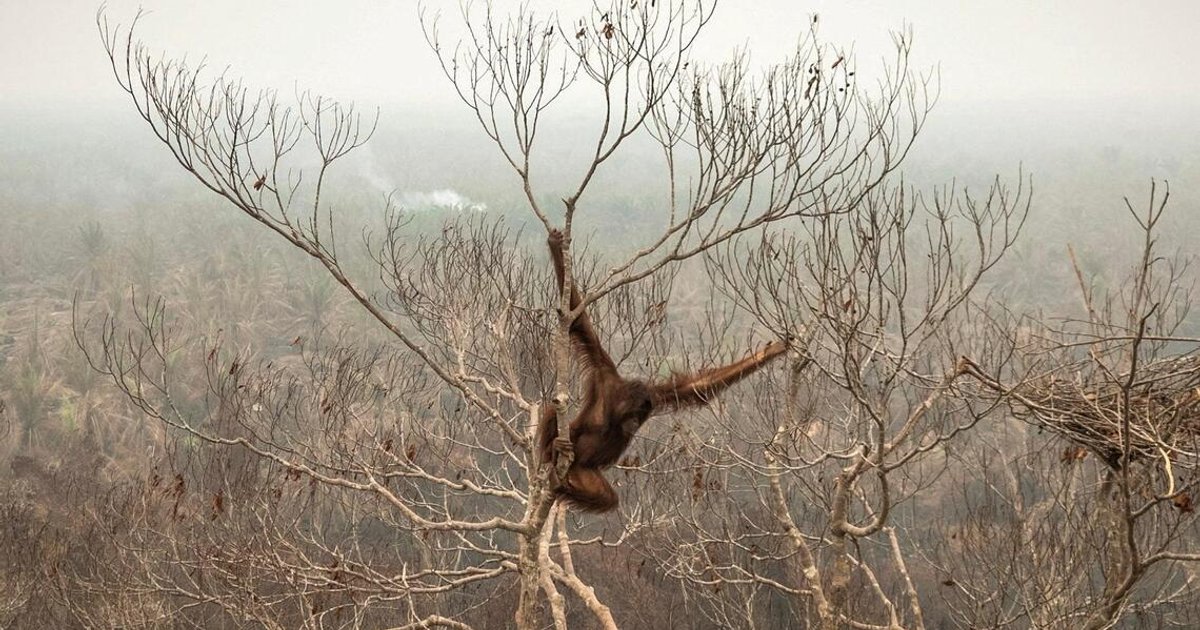
Photo via The Hindu

2026 to be one of four warmest years on record: World Meteorological Organization

Read the original at The Hindu ↗
Cite

2026 to be one of four warmest years on record: World Meteorological Organization. (2026, November 9). The Hindu. https://www.thehindu.com/sci-tech/energy-and-environment/2026-to-be-one-of-four-warmest-years-on-record-world-meteorological-organization/article71682272.ece

Dated from the outlet's own feed. Check the original for its byline.

The Hindu · collected 2026-11-09 · by PTI

Quick Summary

The World Meteorological Organization released its ‘State of the Climate Report’ on Friday during COP31 in Antalya, Türkiye, predicting 2026 to be one of the four warmest years on record with temperatures 1.47 degrees Celsius higher than pre-industrial times. The report attributes this rise partly to a strong El Niño event and a significant increase in atmospheric carbon dioxide from around 278 parts per million (ppm) in 1750 to about 426.8 ppm by the end of 2025, leading to increased heat accumulation in oceans and contributing to extreme weather events globally.
Written by AI on 2026-11-09, from this article's own text only (the story summary below draws on all the coverage).
See how they differ ↓

AI analysis

Story summary

As world leaders gather in Turkey for COP31, scientists predict that 2026 will be one of the four hottest years on record. The World Meteorological Organization (WMO) reported on November 9th that the global average temperature from January to September was 1.47 degrees Celsius above pre-industrial levels, making it likely that this year will surpass recent records set in 2023 and 2024, with only a slight difference compared to the hottest year recorded in 2025. The ongoing El Niño phenomenon is expected to intensify significantly by December, potentially pushing global temperatures even higher.

The impact of these rising temperatures has already been severe, including extensive wildfires across Europe and a devastating glacier collapse in Nepal which killed more than 1,000 people earlier this year. Scientists warn that the increasing heat will continue to cause dramatic changes such as melting glaciers, record-breaking heatwaves, and droughts, underscoring the urgent need for global action on climate change.

Written for “Scientists Predict Hottest Year On Record” on 2026-11-21, grounded in this article and the 2 other(s) covering the same event.

How they differ

3 outlets covered “Scientists Predict Hottest Year On Record”.

What each outlet says

One AI summary per outlet of its latest article on this story, written from that article alone and checked against it. Open the article for the outlet's own words.

The HinduThis outlet9 Nov

The World Meteorological Organization released its ‘State of the Climate Report’ on Friday during COP31 in Antalya, Türkiye, predicting 2026 to be one of the four warmest years on record with temperatures 1.47 degrees Celsius higher than pre-industrial times. The report attributes this rise partly to a strong El Niño event and a significant increase in atmospheric carbon dioxide from around 278 parts per million…

2026 to be one of four warmest years on record: World Meteorological Organization (this article)
BBC9 Nov

Scientists predict that 2026 will be the hottest year on record due to global warming and the influence of El Niño, according to Berkeley Earth. The prediction comes ahead of COP31 climate talks in Turkey, where discussions will focus on adapting to extreme weather events like wildfires and glacier collapses while continuing efforts to reduce emissions. Dr. Robert Rohde from Berkeley Earth emphasizes that these…

Scientists predict 2026 hottest year on record as climate talks begin →
The Straits Times9 Nov

The World Meteorological Organization reports that 2026 is on track to be one of the four hottest years on record due to strong El Niño effects. Between January and September, global temperatures were 1.47 degrees Celsius above pre-industrial levels. The report, based on nine data sets, indicates that each of the past twelve years has been among the warmest since records began in around 1850, with ocean temperatures…

This year set to be one of four hottest on record, UN report says →

Compared with similar articles

This article reads unscored and hedges 22% of its claims. Each row says how that neighbour differs.
The Sydney Morning Herald
Hedges 0 of 25 claims Outlet record 61/100
“The articles discuss related topics but describe different specific events and time periods concerning climate data and emissions.”
The Straits Times
Hedges 1 of 9 claims Outlet record 64/100
BBC News
Leans strongly left Hedges 4 of 43 claims Outlet record 65/100
ABC News (AU)
Leans left Hedges 1 of 19 claims Outlet record 67/100
“The articles discuss different aspects of climate change and environmental policy, with Article A focusing on temperature data for 2026 and Article B discussing a COP31 summit addressing future electrification goals.”
The Straits Times
Hedges 3 of 20 claims Outlet record 64/100
“While both articles discuss the World Meteorological Organization's report on global temperatures in 2026 and mention the impact of El Nino, they do not describe a single specific incident or occurrence but rather summarize different aspects of the same topic.”
CBC News
Hedges 3 of 32 claims Outlet record 72/100
“While both articles discuss the expected temperature trends for 2026 due to El Niño, they are from different sources and provide distinct analyses of probabilities and global average temperatures.”

Story

Scientists Predict Hottest Year On Record
Environment · 3 article(s) covering the same event. See how they differ ↑
How this article was measured signals, leaning charts, publisher record, byline, topics and claims

Signals How these are calculated →

Claims extracted
18
sentences that state something as happening or true
Uncertain
22%
4 of 18 hedged ("reportedly", "may", "according to")
Leaning
not political
takes no side on a contested political question
Publisher signals
78/100
The Hindu's corrections and hedging, across everything collected from it. Not a measure of accuracy.
Outlets on this story
3
Environment
Same framing elsewhere
1
articles that frame the event the way this one does
Analyzed 2026-11-09 · how these are computed

How this is being covered How these are calculated →

Article leaning vs. publisher reliability
Source leaning vs. consistency

Publisher

The Hindu · 1437 article(s) · 2 correction(s) detected
Running correction rate · 2 correction(s)

Who wrote this

No reporter is named on this article, beyond the feed's “ PTI”.

Topics

COP31 El Nino WMO World Meteorological Organization the World Meteorological Organization

Subjects

WMO ORG · 3× Antalya GPE · 1× António Guterres PERSON · 1× Celeste Saulo PERSON · 1× European NORP · 1× India GPE · 1× Türkiye GPE · 1× World Meteorological Organization ORG · 1× the World Meteorological Organization ORG · 1×

Narrative

Moreover, the figure is likely to rise through the end of 2026 because of the warming effect of the prevailing El Nino, which has been intensifying since August and is expected to be the strongest on record by December.
framing: mixed · carried by 1 article(s) · first seen 2026-11-09
The year 2026 will be one of the four warmest years on record, with the global average temperature for January-September 2026 touching 1.47 degrees Celsius higher than pre-industrial times (the average of the 1850-1900 period), according to a new World Meteorological Organization report.

Claims (18 extracted, 4 hedged)

The year 2026 will be one of the four warmest years on record, with the global average temperature for January-September 2026 touching 1.47 degrees Celsius higher than pre-industrial times (the average of the 1850-1900 period), according to a new World Meteorological Organization report. uncertain
temperature → touch → report
It added that this global average temperature figure was higher than the full-year averages in 2025 and 2023, and only slightly lower than 2024, which is the warmest year on record. asserted
which → add → record
Moreover, the figure is likely to rise through the end of 2026 because of the warming effect of the prevailing El Nino, which has been intensifying since August and is expected to be the strongest on record by December. asserted
which → rise → December
The report, ‘State of the Climate Report’, was released by the World Meteorological Organization (WMO) on Friday – the first day of this year’s UN climate meeting, known as COP31, in Antalya, Türkiye. asserted
report → release → Antalya
In a statement, WMO Secretary General Celeste Saulo said, “The past four years have been the warmest in the 177-year observational record, and the heat in the oceans is breaking records for the tenth year in a row.” asserted
heat → say → row
“The ongoing El Nino is forecast to be one of the strongest on record, and the heat it releases from the ocean will continue to fuel high temperatures and extreme weather into 2027,” she added. asserted
she → forecast → 2027
Atmospheric concentration of carbon dioxide The key reason behind the rising global temperatures is that the Earth’s energy imbalance is rising, and the earth system is accumulating heat at an accelerating rate. The imbalance reached its highest level since monitoring began, as greenhouse gases trap unprecedented amounts of heat and upset the equilibrium between incoming energy from the sun and outgoing energy, according to the WMO report. uncertain
gases → rise → report
It revealed that the atmospheric concentration of carbon dioxide has increased by 53% from around 278 parts per million (ppm) in 1750 to about 426.8 ppm in 2025. asserted
concentration → reveal → 2025
Global averaged methane concentrations increased from 729 parts per billion (ppb) in 1750 by 167% to 1,948 ppb in 2025. asserted
concentrations → average → 2025
Moreover, the ocean absorbs 90% of the excess heat, and 2026 is on track to be the tenth successive year of record ocean warmth, the report said. asserted
report → absorb → warmth
It also highlighted that extreme events impacted lives and livelihoods, undermined food security, deepened poverty, and contributed to displacement across multiple regions. asserted
events → highlight → regions
For instance, the European heatwaves, drought and wildfires led to more than 30,000 excess deaths, according to preliminary estimates. uncertain
heatwaves → lead → estimates
An estimated 146.5 million people in India were exposed to extreme heat in an April 2026 heatwave, according to the report. uncertain
people → estimate → report
UN Secretary-General António Guterres said in a statement, “We have entered a new age of climate extremes. asserted
We → say → extremes
A supersized El Nino is colliding with a planet already superheated by manmade climate change. asserted
Nino → collide → change
Climate records keep falling. asserted
records → fall → ?
The human costs keep rising.” asserted
costs → rise → ?
Leaders must get serious by cutting emissions faster, accelerating a just transition from fossil fuels and delivering the finance and protection vulnerable countries need,” he added. asserted
he → get → finance
Give feedback · no sign-in needed

No sign-in needed for now. Your note is sent without a name, so it cannot be answered.

History Support