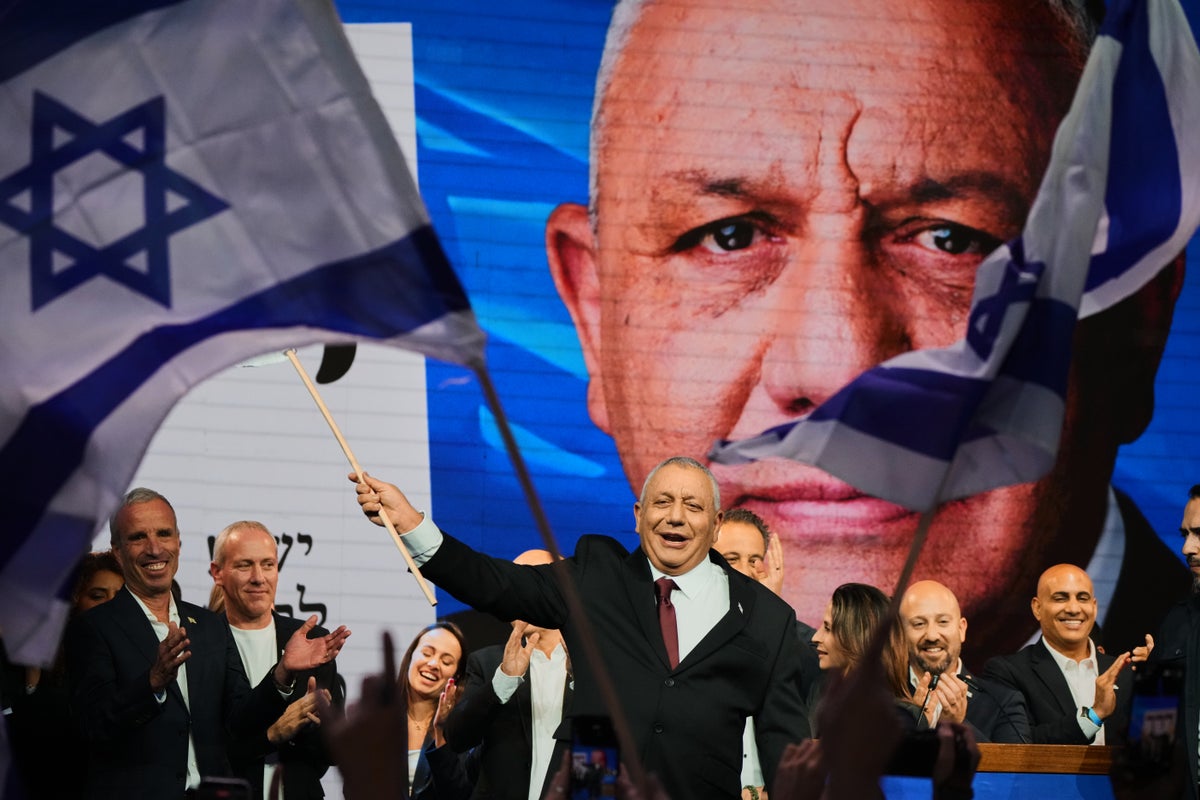
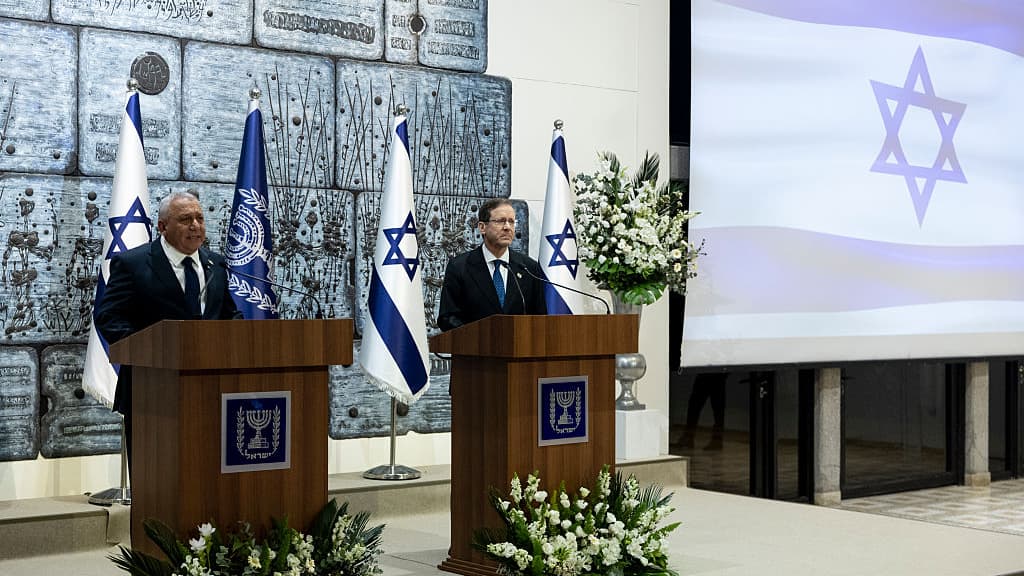
Photo via Al Jazeera

What powers does Netanyahu have as Israel’s interim PM?

Read the original at Al Jazeera ↗
Cite

Mansour, M. (2026, November 10). What powers does Netanyahu have as Israel’s interim PM? Al Jazeera. https://www.aljazeera.com/news/2026/11/10/what-powers-does-netanyahu-have-as-israels-interim-pm?traffic_source=rss

Dated from the outlet's own feed. Check the original for its byline.

Al Jazeera · collected 2026-11-10 · by Mohammad Mansour

Quick Summary

Israel faces political uncertainty two weeks after national elections as President Isaac Herzog gives opposition leader Gadi Eisenkot the chance to form a government, though neither he nor Prime Minister Benjamin Netanyahu has secured a Knesset majority yet. In this transitional period, Netanyahu remains caretaker prime minister with significant powers over state management and security despite lacking public endorsement. Analyst Ehab Jabareen explains that while Netanyahu cannot legally start new conflicts without cabinet approval, he can manipulate existing tensions to maintain political leverage during the formation of a new government.
Written by AI on 2026-11-10, from this article's own text only (the story summary below draws on all the coverage).
See how they differ ↓

AI analysis

Story summary

As of November 11, 2026, Gadi Eisenkot, tasked with forming a new Israeli government after inconclusive elections, pledged to reverse many of former Prime Minister Benjamin Netanyahu’s policies as the new parliament was sworn in. This political shift comes amid ongoing negotiations where the Arab Joint List has offered support for an opposition-led government but will not join the cabinet, according to Ahmad Tibi. Israel's president, Isaac Herzog, urged parties to negotiate with open hearts to avoid a fresh election, emphasizing that securing a new government is critical given security concerns and citizens' welfare.

The investigation into alleged foreign funding of Arab Israeli party Raam did not undermine the recent election results, according to the head of the Central Elections Committee. Meanwhile, Naftali Bennett heckled Netanyahu during a Knesset session, signaling rising tensions as negotiations for a new government continue despite efforts by various parties to form coalitions.

These developments mark a significant political shake-up in Israel, with Eisenkot facing a deadline to form a government and end Netanyahu's long tenure.

Written for “Israel's New Parliament Sworn In” on 2026-11-21, grounded in this article and the 103 other(s) covering the same event.

How they differ

25 outlets covered “Israel's New Parliament Sworn In”.

What each outlet says

One AI summary per outlet of its latest article on this story, written from that article alone and checked against it. Open the article for the outlet's own words.

Al JazeeraThis outlet10 Nov

Israel faces political uncertainty two weeks after national elections as President Isaac Herzog gives opposition leader Gadi Eisenkot the chance to form a government, though neither he nor Prime Minister Benjamin Netanyahu has secured a Knesset majority yet. In this transitional period, Netanyahu remains caretaker prime minister with significant powers over state management and security despite lacking public…

What powers does Netanyahu have as Israel’s interim PM? (this article)17 articles from Al Jazeera on this story
The Straits Times10 Nov

Gadi Eisenkot, Israel's former army chief, led a broad coalition of lawmakers in targeting Benjamin Netanyahu's political legacy during the first session of the new Israeli parliament on November 10. This bloc submitted multiple proposals, including establishing an independent commission to investigate recent security failures and repealing judicial reforms enacted under Netanyahu’s leadership. Despite not having…

Eisenkot quickly targets Netanyahu’s legacy in new Israeli parliament →18 articles from The Straits Times on this story
The Hindu10 Nov

Israel's new parliament convened on November 10, 2026, with Gadi Eisenkot aiming to form a government that includes a coalition of left-to-right blocs and Israeli-Arab parties. Eisenkot, a former military chief recently entered politics, faces the challenge of securing a majority within 28 days to avoid another election. The new parliament plans to investigate security failures under Benjamin Netanyahu's leadership…

New Israeli parliament to take aim at Netanyahu as Eisenkot seeks government →15 articles from The Hindu on this story
The Guardian10 Nov

After Israel’s new Knesset was sworn in on Tuesday, opposition lawmakers quickly moved to oust Amir Ohana, a Netanyahu loyalist who currently serves as speaker. The opposition, consisting of six divided parties with a majority, aims to advance legislation such as term limits for prime ministers and an inquiry into the October 2023 attacks, potentially limiting Netanyahu’s future leadership. Former military chief…

Israeli opposition hurries to seize control as new Knesset is sworn in →7 articles from The Guardian on this story
Dawn10 Nov

Israel’s parliament was sworn in on Tuesday following a recent election that left Prime Minister Benjamin Netanyahu without a majority and his main rival, Gadi Eisenkot, unable to form a coalition immediately. The ceremony was presided over by President Isaac Herzog, who urged lawmakers to avoid another election through compromise and cooperation. Netanyahu called for a unity government due to perceived threats from…

Israel's parliament sworn in as Eisenkot tries to forge a government →7 articles from Dawn on this story
South China Morning Post8 Nov

Israeli President Isaac Herzog has appointed Gadi Eisenkot, an opposition politician and former military chief, as the first candidate to attempt forming a new government following recent elections where Prime Minister Benjamin Netanyahu’s coalition lost its majority. This move is significant in the ongoing efforts to replace Netanyahu as prime minister amid national divisions intensified by Hamas-led attacks…

Israel’s President Herzog gives Gadi Eisenkot the first chance to form the next government →6 articles from South China Morning Post on this story
Show 19 more outlets
ABC News (AU)10 Nov

Benjamin Netanyahu, Israel’s caretaker prime minister, delivered an inflammatory speech during the swearing-in ceremony of the newly elected Knesset. He accused Arab-Israeli members of supporting Hamas and threatening the existence of Israel, causing tension within the parliament with some walking out in protest. This incident follows a recent election where Arab parties gained record support, leading to ongoing…

Taunts, heckling and fiery Netanyahu speech as Israel's Knesset sworn in →5 articles from ABC News (AU) on this story
Times of India9 Nov

President Isaac Herzog tasked Gadi Eisenkot, chairman of Yashar party, with forming Israel's next government after receiving support from 67 out of 120 Knesset members. However, tensions have emerged between Eisenkot and Avigdor Lieberman over the inclusion of Arab-led parties in the coalition. Despite this rift, Eisenkot aims to establish a broad national emergency government addressing security, diplomatic, and…

Eisenkot Tapped To Form Government: President tasks him with coalition bid; rifts emerge with Lieberman →4 articles from Times of India on this story
Fox News11 Nov

Israel's newly elected parliament was sworn in on Tuesday as former Prime Minister Naftali Bennett acts as a kingmaker for military chief Gadi Eisenkot. Bennett is working with Eisenkot despite leading separate parties, giving him the support of 33 lawmakers compared to Netanyahu’s Likud party with 27 seats. During the swearing-in ceremony, Bennett and others disrupted Netanyahu's speech by confronting him over…

Israel's political shake-up enters new phase as former PM plays kingmaker — and deadline looms →2 articles from Fox News on this story
Euronews8 Nov

President Isaac Herzog has tasked Gadi Eisenkot, leader of Israel's centrist Yashar party, with forming a new government following recent inconclusive legislative elections where no single candidate secured enough support to form a majority. The president’s decision came after consultations that revealed 67 Knesset members backed Eisenkot compared to 46 supporting Prime Minister Benjamin Netanyahu. With this…

Netanyahu rival Eisenkot to be tasked with forming new government following Israeli elections →2 articles from Euronews on this story
CBC8 Nov

Israel’s President Isaac Herzog has chosen Gadi Eisenkot, a former military chief and Netanyahu’s main rival, to attempt forming a new government after recent inconclusive elections. The election left neither Eisenkot nor Netanyahu with enough support for clear control; Netanyahu's coalition holds 53 seats out of the needed 61, while Eisenkot's coalition has 48 seats. Herzog gave Eisenkot 28 days, plus a possible…

Israel's president asks Gadi Eisenkot, Netanyahu's rival, to form new government →2 articles from CBC on this story
BBC10 Nov

Israel's new parliament will be sworn in on Tuesday as opposition leader Gadi Eisenkot attempts to form a government with the backing of 67 Knesset members, compared to 46 for Prime Minister Benjamin Netanyahu. Both leaders face challenges in securing a majority, with Netanyahu maintaining caretaker status until a coalition is formed. Arab-led parties have gained unprecedented influence, holding 19 seats between…

Israel's new parliament to be sworn in as leaders compete to form government →2 articles from BBC on this story
Global News8 Nov

Israeli President Isaac Herzog appointed opposition leader Gadi Eisenkot to attempt forming a new government following the October 27 election where neither Netanyahu nor Eisenkot won a clear majority in parliament. With 6 weeks to negotiate with potential coalition partners, Eisenkot emphasized the need for trust and unity among diverse societal groups but also outlined conditions such as recognizing Israel's…

What’s next for Israel as Eisenkot tapped to lead government? →2 articles from Global News on this story
Sydney Morning Herald11 Nov

Gadi Eisenkot, tasked with forming Israel’s new government following Benjamin Netanyahu’s loss of majority support, pledged to reverse many of Netanyahu’s policies as the newly elected parliament was sworn in on Tuesday. The opposition now holds a clear majority in the Knesset and has introduced bills targeting Netanyahu’s tenure, including an inquiry into Hamas attacks and term limits for prime ministers. Netanyahu…

Netanyahu’s policies face the chop as new parliament sworn in →2 articles from Sydney Morning Herald on this story
Semafor8 Nov

Israel’s president has appointed former military chief Gadi Eisenkot to attempt forming the next government, potentially challenging incumbent Prime Minister Benjamin Netanyahu. Despite their differences in approach and personal style, both Eisenkot and Netanyahu adhere closely to a hardline stance on Palestine and Iran, according to experts cited by Le Monde and an Israeli analyst. The situation is complicated…

Eisenkot gets nod to form Israeli government →2 articles from Semafor on this story
The Independent9 Nov

Israel’s former military chief Gadi Eisenkot has been tasked with forming the next government after receiving a mandate from President Isaac Herzog on Sunday. With 67 lawmakers backing him, compared to Netanyahu's 46, Eisenkot now faces 28 days—extendable by 14—to secure a parliamentary majority of 61 seats. He warns of an impending "point of no return" for Israel’s democracy and calls for unconventional political…

Israel in ‘state of emergency’ Eisenkot warns after opposition leader tasked with forming government →2 articles from The Independent on this story
NBC News1 Nov

Israeli President Isaac Herzog has called on political parties to engage in openhearted negotiations to form a new government following last week’s inconclusive election. With Netanyahu’s bloc securing 53 seats and Eisenkot’s opposition winning 48, neither can form a majority alone, leaving the newly empowered Arab parties with 19 seats as potential kingmakers. Herzog will consult party leaders starting Wednesday…

Israel’s president says parties need to engage with ‘open heart’ to avoid fresh election →
Toronto Star5 Nov

Ahmad Tibi, a senior member of Israel’s Arab Joint List, announced that his bloc is willing to support an anti-Netanyahu government without joining it, marking a significant shift from past practices. This move comes after recent elections where Arab-led parties gained a record share in parliament, making their potential backing crucial for forming the next government. However, such an alliance could be politically…

Arab parties extend a hand to try and topple Netanyahu, but challenges remain →
Washington Examiner5 Nov

Israel's Arab parties have endorsed Gadi Eisenkot as their preferred candidate to form a new government over incumbent Prime Minister Benjamin Netanyahu. A delegation from the Joint List party, led by chairman Yousef Jabareen, met with President Isaac Herzog on Thursday to advocate for Eisenkot’s nomination. The meeting aimed to solidify support for Eisenkot and challenge Netanyahu's coalition leadership.

Israel’s Arab parties choose between ‘bad and even worse’ as they back Gadi Eisenkot over Netanyahu to form government →
Los Angeles Times8 Nov

Israel is in political turmoil as President Isaac Herzog must choose between opposition leader Gadi Eisenkot and incumbent Prime Minister Benjamin Netanyahu to form a new government. After the recent election, Eisenkot’s bloc has secured 67 out of 120 Knesset seats with endorsements from Arab-led parties. However, Jewish Israeli parties’ reluctance to govern alongside Arab lawmakers complicates this coalition's…

Arab parties hold the key as Israel struggles to form a government →
Deutsche Welle8 Nov

Israeli President Isaac Herzog has selected Gadi Eisenkot to attempt forming a new government following the October election. In the closely contested vote, Netanyahu's camp secured 53 seats while Eisenkot’s bloc won 48 out of 120 parliamentary seats. Despite this, Eisenkot received endorsements from Arab parties, which are traditionally wary of aligning with Netanyahu. With 28 days to gain majority support or…

Israeli president tasks Gadi Eisenkot with forming government →
Daily Mail8 Nov

Israeli president Isaac Herzog has tasked opposition leader Gadi Eisenkot with forming a new government, challenging incumbent prime minister Benjamin Netanyahu’s position. This follows a recent election where neither Netanyahu nor Eisenkot secured clear majorities; Eisenkot received more endorsements from other parties despite his reluctance to include Arab party support in his coalition. With 28 days (plus…

Netanyahu's leadership threatened as his strongest rival is asked to form a government by Israel's president →
Toronto Sun10 Nov

In Israel, Benjamin Netanyahu remains prime minister as the new parliament takes office on Tuesday, despite his weakened majority following recent elections. With 53 seats compared to the previous 68, Netanyahu faces a more divided Knesset where Gadi Eisenkot’s opposition bloc holds 48 seats and Arab-majority parties hold a record 19 seats. The article details how the new parliament could challenge Netanyahu by…

How Israel’s new parliament can make Benjamin Netanyahu’s life difficult →
Time10 Nov

Israeli President Isaac Herzog has assigned former military chief and Yashar party leader Gadi Eisenkot with forming the next government, giving him until December 6 to secure a coalition that can win parliamentary approval. With no single bloc achieving the necessary majority in the recent election, Netanyahu's Likud party, though the most voted for, lacks enough support to form a new government alone. The…

How Israel Will Choose Its Next Prime Minister, Explained →

Where they agree and split

Agreed

AI · cited, from two or more outlets

  • President Isaac Herzog accepted the election results as legally binding.23
  • Eisenkot was tasked with forming a new government after consultations with party representatives.27
Quoted from the coverage (4)

Netanyahu has claimed repeatedly and without proof that Arab parties committed fraud during the elections with foreign backing.

11 outlets

Two parties representing Israel's Arab minority won an unprecedented 19 seats.

11 outlets

Israel’s election commission said earlier on Wednesday (November 4, 2026) that after a thorough investigation of all parties’ claims of fraud, it had found “no evidence of irregularities that compromised the integrity of the election or affected its results.”

11 outlets

Eisenkot's centrist Yashar party and three other Jewish opposition parties in his bloc won 48.

11 outlets

Disputed

Picked by our model, which is sometimes wrong

  • Netanyahu and his supporters claim that Arab-led parties 'stole' the election, while electoral officials found no evidence of irregularities.23
  • Eisenkot's bloc may or may not be able to form a coalition government within the given timeframe.84

Framing

How the first headlines put it

  • Al Jazeera focuses on the role of Arab parties in Israel’s political deadlock, while The Hindu emphasizes President Herzog's acceptance of election results as a blow to Netanyahu.12
  • BBC highlights the uncertainty and need for consultations after an election deadlock, whereas Fox News focuses on the potential end of Netanyahu’s tenure with Eisenkot's tasking.34
A claim to check1
Attributed to a source4
Stated as fact1
An achievement1
The headlines (7)

Israeli officials say results stand as Netanyahu claims election ‘stolen’ Al Jazeera · a claim to check

Joint List offers to back anti-Netanyahu government: Report Times of India · attributed to a source

Israel’s president says parties need to engage with ‘open heart’ to avoid fresh election NBC News · attributed to a source

Israel elections chief says inquiry into irregularities will not undermine result The Hindu · attributed to a source

Israel elections chief says inquiry into irregularities will not undermine result The Straits Times · attributed to a source

Israeli President Isaac Herzog calls for calm ahead of election mediations ABC News (Australia) · stated as fact

Israel has ‘historic’ opportunity to change direction, says leader of Arab coalition The Guardian · an achievement

Words to watch (3)

Eisenkot says Israel in 'devastating diplomatic crisis' as he seeks to form govt Dawn

Eisenkot warns of Israel crisis as he seeks to replace Netanyahu’s government The Hindu

Israel opposition touts progress ousting Netanyahu after U-turn on ultra-Orthodox The Straits Times

The full story: what happened, how it changed, and all 104 articles →

Compared with similar articles

This article reads unscored and hedges 10% of its claims. Each row says how that neighbour differs.
The Hindu
Hedges 1 of 25 claims Outlet record 78/100
ABC News (AU)
Hedges 2 of 35 claims Outlet record 67/100
CBC News
Hedges 1 of 26 claims Outlet record 60/100
“While both articles discuss the political situation following Israel's election and Gadi Eisenkot being asked to form a new government, Article A describes the immediate aftermath of the president's decision, while Article B focuses on Netanyahu's powers as interim PM during this period.”
The Independent
Hedges 0 of 23 claims Outlet record 59/100
TIME
Hedges 10 of 74 claims Outlet record 60/100
The Hindu
Leans right Hedges 2 of 25 claims Outlet record 78/100
“While both articles discuss Gadi Eisenkot's potential to form a new government after an election, they describe different stages of the process occurring at distinct points in time.”
Al Jazeera
Hedges 3 of 28 claims Outlet record 60/100
“The articles describe different stages of the political process in Israel: ARTICLE A reports on President Herzog's decision to name a candidate, while ARTICLE B discusses Netanyahu's role as interim PM after the elections.”
Global News
Hedges 5 of 44 claims Outlet record 63/100
“Article A describes the moment when Gadi Eisenkot is given the mandate to form the next government, while Article B discusses the broader context and implications of this situation two weeks later.”
The Hindu
Hedges 2 of 25 claims Outlet record 78/100
“While both articles discuss Gadi Eisenkot's mandate to form a government, they describe different stages of this process: Article A covers the initial warning and receipt of mandate on November 8, while Article B discusses subsequent negotiations and uncertainties two days later.”

Story

Israel's New Parliament Sworn In
Politics · 104 article(s) covering the same event. Compare every outlet's account →
How this article was measured signals, leaning charts, publisher record, byline, topics and claims

Signals How these are calculated →

Claims extracted
39
sentences that state something as happening or true
Uncertain
10%
4 of 39 hedged ("reportedly", "may", "according to")
Leaning
not political
takes no side on a contested political question
Publisher signals
60/100
Al Jazeera's corrections and hedging, across everything collected from it. Not a measure of accuracy.
Outlets on this story
104
Politics
Same framing elsewhere
1
articles that frame the event the way this one does
Analyzed 2026-11-10 · how these are computed

How this is being covered How these are calculated →

Article leaning vs. publisher reliability
Source leaning vs. consistency

Publisher

Al Jazeera · 6216 article(s) · 4 correction(s) detected
Running correction rate · 4 correction(s)

Who wrote this

Mohammad Mansour
20 article(s) here · 1 carrying a prediction
Since taking office in May, al-Zaidi has made the disarmament of all armed factions in the country, including Kataib Hezbollah, a priority amid pressure from the United States, which has long demanded the decommissioning of the Iran-backed fighters.
Al-Bidh said that for the STC to stop the Houthi advance, it would require autonomy on the battlefield for its units.
Recommended Stories list of 3 items- list 1 of 3Yemen’s Houthis unilaterally release 600 war detainees - list 2 of 3Houthis advance in Yemen as government forces move to defend Aden - list 3 of 3The Red Sea cannot be secured without restoring the Yemeni state Retired Lebanese Brigadier-General Hassan Jouni, a military and strategic expert, said fighting is now focused on control over a mountainous triangle of territory in southern Yemen, which could decide the outcome of the war.
During the second Intifada in September 2000, his right hand was broken while confronting Ariel Sharon, who would become prime minister the following year, during his provocative storming of the Al-Aqsa Mosque compound.
“If full control is taken, which is unlikely, the government would be able to finally tell Iraqis that a militia had been removed from its base and the legal residents of the area allowed to return,” he said.
In Gaza during that period, 399 health workers were detained, including Dr Husam Abu Safia, the director of Kamal Adwan Hospital, who has spent more than 500 days in Israeli custody. “The Israeli occupation did not and will not stop targeting the health system,” al-Waheidi said.
As Eisenkot huddles with members of his alliance and negotiates with potential outside partners who could support his coalition, including Arab parties, Netanyahu remains ensconced as a caretaker prime minister.
The claims could not be independently verified.
The electoral gains made by the parties representing Palestinian citizens of Israel – the Joint List and the United Arab List (Ra’am) – could give the Zionist opposition to Israeli Prime Minister Benjamin Netanyahu the upper hand in forming the next government, if they choose to work with the Arab parties. Recommended Stories list of 3 items- list 1 of 3Israel’s election commission rejects Likud’s fraud claims, confirms results - list 2 of 3How big is the Republican midterms loss, and is there a silver lining? - list 3 of 3Iran’s Khamenei warns Trump loss at polls won’t end US hostility Meanwhile, Netanyahu and his allies have portrayed the increased vote share for the Palestinian-led parties as the result of illegality, a+nd say they represent Jewish Israelis. Political analyst Mamoun Abu Amer told Al Jazeera that the political backlash was preplanned. “From the beginning, it was clearly a systematic campaign when Arab citizens mobilised heavily, especially in the villages, the Naqab and the Bedouin areas,” Abu Amer said.
But Badr Hassan Al-Shafei, a professor of African studies and conflict resolution expert, said fears of an escalation that could harm Sudan and Ethiopia are preventing an all-out confrontation between the two countries.
Also by Mohammad Mansour
Nothing else under this byline is closely related to this article, so these are simply their most recent.
All 20 articles by Mohammad Mansour →

Topics

Al Jazeera Arab Israel Knesset Palestinian

Subjects

Netanyahu PERSON · 13× Israel GPE · 7× Jabareen PERSON · 5× Eisenkot PERSON · 4× Knesset ORG · 2× Arab NORP · 1× Benjamin Netanyahu PERSON · 1× Gadi Eisenkot PERSON · 1× Herzog PERSON · 1× Isaac Herzog PERSON · 1×

Narrative

In the United States, meanwhile, an outgoing president works under a rigid two-and-a-half-month deadline towards the inauguration of his successor, facing intense congressional oversight regarding transitions, budgets and appointments in the interim.
framing: assertive · carried by 1 article(s) · first seen 2026-11-10
As Eisenkot huddles with members of his alliance and negotiates with potential outside partners who could support his coalition, including Arab parties, Netanyahu remains ensconced as a caretaker prime minister.
2026-11-10 · Al Jazeera
What powers does Netanyahu have as Israel’s interim PM? · assertive framing

Claims (39 extracted, 4 hedged)

Two weeks after Israel’s national elections, opposition leader Gadi Eisenkot has been given a chance by President Isaac Herzog to cobble together a government. asserted
Eisenkot → give → government
But with neither Eisenkot nor Prime Minister Benjamin Netanyahu’s coalition securing the 61 seats needed to secure a majority in the Knesset, who eventually forms the next administration is far from clear. asserted
forms → secure → administration
As Eisenkot huddles with members of his alliance and negotiates with potential outside partners who could support his coalition, including Arab parties, Netanyahu remains ensconced as a caretaker prime minister. uncertain
Netanyahu → huddle → minister
And if Eisenkot fails to form a government, Herzog might approach Netanyahu to see if he can form a workable coalition government. uncertain
he → fail → government
This transitional status creates a unique political landscape where the incumbent lacks a popular mandate but retains the keys to the state’s most powerful institutions. asserted
incumbent → create → institutions
“Netanyahu lost the priority of forming the government, but he did not lose the current premiership,” Ehab Jabareen, an analyst and Palestinian citizen of Israel, told Al Jazeera. asserted
Jabareen → lose → Jazeera
“His power now lies in that his opponents need an agreement to remove him – and their differences are the reason for his current [political] survival.” asserted
differences → lie → survival
In the meantime, Jabareen explained, Israel sits in a “constitutional paradox”: The prime minister does not enjoy a popular mandate. asserted
minister → explain → mandate
So what does that mean for Israel, and what powers does Netanyahu enjoy as a caretaker prime minister? asserted
Netanyahu → mean → minister
The big picture Israel has no single constitution but instead relies on a series of what are known as Basic Laws as its foundational legal principles. asserted
what → have → principles
Under Article 30 of Israel’s Basic Law: The Government, the outgoing administration continues to operate seamlessly until there is a new one sworn in to replace it. asserted
administration → continue → it
“Consequently, Netanyahu and his government continue to work until a new government gains the confidence of the Knesset under the principle of government continuity,” Jabareen said. asserted
Jabareen → continue → continuity
“And in this period, the government retains the powers of managing the state, security and foreign relations, but its use is subject to the duty of reservation and restraint.” asserted
use → retain → reservation
The most pressing concern surrounding Netanyahu’s caretaker status is his authority over the military. asserted
concern → surround → military
He has the authority to make new appointments and security-related decisions. asserted
He → have → appointments
But he is expected to face extra scrutiny over any moves because while he has legal powers, he does not necessarily enjoy “legitimacy” any more, Jabareen noted. asserted
Jabareen → expect → legitimacy
While Netanyahu commands the executive branch, Article 40 of the Basic Law: The Government authorises his cabinet to launch a new war if it votes in its favour. asserted
it → command → favour
He cannot start a new conflict on his own. asserted
He → start → own
But Netanyahu can strategically manipulate existing conflicts. asserted
Netanyahu → manipulate → conflicts
“The most applicable scenario is not inventing a war from scratch, of course. asserted
scenario → invent → course
We are talking about igniting and employing an existing threat. asserted
We → talk → threat
We are talking about Iran. asserted
We → talk → Iran
We are talking about Lebanon,” Jabareen said. asserted
Jabareen → talk → Lebanon
Because Eisenkot and his allies are not members of the current security cabinet, Netanyahu wields unchecked influence over how intelligence is framed. asserted
intelligence → wield → influence
“What is presented to the ministers as a danger that can be contained? asserted
that → present → danger
And what is presented as a final opportunity [for potential attacks] that cannot be delayed? asserted
that → present → attacks
This additional responsibility of the prime minister regarding the information that reaches the cabinet makes the presentation of options extremely important,” Jabareen explained. asserted
Jabareen → regard → options
The Shin Bet, Israel’s internal intelligence agency, reports directly to the premier. asserted
Bet → report → premier
That does not change while Netanyahu is a caretaker prime minister. asserted
Netanyahu → change → ?
While Netanyahu commands security forces, his domestic and legislative powers face functional limits. asserted
powers → command → limits
Maysara Bahr, a writer and expert on Israeli affairs, explained that financial decisions Netanyahu makes could impact whoever forms the next government. “Netanyahu can take some actions that may hinder the work of the next government,” so that it inherits greater “indebtedness”, Bahr told Al Jazeera. uncertain
Bahr → explain → Jazeera
However, Netanyahu cannot push through new legislation to protect himself from his long, ongoing corruption trial. asserted
Netanyahu → push → trial
Political manoeuvring Netanyahu is using his continuing premiership to try to fracture the opposition bloc, Jabareen said. asserted
Jabareen → use → bloc
For instance, the analyst pointed out, Netanyahu is trying to appeal to Zionist voters and parties that represent them by portraying Eisenkot’s alliance as likely to be dependent on Arab parties. asserted
that → point → parties
Bahr warned that Netanyahu might encourage domestic unrest to derail the transition, suggesting that the prime minister would do whatever it takes to try to stay in power. uncertain
it → warn → power
How Israel’s transition compares to other countries Israel’s transition process is not very different from that in other parliamentary democracies. asserted
process → compare → democracies
In the United Kingdom and India too, for instance, caretaker prime ministers enjoy the same legal powers as premiers with electoral mandates. asserted
ministers → enjoy → mandates
However, constitutional conventions and norms require them to avoid major policy decisions – including on questions of war – as caretakers. asserted
conventions → require → caretakers
In the United States, meanwhile, an outgoing president works under a rigid two-and-a-half-month deadline towards the inauguration of his successor, facing intense congressional oversight regarding transitions, budgets and appointments in the interim. asserted
president → work → interim
Give feedback · no sign-in needed

No sign-in needed for now. Your note is sent without a name, so it cannot be answered.

History Support