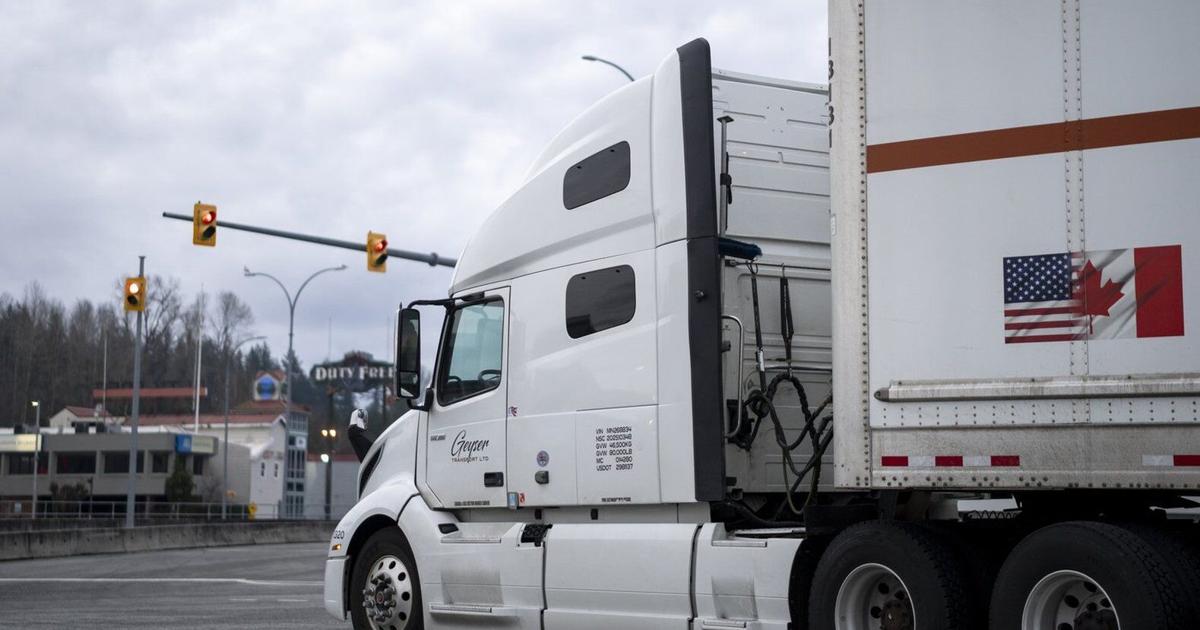
Photo via The Hub

Ottawa widens tariff relief to resource sector, extends remission program to 2028

Read the original at The Hub ↗
Cite

The Hub Staff. (2026, November 11). Ottawa widens tariff relief to resource sector, extends remission program to 2028. The Hub. https://thehub.ca/2026/11/11/ottawa-widens-tariff-relief-to-resource-sector-extends-remission-program-to-2028/

Dated from the outlet's own feed. Check the original for its byline.

The Hub · collected 2026-11-11 · by The Hub Staff commentary

Quick Summary

Ottawa has expanded its tariff remission program to include mining, quarrying, and oil and gas companies that import non-steel inputs from the United States. The relief is extended until June 30, 2028, covering a wide range of goods used in manufacturing, agriculture, packaging, public health, safety, and education. Finance Minister François-Philippe Champagne announced these changes along with specific timelines for removing certain products from eligibility to encourage domestic production. The program, which has been repeatedly renewed since March 4, 2025, aims to support Canadian companies facing significant economic harm due to the ongoing trade disputes with the U.S., where counter-tariffs are imposed on approximately $27 billion of American goods.
Written by AI on 2026-11-11, from this article's own text only (the story summary below draws on all the coverage).
See how they differ ↓

AI analysis

Story summary

The Canadian federal government has extended its tariff relief program for firms importing U.S. goods beyond steel imports to include manufacturing, agricultural production, mining, and oil and gas extraction until June 30, 2028. Goods used by public education entities, including those mandated by Indigenous organizations, will also be eligible for this relief. The program aims to reduce the burden on Canadian firms caught in the tariff crossfire between Canada and the U.S., allowing more time for these companies to transition away from relying on American suppliers. Additionally, Ottawa plans to exclude goods that can be reliably sourced domestically, such as certain trailers, aluminum wire, and paperboard products, starting December 1, 2026.

Written for “Ottawa Extends Tariff Relief Program” on 2026-11-21, grounded in this article and the 3 other(s) covering the same event.

How they differ

4 outlets covered “Ottawa Extends Tariff Relief Program”.

What each outlet says

One AI summary per outlet of its latest article on this story, written from that article alone and checked against it. Open the article for the outlet's own words.

The HubThis outlet11 Nov

Ottawa has expanded its tariff remission program to include mining, quarrying, and oil and gas companies that import non-steel inputs from the United States. The relief is extended until June 30, 2028, covering a wide range of goods used in manufacturing, agriculture, packaging, public health, safety, and education. Finance Minister François-Philippe Champagne announced these changes along with specific timelines…

Ottawa widens tariff relief to resource sector, extends remission program to 2028 (this article)
The Globe and Mail9 Nov

The Canadian government is extending its tariff relief program for firms importing U.S. goods until June 30, 2028. The program now includes additional non-steel goods used in manufacturing, agriculture, mining, and oil and gas extraction, as well as goods for public education and Indigenous organizations. However, the government plans to exclude certain products that can be sourced domestically, such as trailers…

Ottawa extends tariff relief program for firms importing U.S. goods →
Global News9 Nov

The Canadian government is expanding its tariff relief program for firms importing U.S. goods, extending the expiration date until June 30, 2028. This includes broadening eligibility to cover non-steel goods used in various industries like manufacturing, agriculture, mining, and oil and gas extraction. Additionally, educational institutions and Indigenous organizations are now eligible for remission on certain…

Canada extends tariff relief program beyond U.S. steel imports →
Toronto Star9 Nov

The federal government is expanding its relief program for companies importing U.S. goods subject to tariffs. Originally focused solely on steel imports, the program now includes other goods and extends beyond its initial timeframe. Since implementing retaliatory duties against the United States, Ottawa has provided a temporary remission program aimed at mitigating the impact of tariffs on Canadian businesses…

Ottawa amends, extends tariff relief program beyond U.S. steel imports →

Compared with similar articles

This article reads leans right and hedges 0% of its claims. Each row says how that neighbour differs.
The Globe and Mail
Hedges 0 of 6 claims Outlet record 51/100
Global News
Hedges 0 of 6 claims Outlet record 63/100
Toronto Star
Hedges 0 of 2 claims Outlet record 64/100
“The articles describe related announcements about tariff relief but differ in details like dates and specifics of changes, indicating different reporting on potentially distinct occurrences.”

Story

Ottawa Extends Tariff Relief Program
Politics · 4 article(s) covering the same event. See how they differ ↑
How this article was measured signals, leaning charts, publisher record, byline, topics and claims

Signals How these are calculated →

Claims extracted
61
sentences that state something as happening or true
Uncertain
0%
0 of 61 hedged ("reportedly", "may", "according to")
Leaning
Leans right
expected in commentary, which argues a position · beta estimate
Publisher signals
not measured
these signals count newsroom corrections; Commentary has none to count
Outlets on this story
4
Politics
Same framing elsewhere
1
articles that frame the event the way this one does
Analyzed 2026-11-11 · how these are computed

How this is being covered How these are calculated →

Article leaning vs. publisher reliability
Source leaning vs. consistency

Publisher

The Hub · 88 article(s) · 0 correction(s) detected
No corrections detected for this publisher. That may mean careful reporting, or simply that nothing has been checked.

Who wrote this

The Hub Staff
31 article(s) here · 1 carrying a prediction
Statistics Canada’s early reading has sales dropping 1.5 percent that month, though the agency cautioned that the unofficial figure will be revised.
Secondly, it would be interesting to know if Mr. Shimooka thinks any of the blame can be assigned to Canada’s military leadership.
- The budget debate in the House of Commons is concluding with a final vote expected to pass.
2026-11-19 · assertive framing · Parliament Today: Budget debate reaches its final day
Slade found it in thinkers whose reputations might put them in different camps.
That is not because the economy is booming: real growth is expected to slow to 1 percent this year.
How could they spend so much to achieve so little?” — Pierre Poilievre, Conservative MP for Battle River—Crowfoot Government defends budget as investment “They can laugh as much as they want, but Canadians know that confident countries invest in themselves.
2026-11-17 · assertive framing · Lines that landed: Question Period for November 17
Called the Alberta Growth Connector, the 48-inch line would run west to east, linking growing Western Canadian gas supply with oilsands operations in the province’s northeast.
The amendment on the table Monday would have added the parliamentary secretary to the minister of finance.
The reading came in a tick below the 3.2 percent economists had expected, and below the 3.4 percent the Bank of Canada projected for the fourth quarter.
The first, No. 13, would amend the Income Tax Act and the Income Tax Regulations.
Wire or desk byline, not an individual reporter.
Also by The Hub Staff
Nothing else under this byline is closely related to this article, so these are simply their most recent.
All 31 articles by The Hub Staff →

Topics

Canada Canadian Finance Ottawa U.S.

Subjects

Canadian NORP · 10× U.S. GPE · 8× Canada GPE · 5× Ottawa GPE · 5× American NORP · 2× Tombe PERSON · 2× Finance ORG · 1× François-Philippe Champagne PERSON · 1× The Department of Finance ORG · 1× the Department of Finance’s ORG · 1×

Narrative

Who gains and how far relief should go Tombe argues retaliation can pursue three aims: shifting U.S. behaviour by targeting electorally important swing states, hurting American producers that depend on Canadian buyers, and limiting the damage to Canadian consumers and businesses.
framing: assertive · carried by 1 article(s) · first seen 2026-11-11
At the same time, Ottawa will begin pulling relief from goods it has identified as having domestic production.

Claims (61 extracted, 0 hedged)

Mining, quarrying and oil and gas companies that import non-steel inputs from the U.S. can now recover the counter-tariffs they pay. asserted
they → import → tariffs
Ottawa widened its tariff remission program on Monday and extended it by a year, to June 30, 2028. asserted
Ottawa → widen → June
The changes, announced by Finance Minister François-Philippe Champagne, also extend relief to all goods used by public education entities, including those mandated by Indigenous organizations. asserted
changes → announce → organizations
At the same time, Ottawa will begin pulling relief from goods it has identified as having domestic production. asserted
it → begin → production
Certain trailers lose eligibility on Dec. 1. asserted
trailers → lose → Dec.
Certain aluminum wire and extrusions and paperboard products follow on Feb. 1, 2027. asserted
products → follow → Feb.
The Department of Finance says the lead time will let importers adjust their supply chains or apply for case-by-case remission. asserted
importers → say → remission
The broad relief, known as horizontal remission, continues to cover U.S. goods used in manufacturing and processing, agricultural production, and packaging for farm, food and beverage products. asserted
relief → know → products
It also covers goods used by certain public health, public safety, national security and public education organizations. asserted
It → cover → health
Ottawa is also granting targeted relief for some goods in short supply in Canada and for companies facing exceptional circumstances, such as pre-existing contracts. asserted
Ottawa → grant → contracts
Going forward, detailed product schedules will be published on the Department of Finance’s website and incorporated by reference into the remission order. asserted
schedules → go → order
The department says this will speed up relief. asserted
this → say → relief
Dominic LeBlanc, the minister responsible for Canada-U.S. trade, said the extension “gives Canadian companies the support they need today” while encouraging the use of Canadian-made goods. asserted
they → say → goods
A temporary program, repeatedly renewed Ottawa set out its criteria for tariff remission on March 4, 2025. asserted
Ottawa → renew → March
Relief would be considered only for goods in short supply or in other exceptional circumstances with significant harm to the Canadian economy. asserted
Relief → consider → economy
Six weeks later, on April 16, 2025, it introduced time-limited horizontal remission for U.S. goods imported for specific end uses. asserted
it → introduce → uses
That relief has since been extended and amended several times. asserted
relief → extend → ?
In June, Ottawa pushed the steel and aluminum remission out to June 2027, alongside its steel tariff-rate quotas. asserted
Ottawa → push → quotas
Monday’s announcement adds another year. asserted
announcement → add → year
The approach has its critics. asserted
approach → have → critics
The Canadian Steel Producers Association has argued that remissions remove the pressure on Canadian firms to switch to domestic suppliers, The Canadian Press reported. asserted
Press → argue → suppliers
Retaliation on a historic scale The program now sits on top of a much larger set of counter-tariffs. asserted
program → sit → tariffs
After talks in Washington collapsed in August, the U.S. imposed 50 percent tariffs on roughly $20 billion USD of Canadian goods, about 5 percent of Canada’s exports. asserted
U.S. → collapse → exports
Prime Minister Mark Carney committed to respond dollar for dollar. asserted
Carney → commit → dollar
On Sept. 8, Canadian counter-tariffs of 15 to 50 percent took effect on $27.6 billion of American goods, and existing remissions were carried over to the new duties. asserted
remissions → take → duties
Tariffs on U.S. steel and aluminum doubled to 50 percent. asserted
Tariffs → double → percent
Dairy, appliances, farm equipment and electronics joined the list. asserted
Dairy → join → list
University of Calgary economist Trevor Tombe estimated in August that matching the U.S. measures would mean 50 percent tariffs on roughly $28 billion of Canadian imports. asserted
matching → estimate → imports
By his calculation, that would be one of the largest single tariff increases in Canadian history, enough to push Canada’s effective tariff rate on U.S. goods to levels last seen in the late 1970s. asserted
that → push → 1970s
Who gains and how far relief should go Tombe argues retaliation can pursue three aims: shifting U.S. behaviour by targeting electorally important swing states, hurting American producers that depend on Canadian buyers, and limiting the damage to Canadian consumers and businesses. asserted
that → gain → consumers
“Unfortunately, Canada is not big enough to do all three at once. asserted
Canada → do → three
At best, we can pick two,” Tombe writes. asserted
Tombe → pick → two
He estimates that a package meeting all three tests would be less than one-tenth the size the government was seeking. asserted
government → estimate → tests
Food and consumer goods do the least harm at home but are poorly aimed at politically important states, Tombe notes. asserted
Tombe → do → states
That leaves packages dominated by industrial supplies and capital goods. asserted
That → leave → supplies
The announcement answers the question of who gains from the broadened program: mines, quarries, oil and gas operators, and public education bodies. asserted
who → answer → program
How far relief should extend is harder to settle. asserted
extend → extend → ?
Tombe’s analysis addresses which goods to tariff rather than which to exempt, but its logic carries over. asserted
logic → address → which
The damage at home is smallest where other countries can supply the same goods. asserted
countries → supply → goods
Each remission is, in effect, a judgment that a tariffed good fails that test. asserted
good → tariff → test
…and 21 more, not listed.
Give feedback · no sign-in needed

No sign-in needed for now. Your note is sent without a name, so it cannot be answered.

History Support