Photo via Semafor

US official says government needs to make a better case for AI

Read the original at Semafor ↗
Cite

Capelouto, J. (2026, November 16). US official says government needs to make a better case for AI. Semafor. https://www.semafor.com/article/11/15/2026/us-official-says-government-needs-to-make-a-better-case-for-ai

Dated from the outlet's own feed. Check the original for its byline.

Semafor · collected 2026-11-16 · by J.D. Capelouto

Quick Summary

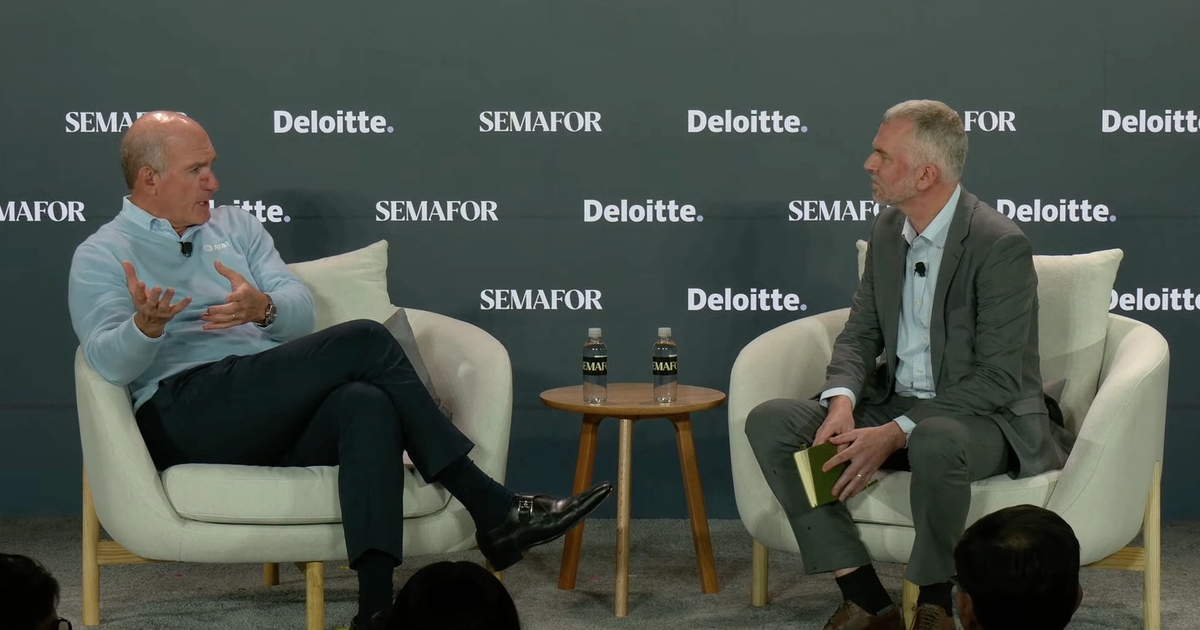
Jacob Helberg, the US State Department’s undersecretary for economic affairs, stated that the government needs to better communicate the benefits of AI to the public following midterm elections where AI faced significant opposition. Speaking at Semafor’s Silicon Valley & the World event, Helberg noted that AI has contributed positively to the US economy through increased investment and productivity without causing mass job losses. He also emphasized that US tech policy should focus on collaboration and innovation rather than obsessing over competitors like China.
Written by AI on 2026-11-16, from this article's own text only (the story summary below draws on all the coverage).

AI analysis

Story summary

Jacob Helberg, the US State Department’s undersecretary for economic affairs, stated that the government needs to better communicate the benefits of AI to the public following the midterm elections, which showed widespread opposition to the technology. Helberg made this assertion during a Semafor event in Silicon Valley, emphasizing the necessity for government officials at all levels to articulate the economic advantages of AI, such as investment and productivity gains. He highlighted that AI has not led to significant job losses and has not caused inflationary pressures, according to data from the Trump administration. Helberg also emphasized that US global tech policy should not overly focus on China, advocating instead for securing global supply chains with allies through initiatives like Pax Silica.

Written for “US Official on AI Policy” on 2026-11-21, grounded in this article and the 0 other(s) covering the same event.

Compared with similar articles

This article reads leans right and hedges 0% of its claims. Each row says how that neighbour differs.
AI boom or bubble? Different event
Al Jazeera
Leans left further left than this Hedges 0 of 11 claims Outlet record 60/100
“The articles discuss related topics but describe different events and contexts.”
The Guardian
Hedges 7 of 26 claims Outlet record 64/100
“The articles describe different events, one focusing on a government warning in Australia about AI's impact on employment, and the other on a US official discussing the need to better communicate AI's benefits post-election.”
The Independent
Hedges 4 of 11 claims Outlet record 59/100
“The articles discuss different aspects of AI policy and public perception, with distinct dates and no overlap in specific events.”
The Sydney Morning Herald
Leans left further left than this Hedges 1 of 21 claims Outlet record 61/100
“The articles discuss different perspectives on AI policy but do not describe the same specific event or incident.”
Semafor
Hedges 3 of 9 claims Outlet record 64/100
“The articles discuss different perspectives on AI from US and Indian officials but do not describe the same specific event or incident.”
New York Post
Hedges 2 of 7 claims Outlet record 66/100
“The articles describe different events: one is about Fed Chair Kevin Warsh discussing AI's impact on the economy, while the other is about a State Department official speaking about the need to communicate AI's benefits to the public post-election.”
Semafor
Hedges 1 of 11 claims Outlet record 64/100
“The articles discuss similar themes of AI's impact and public perception but describe different speakers and viewpoints at the same event.”
The Independent
Leans strongly left further left than this Hedges 3 of 32 claims Outlet record 59/100
“The articles discuss different aspects of AI and technology issues; Article A focuses on the need for better communication about AI's benefits, while Article B criticizes a specific official for attributing tech outages to AI.”
Semafor
Leans right Hedges 2 of 13 claims Outlet record 64/100
Semafor
Leans strongly right further right than this Hedges 1 of 14 claims Outlet record 64/100
“While both articles discuss AI and were presented at the same event, they describe different speakers and their distinct viewpoints.”

Story

US Official on AI Policy
Politics · 1 article(s) covering the same event.
How this article was measured signals, leaning charts, publisher record, byline, topics and claims

Signals How these are calculated →

Claims extracted
9
sentences that state something as happening or true
Uncertain
0%
0 of 9 hedged ("reportedly", "may", "according to")
Leaning
Leans right
of the writing, not the subject · beta estimate
Publisher signals
64/100
Semafor's corrections and hedging, across everything collected from it. Not a measure of accuracy.
Outlets on this story
1
Politics
Same framing elsewhere
1
articles that frame the event the way this one does
Analyzed 2026-11-16 · how these are computed

How this is being covered How these are calculated →

Article leaning vs. publisher reliability
Source leaning vs. consistency

Publisher

Semafor · 1931 article(s) · 7 correction(s) detected
Running correction rate · 7 correction(s)

Who wrote this

J.D. Capelouto
41 article(s) here · 0 carrying a prediction
Some global tech leaders at Semafor’s Silicon Valley & The World suggested that backlash to data centers or a potential financing bubble might provide the necessary brakes that the industry needs.
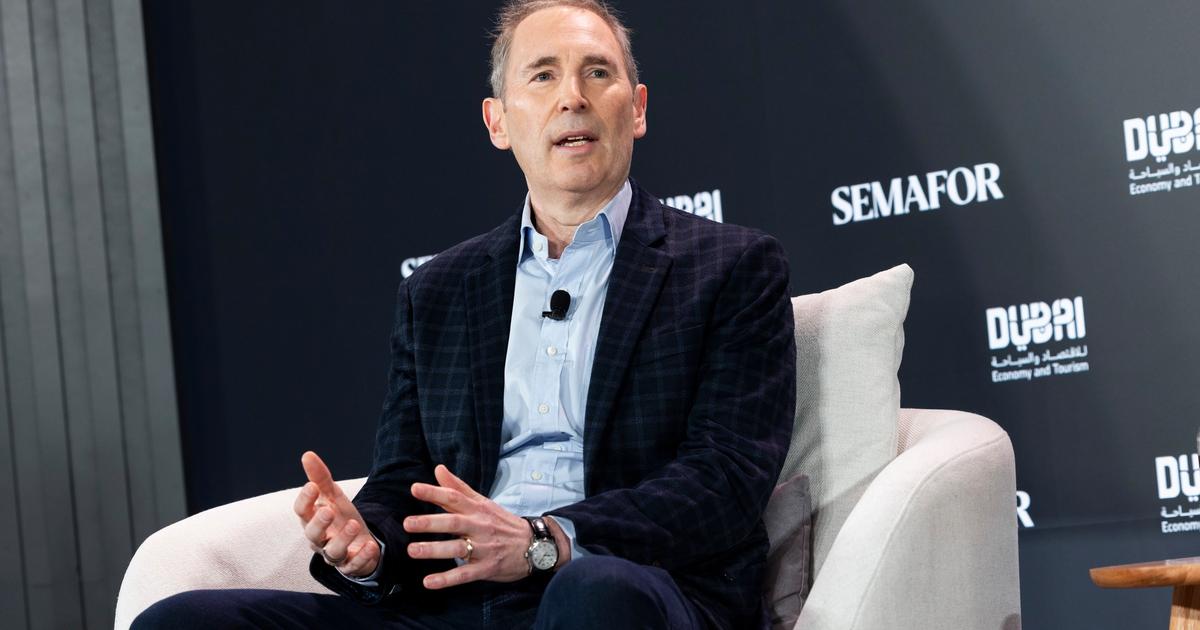
Amazon CEO Andy Jassy said Tuesday it would be a “historic mistake” for the US to pull back on its AI infrastructure buildout following the data center backlash during the midterm elections.
Asked whether “winter is coming” — a nod to fears that the AI boom could face a correction — Al Mubarak said it was, but that “winter doesn’t mean minus 30 degrees.
Speaking alongside Huffington on the panel, Willett Advisors CEO Steven Rattner said the idea of bringing Huang back as CEO is “ridiculous.”
Billionaire hedge fund manager Bill Ackman said Monday it was “unlikely” that he would get directly involved in an effort to reinstate former Nvidia CEO Jensen Huang.
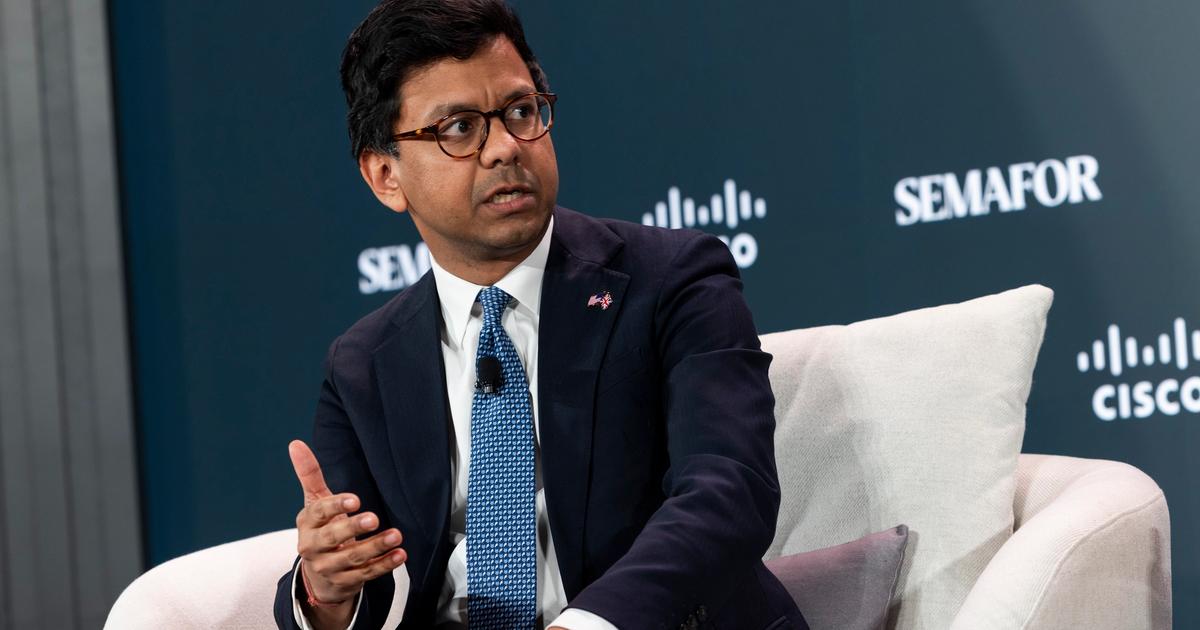
Indians see AI as less of a threat than people in the US because fewer workers hold the “cognitive and office-oriented jobs” that the technology could replace, one of the country’s top tech officials said.
Those ties went beyond business: Hou referenced a New York Times article in which Huang’s longtime hairstylist admitted he was too upset to sleep, drank a bottle of red wine, and prayed for the former chip CEO after his resignation.
They see the model as particularly useful in sales and executive hiring, where a search firm could prompt it to evaluate an interview transcript to gauge how a candidate will behave under pressure.
2026-11-12 · assertive framing · A new AI model wants to read between the lines
“If we leave a market altogether, there’s no question somebody else would step in,” he told Michael Milken in May 2025.
2026-11-11 · assertive framing · Tracking how Jensen Huang changed his stance on China
The votes were hyperlocal and often emotional in nature, but they could carry financial consequences, because some of the projects at stake were already in motion.
Also by J.D. Capelouto
Nothing else under this byline is closely related to this article, so these are simply their most recent.
All 41 articles by J.D. Capelouto →

Topics

China Pax Silica Semafor State Department the Trump administration’s

Subjects

Helberg PERSON · 4× China GPE · 3× Pax Silica ORG · 2× Semafor ORG · 2× America GPE · 1× Ben Smith PERSON · 1× Jacob Helberg PERSON · 1× State Department ORG · 1× the Trump administration’s ORG · 1×

Narrative

“The onus really is on everyone serving in government at all levels, local, state, and federal, to do a better job of communicating to the public the opportunity and the upside of this great technology,” Helberg told Semafor Editor-in-Chief Ben Smith.
framing: assertive · carried by 1 article(s) · first seen 2026-11-16
2026-11-16 · Semafor
US official says government needs to make a better case for AI · assertive framing

Claims (9 extracted, 0 hedged)

The US government has a responsibility to explain AI’s benefits to the public after the midterm elections showed widespread antagonism to the technology, a top State Department official said Sunday. asserted
official → have → technology
Jacob Helberg, the undersecretary for economic affairs, said at Semafor’s Silicon Valley & the World that the election, in which many voters were opposed to AI and data centers, should be seen as an “opportunity.” asserted
voters → say → opportunity
“The onus really is on everyone serving in government at all levels, local, state, and federal, to do a better job of communicating to the public the opportunity and the upside of this great technology,” Helberg told Semafor Editor-in-Chief Ben Smith. asserted
Helberg → serve → Smith
Helberg pointed to data showing that AI has helped prop up the US economy through investment and productivity gains. asserted
AI → point → gains
He said AI hasn’t caused mass job losses, and “we haven’t seen any evidence at all that super intelligence has had an inflationary effect,” using the Trump administration’s preferred alternative term for AI. asserted
intelligence → say → AI
Competitor obsession Helberg, who has spearheaded the Pax Silica effort with US allies to secure global supply chains for critical industries, also said US global tech policy shouldn’t “obsess” over China. asserted
policy → spearhead → China
“Great companies don’t try to succeed by obsessing over their competitors,” he said. asserted
he → try → competitors
“One of the temptations in policy roles is you spend so much time studying what competitors do that it almost becomes easy to over-obsess on them. asserted
it → spend → them
While Pax Silica is building a bloc of US-allied nations to reduce their dependence on China, Helberg said the effort is intended to be “an America-centric initiative, not a China-centric initiative.” asserted
effort → build → China
Give feedback · no sign-in needed

No sign-in needed for now. Your note is sent without a name, so it cannot be answered.

History Support