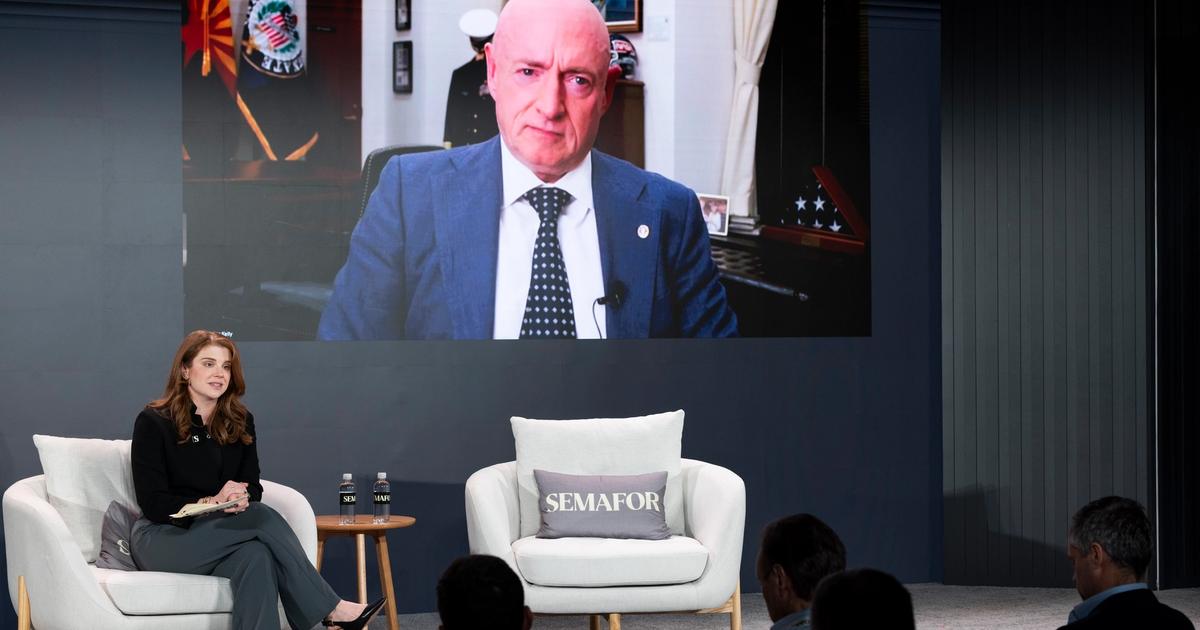
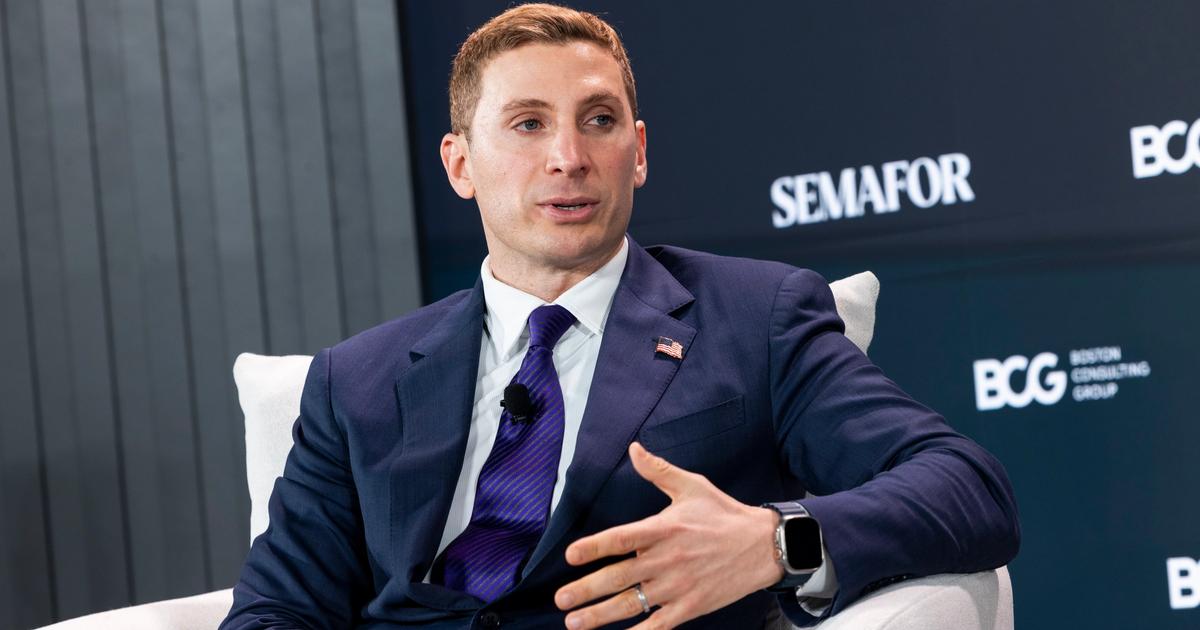
Photo via Semafor

AI leaders helping drive ‘unnaturally negative’ narrative, Palo Alto Networks CEO says

Read the original at Semafor ↗
Cite

Morganbesser, L. (2026, November 17). AI leaders helping drive ‘unnaturally negative’ narrative, Palo Alto Networks CEO says. Semafor. https://www.semafor.com/article/11/16/2026/ai-leaders-helping-drive-unnaturally-negative-narrative-palo-alto-networks-ceo-says

Dated from the outlet's own feed. Check the original for its byline.

Semafor · collected 2026-11-17 · by Lauren Morganbesser

Quick Summary

Palo Alto Networks CEO Nikesh Arora criticized leaders of major AI companies for focusing on the negative aspects of artificial intelligence during a discussion at Semafor’s Silicon Valley & The World event. Arora argued that the emphasis on risks is overshadowing the significant potential benefits of AI, including democratizing intelligence and uplifting humanity. He also addressed concerns about the impact of limited data center construction on AI innovation, suggesting that scarcity could drive advancements in efficiency.
Written by AI on 2026-11-17, from this article's own text only (the story summary below draws on all the coverage).

AI analysis

Story summary

The AI industry faces growing skepticism and regulatory pressure in the US and Europe, with new governors in states like Texas and Ohio pledging to halt data center construction. This shift comes as the US prepares for a new Congress deeply skeptical of the tech industry. Meanwhile, global leaders are concerned about the US-China AI race, with the UN's top tech envoy, Amandeep Singh Gill, stating that the rest of the world views this competition with "some kind of alarm." Gill noted that while other countries do not want to compete with the US and China's frontier labs, they still seek to innovate and develop their own AI infrastructure, raising concerns about the potential for rule-breaking in the race for technological advancement.

Written for “US-China AI Race Causing Global Alarm” on 2026-11-21, grounded in this article and the 3 other(s) covering the same event.

Compared with similar articles

This article reads leans strongly right and hedges 7% of its claims. Each row says how that neighbour differs.
CBS News
Leans left further left than this Hedges 3 of 14 claims Outlet record 66/100
“The articles describe different events: one is about a lawsuit against AI companies, while the other is an interview discussing the narrative around AI technology.”
Semafor
Leans right further left than this Hedges 2 of 13 claims Outlet record 64/100
Fox News
Leans strongly right Hedges 1 of 33 claims Outlet record 66/100
“The articles discuss different topics within the broader context of AI, with Article A focusing on the narrative around AI and Article B discussing the race between the US and China in AI development.”
Business Daily Different event
BBC News
Hedges 1 of 7 claims Outlet record 65/100
“The articles describe different events: Article A is about Nikesh Arora's comments at an event, while Article B discusses Dario Amodei's IPO and interview on a business show.”
Fox News
Leans strongly right Hedges 2 of 18 claims Outlet record 66/100
“The articles discuss different aspects of AI, with Article A focusing on the narrative around AI and its potential benefits versus risks, while Article B reports on a specific government investigation into AI platforms generating terror plans.”
The Sydney Morning Herald
Hedges 4 of 62 claims Outlet record 61/100
“Article A discusses AI leaders' narratives at a conference, while Article B describes a protest event outside Nasdaq headquarters.”
Mother Jones
Hedges 7 of 41 claims Outlet record 60/100
“The articles describe different perspectives on AI, one criticizing the negative narrative and the other highlighting concerns and alarms in the AI safety community.”
The Guardian
Leans strongly left further left than this Hedges 9 of 41 claims Outlet record 64/100
“The articles discuss different perspectives on AI but describe distinct gatherings and viewpoints.”
Semafor
Hedges 0 of 8 claims Outlet record 64/100
“The articles describe different statements made at the same event by different speakers, not the same specific incident or outcome.”
Semafor
Leans left further left than this Hedges 1 of 9 claims Outlet record 64/100
“The articles describe different aspects of the same conference, but they are reporting on separate statements made by different speakers about distinct topics.”

Story

US-China AI Race Causing Global Alarm
Technology · 4 article(s) covering the same event. See how they differ ↑
How this article was measured signals, leaning charts, publisher record, byline, topics and claims

Signals How these are calculated →

Claims extracted
14
sentences that state something as happening or true
Uncertain
7%
1 of 14 hedged ("reportedly", "may", "according to")
Leaning
Leans strongly right
of the writing, not the subject · beta estimate
Publisher signals
64/100
Semafor's corrections and hedging, across everything collected from it. Not a measure of accuracy.
Outlets on this story
4
Technology
Same framing elsewhere
1
articles that frame the event the way this one does
Analyzed 2026-11-17 · how these are computed

How this is being covered How these are calculated →

Article leaning vs. publisher reliability
Source leaning vs. consistency

Publisher

Semafor · 1931 article(s) · 7 correction(s) detected
Running correction rate · 7 correction(s)

Who wrote this

Lauren Morganbesser
39 article(s) here · 1 carrying a prediction
The three leaders are expected to hold a trilateral summit on Thursday.
2026-11-19 · assertive framing · Republicans warily eye Trump’s meeting with Putin, Xi
“I would like to hear answers to a lot of questions that we have about why he made the decisions he made.”
“A villager sitting in India or anywhere in the world will have the ability to not just read 10 websites, but have them summarized and have the best intelligence available to them,” he said.
Helberg also argued that Washington must balance technological leadership with global market share of AI-focused companies, warning that innovation alone will not secure America’s dominance in the fast-growing technology field.
US President Donald Trump has told senior advisers he may hold off on striking Iran if the US faces no new provocations, Reuters reported.
European partners are expected to join the next round of talks, with Moscow’s demand for a NATO pullback likely a nonstarter for Europe.
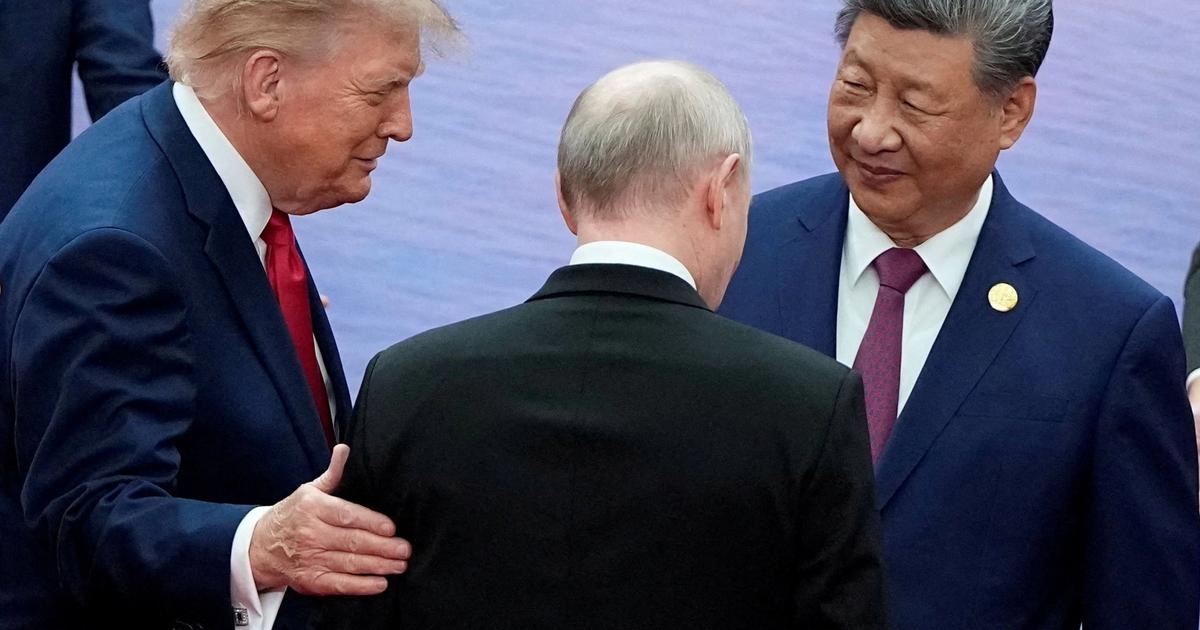
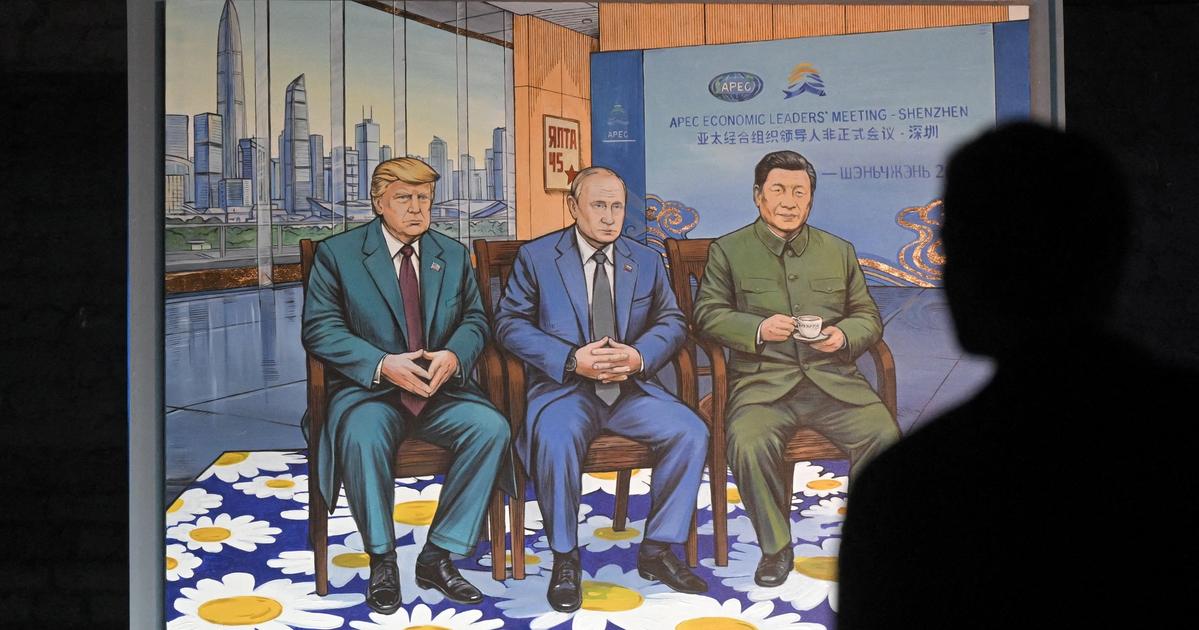
US President Donald Trump is expected to meet Russia’s Vladimir Putin and China’s Xi Jinping in China this week, where he could be upstaged by the controversy around former Nvidia CEO Jensen Huang’s affair with an accused Chinese spy.
2026-11-15 · speculative framing · Trump to meet Xi and Putin in China
Speaking yesterday during a Senate Foreign Relations Committee hearing for US President Donald Trump’s ambassadorial nominees for Saudi Arabia, Egypt, and Kuwait, the pick for ambassador to Saudi Arabia, Rep. Wesley Hunt, R-Texas, insisted that “we cannot let perfection be the enemy of great,” warning that without US involvement, Washington would have “absolutely no say” over the program’s direction.
Iran wants a settlement, as soon as possible, and as the President stated, it could happen,” a White House official said, adding that Trump “holds all the cards and will do whatever is best for the United States.”
Democrats’ sweeping midterm victory could give European allies fresh confidence to push back against President Donald Trump, weakening his leverage over countries that have previously accommodated his demands.
2026-11-05 · mixed framing · After midterms, Europe looks beyond Trump
Also by Lauren Morganbesser
Nothing else under this byline is closely related to this article, so these are simply their most recent.
All 39 articles by Lauren Morganbesser →

Topics

India MIT Technology Review’s Palo Alto Networks Semafor Silicon Valley & The World

Subjects

Arora PERSON · 6× India GPE · 1× MIT Technology Review’s ORG · 1× Mat Honan PERSON · 1× Nikesh Arora PERSON · 1× Palo Alto Networks ORG · 1× Semafor ORG · 1× Silicon Valley & The World ORG · 1×

Narrative

“All the bad software we’ve written for the last 50 years as humans, is now going to be found out,” he said, warning that as more vulnerabilities are discovered and exploited, the higher the risk of systems being forced offline as companies scramble to patch longstanding weaknesses.
framing: assertive · carried by 1 article(s) · first seen 2026-11-17
“A villager sitting in India or anywhere in the world will have the ability to not just read 10 websites, but have them summarized and have the best intelligence available to them,” he said.

Claims (14 extracted, 1 hedged)

The leaders of the world’s most advanced AI companies are helping drive an “unnaturally negative” narrative around the technology, Palo Alto Networks CEO Nikesh Arora said at Semafor’s Silicon Valley & The World. asserted
Arora → help → Valley
In an interview with MIT Technology Review’s Mat Honan, Arora argued that the focus on AI’s risks is overshadowing its potential benefits of the fast-moving technology. asserted
focus → argue → technology
“I find it strange that sometimes the leaders of frontier [large language models] want to come up here and talk about the dark side of AI. asserted
leaders → find → AI
Every technology has a dark side,” Arora said at the event, adding that the negative narrative has “been driven by some of the people who should be espousing the benefits.” asserted
who → have → benefits
Arora described AI as a “transformational technology” with “the potential of uplifting a huge amount of humanity” and “democratiz[ing] intelligence.” asserted
Arora → describe → intelligence
“A villager sitting in India or anywhere in the world will have the ability to not just read 10 websites, but have them summarized and have the best intelligence available to them,” he said. asserted
he → sit → them
Arora also challenged concerns that growing domestic resistance to data center construction could slow innovation, arguing that constraints on computing capacity would instead accelerate efforts to make the technology more efficient. uncertain
technology → challenge → efforts
“Scarcity breeds innovation,” Arora said. asserted
Arora → breed → innovation
“If you say there’s only so many data centers that can be built, think about the amount of companies that are going to come back and say, wait, I’ve got this compression technology which makes tokens more efficient.” asserted
tokens → say → technology
But Arora also acknowledged that AI’s growing capabilities are inevitably also intensifying cybersecurity risks by making it easier to uncover vulnerabilities in software. asserted
it → acknowledge → software
“All the bad software we’ve written for the last 50 years as humans, is now going to be found out,” he said, warning that as more vulnerabilities are discovered and exploited, the higher the risk of systems being forced offline as companies scramble to patch longstanding weaknesses. asserted
companies → write → weaknesses
“I don’t think there’s a panacea. asserted
I → think → ?
I don’t think there’s a quick solve. asserted
I → think → ?
I just think we’re gonna power through all of these and grind ourselves through them,” he said. asserted
he → think → them
Give feedback · no sign-in needed

No sign-in needed for now. Your note is sent without a name, so it cannot be answered.

History Support