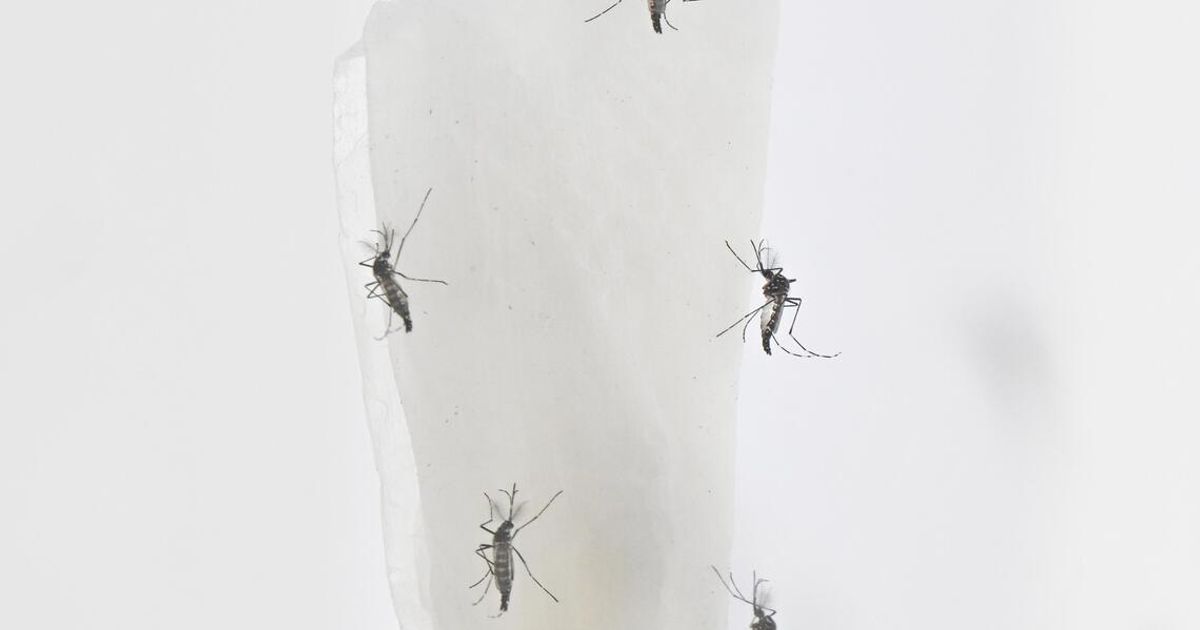
Photo via The Straits Times

Drug-resistant infections putting modern medicine at risk, WHO warns

Read the original at The Straits Times ↗
Cite

The Straits Times. (2026, November 16). Drug-resistant infections putting modern medicine at risk, WHO warns. The Straits Times. https://www.straitstimes.com/world/drug-resistant-infections-putting-modern-medicine-at-risk-who-warns

Dated from the outlet's own feed. Check the original for its byline.

The Straits Times · collected 2026-11-16 · by The Straits Times

Quick Summary

No summary of this article yet; the story summary below covers the event.

AI analysis

Story summary

The World Health Organization (WHO) warned on November 16, 2026, that antimicrobial resistance (AMR) is threatening the future of modern medicine. Despite progress in combating drug-resistant bacteria, WHO officials stated that efforts to prevent, diagnose, and appropriately use antibiotics are still insufficient to meet global targets. Jean-Pierre Nyemazi, interim head of AMR at the WHO, noted that the widespread use of antibiotics in human health, animal husbandry, and food production has accelerated the problem, making AMR one of the leading causes of infectious-disease deaths worldwide. In 2021 alone, AMR was directly responsible for more than 1 million deaths and linked to some additional deaths.

Written for “Drug-resistant Infections Warning” on 2026-11-21, grounded in this article and the 0 other(s) covering the same event.

Compared with similar articles

This article reads unscored and hedges 5% of its claims. Each row says how that neighbour differs.
Al Jazeera
Hedges 2 of 15 claims Outlet record 60/100
“While both articles discuss WHO warnings about antimicrobial resistance on the same day, they differ in their focus, with one emphasizing the threat to modern medicine and the other specifically mentioning the prediction of 39 million deaths over 25 years.”
Daily Mail
Leans strongly left Hedges 2 of 31 claims Outlet record 69/100
“While both articles discuss antibiotic resistance and its dangers, they describe different specific warnings and contexts: WHO's global warning and Australia-specific concerns including a report and trials.”
ABC News (AU)
Hedges 1 of 25 claims Outlet record 67/100
“While both articles discuss warnings about antibiotic resistance, they cover different aspects and focus on different geographical regions, suggesting separate coverage rather than the same specific event.”

Story

Drug-resistant Infections Warning
Health · 1 article(s) covering the same event.
How this article was measured signals, leaning charts, publisher record, byline, topics and claims

Signals How these are calculated →

Claims extracted
20
sentences that state something as happening or true
Uncertain
5%
1 of 20 hedged ("reportedly", "may", "according to")
Leaning
not political
takes no side on a contested political question
Publisher signals
64/100
The Straits Times's corrections and hedging, across everything collected from it. Not a measure of accuracy.
Outlets on this story
1
Health
Same framing elsewhere
1
articles that frame the event the way this one does
Analyzed 2026-11-16 · how these are computed

How this is being covered How these are calculated →

Article leaning vs. publisher reliability
Source leaning vs. consistency

Publisher

The Straits Times · 5674 article(s) · 7 correction(s) detected
Running correction rate · 7 correction(s)

Who wrote this

The Straits Times
3966 article(s) here · 1 carrying a prediction
The environmental consequences of this war will last for generations,” Lewis Pugh wrote in a post on his website.
He predicts that pairing more use of these Wolbachia mosquitoes with existing steps to fight mosquito-borne disease could “knock dengue down to much lower levels” in many places.
The Estonian police said on Nov 20 the closure would “make it harder for Russian intelligence services to recruit and influence people, and help prevent sanctions evasion”.
2026-11-21 · assertive framing · Queues in Russian town as Estonia border closure looms
COP31 climate summit risks failure as talks go deep into overtime ANTALYA, Turkey, Nov 21 - The COP31 climate summit will either produce a good deal or no deal at all, the European Union's top climate official said on Saturday as talks stretched deep into overtime.
He was considered one of the leaders of the Beltran Leyva cartel, which had reportedly allied with the Los Mayors faction of the powerful Sinaloa Cartel.
Trump told European leaders they were spending a lot on Ukraine, Zelenskiy says KYIV, Nov 21 - US President Donald Trump told European leaders this week they were spending a lot on the war in Ukraine and could use that money at home if a peace deal were reached with Russia, Ukrainian President Volodymyr Zelenskiy said on Saturday.
Denmark would present its proposals at a meeting of EU ambassadors in Brussels on Monday.
NATO will defend every inch of Polish territory, Rutte says WARSAW, Nov 21 - NATO will defend every inch of Polish territory, NATO Secretary General Mark Rutte said in Warsaw, a day after Poland said Russia violated its airspace with three objects that were probably two missiles and a drone.
The cuts proposed by Antonio Costa, who chairs summits of EU leaders, would reduce the overall seven-year budget by €40 billion to €1.582 trillion compared to a proposal presented by the Irish EU presidency in October, and by €180.6 billion compared to the original Commission proposal.
Catherine, Britain’s Princess of Wales, will reflect on her experience with cancer and recovery in a documentary to be broadcast internationally in November, Kensington Palace said on Nov 21.
Also by The Straits Times
Nothing else under this byline is closely related to this article, so these are simply their most recent.
All 3966 articles by The Straits Times →

Topics

AMR GENEVA WHO World Health Organization

Subjects

WHO ORG · 10× AFP ORG · 1× AMR ORG · 1× GENEVA GPE · 1× Jean-Pierre Nyemazi PERSON · 1× Nyemazi PERSON · 1× Pravasha Prakash PERSON · 1× Sylvia Bertagnolo PERSON · 1× World Health Organization ORG · 1×

Narrative

The widespread use of antibiotics in human health, animal husbandry and food production has accelerated the problem, making AMR one of the leading causes of infectious-disease deaths worldwide. “Antimicrobial resistance is widespread and threatening the future of modern medicine,” said Jean-Pierre Nyemazi, interim head of antimicrobial resistance at the WHO.
framing: assertive · carried by 1 article(s) · first seen 2026-11-16
“Without testing, clinicians must treat without knowing the cause of infection or which antibiotic will work,” said Sylvia Bertagnolo, head of surveillance for AMR at the WHO.
2026-11-16 · The Straits Times
Drug-resistant infections putting modern medicine at risk, WHO warns · assertive framing

Claims (20 extracted, 1 hedged)

Drug-resistant infections putting modern medicine at risk, WHO warns AI generated asserted
WHO → put → risk
The spread of antimicrobial resistance (AMR) is threatening modern medicine despite progress in combating drug-resistant bacteria, senior World Health Organization (WHO) officials warned on Nov 16. asserted
officials → threaten → Nov
WHO officials said countries have expanded efforts to tackle AMR, but warned that progress in prevention, diagnosis and the appropriate use of antibiotics remains too slow to meet global targets. asserted
progress → say → targets
Bacteria have long evolved resistance to medicines designed to kill them. asserted
Bacteria → evolve → them
The widespread use of antibiotics in human health, animal husbandry and food production has accelerated the problem, making AMR one of the leading causes of infectious-disease deaths worldwide. “Antimicrobial resistance is widespread and threatening the future of modern medicine,” said Jean-Pierre Nyemazi, interim head of antimicrobial resistance at the WHO. asserted
Nyemazi → accelerate → WHO
“Unlike Covid-19, which was very visible, drug-resistant infections have been taking people’s lives for years without us noticing it and raising the alarm as we should,” said Nyemazi. asserted
Nyemazi → take → alarm
In 2021 alone, AMR was directly responsible for more than one million deaths and linked to some 4.7 million others, said the agency. asserted
agency → link → others
A WHO investigation in 183 countries into the progress of the fight against antimicrobial resistance in 2026 revealed that nearly nine countries in 10 had a national action plan against the phenomenon. asserted
countries → reveal → phenomenon
But only 42 countries – less than one in five – said they had a plan that was financed, implemented and monitored, said Pravasha Prakash, an AMR technical officer with the global health agency. asserted
Prakash → say → agency
“Countries are moving forward in every step, but progress still needs to be speeded up to reach the 2030 targets,” she added. asserted
she → move → targets
Poor access to diagnostics One of the main weaknesses remains access to diagnostics. asserted
One → remain → diagnostics
Only 36% of countries had a national reference laboratory capable of testing for resistance in all bacteria and fungi monitored by the WHO, well short of the 80% target set for 2030. asserted
% → have → 2030
“Without testing, clinicians must treat without knowing the cause of infection or which antibiotic will work,” said Sylvia Bertagnolo, head of surveillance for AMR at the WHO. asserted
Bertagnolo → test → WHO
The latest global surveillance data show that in 2023, one in every six laboratory-confirmed bacterial infections flagged to the WHO was resistant to antibiotics used to treat it. asserted
infections → show → it
As a result, the WHO has announced the release of two new tools designed to help countries strengthen their diagnostic capacities. asserted
countries → announce → capacities
The first defines the tests that should be available at every level of the healthcare system, from primary care centres to referral hospitals. asserted
that → define → hospitals
The second compiles 73 laboratory procedures, from sample collection to the identification of pathogens and antibiotic susceptibility testing. asserted
second → compile → pathogens
The WHO has estimated that AMR could cause some 39 million deaths between now and 2050. uncertain
AMR → estimate → 2050
There needed to be improved use of existing antibiotics, at a time when the development of new treatments is failing to keep pace with the rise of resistance, it said. asserted
it → need → resistance
Infection prevention, vaccination, improved access to water and sanitation, and the appropriate use of antimicrobials are the main levers to combat the issue, it added. asserted
it → combat → issue

Give feedback · no sign-in needed

No sign-in needed for now. Your note is sent without a name, so it cannot be answered.

History Support