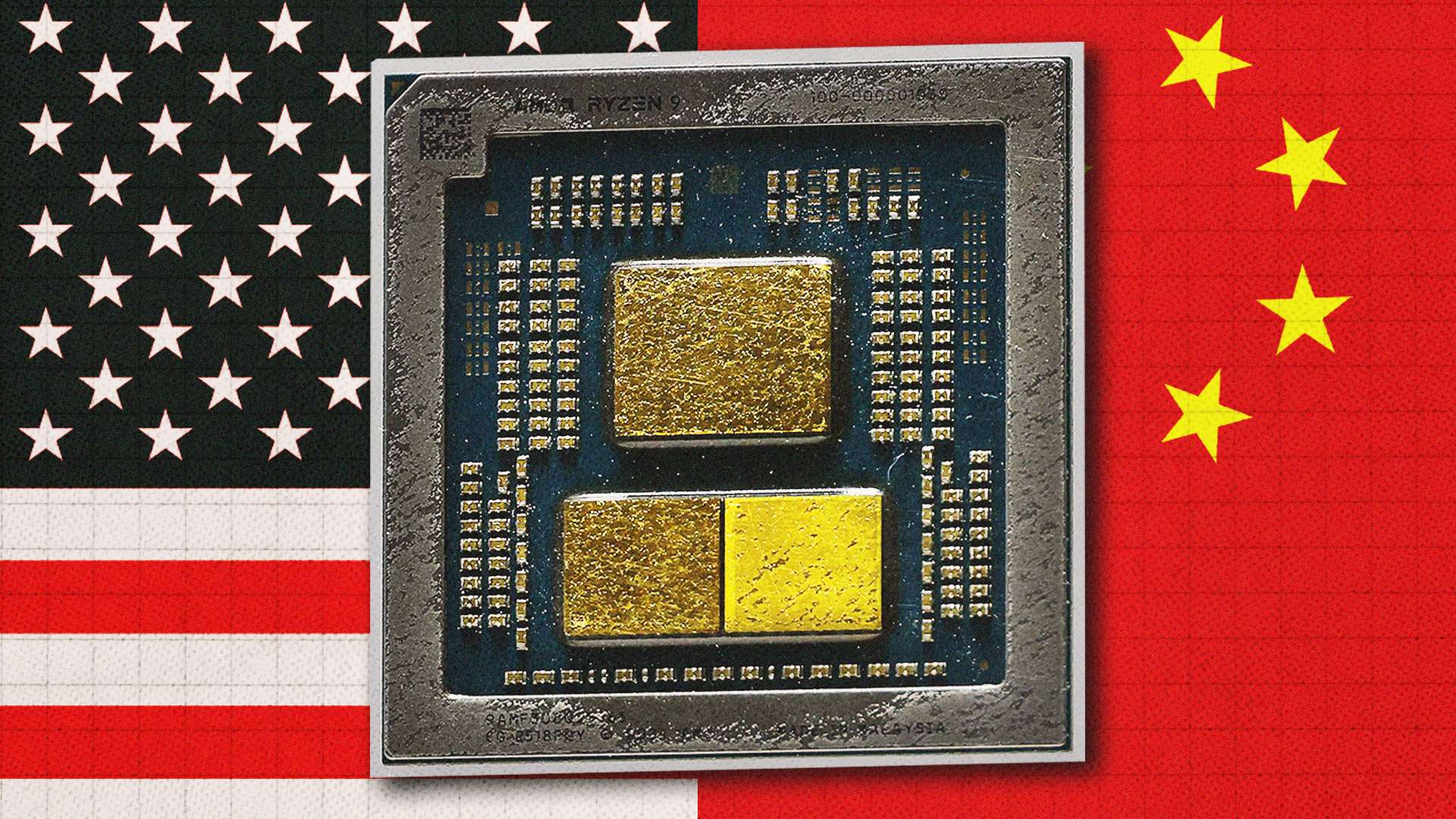
On Monday, the Commerce Department's Bureau of Industry and Security (BIS) released an interim final rule—written by and at the direction of the Treasury Department and the National Security Council—that establishes new nation-based restrictions for "exports, reexports, or transfers (in-country)" of advanced semiconductor chips to "overseas data centers that remotely supply significant volumes of compute."
asserted
that → release → compute
The decision comes days after chip-related tumult in the Trump administration.
asserted
decision → come → administration
Treasury Secretary Scott Bessent blamed the Commerce Department for the lack of export controls on advanced computer chips.
asserted
Bessent → blame → chips
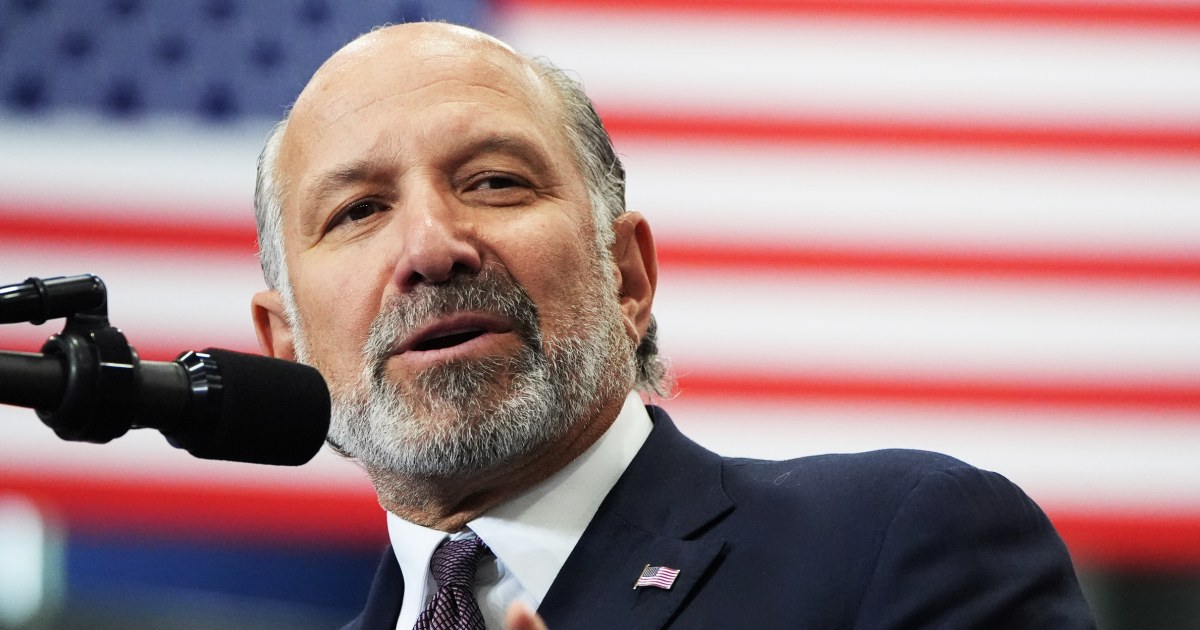
Despite some contrary reports, Commerce Secretary Howard Lutnick still appears to be in President Donald Trump's good graces, and Semafor reported that the Commerce boss would be part of Trump's China contingent, traveling with the president to Beijing on Wednesday.
asserted
boss → appear → Wednesday
Federal law already requires a license to "export, reexport, or transfer (in-country)" advanced semiconductor chips for "entities headquartered in, or whose ultimate parent company is headquartered in, Country Group D:5 or Macau."
asserted
company → require → D:5
Under the rule, anyone knowingly providing data centers located in a Group D:5 country—identified by the State Department as subject to U.S. arms embargoes—or a company headquartered in Macau with "direct or indirect access to a significant volume of computing power" must acquire a license.
asserted
anyone → provide → license
To track which country is subject to what export controls, the government organizes foreign nations into designated groups labeled A, B, D, and E. When
asserted
government → track → groups
export controls are in effect, federal agencies use these groupings to determine who qualifies for a license exception and—depending on the end use and location of the company's headquarters—whether an additional license is needed.
asserted
license → use → headquarters
They face more restrictions with fewer license exceptions.
asserted
They → face → exceptions
As with much of Trump's second term, the BIS rule is a foreign policy decision ostensibly directed at China and its allies, intended to restrict Beijing's ability to source advanced technology to fuel its AI industry.
asserted
rule → direct → industry
The BIS believes its rule will "undermine the ability of companies headquartered in countries of concern" to train their AI models using chips made by American companies.
asserted
rule → believe → companies
Still, export controls on advanced semiconductor chips have largely failed to stop transshipments (using a third country as a middleman for exports) to banned markets.
asserted
controls → fail → markets
From nuclear to aerospace, defense, and critical minerals, U.S. companies and the federal government often do business with American adversaries despite the national security implications.
asserted
companies → do → implications
The new rule significantly expands the federal licensing regime for advanced semiconductor chips.
asserted
rule → expand → chips
It requires overseas data centers to obtain a license, within 90 days of the rule's publication, if they "directly or indirectly" provide "significant volumes of compute to companies headquartered, or with an ultimate parent headquartered, in Macau or Country Group D:5."
asserted
they → require → Macau
It requires "data centers, foreign foundries, and chip exporters" to "perform robust due diligence on their customers, including any direct or indirect ownership or control" by persons based in Country Group D:5 or Macau.
asserted
It → require → D:5
However, commercial recommender systems, platforms used by social media and e-commerce companies to analyze user data, will be exempt from licensing requirements because the BIS believes these "do not pose the same national security threat."
asserted
these → use → threat
That argument fails for several reasons.
asserted
argument → fail → reasons
The exclusion appears to sweep in Chinese companies like Alibaba, the e-commerce giant blacklisted by the Pentagon.
asserted
exclusion → appear → Pentagon
It would also include ByteDance, the parent company of TikTok, an app previously under a federal ban.
asserted
It → include → ban
Because nations can receive more than one group designation at a time—for example, Israel and Taiwan both appear in Groups A and D—the rule the BIS released includes a carve-out for dually listed countries.
asserted
BIS → receive → countries
The rule also lifts the licensing requirement for exports, reexports, and in-country transfers to anyone "headquartered in, or whose ultimate parent company is headquartered in, the United States," so long as the exporting party completes the reporting requirements.
asserted
party → lift → requirements
In its bid to crack down on the illicit advanced chip market, the Trump administration has inevitably made it harder to own or operate a company tangentially related to the semiconductor industry.
asserted
it → crack → industry
Under the rule, foundries—companies such as Taiwan Semiconductor Manufacturing Co., which manufactures advanced semiconductors—and those that package and test these chips would have to obtain a license before operating as de facto quality assurance firms for federal regulators.
asserted
that → manufacture → regulators
When reviewing exports, reexports, or in-country transfers "to or within Country Group D:5 and Macau," the rule directs the BIS to start with a "presumption of denial," while countries in Groups A:5 or A:6 get a "presumption of approval."
asserted
countries → review → approval
Far from being a "logical extension of existing controls," as the BSI said, the new export control regime places the United Arab Emirates—a nation that, by the government's own admission, poses the same transshipment risk as Singapore—on equal footing for presumptive approval with South Korea, which recently saw its semiconductor exports increase "259.4 percent on-year in October to $56.47 billion," according to the Yonhap News Agency.
uncertain
exports → say → Agency
Indonesia, Malaysia, Singapore, Brazil, and Thailand are singled out as countries that pose an "unacceptable risk of diversion" based on their relationship with China.
asserted
that → single → China
In August, the White House claimed four of these countries "combine significant illegal transshipment volumes with deeper integration into China linked supply chains, input sourcing, manufacturing platforms, logistics systems, or regional rerouting channels."
asserted
four → claim → chains
A fifth, Singapore, was identified as a country with "lower absolute transshipment volumes but specific weak-link advantages," making it an "attractive opportunistic" target for "China-linked rerouting."
asserted
it → identify → rerouting
Under the rule, the Commerce Secretary—in consultation with the secretary of state or the assistant to the president for national security affairs—has the authority to designate additional countries as unacceptable risks.
asserted
Secretary → have → risks
Of course, making any of these restrictions feasible would require a time and monetary commitment from private companies that's impractical for all but the industry's most successful firms.
asserted
that → make → firms
If history is any guide, allowing politicians to frame the AI race as a national security issue will lead to less freedom for Americans and domestic corporations alike.
asserted
politicians → allow → Americans
 The Aporia