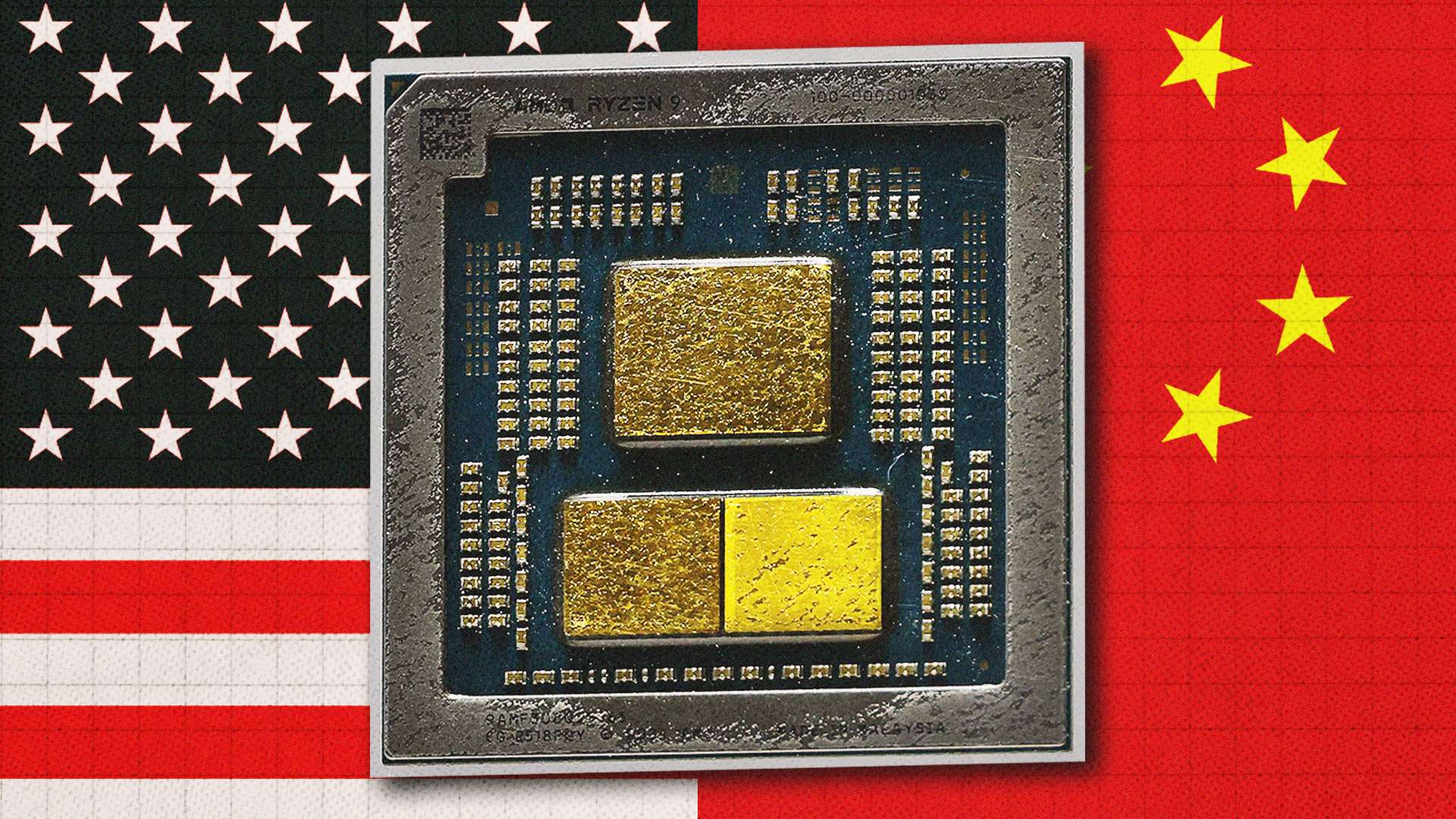
Photo via Global News

Trump administration moves to block Chinese remote access to U.S. AI tech

Read the original at Global News ↗
Cite

Digital, G. (2026, November 17). Trump administration moves to block Chinese remote access to U.S. AI tech. Global News. https://globalnews.ca/news/12154235/trump-us-ai-chips-china-restrictions/

Dated from the outlet's own feed. Check the original for its byline.

Global News · collected 2026-11-17 · by Globalnews Digital

Quick Summary

The Trump administration has issued new rules restricting remote access to advanced U.S. computing chips and servers, aiming to prevent China from using American technology to train its AI models. The regulations require overseas data centers serving companies in China, Russia, Iran, and Cuba to disclose end users and impose additional licensing requirements for chip sales to countries like Indonesia, Malaysia, Singapore, Thailand, and Brazil. China’s foreign ministry criticized the move as economic coercion and interference, threatening to take protective measures in response.
Written by AI on 2026-11-17, from this article's own text only (the story summary below draws on all the coverage).
See how they differ ↓

AI analysis

Story summary

The U.S. Department of Commerce issued an interim rule on November 16, 2026, limiting other countries' access to advanced AI chips made in America. This move aims to address concerns that Chinese firms were circumventing existing export controls by accessing these chips through data centers in third countries like Indonesia, Malaysia, Singapore, and Thailand. The rule requires a license for exporting advanced semiconductors to countries deemed high-risk for diversion, such as those in Southeast Asia. The announcement came amid scrutiny following the resignation of Nvidia CEO Jensen Huang due to a scandal involving a lover and a customer accused of illegally diverting AI chips to China. Commerce Secretary Howard Lutnick faced criticism for being too permissive of Nvidia's sales to China, while Treasury Secretary Scott Bessent called for stricter measures. Congress is now pushing for stricter enforcement of these rules to ensure compliance and prevent future exploitation of legal loopholes.

Written for “US-China Chip Export Tensions” on 2026-11-21, grounded in this article and the 27 other(s) covering the same event.

How they differ

18 outlets covered “US-China Chip Export Tensions”.

What each outlet says

One AI summary per outlet of its latest article on this story, written from that article alone and checked against it. Open the article for the outlet's own words.

Global NewsThis outlet17 Nov

The Trump administration has issued new rules restricting remote access to advanced U.S. computing chips and servers, aiming to prevent China from using American technology to train its AI models. The regulations require overseas data centers serving companies in China, Russia, Iran, and Cuba to disclose end users and impose additional licensing requirements for chip sales to countries like Indonesia, Malaysia…

Trump administration moves to block Chinese remote access to U.S. AI tech (this article)
Semafor17 Nov

China has warned of potential retaliation against the United States if the US proceeds with plans to restrict remote access to advanced semiconductor technology. This threat comes as the two nations prepare for a summit and amid revelations about Nvidia’s former CEO, Jensen Huang, which have spurred more restrictive US policies toward China’s tech sector. These new restrictions could significantly hinder China’s…

China threatens retaliation against US chip curbs →3 articles from Semafor on this story
The Straits Times18 Nov

China’s Ministry of Commerce criticized new US restrictions on Chinese access to advanced AI chips, warning of potential retaliation and emphasizing the need for dialogue to resolve tensions. The restrictions, announced on November 16, aim to prevent Chinese companies from accessing high-end semiconductors through remote means and via countries like Singapore. The measures come as President Xi Jinping prepares to…

China warns US of retaliation over new AI chip restrictions →3 articles from The Straits Times on this story
The Hindu19 Nov

The U.S. Commerce Department issued an interim final rule on November 16, 2026, restricting data center operators outside the U.S. from providing cloud services using advanced American AI chips to businesses in five countries, including China, Iran, and Russia. The rule also mandates that American companies obtain explicit government approval before shipping high-end AI chips to five other countries, such as…

How U.S. controls flow of advanced tech, chip, and compute to China | Explained →3 articles from The Hindu on this story
Just the News16 Nov

The Department of Commerce's Bureau of Industry and Security announced a new interim final rule on Monday, tightening restrictions on foreign, particularly Chinese, remote access to advanced AI processors. This rule aims to address concerns raised by an alleged espionage incident involving NVIDIA and follows the Trump administration's emphasis on protecting American technology from unauthorized access.

Trump admin clamps down on foreign remote access to AI processors →2 articles from Just the News on this story
Washington Examiner20 Nov

The Department of Commerce issued new regulations on Monday aimed at preventing American technology companies from exporting advanced chips to foreign countries that cooperate with China, addressing a practice that had been exploiting legal loopholes. These regulations are seen as necessary to uphold America’s technological dominance, which is crucial for national security, as advanced chips are integral to…

Congress must hold Lutnick to the new China chip rule →2 articles from Washington Examiner on this story
Show 12 more outlets
Reason17 Nov

The Trump administration is grappling with how to restrict Chinese access to American AI chips while maintaining a positive relationship with China. The Commerce Department announced new rules restricting exports of advanced chips to high-risk countries in Southeast Asia, requiring due diligence from data centers that supply significant computing power to Chinese companies. President Trump acknowledged the divided…

Inside the Administration's Chip Divide →2 articles from Reason on this story
Al Jazeera20 Nov

US lawmakers are advocating for stricter regulations on the export of advanced AI chips to prevent them from ending up in China. The Department of Commerce has recently announced new rules that require data centre customers in certain countries to obtain special licenses to purchase US AI chips, closing a loophole that allowed Chinese companies to access these chips remotely. Representative Pramila Jayapal…

US lawmakers push for tougher AI chip rules amid China export crackdown →2 articles from Al Jazeera on this story
CBS News16 Nov

The U.S. Department of Commerce has issued an interim rule to restrict remote access to advanced AI chips from countries like China by limiting exports to certain Southeast Asian nations. This move follows Nvidia CEO Jensen Huang’s resignation amid concerns about potential espionage, and aims to prevent circumvention of existing export regulations through data centers in third countries. The new rule requires…

Commerce Department moves to curb remote access to AI chips →
New York Post16 Nov

The Commerce Department announced a new rule on Monday to address a loophole that has allowed Chinese firms to bypass export controls on American AI chips by leasing them through data centers in third countries like Indonesia and Malaysia. The rule requires licenses for exporting advanced semiconductors to these countries, following criticism from Treasury Secretary Scott Bessent and concerns raised by Senator Maria…

Commerce Department moves to crack down on Chinese AI chip loophole amid Nvidia scandal →
CBC16 Nov

The Trump administration has tightened restrictions on exporting advanced AI chips to China, targeting countries like Malaysia and Thailand where Chinese companies use data centers to access these chips. This move comes ahead of Trump’s meeting with Chinese President Xi Jinping in Shenzhen during the APEC summit. The new rule requires companies in Singapore, Thailand, Malaysia, Indonesia, and Brazil to obtain U.S…

U.S. further restricts China's access to AI chips in wake of Nvidia scandal →
Time16 Nov

The Trump administration announced new restrictions aimed at preventing Chinese tech firms from bypassing U.S. export controls on advanced AI chips through third countries. The new rule, set to take effect in 90 days, requires buyers from Indonesia, Malaysia, Singapore, Thailand, and Brazil to secure licenses for certain advanced semiconductors. This move comes days before President Trump’s meeting with Chinese…

U.S. to Clamp Down On AI Chip Loophole Ahead Of Trump Meeting With Xi →
Toronto Star16 Nov

The Trump administration has announced new regulations to restrict remote access to advanced U.S. computing chips and servers, aiming to prevent China from using American technology to enhance its artificial intelligence capabilities. This move comes shortly after Nvidia co-founder Jensen Huang stepped down as CEO, following investigations into his ties with a former Megaspeed International executive, who is accused…

Trump administration moves to block China from indirect access to American AI technology →
NPR16 Nov

The U.S. government has implemented new regulations to prevent remote access to advanced AI technology from overseas data centers, closing a loophole that could allow foreign governments to access U.S. AI technology indirectly. This move follows the recent scandal involving Nvidia CEO Jensen Huang and his alleged romantic involvement with a suspected Chinese intelligence operative. The Commerce Department's Bureau…

U.S. tightens controls on remote access to AI technology amid Nvidia fallout →
NBC News16 Nov

The U.S. Commerce Department has introduced a new rule that requires data center customers in Indonesia, Malaysia, Singapore, Thailand, and Brazil to obtain special licenses from the department to purchase advanced AI chips from American companies like Nvidia and AMD. This move aims to address concerns about Chinese companies potentially circumventing export restrictions by remotely accessing these chips in foreign…

U.S. closes loophole that let Chinese companies use top AI chips in foreign data centers →
BBC17 Nov

The U.S. has announced new interim rules that will increase scrutiny of data center operators in South East Asian countries like Singapore, Malaysia, Thailand, Indonesia, and Brazil, aiming to restrict China's access to advanced semiconductors and computing power used for training AI models. These measures require U.S. government licenses for the purchase of advanced chips from American chipmakers, impacting Chinese…

How new US chip restrictions on South East Asia will hit China →
Times of India17 Nov

China has criticized new US export restrictions on advanced semiconductor chips, alleging that Washington is misusing national security concerns to disrupt global tech trade. The criticism emerged as US President Donald Trump was set to meet Chinese President Xi Jinping in Shenzhen for the APEC summit. The US Commerce Department introduced rules requiring export licenses for chip shipments to several countries…

China-US tech tensions flare ahead of Trump-Xi talks over new chip export curbs →
The Independent19 Nov

Chinese tech firms are preparing for potential disruptions to their artificial intelligence initiatives due to tightened U.S. restrictions on chip exports to China. Alibaba, which recently reported a 53% year-over-year surge in AI cloud and compute services revenue to nearly 61 billion yuan ($9 billion), has warned that these new rules could impede its global data center expansion plans. The U.S. restrictions aim to…

Chinese tech firms fear AI hits from US curbs after Nvidia fallout →

Where they agree and split

Framing

How the first headlines put it

Stated as fact14
The headlines (14)

US moves to close 'remote access' chip loophole Semafor · stated as fact

US to curb China’s access to AI chips as Trump heads to Asia The Straits Times · stated as fact

Commerce Department moves to curb remote access to AI chips CBS News · stated as fact

Commerce Department moves to crack down on Chinese AI chip loophole amid Nvidia scandal New York Post · stated as fact

Commerce Department issues rule limiting other countries' access to America's advanced AI chips Just the News · stated as fact

U.S. further restricts China's access to AI chips in wake of Nvidia scandal CBC · stated as fact

U.S. to Clamp Down On AI Chip Loophole Ahead Of Trump Meeting With Xi Time · stated as fact

Trump administration moves to block China from indirect access to American AI technology Toronto Star · stated as fact

U.S. tightens controls on remote access to AI technology amid Nvidia fallout NPR · stated as fact

U.S. closes loophole that let Chinese companies use top AI chips in foreign data centers NBC News · stated as fact

Trump administration cracks down on China-Nvidia chips loophole Washington Examiner · stated as fact

Trump's New Chip Export Rule Targets China but Exempts TikTok's Parent Company Reason · stated as fact

US moves to block China’s remote access to AI chips amid Nvidia scandal Al Jazeera · stated as fact

Singapore seeks ‘trusted access’ to AI chips after new US curbs The Hindu · stated as fact

Words to watch (4)

US moves to block China’s remote access to AI chips amid Nvidia scandal Al Jazeera

Commerce Department moves to crack down on Chinese AI chip loophole amid Nvidia scandal New York Post

U.S. further restricts China's access to AI chips in wake of Nvidia scandal CBC

U.S. blocks China’s remote access to AI chips after Nvidia scandal; China slams move The Hindu

The full story: what happened, how it changed, and all 28 articles →

Compared with similar articles

This article reads leans right and hedges 14% of its claims. Each row says how that neighbour differs.
Toronto Star
Leans right Hedges 0 of 3 claims Outlet record 65/100
CBC News
Leans right Hedges 0 of 15 claims Outlet record 60/100
TIME
Leans right Hedges 4 of 24 claims Outlet record 60/100
The Bulwark
Leans strongly left further left than this Hedges 7 of 101 claims
“The articles discuss related topics but describe different specific events: one about Trump's knowledge and response to a compromised AI company, and the other about new restrictions imposed by the Trump administration to block Chinese remote access to U.S. AI tech.”
New York Post
Hedges 6 of 18 claims Outlet record 66/100
Just The News
Leans right Hedges 0 of 10 claims Outlet record 59/100
Just The News
Leans right Hedges 0 of 8 claims Outlet record 59/100
Washington Examiner
Leans right Hedges 0 of 2 claims Outlet record 67/100
Reason
Leans right Hedges 1 of 32 claims Outlet record 67/100
Al Jazeera
Hedges 2 of 13 claims Outlet record 60/100

Story

US-China Chip Export Tensions
Politics · 28 article(s) covering the same event. Compare every outlet's account →
How this article was measured signals, leaning charts, publisher record, byline, topics and claims

Signals How these are calculated →

Claims extracted
28
sentences that state something as happening or true
Uncertain
14%
4 of 28 hedged ("reportedly", "may", "according to")
Leaning
Leans right
of the writing, not the subject · beta estimate
Publisher signals
63/100
Global News's corrections and hedging, across everything collected from it. Not a measure of accuracy.
Outlets on this story
28
Politics
Same framing elsewhere
1
articles that frame the event the way this one does
Analyzed 2026-11-17 · how these are computed

How this is being covered How these are calculated →

Article leaning vs. publisher reliability
Source leaning vs. consistency

Publisher

Global News · 3547 article(s) · 13 correction(s) detected
Running correction rate · 13 correction(s)

Who wrote this

Globalnews Digital
920 article(s) here · 1 carrying a prediction
There also will be additional licensing requirements for sales of chips for Indonesia, Malaysia, Singapore, Thailand or Brazil — countries that “present a higher-than-normal risk of diversion” to unauthorized destinations, the rule says.
Manila, the Philippine capital, is Trump’s first stop on a three-day trip that will later take him to China for historic three-way nuclear talks with Chinese President Xi Jinping and Russian President Vladimir Putin, and, according to Trump, potentially for a meeting with North Korea’s leader Kim Jong Un.
The Manitoba government is set to outline its plans for the upcoming election year in today’s throne speech.
The meeting took place mid-morning on Tuesday in the high-tech hub in the Pearl River Delta megacity region in southeast China, where Xi will host the APEC leaders summit on Wednesday and Thursday.
CTV Edmonton reported someone had posted a City of Champions sign on the southern entrance to the city on Monday, but mayor Andrew Knack told reporters the signs are still in the archives.
2026-11-16 · assertive framing · Elks want City of Champions signs to return
The Opposition NDP has called it gerrymandering and said it would take the new maps to court, as it alleges some riding changes only serve to favour the governing United Conservative Party by diluting the power of urban votes.
The 48-inch diameter pipeline would add an initial billion cubic feet per day of new capacity, serving the oilsands region in the province’s northeast.
I’ve shown that I could do it.
2026-11-16 · assertive framing · Raptors emphasize accountability after Knicks loss
He briefly served as interim general manager after Fletcher stepped down in May 1997, before Dryden took over that August.
2026-11-16 · assertive framing · Former Leafs executive Bill Watters dies at 83
The changes were set to come into effect on Monday, but the college says it’s pausing enforcement to allow time to respond to the injunction.
Also by Globalnews Digital
Nothing else under this byline is closely related to this article, so these are simply their most recent.
All 920 articles by Globalnews Digital →

Topics

China Chinese Nvidia Singapore U.S.

Subjects

China GPE · 14× U.S. GPE · 10× Chinese NORP · 5× Commerce ORG · 3× Nvidia ORG · 3× American NORP · 2× Malaysia GPE · 2× Singapore GPE · 2× Treasury ORG · 2× the Commerce Department ORG · 2×

Narrative

“The rule is designed to ensure that existing restrictions on access to sensitive American technology cannot be circumvented through remote computing arrangements involving data centers in third countries,” the Bureau of Industry and Security under the Commerce Department said in issuing the rule that took effect immediately.
framing: assertive · carried by 1 article(s) · first seen 2026-11-17
There also will be additional licensing requirements for sales of chips for Indonesia, Malaysia, Singapore, Thailand or Brazil — countries that “present a higher-than-normal risk of diversion” to unauthorized destinations, the rule says.
2026-11-17 · Global News
Trump administration moves to block Chinese remote access to U.S. AI tech · assertive framing

Claims (28 extracted, 4 hedged)

The Trump administration on Monday issued new rules to restrict remote access to advanced U.S. computing chips and servers, marking the latest step to limit China’s abilities to use U.S. chips to train their best artificial intelligence models. asserted
administration → issue → models
Last week, Nvidia co-founder Jensen Huang resigned as CEO following scrutiny of his ties to a Chinese executive who used to lead Singapore-based Megaspeed International, which is suspected of diverting advanced Nvidia chips to China in violation of U.S. export controls. asserted
which → resign → controls
The company provides computing power to Chinese companies using chips housed in Southeast Asian data centers, including facilities in Malaysia. asserted
company → provide → Malaysia
“The rule is designed to ensure that existing restrictions on access to sensitive American technology cannot be circumvented through remote computing arrangements involving data centers in third countries,” the Bureau of Industry and Security under the Commerce Department said in issuing the rule that took effect immediately. asserted
that → design → effect
The rule came on the same day President Donald Trump departed for a trip to Asia, where he expects to meet Chinese leader Xi Jinping for the third time this year amid a fragile truce on trade. asserted
he → come → trade
Under the new rule, overseas data centers that serve companies in countries including China, Russia, Iran and Cuba are required to identify their end users. asserted
that → serve → users
There also will be additional licensing requirements for sales of chips for Indonesia, Malaysia, Singapore, Thailand or Brazil — countries that “present a higher-than-normal risk of diversion” to unauthorized destinations, the rule says. asserted
rule → present → destinations
In Beijing, China’s foreign ministry spokesperson Guo Jiakun accused Washington of arbitrarily interfering with China’s trade and technological cooperation with other countries and suppressing the development of China’s high-tech industries. asserted
Jiakun → accuse → industries
“This is a typical example of economic coercion and long-arm jurisdiction, runs counter to the common understanding between the two sides,” he told reporter, adding that it infringes upon the rights of Chinese companies and disrupts the stability of global supply chains. asserted
it → run → chains
He said China would take necessary measures to safeguard its interests. asserted
China → say → interests
The U.S. bans sales of the country’s most advanced AI chips to China, seeking to maintain an edge in its rivalry with China for predominance in artificial intelligence. asserted
U.S. → ban → intelligence
However, many lawmakers and policymakers believe the country’s export control rules are not tough enough and filled with loopholes such as cloud computing that allows China to rent processing power built on American technology. asserted
China → believe → technology
Last year, U.S. Rep. Michael Lawler, a New York Republican, introduced a bill to broaden the U.S. export controls to include remote access. asserted
Lawler → introduce → access
He told Congress “physical export controls” under current rules do not apply to remote access, allowing China to “access our tech through the cloud” and giving it “a real tool to sidestep” U.S. export restrictions. asserted
China → tell → restrictions
The bill has passed the House. asserted
bill → pass → House
In the Senate, lawmakers also are seeking tougher legislation to prevent China from accessing advanced U.S. chip and AI technologies. asserted
lawmakers → seek → technologies
Bills include proposals that would let Congress review licenses to sell advanced AI chips to China, ask the Department of Commerce to track AI chips to ensure they are not diverted to unauthorized regions, and compel U.S. allies such as the Netherlands and Japan to match U.S. restrictions on exports to Chinese chipmakers. asserted
they → include → chipmakers
Last week, Commerce Secretary Howard Lutnick came under pressure when Treasury Secretary Scott Bessent said the Commerce Department was late to place restrictions on Nvidia chip exports to Megaspeed. asserted
Department → come → Megaspeed
On Monday, Trump acknowledged tension between Treasury and Commerce on the matter. asserted
Trump → acknowledge → matter
He suggested that Lutnick may have delayed placing the export restrictions to avoid a “blow up” in the fragile U.S.-China relationship. uncertain
Lutnick → suggest → relationship
“We’re having a very good relationship with China right now, and I understand both sides of it, Trump said. asserted
Trump → have → it
In a joint statement late Monday by the Commerce and Justice departments, it said Commerce initiated an investigation into Megaspeed for potential export control violations in 2024, which was followed by requests to Nvidia for records in May 2025 related to sales to Megaspeed. uncertain
which → say → Megaspeed
The following month, it said, Nvidia placed Megaspeed on its “no sell” list, and agents from the Commerce Department in conjunction with Singapore law enforcement conducted on-site checks of Megaspeed and interviewed Chinese businesswoman Alice Huang. asserted
agents → say → Huang
The Justice Department then took the lead role in the criminal probe of Megaspeed, the statement said. asserted
statement → take → Megaspeed
“The Department of Justice and the Department of Commerce’s Bureau of Industry and Security working together will bring the full extent of the law against Megaspeed for any criminal conduct that may have occurred,” the statement said. uncertain
statement → work → conduct
Last week, the Singapore government confirmed that it had investigated Megaspeed over “potential false declarations” involving servers that were exported through Singapore to Malaysia but might have “subsequently been routed from Malaysia to another destination, contrary to declaration made in Singapore.” uncertain
that → confirm → Singapore
The Malaysian government also said last week that it was investigating if chips brought into Malaysia have been re-exported to other countries as permitted by its own law. asserted
chips → say → law
“Malaysia welcomes investment in data centers and technology, but will not allow itself to be used to get around export controls,” read the Friday statement by Malaysia’s Ministry of Investment, Trade and Industry. asserted
statement → welcome → Investment
Give feedback · no sign-in needed

No sign-in needed for now. Your note is sent without a name, so it cannot be answered.

History Support