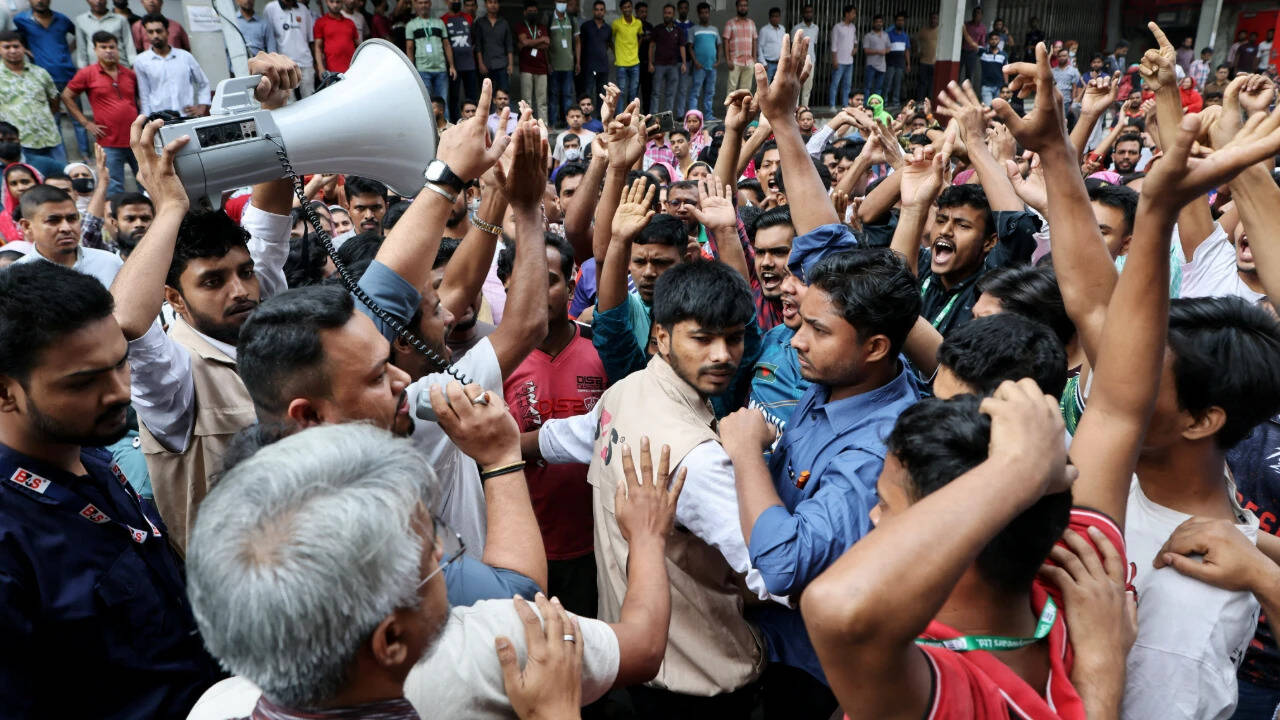
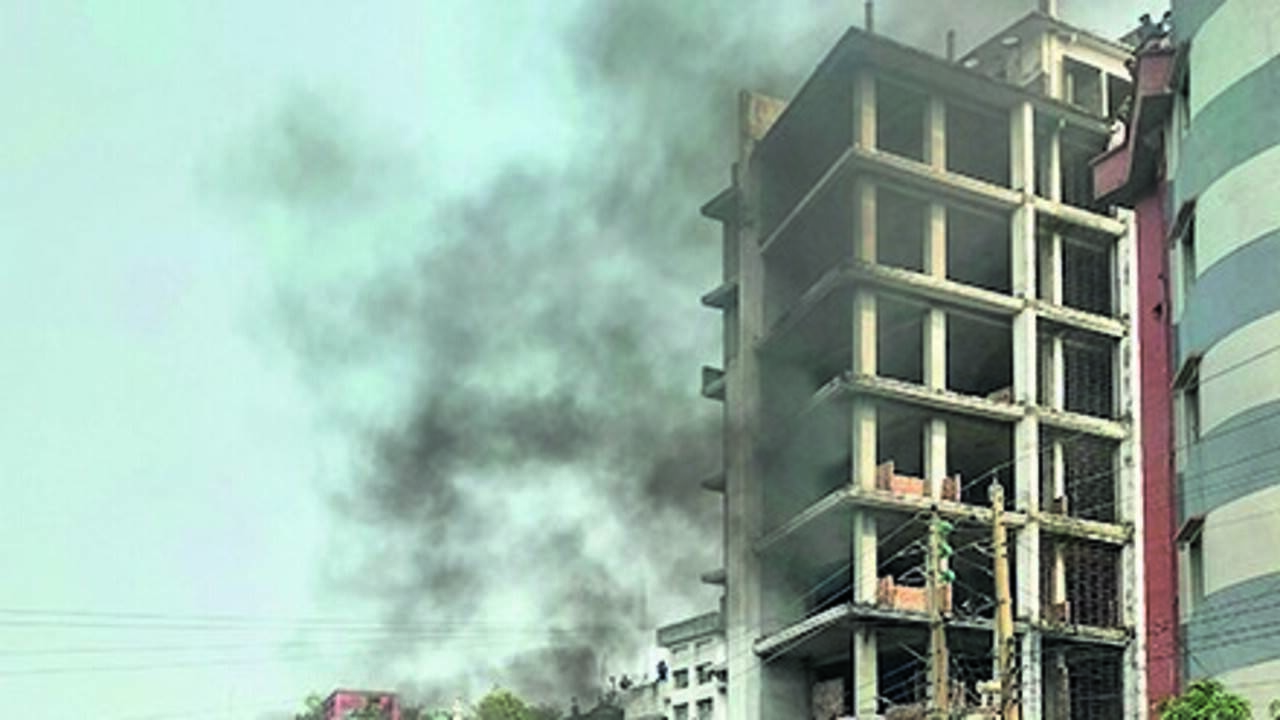
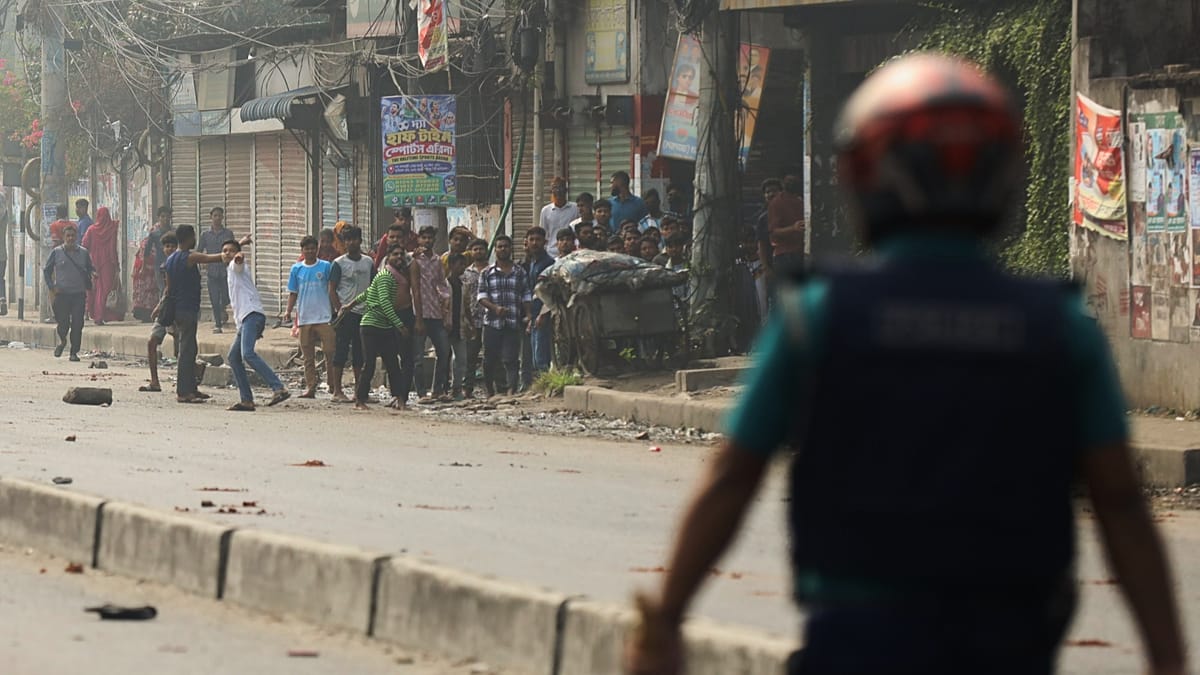
Photo via Dawn

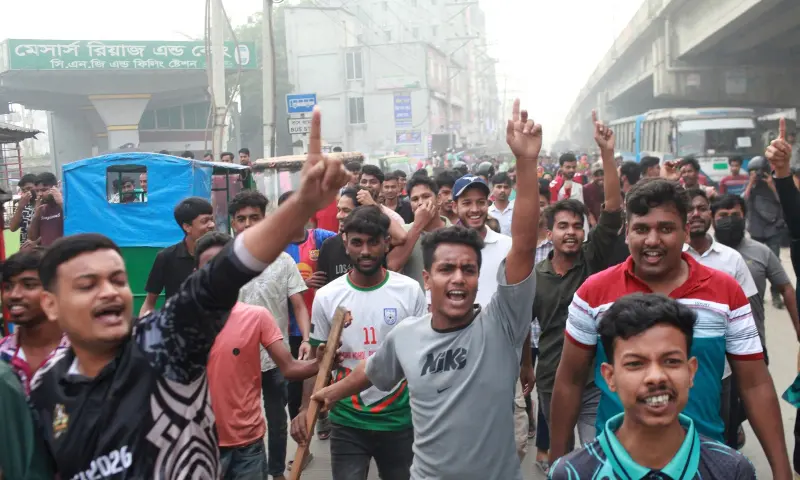
Bangladesh garment workers, police clash in fresh wage protest

Read the original at Dawn ↗
Cite

AFP. (2026, November 17). Bangladesh garment workers, police clash in fresh wage protest. Dawn. https://www.dawn.com/news/2045168/bangladesh-garment-workers-police-clash-in-fresh-wage-protest

Dated from the outlet's own feed. Check the original for its byline.

Dawn · collected 2026-11-17 · by AFP

Quick Summary

On Tuesday, Bangladesh saw clashes between thousands of garment workers and police, with workers demanding a significant wage increase due to rising living costs. Protesters clashed violently, causing disruption to major highways and closing some factories. Workers are pushing for a minimum monthly wage of 30,000 taka ($240), a 140% increase over the current wage. The government's wage board, tasked with negotiating the wage hike, postponed a key meeting and scheduled the next for November 23.
Written by AI on 2026-11-17, from this article's own text only (the story summary below draws on all the coverage).
See how they differ ↓

AI analysis

Story summary

On November 17, 2026, thousands of Bangladeshi garment workers clashed with police in Dhaka and surrounding areas, blocking major highways and demanding a 140% increase in the minimum monthly wage from 12,500 taka ($100) to 30,000 taka ($240). The unrest began in late October and has affected around 500 out of 4,500 garment factories. Police used tear gas and stun grenades to disperse the protesters, who hurled bricks and torched vehicles. The country, the world’s second-largest garment exporter after China, generates $38 billion annually and employs over four million workers, making the industry vital to Bangladesh's economy.

Written for “Police Clashes Over Garment Wages” on 2026-11-21, grounded in this article and the 3 other(s) covering the same event.

How they differ

4 outlets covered “Police Clashes Over Garment Wages”.

What each outlet says

One AI summary per outlet of its latest article on this story, written from that article alone and checked against it. Open the article for the outlet's own words.

DawnThis outlet17 Nov

On Tuesday, Bangladesh saw clashes between thousands of garment workers and police, with workers demanding a significant wage increase due to rising living costs. Protesters clashed violently, causing disruption to major highways and closing some factories. Workers are pushing for a minimum monthly wage of 30,000 taka ($240), a 140% increase over the current wage. The government's wage board, tasked with negotiating…

Bangladesh garment workers, police clash in fresh wage protest (this article)
Al Jazeera17 Nov

Bangladeshi police used tear gas and stun grenades to disperse garment workers protesting for higher wages in Dhaka and Mymensingh on Tuesday. The protesters, demanding a 140% increase in the minimum wage to 30,000 taka ($240) per month, blocked highways and damaged property. The unrest affects the country’s $38 billion garment industry, which employs over four million people and is crucial to Bangladesh’s economy…

Bangladesh police clash with garment workers amid protests over wages →
The Hindu17 Nov

On November 17, 2026, garment workers in Bangladesh protested and blocked major highways around Dhaka, demanding a minimum monthly wage increase from Tk 12,500 ($100) to Tk 30,000 ($240). Authorities deployed over 1,000 paramilitary personnel, used tear gas and sound grenades, and arrested protesters to clear the Dhaka-Aricha, Dhaka-Tangail, and Dhaka-Mymensingh highways. The unrest, which began in late October, has…

Fresh unrest in Bangladesh as garment workers protest, block highways for higher wages →
Euronews18 Nov

On Wednesday, police in Bangladesh clashed with approximately 20,000 garment workers protesting for a higher minimum wage of 30,000 takas (€215) in Savar, outside Dhaka. The demonstrators, armed with stone-throwing and highway blockades, faced tear gas and stun grenades from police. Violence spread to Ashulia and Gazipur, leading to the closure of about 25 factories. The unrest is part of ongoing protests over the…

Police in Bangladesh clash with garment workers demanding higher minimum wages →

Compared with similar articles

This article reads leans left and hedges 5% of its claims. Each row says how that neighbour differs.
Al Jazeera
Leans left Hedges 1 of 22 claims Outlet record 60/100
The Hindu
Leans right further right than this Hedges 5 of 41 claims Outlet record 78/100
Times of India
Leans right further right than this Hedges 4 of 26 claims Outlet record 59/100
“The articles describe different stages of the wage dispute, with Article A reporting on the threat to quit wage talks and shut factories, while Article B covers a violent protest and clash with police that occurred a few days later.”
Times of India
Leans right further right than this Hedges 1 of 9 claims Outlet record 59/100
“The articles describe unrest and police action on different days, with one mentioning protests on Tuesday and the other on Sunday.”
BBC News
Leans left Hedges 1 of 18 claims Outlet record 65/100
“Article A describes the initial factory shutdowns due to strikes, while Article B reports on subsequent violent protests and clashes with police, indicating a different phase or development of the broader wage dispute.”
Euronews
Leans right further right than this Hedges 0 of 19 claims Outlet record 60/100
“The articles describe similar events, but differ in the day and specific details, suggesting they might be reporting on separate incidents or different phases of an ongoing protest.”

Story

Police Clashes Over Garment Wages
Crime & Law · 4 article(s) covering the same event. See how they differ ↑
How this article was measured signals, leaning charts, publisher record, byline, topics and claims

Signals How these are calculated →

Claims extracted
21
sentences that state something as happening or true
Uncertain
5%
1 of 21 hedged ("reportedly", "may", "according to")
Leaning
Leans left
of the writing, not the subject · beta estimate
Publisher signals
67/100
Dawn's corrections and hedging, across everything collected from it. Not a measure of accuracy.
Outlets on this story
4
Crime & Law
Same framing elsewhere
1
articles that frame the event the way this one does
Analyzed 2026-11-17 · how these are computed

How this is being covered How these are calculated →

Article leaning vs. publisher reliability
Source leaning vs. consistency

Publisher

Dawn · 3487 article(s) · 5 correction(s) detected
Running correction rate · 5 correction(s)

Who wrote this

AFP
1298 article(s) here · 1 carrying a prediction
“I would love to see him be back.
A full written argument would be extremely long, he said, adding that he had not yet mastered all of the mathematics involved and planned to write it up properly.
US federal prosecutors alleged that an Indian intelligence officer, who remains at large, directed the plot and recruited Gupta in May 2023 to hire a hitman to carry out the murder.
Huang resigned as chief of the chip giant at the centre of the artificial intelligence (AI) revolution after revelations of extramarital affairs, including one with an alleged Chinese spy who may have funnelled restricted chips to that country.
Mr. Kobir said Dhaka would deal with attacks "very firmly".
They were referring to recursive self-improvement (RSI) — a term the industry uses to describe building advanced AI models that can autonomously create newer versions of themselves, which critics worry will hasten doomsday scenarios.
And Ukraine fears this winter could be the worst yet.
World champions Spain will face France while England will play Norway in the quarterfinals of the UEFA Nations League after the draw took place on Friday.
In March, South Korea’s then-prime minister Kim Min-seok said that Trump thought a meeting with Kim would be “good”.
Rohingya refugees will undergo a Technical and Vocational Education and Training (TVET) programme in Turkiye which would last three to six months.
2026-11-20 · assertive framing · Malaysia plans to resettle 10,000 Rohingya in Turkiye
Wire or desk byline, not an individual reporter.
Also by AFP
Nothing else under this byline is closely related to this article, so these are simply their most recent.
All 1298 articles by AFP →

Topics

AFP BGB BGMEA Bangladeshi Dhaka

Subjects

AFP ORG · 2× BGB ORG · 2× BGMEA ORG · 2× Dhaka GPE · 2× Rakib PERSON · 2× Bangladeshi NORP · 1× China GPE · 1× Fruit of the Loom ORG · 1× Mymensingh GPE · 1× South Asian NORP · 1×

Narrative

The South Asian nation of 170 million people is the world’s second-biggest garment exporter behind China, producing clothes for major international brands including Fruit of the Loom and Levi Strauss. But growing worker unrest over wages that began in October has threatened to disrupt the industry that generates $38 billion in revenues annually and employs more than four million people.
framing: assertive · carried by 1 article(s) · first seen 2026-11-17
“The owners seem unwilling to meet our salary demands.
2026-11-17 · Dawn
Bangladesh garment workers, police clash in fresh wage protest · assertive framing

Claims (21 extracted, 1 hedged)

Bangladeshi police fired tear gas and stun grenades on Tuesday in clashes with thousands of garment workers who were protesting after a key wage board meeting was postponed. asserted
meeting → fire → workers
Protesters hurled bricks, torched vehicles and blocked the main highway between capital Dhaka and key financial district Mymensingh as demonstrations demanding higher wages turned violent. asserted
demonstrations → hurl → wages
The South Asian nation of 170 million people is the world’s second-biggest garment exporter behind China, producing clothes for major international brands including Fruit of the Loom and Levi Strauss. But growing worker unrest over wages that began in October has threatened to disrupt the industry that generates $38 billion in revenues annually and employs more than four million people. asserted
that → produce → people
Workers are demanding a minimum monthly wage of 30,000 taka ($240) — a 140-per cent increase on the current 12,500 taka, as they struggle to cope with rising food, housing, transport and healthcare costs. asserted
they → demand → costs
Some 500 factories out of 4,500 are shut, sources told AFP, something that is further stoking unrest among workers. asserted
that → shut → workers
A “no work, no pay” provision of the country’s labour laws allows factory owners to suspend operations and withhold wages when production is disrupted. asserted
production → allow → wages
“The owners seem unwilling to meet our salary demands. asserted
owners → seem → demands
They are already dragging their feet,” said Khanom, 24, who gave only one name. asserted
who → drag → name
Tensions were also running high in the other garment hubs of Savar and Ashulia on the outskirts of Dhaka. asserted
Tensions → run → Dhaka
The wage board, comprising representatives of employers and workers, was set up by the government earlier this month to negotiate a pay rise. asserted
board → comprise → rise
The new minimum wage would be announced in December and take effect in January. “We want to return to our machines,” said Rakib, 28, another garment worker. asserted
Rakib → announce → machines
“We are not sure if the wage board members are aware of our demands,” he said, adding that workers feared their concerns might not be reflected in the revised wage proposal. uncertain
concerns → say → proposal
Most factories had opened on Tuesday morning but were shut down as protests spread to the highway, Rakib said. asserted
Rakib → open → highway
In a joint statement, the Bangladesh Garment Manufacturers and Exporters Association (BGMEA) and the Bangladesh Knitwear Manufacturers and Exporters Association (BKMEA) called for a resumption of wage negotiations as soon as possible. asserted
Association → call → negotiations
A wage board meeting scheduled for Monday was postponed after a member representing the garment workers said he was unwell, a source in BGMEA told AFP. asserted
source → schedule → AFP
The next meeting would be held on November 23, the board said. asserted
board → hold → November
In the wake of Tuesday’s protest, the Border Guard Bangladesh (BGB) stepped up patrols across the industrial zone, deploying hundreds of personnel. asserted
Guard → step → personnel
“BGB headquarters has been closely observing the situation from a monitoring cell,” it said in a statement. asserted
it → observe → statement
The force said it was also using drones, body-worn cameras and other devices to keep a close watch on demonstrations. asserted
it → say → demonstrations
The country’s garment industry makes clothes for some of the world’s best-known brands but the sector has been marred by longstanding disputes over wages, working conditions and labour rights. asserted
sector → make → wages
The latest disruption comes during the run-up to Christmas, the busiest export period for Bangladesh’s garment industry. asserted
disruption → come → industry
Give feedback · no sign-in needed

No sign-in needed for now. Your note is sent without a name, so it cannot be answered.

History Support