Photo via Euronews

Police in Bangladesh clash with garment workers demanding higher minimum wages

Read the original at Euronews ↗
Cite

Blackburn, G. (2026, November 18). Police in Bangladesh clash with garment workers demanding higher minimum wages. Euronews. https://www.euronews.com/2026/11/18/police-in-bangladesh-clash-with-garment-workers-demanding-higher-minimum-wages

Dated from the outlet's own feed. Check the original for its byline.

Euronews · collected 2026-11-18 · by Gavin Blackburn

Quick Summary

On Wednesday, police in Bangladesh clashed with approximately 20,000 garment workers protesting for a higher minimum wage of 30,000 takas (€215) in Savar, outside Dhaka. The demonstrators, armed with stone-throwing and highway blockades, faced tear gas and stun grenades from police. Violence spread to Ashulia and Gazipur, leading to the closure of about 25 factories. The unrest is part of ongoing protests over the past weeks, with workers arguing that inflation and rising living costs have reduced their purchasing power.
Written by AI on 2026-11-20, from this article's own text only (the story summary below draws on all the coverage).
See how they differ ↓

AI analysis

Story summary

On November 17, 2026, thousands of Bangladeshi garment workers clashed with police in Dhaka and surrounding areas, blocking major highways and demanding a 140% increase in the minimum monthly wage from 12,500 taka ($100) to 30,000 taka ($240). The unrest began in late October and has affected around 500 out of 4,500 garment factories. Police used tear gas and stun grenades to disperse the protesters, who hurled bricks and torched vehicles. The country, the world’s second-largest garment exporter after China, generates $38 billion annually and employs over four million workers, making the industry vital to Bangladesh's economy.

Written for “Police Clashes Over Garment Wages” on 2026-11-21, grounded in this article and the 3 other(s) covering the same event.

How they differ

4 outlets covered “Police Clashes Over Garment Wages”.

What each outlet says

One AI summary per outlet of its latest article on this story, written from that article alone and checked against it. Open the article for the outlet's own words.

EuronewsThis outlet18 Nov

On Wednesday, police in Bangladesh clashed with approximately 20,000 garment workers protesting for a higher minimum wage of 30,000 takas (€215) in Savar, outside Dhaka. The demonstrators, armed with stone-throwing and highway blockades, faced tear gas and stun grenades from police. Violence spread to Ashulia and Gazipur, leading to the closure of about 25 factories. The unrest is part of ongoing protests over the…

Police in Bangladesh clash with garment workers demanding higher minimum wages (this article)
Dawn17 Nov

On Tuesday, Bangladesh saw clashes between thousands of garment workers and police, with workers demanding a significant wage increase due to rising living costs. Protesters clashed violently, causing disruption to major highways and closing some factories. Workers are pushing for a minimum monthly wage of 30,000 taka ($240), a 140% increase over the current wage. The government's wage board, tasked with negotiating…

Bangladesh garment workers, police clash in fresh wage protest →
Al Jazeera17 Nov

Bangladeshi police used tear gas and stun grenades to disperse garment workers protesting for higher wages in Dhaka and Mymensingh on Tuesday. The protesters, demanding a 140% increase in the minimum wage to 30,000 taka ($240) per month, blocked highways and damaged property. The unrest affects the country’s $38 billion garment industry, which employs over four million people and is crucial to Bangladesh’s economy…

Bangladesh police clash with garment workers amid protests over wages →
The Hindu17 Nov

On November 17, 2026, garment workers in Bangladesh protested and blocked major highways around Dhaka, demanding a minimum monthly wage increase from Tk 12,500 ($100) to Tk 30,000 ($240). Authorities deployed over 1,000 paramilitary personnel, used tear gas and sound grenades, and arrested protesters to clear the Dhaka-Aricha, Dhaka-Tangail, and Dhaka-Mymensingh highways. The unrest, which began in late October, has…

Fresh unrest in Bangladesh as garment workers protest, block highways for higher wages →

Compared with similar articles

This article reads leans right and hedges 0% of its claims. Each row says how that neighbour differs.
Al Jazeera
Leans left further left than this Hedges 1 of 22 claims Outlet record 60/100
Times of India
Leans right Hedges 4 of 26 claims Outlet record 59/100
“The articles describe different stages of the same broader conflict, but the specific incidents they report are not the same. Article A discusses the threat by garment manufacturers to withdraw from wage talks, while Article B reports on a police clash with workers demanding higher wages weeks later.”
Times of India
Leans right Hedges 1 of 9 claims Outlet record 59/100
“The first article describes unrest on a Sunday, a day before the wage board meeting, while the second describes a clash on a Wednesday, involving a specific highway blockage. These appear to be related but distinct events.”
BBC News
Leans left further left than this Hedges 1 of 18 claims Outlet record 65/100
“While both articles describe workers striking for higher wages in Bangladesh, they appear to report on different stages of the same general protest. Article A describes the initial factory closures and strikes, while Article B reports on a later clash between police and workers on the Dhaka-Aricha Highway.”
The Hindu
Leans right Hedges 5 of 41 claims Outlet record 78/100
“The articles describe protests occurring on different days with the first article mentioning a clash on a specific highway on November 16th, while the second article covers unrest on November 17th involving multiple highways.”
Dawn
Leans left further left than this Hedges 1 of 21 claims Outlet record 66/100
“The articles describe similar events, but differ in the day and specific details, suggesting they might be reporting on separate incidents or different phases of an ongoing protest.”

Story

Police Clashes Over Garment Wages
Crime & Law · 4 article(s) covering the same event. See how they differ ↑
How this article was measured signals, leaning charts, publisher record, byline, topics and claims

Signals How these are calculated →

Claims extracted
19
sentences that state something as happening or true
Uncertain
0%
0 of 19 hedged ("reportedly", "may", "according to")
Leaning
Leans right
of the writing, not the subject · beta estimate
Publisher signals
60/100
Euronews's corrections and hedging, across everything collected from it. Not a measure of accuracy.
Outlets on this story
4
Crime & Law
Same framing elsewhere
1
articles that frame the event the way this one does
Analyzed 2026-11-20 · how these are computed

How this is being covered How these are calculated →

Article leaning vs. publisher reliability
Source leaning vs. consistency

Publisher

Euronews · 1563 article(s) · 1 correction(s) detected
Running correction rate · 1 correction(s)

Who wrote this

Gavin Blackburn
74 article(s) here · 0 carrying a prediction
Kim has previously said he could return to talks if the US drops its “hostile policy” against his country and respects what he calls the North’s status as a nuclear state.
Rubio emphasised the ubiquity of technology when explaining why it could feel as if there was a growing wave of cyber incidents.
"I would really like to go back to my country.
Democrats will control 56 seats in the 100-seat Senate which will give them the power to block legislation, launch broad investigations into Trump's administration and thwart his judicial and senior government appointments.
The Guards also warned that continued use of regional bases and military facilities for actions against Iran would not go unanswered.
China said on Tuesday it has "no information" on whether US President Donald Trump would meet Kim Jong-un, after the US president left open the possibility of meeting the North Korean leader on his Asia trip. "I have no information regarding this matter," foreign ministry spokesman Guo Jiakun said at a news briefing in Beijing, a day before Trump was expected in Shenzhen for an APEC meeting.
In July last year, it went dark for 10 days after being slapped with a ban by Turkey's RTUK broadcasting regulator over its coverage of the mass protests sparked by the jailing of Istanbul's powerful opposition mayor, Ekrem İmamoğlu on graft charges widely denounced as political.
Military aircraft are generally expected to notify the relevant country before entering its air defence zone, although such notification is not legally required.
The Trump administration sought to reassure weary flyers as questions remained over how such chaos could unfold in the world's largest economy, a country that prides itself on its technological prowess.
The proposed rule, which is expected to face legal challenges, is part of wider DHS efforts that include terminating the legal status of thousands of international students, along with detaining and deporting many of them.
Also by Gavin Blackburn
Nothing else under this byline is closely related to this article, so these are simply their most recent.
All 74 articles by Gavin Blackburn →

Topics

Ashulia Bangladesh Daily Star Dhaka Savar

Subjects

Dhaka GPE · 3× Ashulia GPE · 2× Bangladesh GPE · 2× Daily Star ORG · 1× Gazipur GPE · 1× Mymensingh GPE · 1× Saiful Alam PERSON · 1× Savar GPE · 1× South Asian NORP · 1× The Bangladesh Garment Manufacturers and Exporters Association ORG · 1×

Narrative

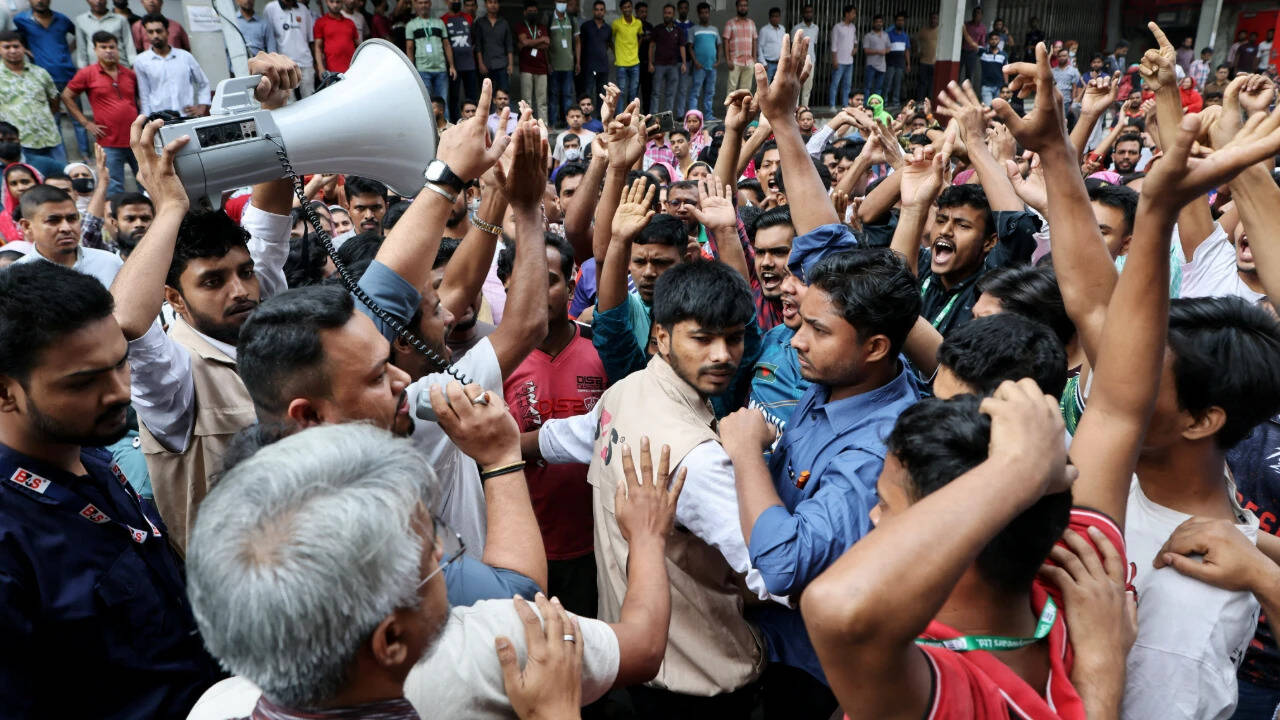
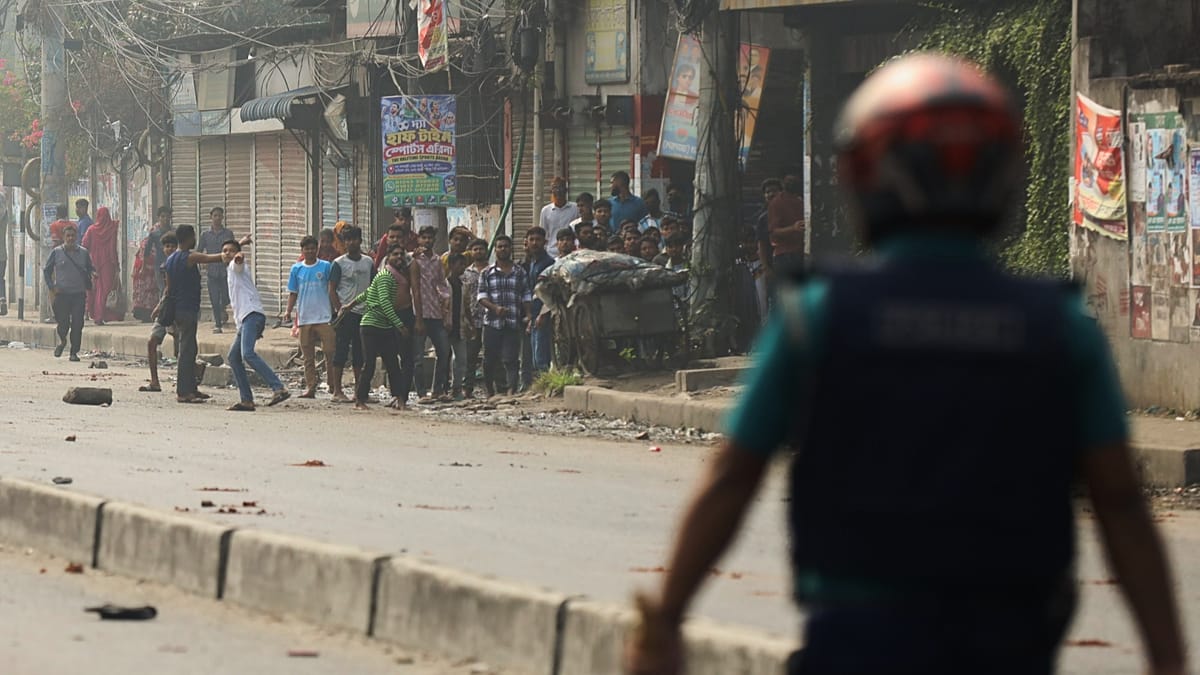
Police in Bangladesh clashed with thousands of garment workers demanding higher basic wages on Wednesday amid weekslong chaos in the main export-earning industry in the country, police and media reports said.
framing: assertive · carried by 1 article(s) · first seen 2026-11-20

Claims (19 extracted, 0 hedged)

Workers are demanding a minimum monthly wage of 30,000 takas (€215), up from 12,500 takas (€89) and say rising living costs have eroded their purchasing power. asserted
costs → demand → power
Police in Bangladesh clashed with thousands of garment workers demanding higher basic wages on Wednesday amid weekslong chaos in the main export-earning industry in the country, police and media reports said. asserted
reports → clash → country
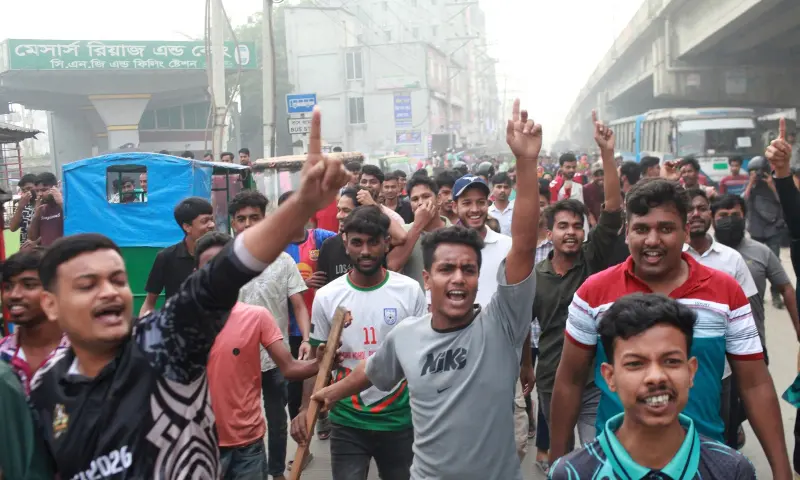
Local media reported that around 20,000 workers at a garment factory took to the streets and blocked the Dhaka-Aricha Highway in Savar, outside the capital Dhaka. asserted
workers → report → capital
They clashed with police who used tear gas and stun grenades and charged at them with batons to disperse them. asserted
who → clash → them
It wasn’t immediately clear how many people were injured. asserted
people → injure → ?
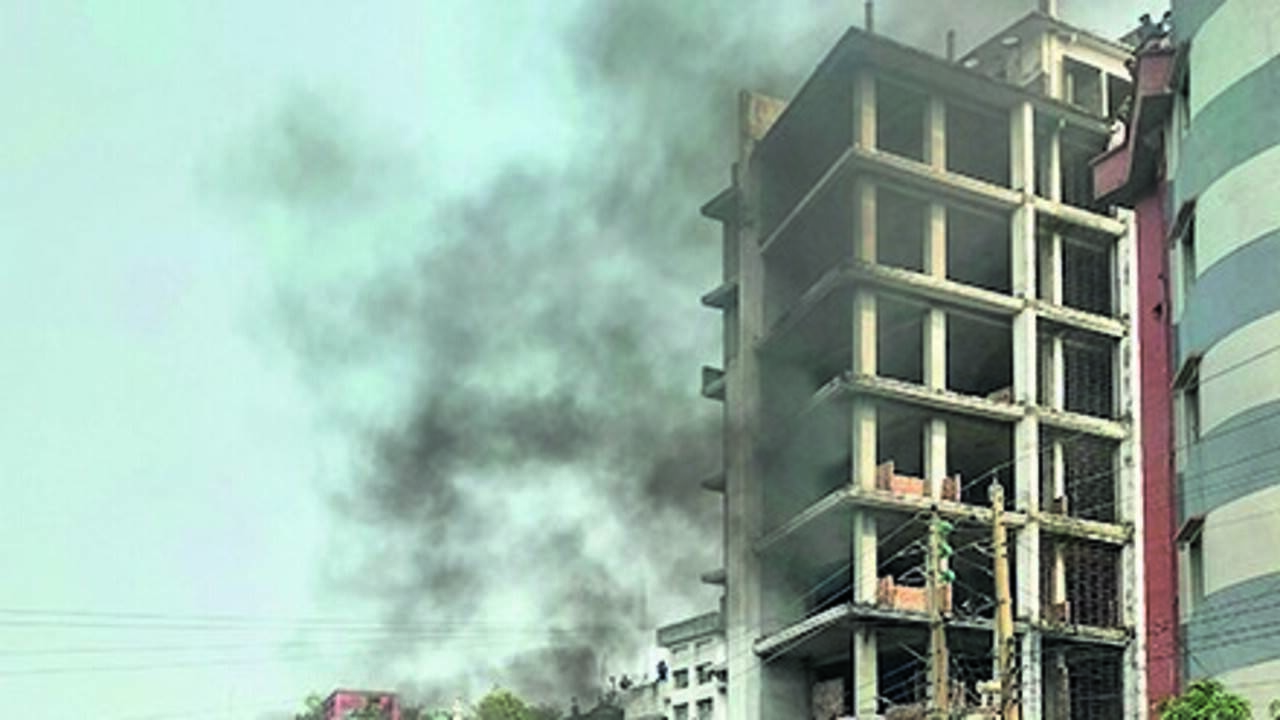
The violence spread to the nearby area of Ashulia, the country’s leading English-language Daily Star newspaper reported. asserted
newspaper → spread → Ashulia
Local police chief Saiful Alam said that officers took action to disperse them after the protesting workers blocked the highway and threw stones at them. asserted
workers → say → them
About 25 factories were closed because of the unrest in Ashulia, police said. asserted
police → close → Ashulia
Violence was also reported in the district of Gazipur, outside Dhaka, which is a major industrial zone. asserted
which → report → Dhaka
Protesters also blocked the Dhaka-Mymensingh highway and torched a police vehicle. asserted
Protesters → block → vehicle
Police fired tear gas and stun grenades during the violence. asserted
Police → fire → violence
The protests intensified earlier this month and disruptions to production because of the closure of hundreds of factories and street clashes have become routine in recent weeks. asserted
disruptions → intensify → weeks
The industry earns about $40 billion (€36 billion) a year from exports through the South Asian nation’s garment factories, which number around 2,500. asserted
which → earn → 2,500
Workers are demanding a minimum monthly wage of 30,000 takas (€215), up from 12,500 takas (€89). asserted
Workers → demand → takas
They say rising living costs and inflation have eroded their purchasing power. asserted
costs → say → power
About 4 million workers, mostly women from rural Bangladesh, are employed directly in the industry while its backward linkage industry has employed a few million more. asserted
industry → employ → more
Many factories have remained shut under a “no work, no pay” provision under labour laws allowing the factory owners to suspend operations because of the unrest. asserted
owners → remain → unrest
The government has formed a board to set a new wage package, but the efforts have failed to appease the protesters. asserted
efforts → form → protesters
The Bangladesh Garment Manufacturers and Exporters Association and the Bangladesh Knitwear Manufacturers and Exporters Association demanded protection of their factories. asserted
Association → demand → factories
Give feedback · no sign-in needed

No sign-in needed for now. Your note is sent without a name, so it cannot be answered.

History Support