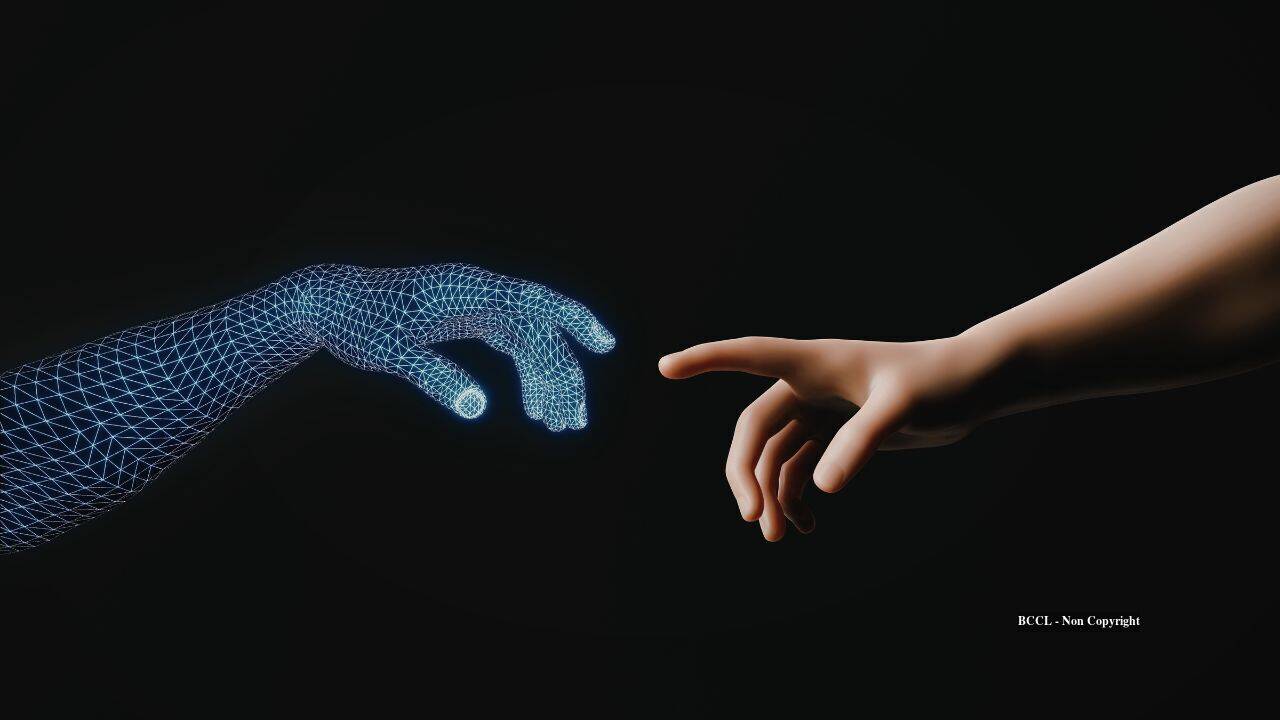
Photo via CBC News

Would AI have come up with a better word of the year than the Cambridge Dictionary?

Read the original at CBC News ↗
Cite

Would AI have come up with a better word of the year than the Cambridge Dictionary? (2026, November 18). CBC News. https://www.cbc.ca/news/world/cambridge-dictionary-2026-word-of-the-year-9.7426019?cmp=rss

Dated from the outlet's own feed. Check the original for its byline.

CBC News · collected 2026-11-18 · by CBC

Quick Summary

The Cambridge Dictionary selected "human" as its word of the year for 2026, responding to increasing concerns about artificial intelligence. This choice reflects how AI has prompted a renewed focus on human attributes and creations. The dictionary highlighted the word's use in phrases like "human-written" and "human-generated," emphasizing the value placed on uniquely human contributions in an AI-dominated world.
Written by AI on 2026-11-18, from this article's own text only (the story summary below draws on all the coverage).
See how they differ ↓

AI analysis

Story summary

Cambridge Dictionary named human as its Word of the Year for 2026, emphasizing the qualities, faults, and feelings that distinguish humans from machines, animals, and gods. This selection comes in response to growing fears about the impact of artificial intelligence (AI) on human identity and reliance. The dictionary's chief editor, Colin McIntosh, noted that the rise of AI necessitates explicitly stating "human" for tasks previously attributed only to humans. The word reflects a cultural debate over the increasing presence of AI in daily life and concerns about the potential loss of human traits when relying heavily on technology. Other new entries include "aura farming," trying to appear attractive or impressive online, and "looksmaxxing," the pursuit of improving physical appearance.

Written for “Human Cambridge Dictionary Word of the Year” on 2026-11-21, grounded in this article and the 9 other(s) covering the same event.

How they differ

10 outlets covered “Human Cambridge Dictionary Word of the Year”.

What each outlet says

One AI summary per outlet of its latest article on this story, written from that article alone and checked against it. Open the article for the outlet's own words.

CBCThis outlet18 Nov

The Cambridge Dictionary selected "human" as its word of the year for 2026, responding to increasing concerns about artificial intelligence. This choice reflects how AI has prompted a renewed focus on human attributes and creations. The dictionary highlighted the word's use in phrases like "human-written" and "human-generated," emphasizing the value placed on uniquely human contributions in an AI-dominated world.

Would AI have come up with a better word of the year than the Cambridge Dictionary? (this article)
Evening Standard18 Nov

Cambridge Dictionary has named "human" as its Word of the Year, reflecting concerns about the impact of artificial intelligence on human life and the growing distinction people draw between human work and AI. The dictionary’s editor highlighted both the potential benefits and risks of AI, emphasizing the importance of careful integration to improve human lives. Other notable word contenders were "agent,"…

Cambridge Dictionary announces Word of the Year - and it’s link to AI →
The Straits Times18 Nov

Cambridge Dictionary named “human” as its Word of the Year for 2026, reflecting concerns about the impact of artificial intelligence on society. According to Francesca Woodward from Cambridge University Press, the choice highlights global discussions about human qualities and the changing understanding of what it means to be human in the age of AI. The selection was influenced by increased dictionary searches and…

‘Human’ is Cambridge Dictionary’s word of the year →
ABC News (AU)18 Nov

Cambridge Dictionary has named "human" as its Word of the Year, highlighting concerns about the influence of artificial intelligence and its impact on employment. Cambridge University Press board member Francesca Woodward notes that the word reflects people’s contemplation of what it means to be human in an era of rapid technological advancement. The dictionary also observed an increase in the use of "human" in…

Cambridge Dictionary names 'human' word of the year in rebuttal to AI →
Daily Mail18 Nov

Cambridge Dictionary has named 'human' as its Word of the Year for 2026, highlighting the renewed significance of the term as AI increasingly blurs the lines between people and machines. This choice reflects growing concerns and debates about uniquely human qualities in the age of advanced AI, with notable figures like Bill Gates and Geoffrey Hinton advocating for preserving human-centric roles and values.

Cambridge Dictionary names 'human' the Word of the Year 2026 - as AI 'blurs the boundaries between people and machines' →
Show 4 more outlets
The Guardian18 Nov

Cambridge Dictionary named "human" its word of the year for 2026, reflecting the growing importance of distinguishing natural human intelligence from artificial intelligence. The dictionary emphasized the word’s use to highlight human qualities, faults, and feelings in contrast to machines, amid debates about AI consciousness and its impact on human reliance and identity. Colin McIntosh, a dictionary editor, noted…

‘Human’ wins Cambridge dictionary’s word of the year →
Times of India18 Nov

Cambridge Dictionary named 'human' its Word of the Year for 2026, reflecting the growing importance of human qualities in a world dominated by artificial intelligence. The selection highlights how the rise of AI has led to a renewed appreciation of human creativity, emotion, and connection. Cambridge Dictionary’s chief editor, Colin McIntosh, noted that this year saw a significant re-evaluation of what it means to…

'Human': Cambridge’s 'word of the year' is a counterbalance to AI →
New York Post18 Nov

Cambridge Dictionary selected “human” as its word of the year for 2026, reflecting growing concerns about artificial intelligence. According to lexicographer Colin McIntosh, the choice highlights how discussions about AI are prompting people to reconsider what it means to be human. The dictionary defines “human” as having qualities, faults, and feelings distinct from machines, emphasizing a cultural shift in…

Cambridge Dictionary chooses ‘human’ as word of the year in response to AI fears →
BBC18 Nov

Cambridge Dictionary named "Human" as its Word of the Year, defining it as having qualities, faults, and feelings that distinguish people from gods, animals, or machines. Chief editor Colin McIntosh explained that the rise of AI necessitates emphasizing human qualities. Examples include actors challenging AI's impact on creativity and tech leaders discussing the importance of AI improving human lives. The word's…

'Human' is Cambridge Dictionary Word of the Year →

Where they agree and split

Framing

How the first headlines put it

Attributed to a source1
Stated as fact9
The headlines (10)

Cambridge Dictionary announces Word of the Year - and it’s link to AI Evening Standard · attributed to a source

‘Human’ is Cambridge Dictionary’s word of the year The Straits Times · stated as fact

Cambridge Dictionary chooses 'human' as word of the year in response to AI fears Toronto Star · stated as fact

Cambridge Dictionary names 'human' word of the year in rebuttal to AI ABC News (Australia) · stated as fact

Would AI have come up with a better word of the year than the Cambridge Dictionary? CBC · stated as fact

Cambridge Dictionary names 'human' the Word of the Year 2026 - as AI 'blurs the boundaries between people and machines' Daily Mail · stated as fact

‘Human’ wins Cambridge dictionary’s word of the year The Guardian · stated as fact

'Human': Cambridge’s 'word of the year' is a counterbalance to AI Times of India · stated as fact

Cambridge Dictionary chooses ‘human’ as word of the year in response to AI fears New York Post · stated as fact

'Human' is Cambridge Dictionary Word of the Year BBC · stated as fact

The full story: what happened, how it changed, and all 10 articles →

Compared with similar articles

This article reads unscored and hedges 0% of its claims. Each row says how that neighbour differs.
Daily Mail
Leans strongly left Hedges 4 of 35 claims Outlet record 69/100
Toronto Star
Hedges 0 of 2 claims Outlet record 64/100
New York Post
Hedges 1 of 11 claims Outlet record 66/100
Evening Standard
Hedges 2 of 8 claims Outlet record 64/100
The Guardian
Leans right Hedges 1 of 15 claims Outlet record 64/100
Times of India
Leans left Hedges 1 of 14 claims Outlet record 59/100
The Straits Times
Hedges 2 of 18 claims Outlet record 64/100
ABC News (AU)
Hedges 2 of 24 claims Outlet record 67/100
BBC News
Hedges 3 of 22 claims Outlet record 65/100

Story

Human Cambridge Dictionary Word of the Year
Technology · 10 article(s) covering the same event. Compare every outlet's account →
How this article was measured signals, leaning charts, publisher record, byline, topics and claims

Signals How these are calculated →

Claims extracted
10
sentences that state something as happening or true
Uncertain
0%
0 of 10 hedged ("reportedly", "may", "according to")
Leaning
not political
takes no side on a contested political question
Publisher signals
60/100
CBC News's corrections and hedging, across everything collected from it. Not a measure of accuracy.
Outlets on this story
10
Technology
Same framing elsewhere
1
articles that frame the event the way this one does
Analyzed 2026-11-18 · how these are computed

How this is being covered How these are calculated →

Article leaning vs. publisher reliability
Source leaning vs. consistency

Publisher

CBC News · 971 article(s) · 2 correction(s) detected
Running correction rate · 2 correction(s)

Who wrote this

No reporter is named on this article, beyond the feed's “CBC”.

Topics

CBC News Cambridge Dictionary U.K. the Cambridge Dictionary

Subjects

the Cambridge Dictionary ORG · 2× CBC News ORG · 1× Cambridge Dictionary ORG · 1× Colin McIntosh PERSON · 1× U.K. GPE · 1×

Narrative

Increasingly seen in compounds such as human-written, human-generated, and human-made, it now also denotes that something is created by or typical of people as opposed to AI." Colin McIntosh, the dictionary's lexicographer, notes that though AI has been a growing presence in society for years, in 2026, it seemed to be everywhere — and changed how people talk about being human.
framing: assertive · carried by 1 article(s) · first seen 2026-11-18
Would AI have come up with a better word of the year than the Cambridge Dictionary?

Claims (10 extracted, 0 hedged)

Would AI have come up with a better word of the year than the Cambridge Dictionary? asserted
AI → come → Dictionary
The publication has chosen 'human' in response to concerns around artificial intelligence The Cambridge Dictionary has chosen "human" as its word of the year, reflecting concerns about artificial intelligence. asserted
Dictionary → choose → intelligence
The choice announced Wednesday in the U.K. highlights the debate over how AI blurs the lines between machines and people. asserted
AI → announce → machines
Explaining the choice, the dictionary said, "Throughout history, the adjective human has signified people, as opposed to animals and gods (and, more recently, machines). asserted
adjective → explain → people
Increasingly seen in compounds such as human-written, human-generated, and human-made, it now also denotes that something is created by or typical of people as opposed to AI." Colin McIntosh, the dictionary's lexicographer, notes that though AI has been a growing presence in society for years, in 2026, it seemed to be everywhere — and changed how people talk about being human. asserted
people → see → 2026
"2026 has been all about a refound appreciation of the human factor in what we consume (with a consequent human premium)," he said in a statement, "and a new value is being placed on the human element in our lives in general: all confirmed by our analysis of the language data, internet trends, and search habits. asserted
all → consume → data
" Given that, he said, human was the perfect choice. asserted
human → give → that
Last year's word of the year was also AI-related. asserted
word → relate → year
Cambridge Dictionary chose "parasocial," explaining that "as social media intensifies the intimacy that fans feel with their adored celebrities, and with the rise in popularity of AI companions that can take on personalities, the word for these one-way relationships — parasocial — is having its own moment." asserted
word → choose → moment
Four other words made the shortlist for the 2026 word of the year: analogue, agent, wholesome and chic. asserted
words → make → year
Give feedback · no sign-in needed

No sign-in needed for now. Your note is sent without a name, so it cannot be answered.

History Support