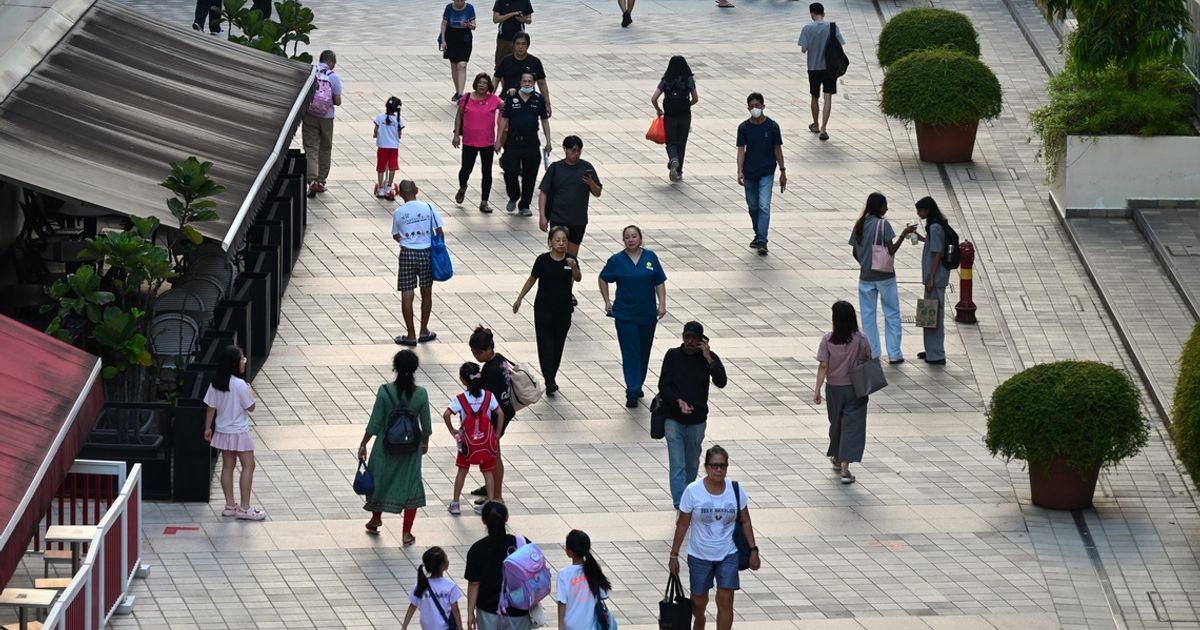
Photo via The Straits Times

‘Human’ is Cambridge Dictionary’s word of the year

Read the original at The Straits Times ↗
Cite

The Straits Times. (2026, November 18). ‘Human’ is Cambridge Dictionary’s word of the year. The Straits Times. https://www.straitstimes.com/world/europe/human-is-cambridge-dictionarys-word-of-the-year

Dated from the outlet's own feed. Check the original for its byline.

The Straits Times · collected 2026-11-18 · by The Straits Times

Quick Summary

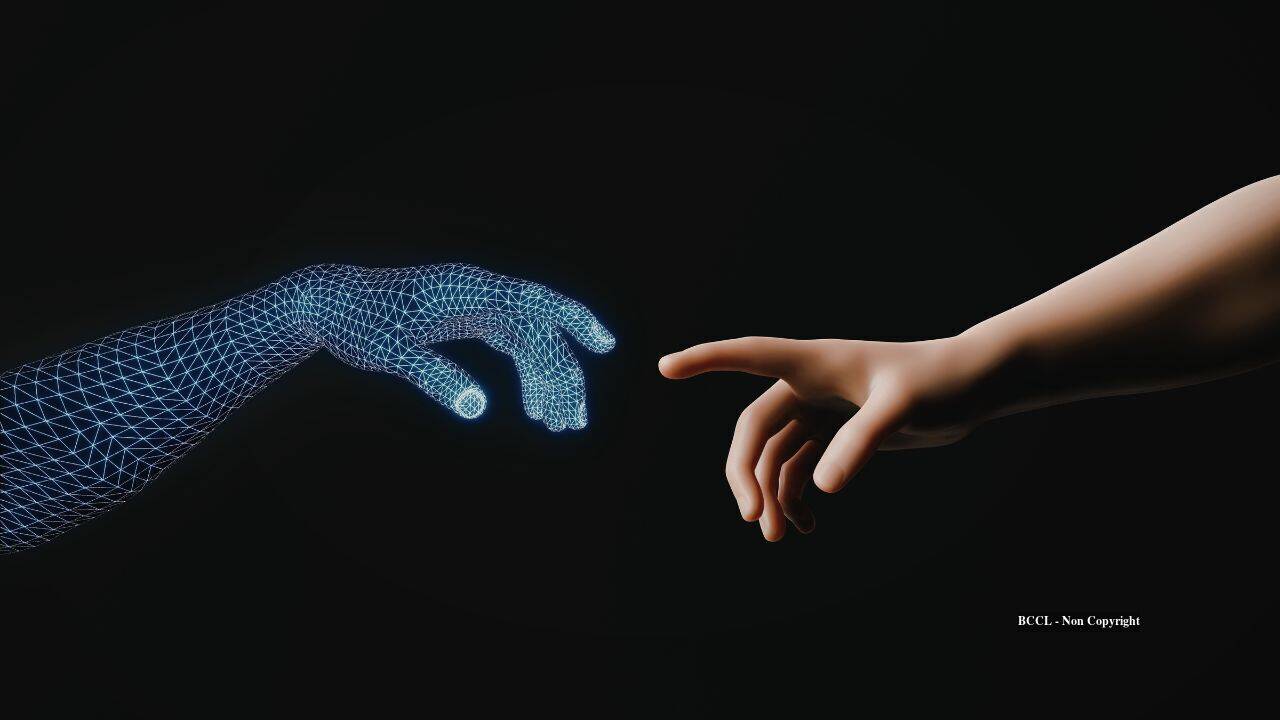
Cambridge Dictionary named “human” as its Word of the Year for 2026, reflecting concerns about the impact of artificial intelligence on society. According to Francesca Woodward from Cambridge University Press, the choice highlights global discussions about human qualities and the changing understanding of what it means to be human in the age of AI. The selection was influenced by increased dictionary searches and the use of the word in compound forms like “human-made” and “human author.”
Written by AI on 2026-11-18, from this article's own text only (the story summary below draws on all the coverage).
See how they differ ↓

AI analysis

Story summary

Cambridge Dictionary named human as its Word of the Year for 2026, emphasizing the qualities, faults, and feelings that distinguish humans from machines, animals, and gods. This selection comes in response to growing fears about the impact of artificial intelligence (AI) on human identity and reliance. The dictionary's chief editor, Colin McIntosh, noted that the rise of AI necessitates explicitly stating "human" for tasks previously attributed only to humans. The word reflects a cultural debate over the increasing presence of AI in daily life and concerns about the potential loss of human traits when relying heavily on technology. Other new entries include "aura farming," trying to appear attractive or impressive online, and "looksmaxxing," the pursuit of improving physical appearance.

Written for “Human Cambridge Dictionary Word of the Year” on 2026-11-21, grounded in this article and the 9 other(s) covering the same event.

How they differ

10 outlets covered “Human Cambridge Dictionary Word of the Year”.

What each outlet says

One AI summary per outlet of its latest article on this story, written from that article alone and checked against it. Open the article for the outlet's own words.

The Straits TimesThis outlet18 Nov

Cambridge Dictionary named “human” as its Word of the Year for 2026, reflecting concerns about the impact of artificial intelligence on society. According to Francesca Woodward from Cambridge University Press, the choice highlights global discussions about human qualities and the changing understanding of what it means to be human in the age of AI. The selection was influenced by increased dictionary searches and…

‘Human’ is Cambridge Dictionary’s word of the year (this article)
Evening Standard18 Nov

Cambridge Dictionary has named "human" as its Word of the Year, reflecting concerns about the impact of artificial intelligence on human life and the growing distinction people draw between human work and AI. The dictionary’s editor highlighted both the potential benefits and risks of AI, emphasizing the importance of careful integration to improve human lives. Other notable word contenders were "agent,"…

Cambridge Dictionary announces Word of the Year - and it’s link to AI →
ABC News (AU)18 Nov

Cambridge Dictionary has named "human" as its Word of the Year, highlighting concerns about the influence of artificial intelligence and its impact on employment. Cambridge University Press board member Francesca Woodward notes that the word reflects people’s contemplation of what it means to be human in an era of rapid technological advancement. The dictionary also observed an increase in the use of "human" in…

Cambridge Dictionary names 'human' word of the year in rebuttal to AI →
CBC18 Nov

The Cambridge Dictionary selected "human" as its word of the year for 2026, responding to increasing concerns about artificial intelligence. This choice reflects how AI has prompted a renewed focus on human attributes and creations. The dictionary highlighted the word's use in phrases like "human-written" and "human-generated," emphasizing the value placed on uniquely human contributions in an AI-dominated world.

Would AI have come up with a better word of the year than the Cambridge Dictionary? →
Daily Mail18 Nov

Cambridge Dictionary has named 'human' as its Word of the Year for 2026, highlighting the renewed significance of the term as AI increasingly blurs the lines between people and machines. This choice reflects growing concerns and debates about uniquely human qualities in the age of advanced AI, with notable figures like Bill Gates and Geoffrey Hinton advocating for preserving human-centric roles and values.

Cambridge Dictionary names 'human' the Word of the Year 2026 - as AI 'blurs the boundaries between people and machines' →
Show 4 more outlets
The Guardian18 Nov

Cambridge Dictionary named "human" its word of the year for 2026, reflecting the growing importance of distinguishing natural human intelligence from artificial intelligence. The dictionary emphasized the word’s use to highlight human qualities, faults, and feelings in contrast to machines, amid debates about AI consciousness and its impact on human reliance and identity. Colin McIntosh, a dictionary editor, noted…

‘Human’ wins Cambridge dictionary’s word of the year →
Times of India18 Nov

Cambridge Dictionary named 'human' its Word of the Year for 2026, reflecting the growing importance of human qualities in a world dominated by artificial intelligence. The selection highlights how the rise of AI has led to a renewed appreciation of human creativity, emotion, and connection. Cambridge Dictionary’s chief editor, Colin McIntosh, noted that this year saw a significant re-evaluation of what it means to…

'Human': Cambridge’s 'word of the year' is a counterbalance to AI →
New York Post18 Nov

Cambridge Dictionary selected “human” as its word of the year for 2026, reflecting growing concerns about artificial intelligence. According to lexicographer Colin McIntosh, the choice highlights how discussions about AI are prompting people to reconsider what it means to be human. The dictionary defines “human” as having qualities, faults, and feelings distinct from machines, emphasizing a cultural shift in…

Cambridge Dictionary chooses ‘human’ as word of the year in response to AI fears →
BBC18 Nov

Cambridge Dictionary named "Human" as its Word of the Year, defining it as having qualities, faults, and feelings that distinguish people from gods, animals, or machines. Chief editor Colin McIntosh explained that the rise of AI necessitates emphasizing human qualities. Examples include actors challenging AI's impact on creativity and tech leaders discussing the importance of AI improving human lives. The word's…

'Human' is Cambridge Dictionary Word of the Year →

Where they agree and split

Framing

How the first headlines put it

Attributed to a source1
Stated as fact9
The headlines (10)

Cambridge Dictionary announces Word of the Year - and it’s link to AI Evening Standard · attributed to a source

‘Human’ is Cambridge Dictionary’s word of the year The Straits Times · stated as fact

Cambridge Dictionary chooses 'human' as word of the year in response to AI fears Toronto Star · stated as fact

Cambridge Dictionary names 'human' word of the year in rebuttal to AI ABC News (Australia) · stated as fact

Would AI have come up with a better word of the year than the Cambridge Dictionary? CBC · stated as fact

Cambridge Dictionary names 'human' the Word of the Year 2026 - as AI 'blurs the boundaries between people and machines' Daily Mail · stated as fact

‘Human’ wins Cambridge dictionary’s word of the year The Guardian · stated as fact

'Human': Cambridge’s 'word of the year' is a counterbalance to AI Times of India · stated as fact

Cambridge Dictionary chooses ‘human’ as word of the year in response to AI fears New York Post · stated as fact

'Human' is Cambridge Dictionary Word of the Year BBC · stated as fact

The full story: what happened, how it changed, and all 10 articles →

Compared with similar articles

This article reads unscored and hedges 11% of its claims. Each row says how that neighbour differs.
Toronto Star
Hedges 0 of 2 claims Outlet record 64/100
New York Post
Hedges 1 of 11 claims Outlet record 66/100
Times of India
Leans left Hedges 1 of 14 claims Outlet record 59/100
Daily Mail
Leans strongly left Hedges 4 of 35 claims Outlet record 69/100
The Guardian
Leans right Hedges 1 of 15 claims Outlet record 64/100
BBC News
Hedges 3 of 22 claims Outlet record 65/100
ABC News (AU)
Hedges 2 of 24 claims Outlet record 67/100
CBC News
Hedges 0 of 10 claims Outlet record 60/100
Evening Standard
Hedges 2 of 8 claims Outlet record 64/100

Story

Human Cambridge Dictionary Word of the Year
Technology · 10 article(s) covering the same event. Compare every outlet's account →
How this article was measured signals, leaning charts, publisher record, byline, topics and claims

Signals How these are calculated →

Claims extracted
18
sentences that state something as happening or true
Uncertain
11%
2 of 18 hedged ("reportedly", "may", "according to")
Leaning
not political
takes no side on a contested political question
Publisher signals
64/100
The Straits Times's corrections and hedging, across everything collected from it. Not a measure of accuracy.
Outlets on this story
10
Technology
Same framing elsewhere
1
articles that frame the event the way this one does
Analyzed 2026-11-18 · how these are computed

How this is being covered How these are calculated →

Article leaning vs. publisher reliability
Source leaning vs. consistency

Publisher

The Straits Times · 5634 article(s) · 7 correction(s) detected
Running correction rate · 7 correction(s)

Who wrote this

The Straits Times
3888 article(s) here · 1 carrying a prediction
He told groups of subordinates that they had become so rich that he couldn’t motivate them simply with money, according to three people who spoke on the condition of anonymity to discuss confidential conversations.
The closed freeway lanes recall stems from unusual circumstances where a Waymo vehicle may enter and continue driving in a closed freeway lane, the company said, adding it is still working on the recall remedy.
Araqchi says Iran wants diplomacy to end war; Trump says terms unacceptable Nov 20 - Iran's Foreign Minister Abbas Araqchi said Tehran still hoped diplomacy could end its war with the United States, while US President Donald Trump said Iran wanted a deal but one that was not acceptable to him.
While You Were Sleeping: 5 stories you might have missed, Nov 21, 2026 Trump, Xi agree military AI decisions should involve humans US President Donald Trump and Chinese President Xi Jinping agreed humans should always be involved in military decisions that use artificial intelligence technologies, even as the two countries compete for AI supremacy, Treasury Secretary Scott Bessent said on Nov 20.
US Vice President Vance declines to say he would have ordered Iran strikes WASHINGTON, Nov 20 - US Vice President JD Vance on Friday declined to say whether he would have authorized strikes on Iran to prevent the country from developing a nuclear weapon, sidestepping President Donald Trump's calls for him to say the attacks were necessary and that he would carry them out again.
Some would blame Ottawa for the trade conflict while others pointed the finger at Washington.
Whoever wins will have to tackle multiple crises, including several wars, cutbacks in US contributions to the UN, and the 193-member body's declining political relevance as Washington has pulled out of dozens of its agencies.
I don’t think any human was about to find this,” Conrey said, adding that he believed “there will be simpler ways to do it.” The Riemann Hypothesis is one of seven Millennium Prize Problems selected by the Clay Mathematics Institute in 2000, which offers US$1 million (S$1.28 million) for a solution to each. Under the institute’s rules, a solution must be published in a peer-reviewed journal and withstand two years of scrutiny.
If the hearing proceeds as planned, it would mark Huang's first public testimony since stepping down as Nvidia's chief executive on November 12.
Denmark’s foreign minister on Nov 20 said Moscow’s defence attache in Copenhagen would be expelled after Russia was suspected of being behind an attempted assassination of a Ukrainian rapper.
Also by The Straits Times
Nothing else under this byline is closely related to this article, so these are simply their most recent.
All 3888 articles by The Straits Times →

Topics

AFP Cambridge Dictionary’s Cambridge University Press LONDON the University of Cambridge

Subjects

AFP ORG · 2× Cambridge Dictionary’s ORG · 2× Bill Gates PERSON · 1× Cambridge University Press ORG · 1× Francesca Woodward PERSON · 1× LONDON GPE · 1× Leo PERSON · 1× Mary Beard PERSON · 1× Tom McClelland PERSON · 1× the University of Cambridge ORG · 1×

Narrative

Another was “weather whiplash”, denoting a “quick change from one extreme of weather to another”. The word of the year in 2025 was “parasocial” to describe the sense of having a connection to a famous person you do not know personally or a fictional character.
framing: assertive · carried by 1 article(s) · first seen 2026-11-18
In an era of rapidly expanding Artificial Intelligence (AI) and dire warnings it could even wipe out humanity, the word captured “the 2026 zeitgeist”, Cambridge University Press board member Francesca Woodward told AFP.
2026-11-18 · The Straits Times
‘Human’ is Cambridge Dictionary’s word of the year · assertive framing

Claims (18 extracted, 2 hedged)

LONDON – “Human”, meaning to have the “qualities, faults, and feelings that people have, as opposed to gods, animals, or machines” has been named Cambridge Dictionary’s Word of the Year. asserted
people → mean → Year
In an era of rapidly expanding Artificial Intelligence (AI) and dire warnings it could even wipe out humanity, the word captured “the 2026 zeitgeist”, Cambridge University Press board member Francesca Woodward told AFP. uncertain
Woodward → expand → AFP
Over the past 12 months, she said, people had been “really considering what it is to be human” in particular due to concerns about AI taking over their jobs. asserted
AI → say → jobs
“I think people are trying to remind themselves of... what human means,” she said. asserted
she → think → what
The word beat off competition from other words related to AI and the online world, reflecting intense global interest in how technology is changing our lives, she said. asserted
she → beat → lives
The dictionary’s lexicographers had also observed an increased use of “human” in compound words such as human-made or human author, she added. asserted
she → observe → author
Tom McClelland, a philosopher of science at the University of Cambridge, described “human” as a “really interesting choice... because right now our understanding of humanity is changing”. asserted
understanding → describe → humanity
Global AI debate “We’re trying to understand the difference between a human mind and an artificial mind, between living beings like us and artificial beings that we’re creating. asserted
we → try → that
What sets us apart, is it consciousness, creativity or compassion?” he said. asserted
he → set → ?
The focus on what it means to be human has seen global leaders and prominent figures such as Pope Leo, Bill Gates, classicist Mary Beard and actor Cate Blanchett weigh in on the debate. asserted
leaders → mean → debate
Other contenders for the word of the year crown included “agent”, meaning an artificial intelligence system that can operate in a complicated way without human control. asserted
that → include → control
Also in the running was “wholesome”, defined as “good for you, and likely to improve your life either physically, morally, or emotionally”. asserted
wholesome → define → life
“Dusking” was also in contention, the practice of watching daylight turn to darkness as a form of relaxation. asserted
daylight → dusk → relaxation
A Dutch tradition, it has been revived as a way of reconnecting with the natural world. asserted
it → revive → world
Other new words added to the dictionary in 2026 included “aura farming”, doing things to show a personality that people will admire, and “looksmaxing”, making yourself as physically attractive as possible. asserted
yourself → add → that
The word of the year and new additions are selected using a range of criteria including the words searched for on the Cambridge Dictionary website. asserted
word → select → website
Among words to watch for 2027, according to Cambridge Dictionary, were FOBO, “fear of becoming obsolete” because your job can be performed by AI. uncertain
job → watch → AI
Another was “weather whiplash”, denoting a “quick change from one extreme of weather to another”. The word of the year in 2025 was “parasocial” to describe the sense of having a connection to a famous person you do not know personally or a fictional character. asserted
you → denote → person
Give feedback · no sign-in needed

No sign-in needed for now. Your note is sent without a name, so it cannot be answered.

History Support