Photo via Fox News

AI hysteria has a Y2K problem — and the stakes this time could be far higher

Read the original at Fox News ↗
Cite

DiMella, A. (2026, September 17). AI hysteria has a Y2K problem — and the stakes this time could be far higher. Fox News. https://www.foxnews.com/politics/ai-hysteria-has-y2k-problem-stakes-time-could-far-higher

Dated when The Aporia collected the article, usually within hours of publication. Check the original for its exact date and byline.

Fox News · collected 2026-09-17 · by Ashley DiMella

Quick Summary

The article compares current fears about artificial intelligence (AI) to the Y2K scare of 1999-2000, where dire warnings of technological failure turned out to be less severe than predicted after significant preparatory measures. It notes that while Democrats are pushing for government regulation due to concerns like job losses and threats to democracy, some experts argue that similar fears existed during Y2K but were largely mitigated through proactive efforts by the tech industry. The piece contrasts these cautionary calls with the Trump administration's support for AI development, including safeguards aimed at cybersecurity and child exploitation prevention.
Written by AI on 2026-09-17, from this article's own text only (the story summary below draws on all the coverage).

AI analysis

Story summary

Experts are comparing current concerns over artificial intelligence (AI) to the Y2K crisis of 1999-2000. During Y2K, there were fears that computer systems would fail when the calendar changed from 1999 to 2000, but significant preparations by the tech industry and a $100 billion (or approximately $200 billion today) investment in readiness efforts ensured minimal disruption.

Heritage Foundation technology analyst Annie Chestnut Tutor notes Democrats are leveraging American fears about AI ahead of the midterm elections. Meanwhile, President Donald Trump prioritized rapid AI development and the construction of necessary data centers to support it, highlighting its potential economic benefits. Steven Milloy, founder of Junk Science, suggests that just as tech companies addressed Y2K issues proactively, similar measures can mitigate current AI anxieties.

Written for “AI Hysteria Concerns” on 2026-11-20, grounded in this article and the 0 other(s) covering the same event.

Compared with similar articles

This article reads leans right and hedges 24% of its claims. Each row says how that neighbour differs.
CBS News
Hedges 4 of 19 claims Outlet record 67/100
“The articles discuss different perspectives on AI concerns; one focuses on a potential economic bubble bursting, while the other compares current AI fears to Y2K. They do not describe the same specific incident.”
Reason
Hedges 1 of 17 claims Outlet record 67/100
“The articles discuss different perspectives on AI risks but describe separate discussions rather than the same specific incident.”
BBC News
Hedges 13 of 54 claims Outlet record 65/100
“The articles discuss different aspects of AI concerns; one focuses on a resignation and warning at a Silicon Valley conference, while the other draws parallels to Y2K warnings.”
The Guardian
Leans left further left than this Hedges 5 of 24 claims Outlet record 64/100
“The articles discuss different perspectives on AI regulation, with Article A focusing on optimism about government action due to recent events and warnings from insiders, while Article B compares current concerns to the Y2K scare and expresses skepticism about exaggerated fears.”
Washington Examiner
Leans strongly right further right than this Hedges 7 of 46 claims Outlet record 67/100
“The articles discuss different perspectives on AI concerns but do not describe the same specific incident or occurrence.”
The Free Press
Leans left further left than this Hedges 2 of 17 claims Outlet record 96/100
“The articles discuss different topics within the broader context of AI concerns; one covers a specific assembly and meeting, while the other compares current AI worries to past Y2K fears.”
Noahpinion
Leans left further left than this Hedges 7 of 144 claims
“The articles discuss different aspects of AI concerns and do not describe the same specific incident or occurrence.”
The Free Press
Leans right Hedges 0 of 7 claims Outlet record 96/100
“The articles discuss similar themes of concern over AI but describe different perspectives and topics within that broader theme.”
New York Post
Leans right Hedges 1 of 31 claims Outlet record 66/100
“The articles discuss AI regulation but describe different aspects and perspectives on the issue, without focusing on a single specific incident.”
The Straits Times
Leans left further left than this Hedges 7 of 52 claims Outlet record 64/100
“The articles discuss different aspects and time periods related to AI concerns, not a single specific incident.”

Story

AI Hysteria Concerns
Technology · 1 article(s) covering the same event.
How this article was measured signals, leaning charts, publisher record, byline, topics and claims

Signals How these are calculated →

Claims extracted
29
sentences that state something as happening or true
Uncertain
24%
7 of 29 hedged ("reportedly", "may", "according to")
Leaning
Leans right
of the writing, not the subject · beta estimate
Publisher signals
66/100
Fox News's corrections and hedging, across everything collected from it. Not a measure of accuracy.
Outlets on this story
1
Technology
Same framing elsewhere
1
articles that frame the event the way this one does
Analyzed 2026-09-17 · how these are computed

How this is being covered How these are calculated →

Article leaning vs. publisher reliability
Source leaning vs. consistency

Publisher

Fox News · 8283 article(s) · 16 correction(s) detected
Running correction rate · 16 correction(s)

Who wrote this

Ashley DiMella
60 article(s) here · 1 carrying a prediction
Trump acknowledged their competing views Monday and suggested Lutnick may have delayed action to avoid worsening relations with Beijing.
Sen. Maggie Hassan, D-N.H., also questioned whether the reported transfer of $415 million in Secret Service funding to White House construction projects could affect the agency's protective operations, citing federal watchdog concerns about staffing and resource shortages.
Counsel to the president William Scharf sent a letter to House Committee on Oversight and Government Reform ranking member California Democratic Rep. Robert Garcia Nov. 9, warning Democrats against running afoul of their allotted powers pertaining to investigations and subpoenas.
The president also thanked veterans "working to ensure the world’s number one sponsor of state terrorism, the Islamic Republic of Iran, will never have a nuclear weapon."
He reintroduced the effort in 2013, testified before Congress in February 2014 and watched the House approve the measure in a unanimous 370-0 vote on May 28, 2014.
"The 'double tap' allegation would be a war crime, if true," Turley wrote, noting that Trump and Hegseth have denied issuing such orders.
Republicans' loss of the U.S. Senate in the midterm elections could have far-reaching consequences for President Donald Trump's judicial agenda, threatening his ability to reshape the federal courts and raising new questions about the future of the Supreme Court's 6-3 conservative majority.
The findings suggest broader economic frustrations were also a major concern among voters, although the two issues may overlap and the polling does not establish which ultimately drove Republican defections.
Miller, Office of Management and Budget Director Russell Vought and White House lawyers have worked since April to identify executive actions Trump could take without new legislation, including measures on immigration, tariffs, housing costs and federal spending, Reuters reported Sunday, citing three people familiar with the planning.
Miller will ascend to the role on Monday, officially replacing Susie Wiles, who Trump said will be moving to his political operation. "I want to thank her for her service as Chief of Staff — She has done a great job!" Trump wrote.
Also by Ashley DiMella
Nothing else under this byline is closely related to this article, so these are simply their most recent.
All 60 articles by Ashley DiMella →

Topics

Democrats Fox News Digital Junk Science U.S. Washington

Subjects

Milloy PERSON · 4× Democrats NORP · 3× Americans NORP · 2× Fox News Digital ORG · 2× Tutor ORG · 2× Washington GPE · 2× Junk Science ORG · 1× Senate ORG · 1× Steven Milloy PERSON · 1× U.S. GPE · 1×

Narrative

President Donald Trump has made rapid AI development and the data centers needed to power it a priority, while the administration promotes the technology’s potential economic benefits and Democrats cry foul before midterm elections. "Democrats are capitalizing on the fears of Americans that angst over AI," Heritage Foundation technology analyst Annie Chestnut Tutor told Fox News Digital.
framing: mixed · carried by 1 article(s) · first seen 2026-09-17
"You could draw all sorts of scary scenarios with Y2K as well.

Claims (29 extracted, 7 hedged)

Washington’s growing alarm over artificial intelligence is beginning to echo Y2K, experts say, when dire warnings of technological catastrophe prompted a massive scramble to avert failures that ultimately proved far less severe than feared. asserted
that → grow → failures
"You could draw all sorts of scary scenarios with Y2K as well. uncertain
You → draw → K
The financial system was just going to collapse because people had not written their programs for the year 2000. asserted
people → go → year
I had been writing programs in the 1980s for the government, so I'm well aware of the program," Junk Science publisher and founder Steven Milloy told Fox News Digital. asserted
Milloy → write → Digital
"But of course, the tech industry knew about the problem, and to the extent that was a real problem, took action to fix it. asserted
that → know → it
The same can happen with AI," Milloy added. asserted
Milloy → happen → AI
Y2K was a computer bug that raised fears systems could fail when the calendar changed from 1999 to 2000. uncertain
calendar → raise → 2000
The U.S. spent an estimated $100 billion, $200 billion adjusted for today's inflation, in preparing for the problem, according to a 2000 Senate report. uncertain
U.S. → spend → report
When the new millennium arrived, there were few major disruptions. asserted
millennium → arrive → ?
President Donald Trump has made rapid AI development and the data centers needed to power it a priority, while the administration promotes the technology’s potential economic benefits and Democrats cry foul before midterm elections. "Democrats are capitalizing on the fears of Americans that angst over AI," Heritage Foundation technology analyst Annie Chestnut Tutor told Fox News Digital. asserted
Tutor → make → Digital
Democrats are increasingly calling for government guardrails on AI, citing potential threats ranging from job losses and inequality to risks to democracy and humanity. asserted
Democrats → call → democracy
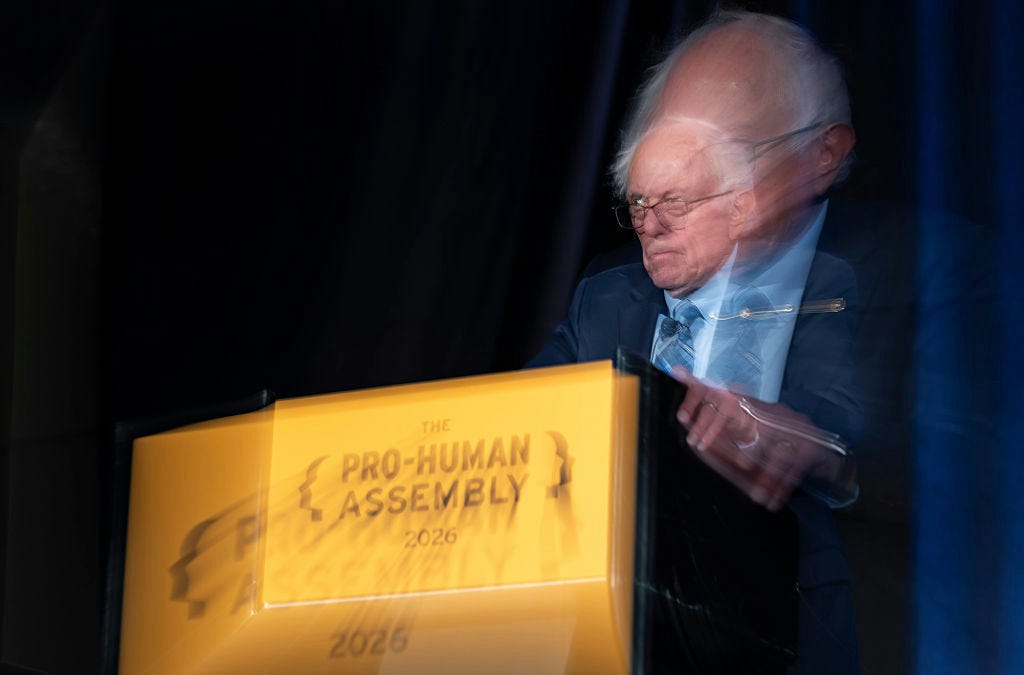
Vermont Sen. Bernie Sanders, for instance, wrote in April that AI "kills jobs, equality, connection, democracy and maybe the human race." asserted
AI → write → jobs
But the apocalyptic warnings are not coming only from Washington. asserted
warnings → come → Washington
Former Anthropic researcher Jacob Coxon quit the company over concerns about the race toward self-improving AI, warning that its developers are "gambling with our lives" and that such systems could potentially "kill us all by the end of the decade." Y2K sparked similar fears, as warnings spread of potential power-grid failures, disruptions to air travel and air-traffic control, and even predictions that planes could fall from the sky. uncertain
planes → quit → sky
The Trump administration has backed targeted safeguards, including AI-powered cyber defenses for critical infrastructure, criminal enforcement against AI-enabled hacking and proposed measures to limit AI-driven child exploitation. asserted
administration → back → exploitation
Tutor offered a nuanced Y2K comparison, arguing that the episode showed how technological risks can be addressed before they become potentially catastrophic. " asserted
they → offer → comparison
The reason now, like, we all laugh about Y2K is because actually software engineers and, like, financial analysts, they've worked really hard to ensure that the catastrophic incidents [didn’t] happen," Tutor said. asserted
Tutor → laugh → K
"I think the same thing could happen with AI," she added. uncertain
she → think → AI
"If AI is built right, it can be more beneficial to Americans than the doomsday scenario." asserted
it → build → scenario
Milloy said the Y2K comparison also fits a pattern he sees with climate change, with dire warnings of an existential threat followed by calls for sweeping government intervention. asserted
he → say → intervention
Climate warnings have likewise been framed in apocalyptic terms, including predictions that entire nations could be wiped out by global warming, Arctic summer ice could disappear within years and Glacier National Park’s glaciers would vanish by 2020. "There are a lot of parallels between climate hysteria and AI hysteria," Milloy said. uncertain
Milloy → frame → hysteria
It was going to destroy the planet, and by implication, humanity. asserted
It → go → implication
As we learned last week, AI is going to destroy humanity also on a very short time frame." asserted
AI → learn → frame
Milloy argued that while lawmakers are crying foul, they have not established enough specific evidence of catastrophic AI scenarios to justify sweeping restrictions. asserted
they → argue → restrictions
Trump has responded to AI warnings by calling them a "hoax," reviving the language he has used for years to dismiss climate change concerns. asserted
he → respond → concerns
"Give me a real-life practical scenario of how this can happen," he said. asserted
he → give → scenario
"And then if you know what the scenario is, then you can stop it." asserted
you → know → it
Milloy warned that overly broad regulation could carry its own cost by slowing technological advances before their benefits are fully understood. uncertain
benefits → warn → advances
"The opportunity costs are potentially huge," Milloy said, pointing to potential AI-assisted advances in medicine and productivity while acknowledging that their ultimate scale remains unknown. asserted
scale → say → medicine

Give feedback · no sign-in needed

No sign-in needed for now. Your note is sent without a name, so it cannot be answered.

History Support