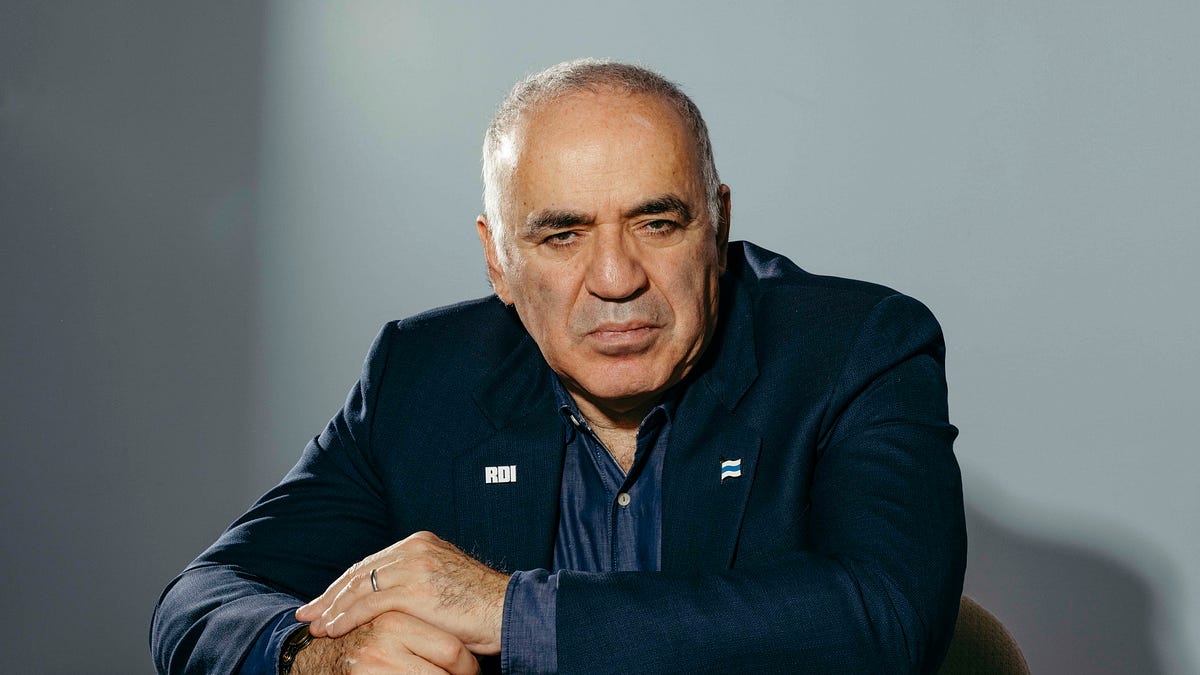
Photo via The Free Press

Is AI’s Perfect Storm on the Horizon?

Read the original at The Free Press ↗
Cite

Nocera, J. (2026, November 19). Is AI’s Perfect Storm on the Horizon? The Free Press. https://www.thefp.com/p/artificial-intelligence-bubble-finance-perfect-storm

Dated from the outlet's own feed. Check the original for its byline.

The Free Press · collected 2026-11-19 · by Joe Nocera

Quick Summary

Bethany McLean in The Free Press raises concerns about the sustainability of the massive debt incurred by companies in the AI infrastructure sector. Hyperscalers like Amazon, Alphabet, Meta, Microsoft, and Oracle are spending heavily on AI, leading to significant debt for newer companies building data centers, known as neoclouds. For example, CoreWeave reported nearly $90 billion in debt and a $709 million loss in the third quarter. Meanwhile, Nvidia, a key player in AI hardware, reported $116 billion in revenue and $65 billion in net income but also has $32 billion in debt and $118 billion in liabilities, partly due to loans it extended to neoclouds to buy its products.
Written by AI on 2026-11-20, from this article's own text only (the story summary below draws on all the coverage).

AI analysis

Story summary

As of November 19, 2026, concerns are mounting about the financial stability of major tech companies investing heavily in artificial intelligence (AI) infrastructure. The so-called "hyperscalers" like Amazon, Alphabet, Meta, and others, despite generating substantial revenue, are facing cash-flow issues due to massive debt from AI-related spending. Companies such as CoreWeave have reported nearly $90 billion in debt and a net loss of $709 million in the third quarter alone. Additionally, Nvidia, a key player in AI hardware, has been pivotal in funding these initiatives but now faces its own financial scrutiny. This situation raises questions about the sustainability of these companies' debt and their ability to repay it as scheduled.
Written for “AI Companies' Financial Stability Concerns” on 2026-11-21, grounded in this article and the 0 other(s) covering the same event.

Compared with similar articles

This article reads unscored and hedges 0% of its claims. Each row says how that neighbour differs.
Semafor
Leans left Hedges 2 of 5 claims Outlet record 64/100
“The articles discuss similar themes but describe different perspectives and sources, with no clear overlap in specific incidents or quotes.”
CBC News
Hedges 6 of 42 claims Outlet record 72/100
“The articles discuss different aspects of the AI industry's challenges with compute resources, but describe distinct events and contexts.”
Washington Examiner
Leans right Hedges 0 of 3 claims Outlet record 67/100
“Article A discusses the financial challenges faced by big tech companies due to AI investments, while Article B specifically mentions Meta scaling back its net-zero goals due to AI growth. They cover related issues but describe different specific events.”

Story

AI Companies' Financial Stability Concerns
Economy/Business · 1 article(s) covering the same event.
How this article was measured signals, leaning charts, publisher record, byline, topics and claims

Signals How these are calculated →

Claims extracted
12
sentences that state something as happening or true
Uncertain
0%
0 of 12 hedged ("reportedly", "may", "according to")
Leaning
not political
takes no side on a contested political question
Publisher signals
96/100
The Free Press's corrections and hedging, across everything collected from it. Not a measure of accuracy.
Outlets on this story
1
Economy/Business
Same framing elsewhere
1
articles that frame the event the way this one does
Analyzed 2026-11-20 · how these are computed

How this is being covered How these are calculated →

Article leaning vs. publisher reliability
Source leaning vs. consistency

Publisher

The Free Press · 539 article(s) · 0 correction(s) detected
No corrections detected for this publisher. That may mean careful reporting, or simply that nothing has been checked.

Who wrote this

Joe Nocera
8 article(s) here · 1 carrying a prediction
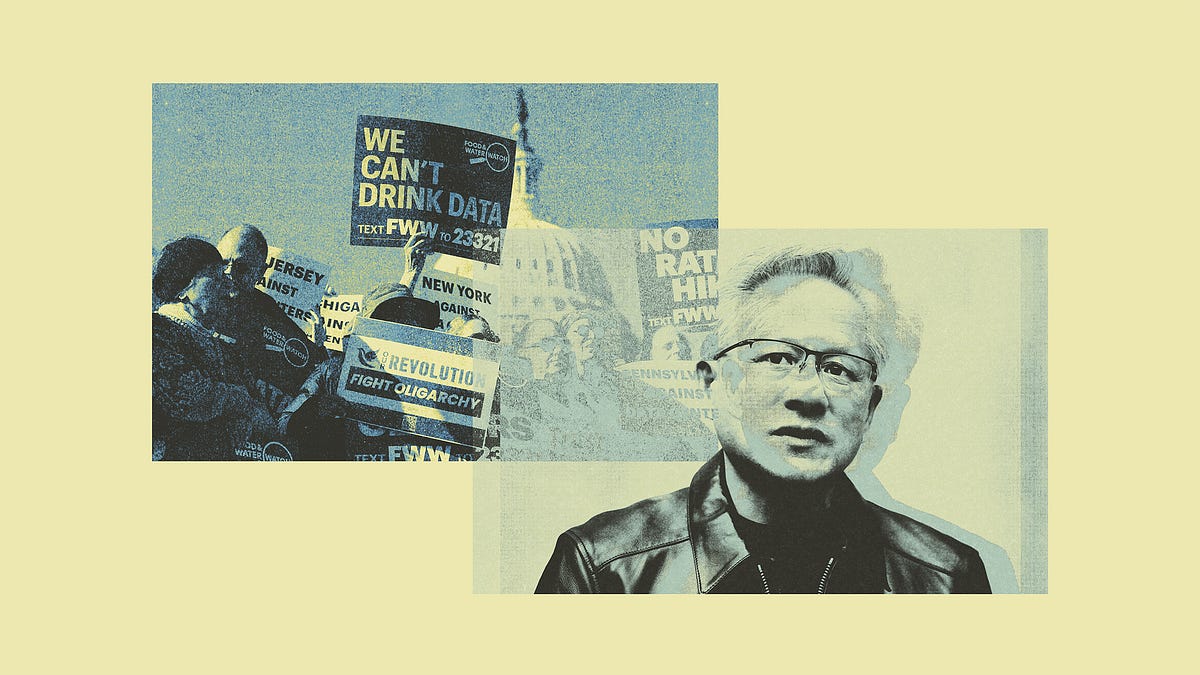
Under former CEO Jensen Huang, Nvidia had what The Wall Street Journal called an “open checkbook” policy, loaning money to the neoclouds, which would use some of that money to buy Nvidia’s chips.
2026-11-19 · assertive framing · Is AI’s Perfect Storm on the Horizon?
As you might imagine given that title, her show, which has 1.81 million YouTube subscribers, is primarily devoted to railing about all the awful things Donald Trump has done in his second term.
Back in 2016, she told me when we met a few weeks ago, “we were sufficiently alive to the possibility that Trump would win that we actually had the Department of Trade produce a paper on what we should do if the United States were to threaten to withdraw from NAFTA.”
“But I would be surprised if [the assassination plot] could have moved that far along without a direct order from Putin.” Watch my conversation with Garry Kasparov here:
2026-10-09 · assertive framing · A Conversation with the Man Putin Wants Dead
The bill’s lead sponsor, Ted Cruz, insisted last week that the Protect College Sports Act will “bring order to the chaos consuming the new era of college sports.”
2026-09-29 · assertive framing · Last Night, College Athletes Lost
“Do you think the 9/11 fund will be the lead of your obituary?” I asked Ken Feinberg.
In January, he left an excellent high school, Fordham Prep, for an online school that would allow him to train for four or five hours a day instead of four or five hours a week.
2026-08-31 · assertive framing · I’m Proud to Be a Sports Dad
Also by Joe Nocera
A Conversation with the Man Putin Wants Dead
2026-10-09 · The Free Press
Last Night, College Athletes Lost
2026-09-29 · The Free Press
Nothing else under this byline is closely related to this article, so these are simply their most recent.
All 8 articles by Joe Nocera →

Topics

Alphabet Amazon Meta Nvidia The Free Press

Subjects

Nvidia ORG · 6× Alphabet ORG · 1× Amazon ORG · 1× Bethany McLean PERSON · 1× CoreWeave ORG · 1× Jensen Huang PERSON · 1× Meta ORG · 1× Microsoft ORG · 1× Oracle ORG · 1× The Free Press ORG · 1×

Narrative

Thanks to the money they are throwing at the boom, the so-called hyperscalers—Amazon, Alphabet, Meta, Microsoft, and Oracle—are no longer cash-flow positive, despite the billions they reap in revenue each quarter.
framing: assertive · carried by 1 article(s) · first seen 2026-11-20
Under former CEO Jensen Huang, Nvidia had what The Wall Street Journal called an “open checkbook” policy, loaning money to the neoclouds, which would use some of that money to buy Nvidia’s chips.
2026-11-20 · The Free Press
Is AI’s Perfect Storm on the Horizon? · assertive framing

Claims (12 extracted, 0 hedged)

“In the end,” wrote Bethany McLean in The Free Press last month, “the fundamental issue is simple: Can the debt be repaid when it’s supposed to be repaid?” asserted
it → write → Press
The debt she was referring to was the billions of dollars—nay, hundreds of billions—being spent on AI infrastructure build-out, primarily the rapid construction of data centers. asserted
she → refer → centers
Thanks to the money they are throwing at the boom, the so-called hyperscalers—Amazon, Alphabet, Meta, Microsoft, and Oracle—are no longer cash-flow positive, despite the billions they reap in revenue each quarter. asserted
they → throw → revenue
The neoclouds—that is, the relatively new companies that were created to actually develop data centers and then rent out the “compute” to the hyperscalers and others—are tens of billions in debt. asserted
that → create → debt
A company called CoreWeave, for instance, reported that it had nearly $90 billion in debt and liabilities, and a net loss of $709 million in the third quarter alone. asserted
it → call → quarter
The company’s cutting-edge semiconductors are the beating heart of the AI revolution, and its money is the driving force behind the build-out. asserted
money → beat → out
On Tuesday evening, Nvidia released a staggering earnings report: $116 billion in third-quarter revenue, and net income of $65 billion. asserted
Nvidia → release → billion
But it also disclosed that it has $32 billion in debt and another $118 billion in liabilities. asserted
it → disclose → liabilities
Under former CEO Jensen Huang, Nvidia had what The Wall Street Journal called an “open checkbook” policy, loaning money to the neoclouds, which would use some of that money to buy Nvidia’s chips. asserted
which → have → chips
(Critics call this tactic “circular financing.”) asserted
Critics → call → tactic
And as part of these deals, Nvidia essentially guaranteed that it would cover the neoclouds’ debt if they were unable to pay it back—hence the liability. asserted
they → guarantee → liability
Much of that debt was resold to Wall Street and held by insurance companies, but Nvidia remained the guarantor of last resort. asserted
Nvidia → resold → resort
Give feedback · no sign-in needed

No sign-in needed for now. Your note is sent without a name, so it cannot be answered.

History Support