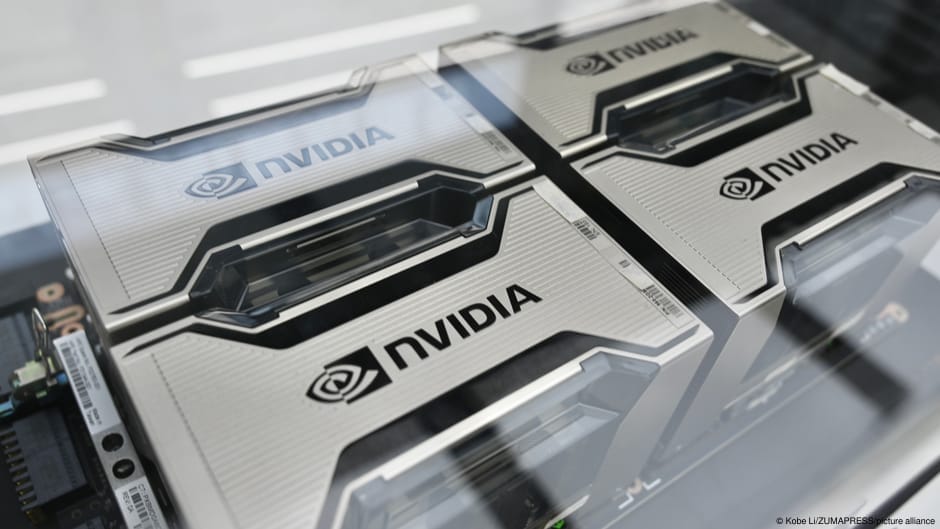
Photo via New York Post

Alarming reason China is desperately seeking US Nvidia chips: ‘Intelligentized warfare’

Read the original at New York Post ↗
Cite

Reyes, R. (2026, November 19). Alarming reason China is desperately seeking US Nvidia chips: ‘Intelligentized warfare’. New York Post. https://nypost.com/2026/11/19/us-news/alarming-reason-china-really-wants-americas-nvidia-chips-intelligentized-warfare/

Dated from the outlet's own feed. Check the original for its byline.

New York Post · collected 2026-11-19 · by Ronny Reyes

Quick Summary

The US-China Economic and Security Review Commission reported that China is attempting to circumvent US export bans to acquire Nvidia’s advanced semiconductors for its military’s “intelligentized warfare” initiatives, which integrate AI into weaponry and command systems. The report notes that Chinese tech companies like Huawei and Cambricon lack the necessary semiconductor power to handle the most advanced AI tasks, making Nvidia’s chips essential. Additionally, the report highlights Nvidia’s significant revenue from Chinese customers, estimated at $12.4 billion in six months, and raises concerns about potential breaches in export controls due to Nvidia’s former CEO’s alleged affair with a Chinese spy.
Written by AI on 2026-11-22, from this article's own text only.

AI analysis

Why this leaning score
The article's own words the score was based on. Each is quoted verbatim and was checked against the article text before being stored, so you can find it in the original.
Reading Leans strongly right (beta estimate) Confidence high 1 quote(s) discarded as not found in the article
Leaning: leans strongly right for article 165320 (high confidence, 2 verified quotes) · logged 2026-11-22

Compared with similar articles

This article reads leans strongly right and hedges 20% of its claims. Each row says how that neighbour differs.
Deutsche Welle
Hedges 5 of 49 claims Outlet record 95/100
“The articles discuss related topics but describe different aspects of the US-China tech rivalry, not the same specific incident.”
How this article was measured signals, leaning charts, publisher record, byline, topics and claims

Signals How these are calculated →

Claims extracted
10
sentences that state something as happening or true
Uncertain
20%
2 of 10 hedged ("reportedly", "may", "according to")
Leaning
Leans strongly right
of the writing, not the subject · beta estimate
Publisher signals
66/100
New York Post's corrections and hedging, across everything collected from it. Not a measure of accuracy.
Outlets on this story
unclustered
not grouped into a story yet
Same framing elsewhere
1
articles that frame the event the way this one does
Analyzed 2026-11-22 · how these are computed

How this is being covered How these are calculated →

Article leaning vs. publisher reliability
Source leaning vs. consistency

Publisher

New York Post · 21894 article(s) · 42 correction(s) detected
Running correction rate · 42 correction(s)

Who wrote this

Ronny Reyes
91 article(s) here · 1 carrying a prediction
Advertisement Tehran has repeatedly stated that it would not allow ships to undermine its claim to the oil chokehold, with Iran specifically targeting the busiest ships that have been making the dangerous back-and-forth trips, according to the Vortexa maritime firm.
Huang’s efforts to supply China with key AI tech showered Nvidia with an eye-watering $12.4 billion in revenue in the six months through July 26 of this year, or 7% of its global revenue, according to the Wall Street Journal, which added that countless more billions of dollars could ultimately trace back to Chinese customers.
Advertisement Duffy went as far as to claim that he would drop L3Harris as a partner if he could. “I want to get away from L3Harris and get to a new one, but they own the network.
The president has since said that he’s not interested in reigniting the war and signaled that he would let America’s economic pressure campaign play out to force Iran to negotiate seriously.
With Russia stepping up attacks on Ukraine’s energy infrastructure in an attempt to freeze the country, nuclear safety regulators representing 38 nations fear that the lack of stable electricity could threaten the country’s power plants’ ability to stay cool and avoid a meltdown.
The figure would match what is already known about Iran’s production capacity.
Any savings from buying the cheaper Russian diesel would be easily wiped out by potential legal fees, likely upcoming congressional investigations, and reputation damage of going through with the exchange, said Jeremy Paner, a former US sanctions official.
President Trump’s special envoy Steve Witkoff said the negotiations would focus on a “post-war security arrangement” and “de-escalation.”
Trump has reiterated that he would keep pushing for diplomacy in Iran, declaring on Monday that the war was “effectively over” despite negotiators being nowhere near to reaching a peace deal.
Additionally, selling more chips to the world’s second largest economy could only help Nvidia’s bottom line.
Also by Ronny Reyes
Nothing else under this byline is closely related to this article, so these are simply their most recent.
All 91 articles by Ronny Reyes →

Topics

Beijing China Chinese Economic and Security Review Commission Nvidia

Subjects

China GPE · 7× Nvidia ORG · 7× Beijing GPE · 3× Chinese NORP · 3× Huang PERSON · 3× Cambricon ORG · 1× Economic and Security Review Commission ORG · 1× Huawei ORG · 1× Jensen Huang PERSON · 1× the People’s Liberation Army’s ORG · 1×

Narrative

Advertisement While Nvidia claimed that the export ban has effectively shut it out of China’s AI data-center market, a Reuters review revealed that more than $3 billion in Chinese computing projects were using Nvidia’s restricted chips.
framing: assertive · carried by 1 article(s) · first seen 2026-11-22
Huang’s efforts to supply China with key AI tech showered Nvidia with an eye-watering $12.4 billion in revenue in the six months through July 26 of this year, or 7% of its global revenue, according to the Wall Street Journal, which added that countless more billions of dollars could ultimately trace back to Chinese customers.

Claims (10 extracted, 2 hedged)

The US-China Economic and Security Review Commission asserted that Beijing was looking to circumvent US export bans to get the leading tech company’s semiconductors for China’s so-called “intelligentized warfare,” according to the committee’s annual report published on Wednesday. uncertain
Beijing → assert → Wednesday
The term refers to the People’s Liberation Army’s way of integrating AI into weapons, command and control, kill chains and logistics. asserted
term → refer → weapons
“China is seeking to evade US export controls to gain the most advanced semiconductors that underpin its intelligentization drive,” the report read. asserted
report → seek → drive
Beijing is especially hungry for the Nvidia chips because the US company leads the world’s AI industry. asserted
company → lead → industry
China’s Huawei’s Ascend and Cambricon’s Siyuan chips are not powerful enough for the most advanced AI tasks, the report said. asserted
report → say → tasks
The report highlights yet more worries following former Nvidia CEO Jensen Huang’s exit after he admitted to having an affair with suspected Chinese spy Alice Huang, who company was accused of funneling advanced chips to China. asserted
company → highlight → China
During his affair with the alleged spy, Huang lobbied the Trump administration to allow Nvidia to export more of its products to Beijing. asserted
Nvidia → allege → Beijing
Huang’s efforts to supply China with key AI tech showered Nvidia with an eye-watering $12.4 billion in revenue in the six months through July 26 of this year, or 7% of its global revenue, according to the Wall Street Journal, which added that countless more billions of dollars could ultimately trace back to Chinese customers. uncertain
billions → supply → customers
Advertisement While Nvidia claimed that the export ban has effectively shut it out of China’s AI data-center market, a Reuters review revealed that more than $3 billion in Chinese computing projects were using Nvidia’s restricted chips. asserted
billion → claim → chips
With Nvidia under increased scrutiny over its chips and Huang’s affair, Washington announced earlier this week that it would further restrict China’s access to advanced chips developed in the US. asserted
it → increase → US
Give feedback · no sign-in needed

No sign-in needed for now. Your note is sent without a name, so it cannot be answered.

History Support