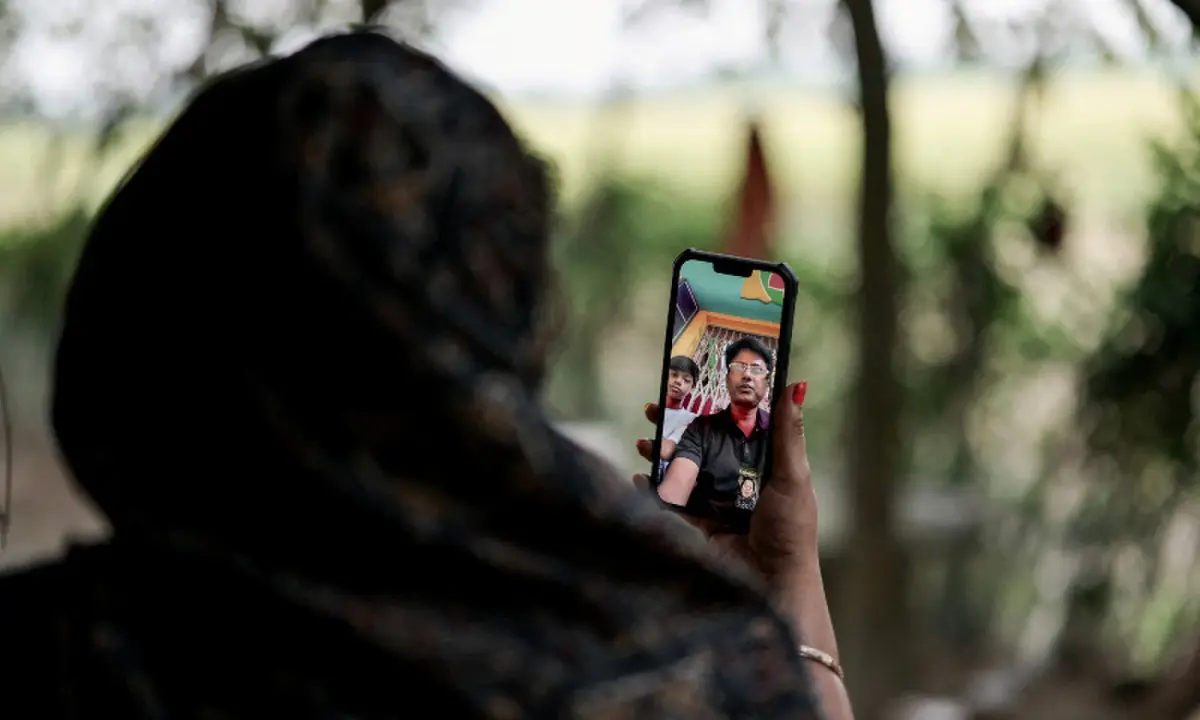
Photo via Dawn

Islam forecast to exceed Christianity as world's biggest religion by middle of next decade

Read the original at Dawn ↗
Cite

Reuters. (2026, November 19). Islam forecast to exceed Christianity as world's biggest religion by middle of next decade. Dawn. https://www.dawn.com/news/2045648/islam-forecast-to-exceed-christianity-as-worlds-biggest-religion-by-middle-of-next-decade

Dated from the outlet's own feed. Check the original for its byline.

Dawn · collected 2026-11-19 · by Reuters

Quick Summary

Pew Research Centre projects that Islam will surpass Christianity as the world’s largest religion by the middle of the next decade, with 2.57 billion Muslims compared to 2.52 billion Christians in 2035. By 2070, Muslims are forecast to number 3.6 billion and Christians 3 billion, with Islam accounting for 37% of the global population and Christianity for 29%. The study attributes the growth in the Muslim population to higher fertility rates in Muslim countries, averaging 3.1 children per woman compared to 2.5 for Christians. Additionally, Pakistan’s Muslim population is expected to double to 461 million by 2070, making it the world’s largest Muslim country.
Written by AI on 2026-11-20, from this article's own text only (the story summary below draws on all the coverage).
See how they differ ↓

AI analysis

Story summary

Islam is projected to become the world's largest religion by 2035, surpassing Christianity, according to a new report by the Pew Research Center released on November 18, 2026. The report forecasts that by 2035, the Muslim population will reach 2.57 billion, compared to 2.52 billion Christians. By 2070, Muslims will number 3.6 billion, while Christians will total just under 3 billion. This shift is largely due to higher Muslim birth rates and faster population growth. The study also notes that the United States, which had the largest Christian population in 2020, will no longer have a Christian majority by 2070, with Christians expected to decline to less than half of the U.S. population, while the religiously unaffiliated will rise to about 41%.

Written for “Islam to exceed Christianity by 2035” on 2026-11-20, grounded in this article and the 7 other(s) covering the same event.

How they differ

8 outlets covered “Islam to exceed Christianity by 2035”.

What each outlet says

One AI summary per outlet of its latest article on this story, written from that article alone and checked against it. Open the article for the outlet's own words.

DawnThis outlet19 Nov

Pew Research Centre projects that Islam will surpass Christianity as the world’s largest religion by the middle of the next decade, with 2.57 billion Muslims compared to 2.52 billion Christians in 2035. By 2070, Muslims are forecast to number 3.6 billion and Christians 3 billion, with Islam accounting for 37% of the global population and Christianity for 29%. The study attributes the growth in the Muslim population…

Islam forecast to exceed Christianity as world's biggest religion by middle of next decade (this article)
The Daily Wire18 Nov

Pew Research Center projects that by 2035, Islam will become the world’s largest religion, surpassing Christianity due to higher Muslim birth rates and lower rates of religious switching. Between 2020 and 2025, the Muslim fertility rate was 3.1 children per woman, compared to 2.5 for Christians. By 2070, Muslims are expected to gain 1.6 billion people through natural population change, while Christians will see an…

Islam Projected To Overtake Christianity As World’s Largest Religion →
Washington Free Beacon19 Nov

Pew Research Center predicts that Islam will surpass Christianity as the world's largest religion by 2035, with Muslims outnumbering Christians by over 600 million by 2070. In the United States, Christians are projected to decline to less than half of the population by 2070, while religiously unaffiliated individuals will rise to about 41%. The report attributes these changes to higher fertility rates among Muslims…

Islam Will Overtake Christianity by 2035 as World's Largest Religion, New Pew Survey Predicts →
NPR19 Nov

A new report by the Pew Research Center projects that Muslims will outnumber Christians globally by 2035. The report, released today, predicts the world's Muslim population to reach 3.6 billion by 2070, while Christians will number just under 3 billion. These projections are based on demographic trends, including fertility rates and religious switching patterns, using data from national censuses, United Nations…

Muslims will outnumber Christians worldwide by 2035, report says →
Reason19 Nov

Pew Research Center released a report predicting religious trends in the United States from 2020 to 2070. The study forecasts a decline in Christianity to less than half of the U.S. population by 2070, with religiously unaffiliated people increasing to about 41%, and Jews being outnumbered by Muslims and Hindus. Additionally, the report projects that Israel will house 62% of the global Jewish population by 2070, up…

The Pew Research Center Report on Future of World Religions →
The Hindu19 Nov

Pew Research Center projects that Islam will surpass Christianity as the world's largest religion by 2035, with Muslims expected to number over 3.6 billion and Christians just under three billion by 2070. The study attributes this shift to higher fertility rates among Muslims and Christians compared to other religious groups, with the Muslim fertility rate at 3.1 children per woman and Christians at 2.5, while other…

Muslims to outnumber Christians by 2035 worldwide: Pew research →
Show 2 more outlets
Euronews20 Nov

Pew Research Center projects that both Islam and Christianity will grow significantly by 2070, with Islam becoming the world’s largest religion by 2035. The number of Muslims is expected to rise by over 80% to 3.6 billion, surpassing Christians by around 50 million people. Christianity is projected to grow by 30% to nearly 3 billion, but its share of the global population will remain stable at around 29%. The study…

Islam to become world's largest religion by 2035 as Christianity also grows, study says →
Al Jazeera20 Nov

Pew Research Center projects that Muslims will outnumber Christians globally by 2035, with the Muslim population expected to rise from 2.02 billion to 3.64 billion by 2070, marking an 80% increase. This growth is primarily driven by higher birth rates among Muslim women, who had an average of 3.1 children between 2020 and 2025. By 2070, most of the growth will occur in Muslim-majority countries, with Pakistan…

Islam set to be the largest religion by 2035: Where will most Muslims live? →

Where they agree and split

The full story: what happened, how it changed, and all 8 articles →

Compared with similar articles

This article reads unscored and hedges 12% of its claims. Each row says how that neighbour differs.
Euronews
Hedges 2 of 34 claims Outlet record 60/100
The Daily Wire
Hedges 4 of 21 claims Outlet record 59/100
freebeacon
Hedges 3 of 39 claims Outlet record 95/100
The Hindu
Hedges 3 of 25 claims Outlet record 78/100
NPR
Hedges 4 of 31 claims Outlet record 60/100

Story

Islam to exceed Christianity by 2035
World · 8 article(s) covering the same event. Compare every outlet's account →
How this article was measured signals, leaning charts, publisher record, byline, topics and claims

Signals How these are calculated →

Claims extracted
17
sentences that state something as happening or true
Uncertain
12%
2 of 17 hedged ("reportedly", "may", "according to")
Leaning
not political
takes no side on a contested political question
Publisher signals
67/100
Dawn's corrections and hedging, across everything collected from it. Not a measure of accuracy.
Outlets on this story
8
World
Same framing elsewhere
1
articles that frame the event the way this one does
Analyzed 2026-11-20 · how these are computed

How this is being covered How these are calculated →

Article leaning vs. publisher reliability
Source leaning vs. consistency

Publisher

Dawn · 3468 article(s) · 5 correction(s) detected
Running correction rate · 5 correction(s)

Who wrote this

Reuters
1187 article(s) here · 1 carrying a prediction
US Secretary of State Marco Rubio said last month the issue was a “domestic political matter” and Washington would not comment on it.
CA bosses said on Wednesday that an independent forum would be set up to allow players to give their accounts of the incident, but the results would not necessarily be made public and no sanctions would follow.
Some analysts said the outcome of the Shenzhen summit may actually diminish Trump’s stature on the world stage as he enters the lame-duck phase of his presidency, while bolstering two of Washington’s main adversaries.
Department of Defence Chief Information Officer Kirsten Davies will assume the position temporarily, according to the source.
FIFA last month said it would amend the rule in its disciplinary code, which had allowed for the reversal of the ban.
While Aikman’s contract is set to expire after February’s Super Bowl, Buck finalized a six-year extension with ESPN that is worth more than $100m, The Athletic reported in September.
Pakistan, along with 14 other countries, has welcomed the imposition of sanctions by the United Kingdom and Australia in response to Israeli settlement activities in the occupied Palestinian territory and expressed hope that the decisions would encourage others to follow suit.
He added it was possible Republican candidates would have fared worse without the spending, but said the result demonstrated that campaign cash alone could not determine an election.
Pakistan, along with 14 other countries, has welcomed the imposition of sanctions by the United Kingdom and Australia in response to Israeli settlement activities in the occupied Palestinian territory and expressed hope that the decisions would encourage others to follow suit.
Wire or desk byline, not an individual reporter.
Also by Reuters
Nothing else under this byline is closely related to this article, so these are simply their most recent.
All 1187 articles by Reuters →

Topics

Christianity Islam Muslim Muslims Pew

Subjects

Muslim NORP · 7× Pew ORG · 6× Islam NORP · 4× Christianity ORG · 3× Christians NORP · 3× Christian NORP · 2× Muslims NORP · 2× Pakistan GPE · 1× Washington GPE · 1× the Pew Research Centre ORG · 1×

Narrative

The numbers of religiously unaffiliated people are expected to grow in most countries in the coming decades, but those increases will be entirely outweighed by the dwindling population forecast for China, where most of the world’s non-believers currently reside.
framing: assertive · carried by 1 article(s) · first seen 2026-11-20
Islam is expected to surpass Christianity as the world’s biggest religion by the middle of the next decade, the Pew Research Centre projected on Wednesday.

Claims (17 extracted, 2 hedged)

Islam is expected to surpass Christianity as the world’s biggest religion by the middle of the next decade, the Pew Research Centre projected on Wednesday. asserted
Centre → expect → Wednesday
While Christianity has ranked as humanity’s largest religion for centuries, the global Muslim population has grown much faster and is forecast to reach 2.57 billion by 2035, compared with a projected tally of 2.52bn Christians in that year, the Pew study found. asserted
study → rank → year
If recent trends hold, Muslims will outnumber Christians 3.6bn to 3bn worldwide by 2070, and Islam will also then account for the largest portion of the global population — 37 per cent, up from 26pc in 2020, Pew said. asserted
Pew → hold → 2020
Christianity, meanwhile, is expected to hold steady at around 29pc, ranking second in global proportion. asserted
Christianity → expect → proportion
The Pew study also concluded that Pakistan’s Muslim population was expected to double from 227 million in 2020 to 461m in 2070. asserted
population → conclude → 2070
“The country will rise from having the second-largest Muslim population to the world’s largest,” it said. asserted
it → rise → world
The study attributes the projected rise in the world’s Muslim population mostly to higher fertility rates in Muslim countries, averaging 3.1 children for each Muslim woman, compared with 2.5 children per Christian woman during the period 2020-2025. asserted
study → attribute → period
In all other religious categories combined, the birth rate in that period averaged 1.6 children per woman, below the minimum rate of 2.1 considered necessary for a generation to replace itself. asserted
generation → combine → itself
While natural population growth — births exceeding deaths — remains the biggest factor in the changing face of Muslim and Christian demographics, religious switching will also play a role, said Pew, a non-partisan, Washington-based think tank. asserted
Pew → exceed → role
Based on past trends, according to Pew, both Islam and Christianity will lose more adherents from switching than they gain, but Muslims are expected to lose far fewer — 8m between 2020 and 2070, compared with 105m for Christians. uncertain
Muslims → base → Christians
The world’s overall population is projected to increase 29pc between 2020 and 2070, with Islam and Christianity the only two religious groups forecast to keep pace with or exceed that growth rate, expanding by 80pc and 30pc, respectively. asserted
population → project → 80pc
Hindus are growing in absolute numbers but are expected to shrink slightly as a share of the world’s population (13.6pc in 2070), with Jews projected to follow a similar pattern (0.17pc in 2070). asserted
Jews → grow → 2070
Buddhists, meanwhile, are forecast to decline in numbers and as a percentage of global population (2.5pc in 2070). asserted
Buddhists → forecast → 2070
All other faiths combined — including Baha’is, Daoists, Jains, Sikhs and followers of various folk religions — are expected to see a modest rise in numbers, while collectively slipping below 2pc of all humanity by 2070, according to Pew. Moreover, people with no religious affiliation, a category that includes those identifying as atheist or agnostic, are expected to decline sharply as a proportion of the global whole, from 24pc in 2020 to 17pc in 2070, the study found. uncertain
study → combine → 2070
The geographic distribution among religions is also shifting dramatically. asserted
distribution → shift → religions
By 2070, for instance, Christianity will rank as the largest religion in the United States but not its majority religion, and the Democratic Republic of Congo will surpass the US as the country with the greatest concentration of Christians, Pew projected. asserted
Pew → rank → Christians
The numbers of religiously unaffiliated people are expected to grow in most countries in the coming decades, but those increases will be entirely outweighed by the dwindling population forecast for China, where most of the world’s non-believers currently reside. asserted
believers → expect → China
Give feedback · no sign-in needed

No sign-in needed for now. Your note is sent without a name, so it cannot be answered.

History Support