Every now and then, Mark Carney betrays some frustration about what it’s like to deal with Donald Trump’s administration.
asserted
it → betray → administration
A bit of that emerged when Carney sat down for the New York Times’s DealBook summit on Wednesday.
asserted
Carney → emerge → Wednesday
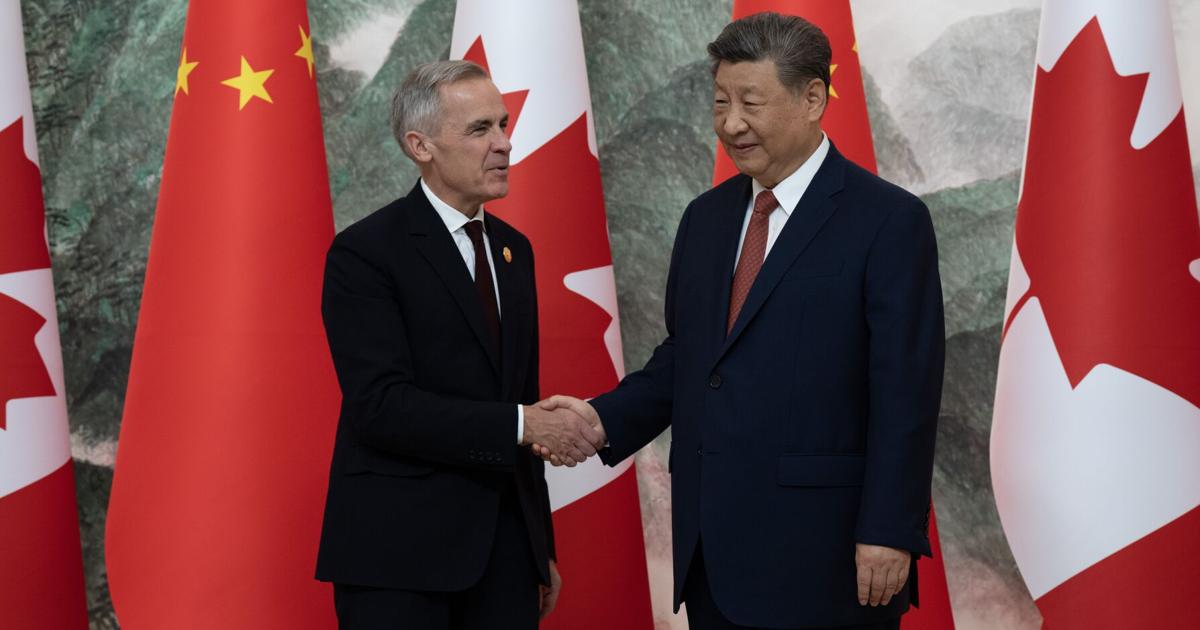
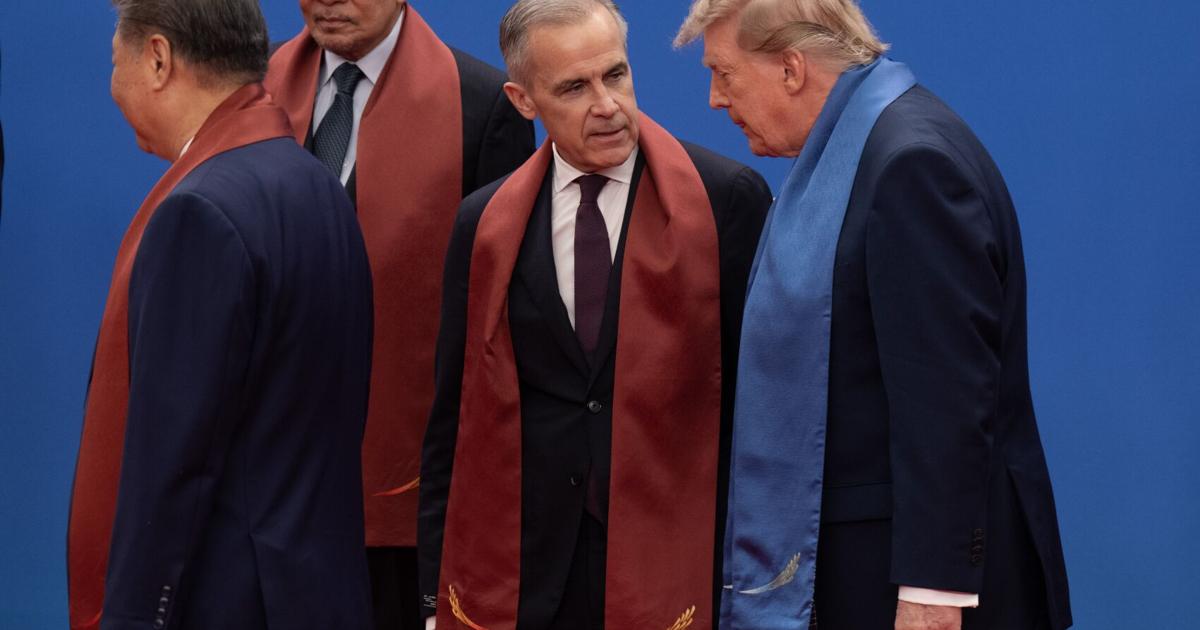
Talking to Andrew Ross Sorkin from Shenzhen, China, not long after a 20-minute meeting there with Trump, Carney said Canada is in the wrong automobile war.
asserted
Canada → talk → war
Rather than fighting the U.S. on tariffs, he said, we should be fighting to catch up with China on the electrification of vehicles.
asserted
we → fight → vehicles
“We are way behind in North America relative to China, as is Europe, and so we’re spending way too much time on a trade war around autos, as opposed to where is this sector going and how are we pooling our resources.”
asserted
we → spend → resources
Carney and Trump discussed ‘the work underway to reach a mutually beneficial trade agreement,’ according to an official readout from the Canadians.
uncertain
Carney → discuss → Canadians
Carney and Trump discussed ‘the work underway to reach a mutually beneficial trade agreement,’ according to an official readout from the Canadians.
uncertain
Carney → discuss → Canadians
On that subject, Carney also said he’d owned a Tesla but sold it — and for less than he expected to get.
asserted
he → say → less
“I don’t have it any more — sorry, Elon — and I didn’t get the resale value for it that I thought I would because they don’t quite have the cachet that they used to,” he said, in a sly dig at Tesla CEO Elon Musk, who was lined up to speak to the same summit not long after Carney.
asserted
who → have → Carney
On both counts, Carney was essentially saying that before 2024, he was pretty sure he knew where the future of autos was headed.
asserted
future → say → autos
Then along came Trump, tariffs, and Musk’s disruptive effects in general.
asserted
Trump → come → ?
Carney actually arrived at that interview armed with a joke that was also a gentle poke at how things are going in Canada-U.S. relations.
asserted
things → arrive → relations
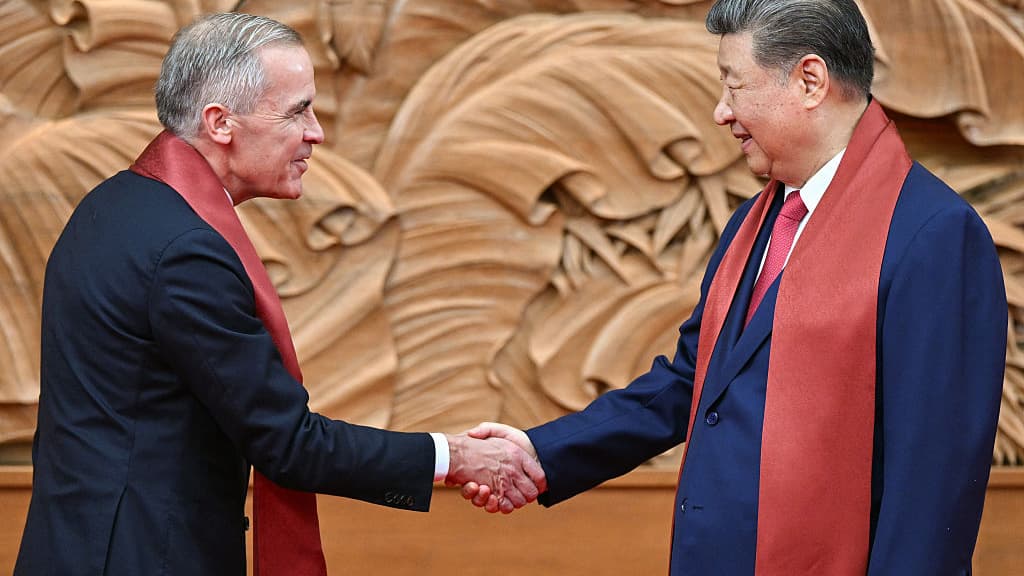
After Sorkin introduced him and noted that Carney had spoken to Trump and Xi Jinping separately at the summit, Carney said, “I can report that the trade negotiations are going exceptionally well.
asserted
negotiations → introduce → summit
We reached an agreement.
asserted
We → reach → agreement
We’ve reduced tariffs on over 90 per cent of trade irritants.”
asserted
We → reduce → irritants
Then, smiling, he added, “Of course I’m speaking about our trade negotiations with China.
asserted
I → smile → China
They’re very professional.
asserted
They → ’re → ?
They’ve moved forward in a very linear fashion, and it
asserted
They → move → fashion
Now, if you’re asking about the United States, well, we continue to have a series of issues there.”
asserted
we → ask → issues
Carney has circled this territory before, notably in the aftermath of the breakdown in trade talks with the U.S. last summer, when he spoke about how Trump kept coming up with different reasons for tariffs.
asserted
Trump → circle → tariffs
But in this encounter, Carney diplomatically would not be drawn into a direct comparison of which leader he trusted more, Xi or Trump.
asserted
he → draw → Xi
“We look for situations where there’s alignment and we trust alignment.”
asserted
we → look → alignment
Nor did Carney go into great detail about what had taken place in the meeting with Trump in Shenzhen, beyond calling it a “very nice discussion.”
asserted
what → go → it
He did, however, give a more general peek behind the curtain on what it’s like dealing with Trump one on one.
asserted
it → give → one
“He’s very different inside the room is the short answer.
asserted
answer → ’ → room
I mean, he’s a very personable individual,” Carney said.
asserted
Carney → mean → ?
“He listens a lot more in private.
asserted
He → listen → ?
I mean, he’s interested genuinely in your opinion, and it’s a reasonably direct conversation.
asserted
it → mean → opinion
But Carney said he doesn’t forget that what those discussions come down to is whether there’s a deal or not, and right now, there is not one.
asserted
come → say → what
It was a wide-ranging interview with Sorkin, touching on a variety of countries and topics, but the thread running through it was how Canada continues to handle a world that Trump has so disrupted.
asserted
Trump → range → that
Carney was asked if the Democrats’ rout of Trump’s Republicans in the U.S. midterm elections earlier this month would change things.
asserted
rout → ask → things
“I would say no is the short answer,” he replied.
asserted
he → say → ?
Well in advance of the Shenzhen summit, Carney had ratcheted down expectations for any meeting he might have with Trump there.
uncertain
he → ratchet → Trump
He also said, realistically, that in the larger context of what was happening at this summit — the trilateral meeting between Trump, Xi and Vladimir Putin, for instance — the Canada-U.S. file was not at the top of the president’s agenda.
asserted
file → say → agenda
But the DealBook interview was Carney doing what has become a familiar workaround in dealing with Trump — telling influential Americans, very diplomatically, that their president is the cause of the rupture, and that it continues, even in “very nice discussions.”
asserted
it → do → discussions
It’s a bit like how he dealt with the sale of his Tesla — not suggesting it was in protest against Musk or because of the declining cachet of the brand, but just a practical decision.
asserted
it → ’ → brand
When Sorkin asked what prompted Carney to sell his Tesla, he replied, “I got a new job and I’m not allowed to drive anymore.”
asserted
I → ask → job
 The Aporia