Barring a miracle, we are less than two weeks away from a prolonged work stoppage in Major League Baseball.
asserted
we → bar → Baseball
The Collective Bargaining Agreement between the 30 team owners and the MLB Players Association expires in early December, and the two sides, despite some bargaining between them, are no closer to a deal than they were when negotiations started over the summer.
asserted
negotiations → expire → summer
The disagreement stems from the creation of a salary cap, which MLB has avoided for decades, despite other sports like the NBA and NFL implementing their own cap systems years ago.
asserted
sports → stem → systems
Many fans have, for some inexplicable reason, come down on the side of the owners, believing that limiting what players can earn will somehow "level the playing field," as the league's propaganda campaign has claimed.
asserted
campaign → come → field
While there would be a so-called "floor" under the league's proposal, it would again be far less than the cap.
asserted
it → call → cap
Meaning that the cheaper small-market teams already raking in tens of millions of dollars per year in revenue sharing would still spend as little as possible on player payroll.
asserted
teams → mean → payroll
If money is such a pivotal factor, the proposed ~$80 million gap would still allow teams that try to win to sign at least three or four big-name star-level players that the cheaper teams wouldn't. Not to mention that free agents, with their earnings now artificially limited to make owners richer, would gravitate towards the larger markets like LA, New York, Chicago or Boston anyway, as those cities would offer more lucrative off-field opportunities.
asserted
cities → propose → opportunities
Along with a broader commitment to winning, or trying to win, that the Pirates and Marlins of the world laugh at.
asserted
Pirates → win → world
All these issues aside though, the argument that pro-cap fans make is that while the owners might want a cap for the wrong reasons, the outcome would be beneficial.
uncertain
outcome → make → reasons
Competitive balance would be restored, they say, because of a limit on big spending teams.
asserted
they → restore → teams
So it's worth examining then, is that claim actually true?
uncertain
claim → examine → ?
Obviously, we just completed a 2026 season in which the Milwaukee Brewers, long one of baseball's cheapest organizations, won the World Series in historic fashion.
asserted
Brewers → complete → fashion
They went 11-2 in the playoffs, with their two losses coming by a combined total of just two runs.
asserted
losses → go → runs
They were three outs away from becoming the first team to sweep the NLCS and World Series.
asserted
They → become → NLCS
That NLCS sweep came against the Los Angeles Dodgers and their $400 million+ payroll.
asserted
sweep → come → Dodgers
The Brewers beat the Tampa Bay Rays in the World Series, another one of baseball's cheapest teams.
asserted
Brewers → beat → teams
Yet the Rays have made the World Series three times since 2008 and twice since 2020.
asserted
Rays → make → 2020
Here's how that compares to some of baseball's biggest markets over the last decade:
asserted
that → compare → decade
- Yankees - 1
- Mets - 0
- Giants - 0
- Red Sox - 1
- Cubs - 1
- Rangers - 1
- Nationals - 1
- Phillies - 1
The Rays have been a more successful organization at reaching the World Series over the past decade than every big market team other than the Dodgers and Houston Astros.
asserted
Rays → reach → Dodgers
The San Diego Padres, who have spent a fortune signing players like Fernando Tatis Jr., Manny Machado, Xander Bogaerts, Yu Darvish, Joe Musgrove, Jackson Merrill, rank in the top five in overall spending in the last five seasons.
asserted
who → spend → seasons
They have one win in the NLCS to show for it and no World Series appearances.
asserted
They → have → it
Still, there are many who remain convinced that a cap would ultimately make a substantial difference in outcomes, relative to the capitalist market baseball currently enjoys.
asserted
baseball → be → market
Thankfully, The Athletic put that theory to the test.
asserted
Athletic → put → test
And got what might be surprising results for some fans.
uncertain
what → get → fans
Eno Sarris, one of their baseball writers, used regression analysis to "determine the state of competitive balance."
asserted
Sarris → use → balance
His methodology "incorporated three ways of measuring market size — payroll, Nielsen’s ranking of television markets and a metric the union and league created called "market score" — and examined the correlation between those factors and outcomes on the field."
asserted
union → incorporate → field
He then compared the current state of baseball to the NBA and NFL, the two salary capped leagues.
asserted
He → compare → NBA
And while there's a lot to unpack, here's the topline, as the article states:
asserted
article → be → ?
"First, the math largely supports the Players Association’s position that baseball’s competitive balance is already strong."
asserted
balance → support → position
"Second, MLB’s vision for a competitive-balance utopia might not level the playing field the way fans expect," it adds.
uncertain
it → level → field
There is a caveat; sustained spending over time can correlate, at least somewhat, with higher winning percentages in the regular season.
asserted
spending → be → season
But the complaints about "big markets" are mostly false, they found.
asserted
they → find → markets
"If, instead of payroll, the analysis uses 'market score' — a metric that factors in TV audiences, population and median household income — then market size explains almost nothing statistically about how a team will fare.
asserted
team → use → nothing
Analytics and modern front offices have also closed the gaps between teams, their analysis found, and the postseason is mostly random, making regular season success of little value.
asserted
success → close → value
"In addition, when compared to the past, team win-loss records are more clustered in the middle, with fewer clubs occupying the extremes," the article reads.
asserted
article → compare → extremes
"At the same time, outcomes in the playoffs also remain much more random than those in the regular season."
asserted
outcomes → remain → season
As for a salary cap, even the league's top executives admit that it will do little-to-nothing to create more playoff appearances for small-market teams.
asserted
it → admit → teams
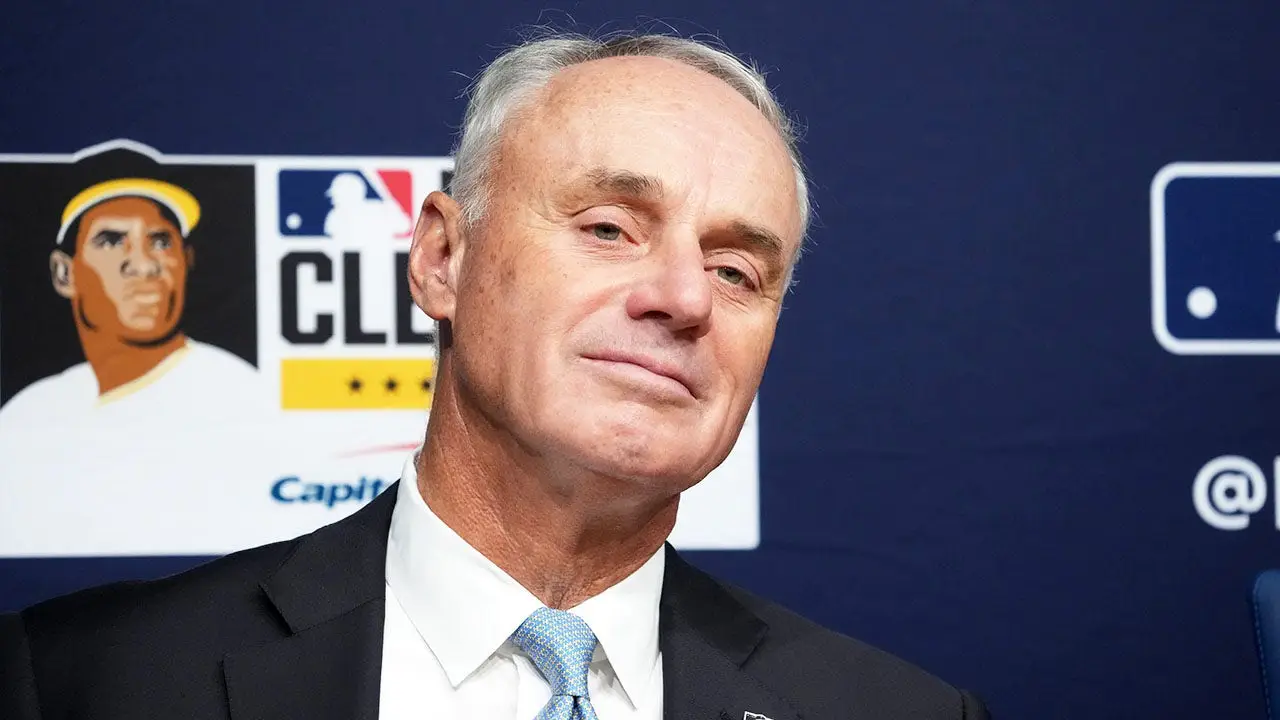
Morgan Sword, an executive VP and one of commissioner Rob Manfred's top economics experts, told The Athletic, "No, no, I don’t think it would (lead to more playoff appearances), and I don’t think it needs to."
asserted
it → tell → appearances
There goes the marketing campaign.
asserted
campaign → go → ?
They also found that the gaps between teams is smaller than it's been in decades, thanks to the latest CBA, which increased revenue sharing and luxury tax penalties, giving smaller market teams more money for existing.
asserted
which → find → money
…and 33 more, not listed.
 The Aporia