Photo via Times of India

California 'lost shark guy', 68, names 56 species, hunts fish unseen since 1926

Read the original at Times of India ↗
Cite

TOI Lifestyle Desk. (2026, November 20). California 'lost shark guy', 68, names 56 species, hunts fish unseen since 1926. Times of India. https://timesofindia.indiatimes.com/world/us/a-68-year-old-californian-known-as-the-lost-shark-guy-has-named-56-new-shark-and-ray-species-by-scouring-fish-markets-and-spent-nearly-40-years-tracking-a-guitarfish-last-recorded-in-1926/articleshow/136015677.cms

Dated from the outlet's own feed. Check the original for its byline.

Times of India · collected 2026-11-20 · by TOI Lifestyle Desk

Quick Summary

Marine biologist David Ebert, 68, has identified 56 new shark and ray species over nearly four decades by examining catches at fish markets. In an interview with Mongabay, Ebert discusses his unconventional research method, which involves visiting fish markets and fishing communities to document species that scientists had not previously recorded. He emphasizes the importance of these markets as a source of new discoveries, highlighting how rare species can go unnoticed and unrecorded by the scientific community.
Written by AI on 2026-11-22, from this article's own text only (the story summary below draws on all the coverage).

AI analysis

Story summary

Marine biologist David Ebert, aged 68, has spent nearly four decades identifying 56 previously unknown shark and ray species, primarily by examining fish catches at markets. His unconventional research method, described in an interview with Mongabay, highlights how rare species can remain unnamed and unrecorded until they appear in markets. Ebert's approach began as a search for rarely seen sharks and has since documented species like the big-nosed lantern shark and the Arabian black electric ray. His work underscores the lack of scientific attention and awareness regarding these lesser-known marine species.

Written for “California Shark Discoveries” on 2026-11-23, grounded in this article and the 0 other(s) covering the same event.

Compared with similar articles

Nothing to compare against. No article is close enough to this one for the pipeline to have linked or judged the pair.

Story

California Shark Discoveries
Science · 1 article(s) covering the same event.
How this article was measured signals, leaning charts, publisher record, byline, topics and claims

Signals How these are calculated →

Claims extracted
30
sentences that state something as happening or true
Uncertain
3%
1 of 30 hedged ("reportedly", "may", "according to")
Leaning
not political
takes no side on a contested political question
Publisher signals
58/100
Times of India's corrections and hedging, across everything collected from it. Not a measure of accuracy.
Outlets on this story
1
Science
Same framing elsewhere
1
articles that frame the event the way this one does
Analyzed 2026-11-22 · how these are computed

How this is being covered How these are calculated →

Article leaning vs. publisher reliability
Source leaning vs. consistency

Publisher

Times of India · 5630 article(s) · 8 correction(s) detected
Running correction rate · 8 correction(s)

Who wrote this

TOI Lifestyle Desk
89 article(s) here · 1 carrying a prediction
While the precise circumstances of her death remain unknown, researchers suggested that it may have been connected to ritualised killing or sacrifice, a practice associated with several Iron Age bog bodies discovered across north-western Europe.
The ruling was delivered on November 18, 2026, in the case of Benjamin Lee Bird v. William Eric Gill and Rhonda Marie Olivo Gill.
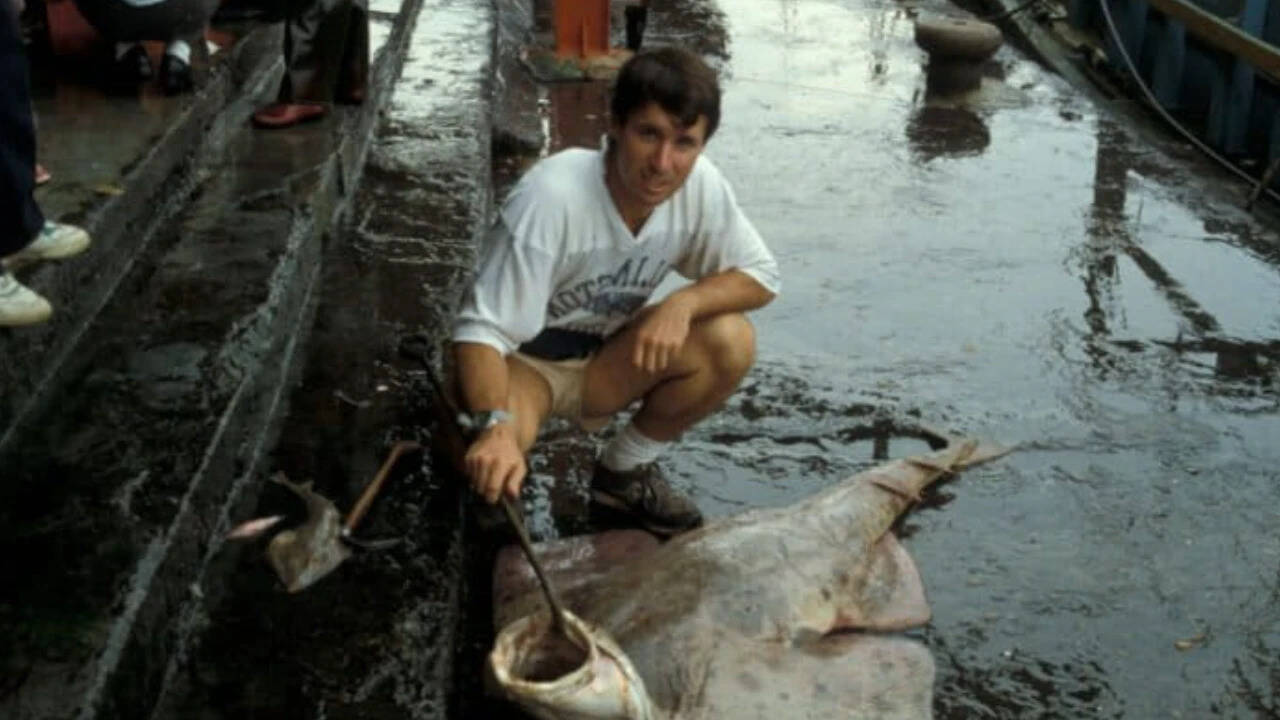
Cheeky as it may sound, the 68-year-old Californian has spent nearly four decades examining sharks and rays brought in by fishers, identifying 56 species previously unknown to science along the way.
Sometimes, all it takes is a little collective effort and a community willing to restore what has been neglected.
What initially began as a repair project grew into a $53.2 million renovation, with work that will continue into 2027, the center has reported.
The conservation easements will also allow the land to continue operating as a working forest while protecting it from future development.
That is what you would expect if their clocks were running behind.
Some chinchillas had eyes so swollen and filled with discharge that they could not open them.
The dispute arose when planning approval left important details of the subdivision unresolved, despite the seller having represented that the land would be divided into 15 lots.
The organisation, which was founded in 2019, has spent much of this time studying the conditions around City Island to understand whether native oysters could survive and eventually establish a self-sustaining reef.
Wire or desk byline, not an individual reporter.
Also by TOI Lifestyle Desk
Nothing else under this byline is closely related to this article, so these are simply their most recent.
All 89 articles by TOI Lifestyle Desk →

Topics

Arabian Californian Mongabay Sri Lanka Zanzibar

Subjects

Ebert PERSON · 9× Mongabay ORG · 6× David Ebert PERSON · 4× Arabian NORP · 2× Californian NORP · 1× Sri Lanka GPE · 1× Zanzibar GPE · 1×

Narrative

56 species described over four decades Big-nosed lantern shark, Arabian black electric ray, Lanas saw shark (Image courtesy of David Ebert via Mongabay official site ) What began as a search for rarely seen sharks gradually turned into a career of documenting species that had received little scientific attention.
framing: assertive · carried by 1 article(s) · first seen 2026-11-22
Cheeky as it may sound, the 68-year-old Californian has spent nearly four decades examining sharks and rays brought in by fishers, identifying 56 species previously unknown to science along the way.

Claims (30 extracted, 1 hedged)

Most scientists have a research lab, white coats, thick glasses, the hum of equipment and shelves full of specimens. asserted
scientists → have → specimens
But marine biologist David Ebert has found himself a rather unconventional second laboratory: the fish market. asserted
Ebert → find → laboratory
Cheeky as it may sound, the 68-year-old Californian has spent nearly four decades examining sharks and rays brought in by fishers, identifying 56 species previously unknown to science along the way. uncertain
Californian → sound → way
In a recent interview with environmental news publication Mongabay, Ebert spoke about his unusual approach to shark research and how years of examining fish catches have led him to species that scientists had not previously documented. asserted
scientists → speak → that
In the interview, titled Indiana Jones at the fish market: David Ebert on a life spent searching for ‘lost sharks’, he recounted how routine visits to fish markets helped him find fish and other creatures that scientists had not officially recorded before. asserted
scientists → title → that
The interview, however, reveals something rather unsettling: because of the lack of awareness and scientific attention, rare fish species that remain unknown and unnamed to science can end up lying dead in fish markets. asserted
that → reveal → markets
The extent of this knowledge gap becomes clearer when Ebert tells Mongabay that “for most shark species, 90- 95%, we know nothing.” asserted
we → become → nothing
How a fish market becomes a research ground Dr Ebert and team surveying a Fish market in Zanzibar (Image courtesy of David Ebert via Mongabay official site ) asserted
market → become → site
For Ebert, finding a rare shark is often less about setting out on a carefully planned expedition and more about knowing where to look. asserted
finding → find → expedition
He travels to fish-landing sites and markets, particularly in remote coastal communities, where fishing boats bring in their daily catch. asserted
boats → travel → catch
Rather than searching for one particular species, he walks around observing what the fishers have caught, photographing the sharks and rays and documenting the different species he comes across. asserted
he → search → species
In his interview with Mongabay, Ebert explained that he once carried a notepad to record his observations, but now uses his cellphone to photograph almost everything he encounters. asserted
he → explain → everything
Even species he recognises are documented, since their presence in a particular location can itself reveal something new to researchers. asserted
presence → recognise → researchers
Sometimes, a photograph shared by a colleague or a conversation with a local fisher can lead him to a species that has rarely been seen or studied. asserted
that → share → species
He also relies on a network of local researchers and fishing communities, who alert him when unusual or rarely encountered sharks turn up in their catches. asserted
sharks → rely → catches
During one visit to Sri Lanka, for instance, he followed up on photographs of an unfamiliar shark caught by a local fisherman. asserted
he → follow → fisherman
When Ebert showed the fisherman the photograph, he agreed to look out for another specimen. asserted
he → show → specimen
The following day, the fisherman had caught one. asserted
fisherman → catch → one
For Ebert, these encounters are part of the detective work involved in studying sharks that receive little scientific attention. asserted
that → involve → attention
56 species described over four decades Big-nosed lantern shark, Arabian black electric ray, Lanas saw shark (Image courtesy of David Ebert via Mongabay official site ) What began as a search for rarely seen sharks gradually turned into a career of documenting species that had received little scientific attention. asserted
that → describe → attention
Over the past 40 years, Ebert has described and named 56 new species of sharks, rays and chimaeras, with another six species awaiting formal description. asserted
species → describe → description
His discoveries range from the big-nosed lanternshark, which reaches a maximum known length of just 21 centimetres, to the Arabian black electric ray and Lana's sawshark, which he named after his niece as a graduation present. asserted
he → range → present
But Ebert's discoveries are not just about adding new names to scientific records. asserted
discoveries → add → records
They also bring attention to an entire group of marine animals that often remain overshadowed by more familiar species such as great white sharks, tiger sharks and whale sharks. asserted
that → bring → sharks
As he told Mongabay, “Everybody wants to go diving with the manta rays and the whale sharks, but there's all these other sharks out here.” asserted
Everybody → tell → rays
He believes these lesser-known species deserve attention not simply because they are unusual, but because they can tell scientists much more about the condition of marine ecosystems. asserted
they → believe → ecosystems
Ebert compares them to the proverbial canary in a coal mine, explaining that changes in their populations can signal problems in the marine environment long before larger, more familiar shark species show visible signs of decline. asserted
species → compare → decline
For Ebert, the work is far from done. asserted
work → do → Ebert
With several species still awaiting formal description and countless others yet to be studied, he believes there is much more to discover beneath the surface. asserted
he → await → surface
And sometimes, finding answers to mysteries that have remained unresolved for decades requires looking in places where few scientists would think to search in the first place. asserted
scientists → find → place

Give feedback · no sign-in needed

No sign-in needed for now. Your note is sent without a name, so it cannot be answered.

History Support