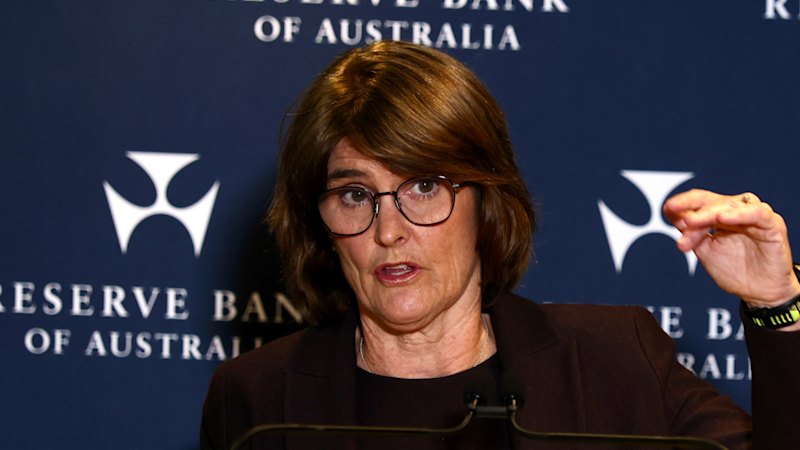
Photo via The Sydney Morning Herald

Hiring freeze, graduate cuts and offshoring: How AI is hitting the jobs market

Read the original at The Sydney Morning Herald ↗
Cite

Muroi, M. (2026, November 20). Hiring freeze, graduate cuts and offshoring: How AI is hitting the jobs market. The Sydney Morning Herald. https://www.smh.com.au/business/workplace/hiring-freeze-graduate-cuts-and-offshoring-how-ai-is-hitting-the-jobs-market-20261121-p61d18.html?ref=rss&utm_medium=rss&utm_source=rss_feed

Dated from the outlet's own feed. Check the original for its byline.

The Sydney Morning Herald · collected 2026-11-20 · by Millie Muroi

Quick Summary

Australian industry giants are cutting thousands of jobs, contributing to a five-year-high unemployment rate of 4.9% in October, according to the Australian Bureau of Statistics. Companies like KPMG, Bunnings, and David Jones have announced significant layoffs, while Qantas has linked some of its 850 job cuts to AI implementation. Economists debate the extent to which AI is responsible for these job losses, with some attributing the trend to rising interest rates and economic slowdowns impacting retail spending and company debt. Others suggest that AI is a factor but also point out that companies may be using AI as a pretext for offshoring to reduce costs.
Written by AI on 2026-11-20, from this article's own text only (the story summary below draws on all the coverage).

AI analysis

Story summary

As of November 20, 2026, unemployment in Australia reached 4.9% in October, the highest rate in five years, according to the Australian Bureau of Statistics. Major companies like KPMG, Bunnings, and David Jones have announced significant job cuts, with KPMG cutting 230 jobs and 20 partners, Bunnings slashing 350 local jobs, and David Jones revealing plans to axe 1,500 jobs by the end of the year. While some companies attribute these cuts to AI efficiencies, others, like National Australia Bank, deny AI is the driving factor behind their 2,500 redundancies. Retailers such as David Jones have also faced challenges due to mounting debt and a slowdown in household spending.

Written for “AI Impact on Jobs Market” on 2026-11-21, grounded in this article and the 0 other(s) covering the same event.
Why this leaning score
The article's own words the score was based on. Each is quoted verbatim and was checked against the article text before being stored, so you can find it in the original.
Reading Leans left (beta estimate) Confidence medium 2 quote(s) discarded as not found in the article
Leaning: leans left for article 168083 (medium confidence, 1 verified quote) · logged 2026-11-20

Compared with similar articles

This article reads leans left and hedges 24% of its claims. Each row says how that neighbour differs.
ABC News (AU)
Hedges 6 of 49 claims Outlet record 67/100
“The articles discuss broader trends and different specific situations involving job losses in Australia, but do not describe the same specific incident.”

Story

AI Impact on Jobs Market
Economy/Business · 1 article(s) covering the same event.
How this article was measured signals, leaning charts, publisher record, byline, topics and claims

Signals How these are calculated →

Claims extracted
33
sentences that state something as happening or true
Uncertain
24%
8 of 33 hedged ("reportedly", "may", "according to")
Leaning
Leans left
of the writing, not the subject · beta estimate
Publisher signals
61/100
The Sydney Morning Herald's corrections and hedging, across everything collected from it. Not a measure of accuracy.
Outlets on this story
1
Economy/Business
Same framing elsewhere
1
articles that frame the event the way this one does
Analyzed 2026-11-20 · how these are computed

How this is being covered How these are calculated →

Article leaning vs. publisher reliability
Source leaning vs. consistency

Publisher

The Sydney Morning Herald · 7770 article(s) · 16 correction(s) detected
Running correction rate · 16 correction(s)

Who wrote this

Millie Muroi
13 article(s) here · 1 carrying a prediction
This month, KPMG announced it would cut 230 jobs and about 20 partners, Bunnings said it would slash 350 local jobs, and David Jones revealed it would axe 1500 jobs by the end of this year.
Between December 1, 2021 and September 9, 2022, Macquarie had described its welcome rate on the Macquarie Savings Account as a “welcome variable rate” and a “bonus” which the commission alleged could lead customers to believe it was paid on top of the standard variable rate.
In May, Tamburella was called into a meeting to address performance concerns.
The last time the RBA board split was in May when 8 voted in favour of a rate hike with one holding out.
The bank will pay a final dividend of 77 cents a share, taking the full-year dividend to $1.54, up 1 per cent from the previous year.
Leaving complaints unresolved could mean problems snowball into larger failures, she said, exposing customers to harm and erode trust in the multi-trillion dollar superannuation system.
A Coles worker who tried to stop two suspected thieves at a neighbouring Liquorland store will receive $6500 in compensation from the supermarket chain after he was unfairly dismissed for breaching its workplace rules.
I didn’t understand why people voluntarily spent hundreds – or thousands – of dollars to put themselves through pain, and I couldn’t believe they actually enjoyed it.
A chef who consumed alcohol while working at a high-end Sydney restaurant will receive more than $11,000 in compensation after the national fair work umpire ruled his dismissal was harsh, unjust and unreasonable.
Dentist Sen Le says he is not afraid of losing his job to AI: a technology he has helped to develop, and one which he says can detect problems in a patient’s mouth that most human dentists would miss.
Also by Millie Muroi
Nothing else under this byline is closely related to this article, so these are simply their most recent.
All 13 articles by Millie Muroi →

Topics

Australian Bunnings KPMG National Australia Bank the Australian Bureau of Statistics

Subjects

Borland PERSON · 2× David Jones PERSON · 2× Accenture ORG · 1× Andrew Irvine PERSON · 1× Australian NORP · 1× Bunnings ORG · 1× KPMG ORG · 1× National Australia Bank ORG · 1× Qantas ORG · 1× the Australian Bureau of Statistics ORG · 1×

Narrative

“People pull back spending meaning retail has been hit, and some job losses are attributable to that.” Major retailers such as David Jones, for example, have been squeezed by mounting debt and a slowdown in household spending. Melbourne University labour economist Jeff Borland says while interest rates have played a major role, AI has also led to some job cuts. “There have definitely been some retrenchments to do with AI,” he says, noting it is “very believable” for companies such as Canva – which earlier this month announced more than 1200 people would either lose their jobs, be asked to relocate or change roles – to have been disrupted by AI given software designers are among the most exposed to the technology.
framing: mixed · carried by 1 article(s) · first seen 2026-11-20
This month, KPMG announced it would cut 230 jobs and about 20 partners, Bunnings said it would slash 350 local jobs, and David Jones revealed it would axe 1500 jobs by the end of this year.
2026-11-20 · The Sydney Morning Herald
Hiring freeze, graduate cuts and offshoring: How AI is hitting the jobs market · mixed framing

Claims (33 extracted, 8 hedged)

Despite the labour market taking a turn with several Australian industry giants revealing thousands of job cuts within weeks or days of each other and unemployment figures hitting a five-year-high, economists say it’s not all because of AI. asserted
it → take → AI
On Thursday, data from the Australian Bureau of Statistics showed unemployment reached 4.9 per cent in October, the highest in five years. asserted
unemployment → show → years
This month, KPMG announced it would cut 230 jobs and about 20 partners, Bunnings said it would slash 350 local jobs, and David Jones revealed it would axe 1500 jobs by the end of this year. asserted
it → announce → year
While National Australia Bank chief executive Andrew Irvine has denied that AI is driving the bank’s latest round of 2500 redundancies, some firms such as Qantas, which announced it would cut 850 positions under a deal with AI services provider Accenture, have suggested the technology – and the efficiencies it brings – is a key reason for trimming their workforces. uncertain
it → deny → workforces
So, how much of the recent job cuts are a result of AI uptake by firms, is there likely to be more disruption to come, and what might the employment landscape look like over coming years? uncertain
landscape → come → years
How much is AI to blame for recent job cuts? asserted
AI → blame → cuts
While AI has played a part in some of the recent wave of redundancies and retrenchments, economists say it’s not the only reason that unemployment has ticked up. asserted
unemployment → play → redundancies
Bob Breunig, director of the Tax and Transfer Policy Institute at the Australian National University, says interest rates, which hit 4.85 per cent – the highest level since the global financial crisis – after the Reserve Bank lifted them for the fifth time this year, are one key factor. asserted
Bank → say → time
“Interest rates are really starting to bite,” he says. asserted
he → start → ?
“People pull back spending meaning retail has been hit, and some job losses are attributable to that.” Major retailers such as David Jones, for example, have been squeezed by mounting debt and a slowdown in household spending. Melbourne University labour economist Jeff Borland says while interest rates have played a major role, AI has also led to some job cuts. “There have definitely been some retrenchments to do with AI,” he says, noting it is “very believable” for companies such as Canva – which earlier this month announced more than 1200 people would either lose their jobs, be asked to relocate or change roles – to have been disrupted by AI given software designers are among the most exposed to the technology. asserted
designers → pull → technology
However, Borland also notes that some companies are likely dressing up job losses to avoid stronger backlash for offshoring. asserted
companies → note → offshoring
“Historically, it’s often convenient for businesses to make job cuts and say it’s because of new technology coming along rather than saying they are offshoring jobs because that’s cheaper,” he says. Australia Institute co-chief executive Richard Denniss also says one of the major drivers of recent job losses has been the Reserve Bank’s continued interest rates rises, which are aimed at dampening inflation but have also slowed the economy. However, Denniss says some business leaders are likely packaging up job losses as a response to AI even when it is not the primary reason for their job cuts. asserted
it → ’ → cuts
“Two things are happening at the same time: old-fashioned offshoring in pursuit of lower wages and reducing costs, and the need to convince investors that the company is preparing for AI,” he says. asserted
he → happen → AI
“Chief executives, such as at WiseTech and Telstra, are deliberately trying to signal they are forward-looking and gearing up for an AI revolution. asserted
they → try → revolution
They have to tell a story that they will not be eaten or threatened by AI, but enhanced by it. asserted
they → have → it
Will AI lead to more job losses? asserted
AI → lead → losses
Evidence of mass job losses has not yet emerged in Australia, but there are signs of a hiring slowdown, especially in some occupations and programs. asserted
Evidence → emerge → occupations
Borland says looking at countries such as the US suggests there may be more disruption and job losses to come from AI uptake. uncertain
looking → say → uptake
“We might not be able to predict the exact extent or timing, but the US, which is ahead of us, can give us an indication. uncertain
which → predict → indication
Breunig says the main immediate effect of AI on the jobs market is slower growth in employment rather than widespread job losses. asserted
effect → say → losses
“We’re not yet seeing a lot of firing because of AI, but we are seeing downward revision in hiring because of AI,” he said, noting some big banks and consultancy firms he has spoken to have cut down their graduate intakes, specifically citing AI. asserted
he → see → AI
“Mass unemployment is not an unintended consequence of the AI boom, it’s the business plan. asserted
it → ’ → boom
Denniss does not have a prediction for the extent of job losses from AI uptake, but believes the Reserve Bank is “massively underestimating” the effect of AI on the labour market. asserted
Bank → have → market
“The only reason Anthropic and Open AI can be worth a trillion dollars is if businesses and government departments replace millions of workers with AI, swapping their wage bill for an AI bill,” he says. asserted
he → replace → bill
“Mass unemployment is not an unintended consequence of the AI boom, it’s the business plan [for AI companies]. asserted
it → ’ → companies
Either companies such as Anthropic are not worth as much as markets think, or there are a hell of a lot of job losses to come.” How will AI change employment? Although AI has led to some job losses, like most technologies, it is likely to create demand for new jobs and change the nature of the work we do. asserted
we → think → work
“It could go either way,” Bruenig says. uncertain
Bruenig → go → ?
“Every time new technology is introduced, old jobs die and new jobs emerge, but it’s really hard to predict what those new jobs will look like.” asserted
jobs → introduce → what
Breunig also says it may affect some intakes such as graduate programs more than others, and that it could change how jobs are done or the skills – such as softer human skills – that are sought after. uncertain
that → say → skills
Borland says while some jobs such as computer or mathematics related fields and office administration – and tasks such as research and translating or summarising documents – may be more exposed to AI displacement, the effect may be more complex. uncertain
effect → say → displacement
“Automation can reduce employment, but it can also complement other tasks that require humans, making them more productive, creating new tasks and driving demand,” he says. asserted
he → reduce → demand
“And if it increases real incomes, and money gets spent – especially on things humans produce – demand for labour in those areas may grow.” uncertain
demand → increase → areas
The Business Briefing newsletter delivers major stories, exclusive coverage and expert opinion. asserted
newsletter → deliver → stories

Give feedback · no sign-in needed

No sign-in needed for now. Your note is sent without a name, so it cannot be answered.

History Support